

There is a moment that sometimes happens during a concert when a crowd appears to become a single body.
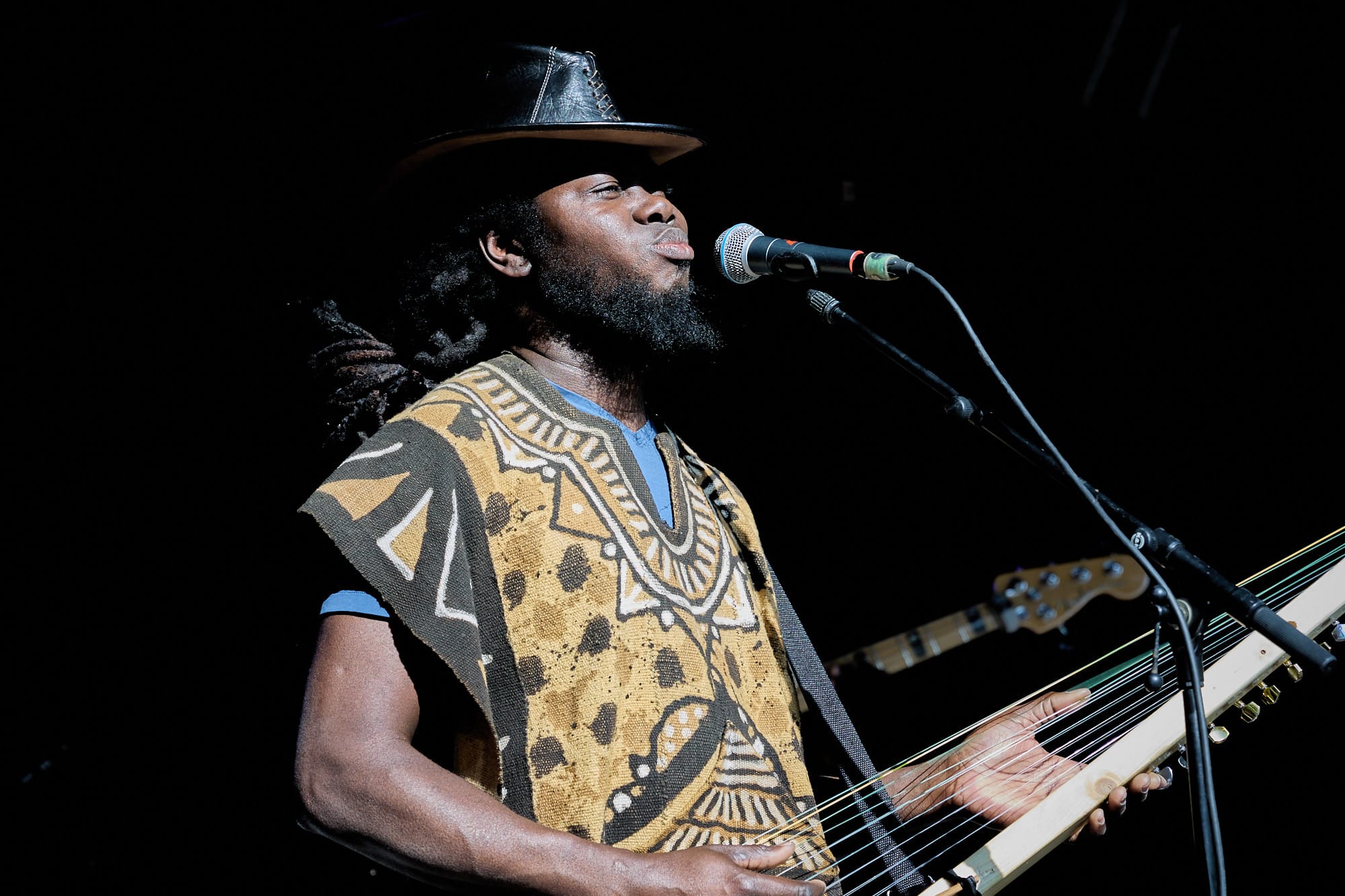
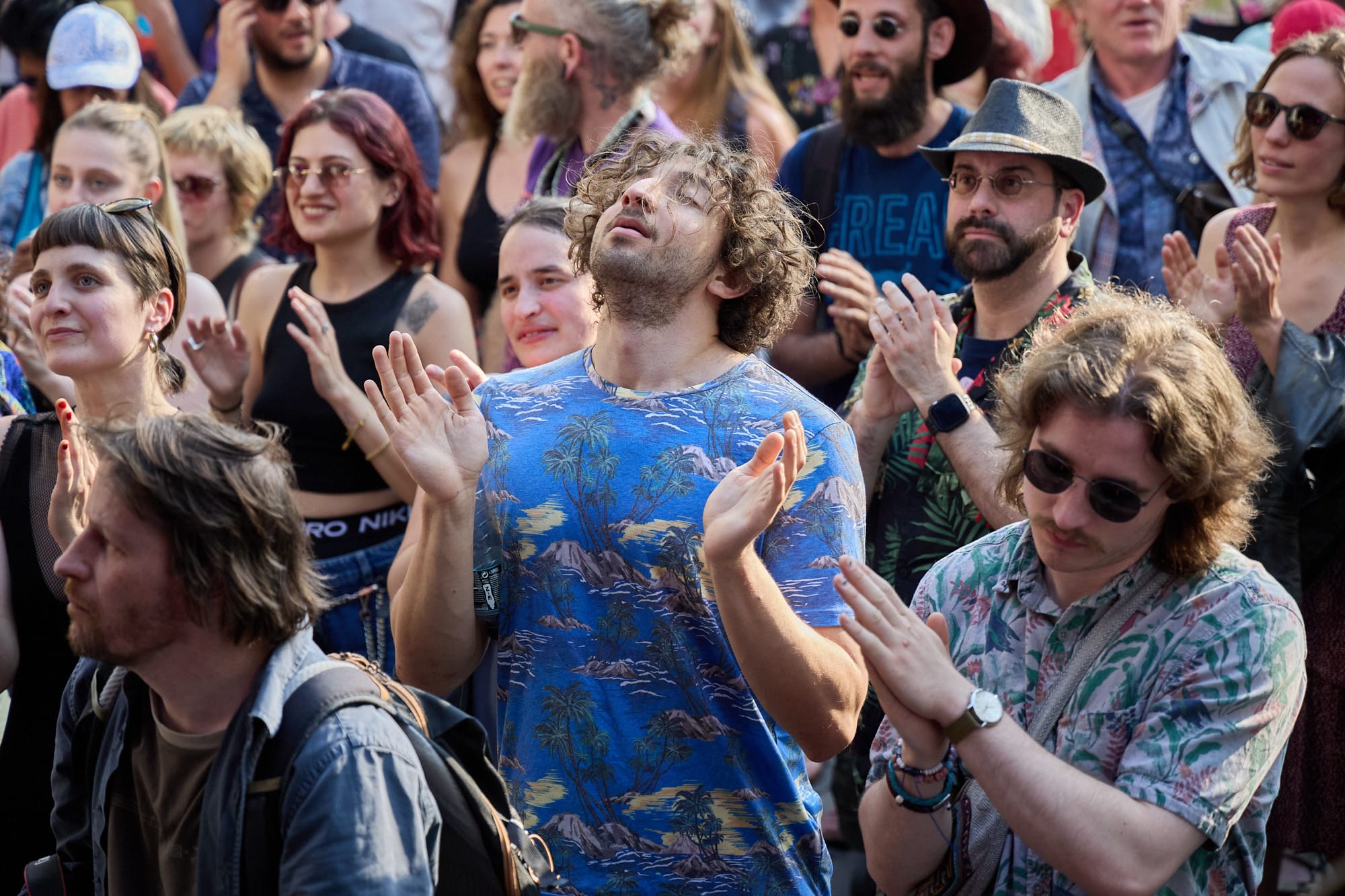
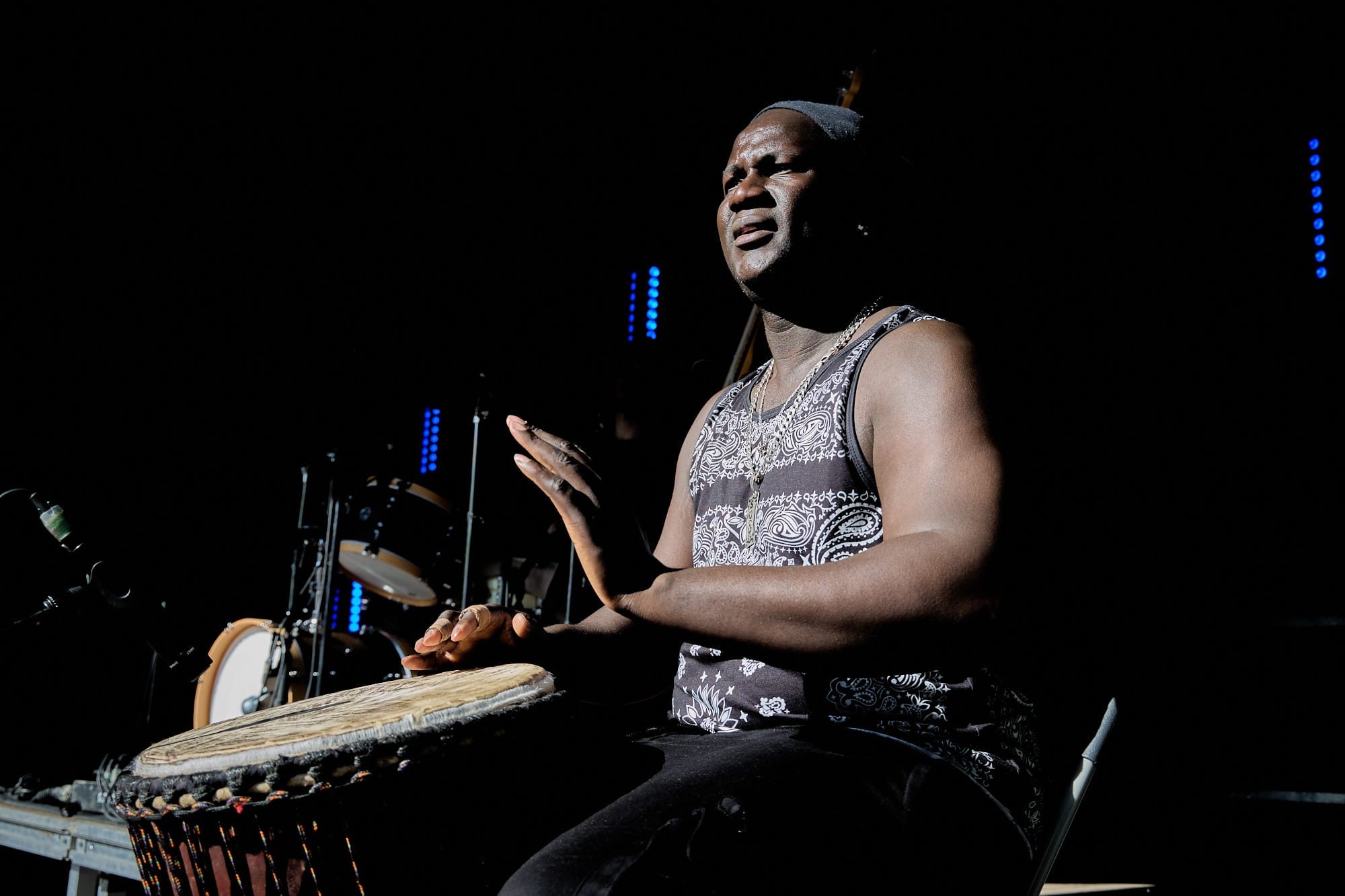
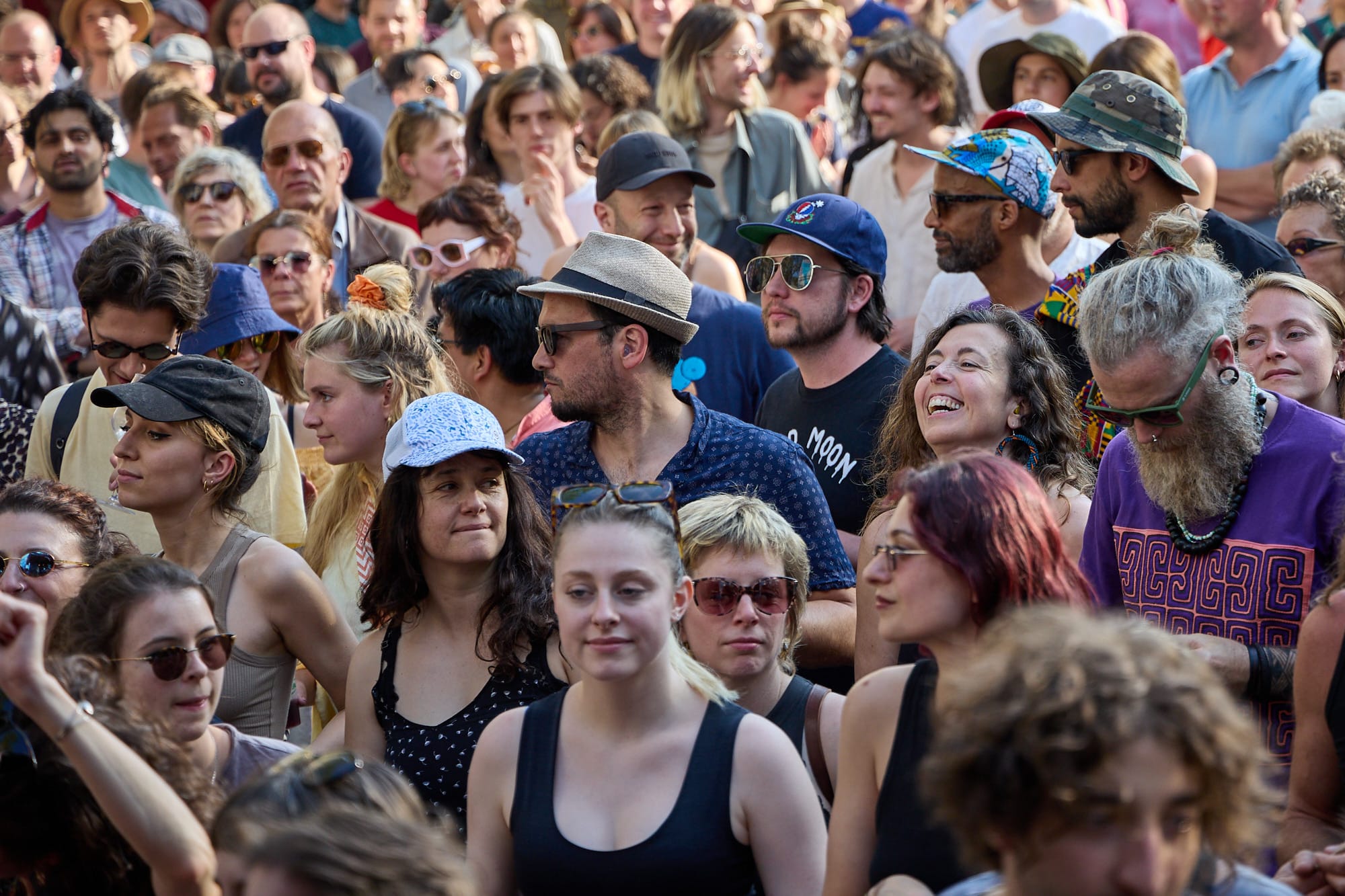
I have seen it in Brussels while listening to Zouratié Koné, musician and griot from Burkina Faso. Rhythm moves through a public space and, for a while, the usual boundaries seem less important.
People who arrived separately are suddenly listening to the same pulse. Music passes between strangers without asking for passports, biographies, political affiliations, languages, or explanations. From the outside, the conclusion seems obvious. Music unites us.
I have spent a considerable part of my life working with music, dance, performing arts, and cultural projects, and I helped create Amu Les Griots precisely around the possibility of encounters like these.
Between Brussels and Bobo Dioulasso, our work has often used rhythm, oral transmission, movement, and the living traditions of West Africa to create spaces where people who might otherwise never meet can learn something together.
So I should probably find the sentence reassuring. And yet I hesitate every time I hear it. Because what exactly do we mean when we say that art unites us?
A difficult seat in the audience
The question returned recently in Italy, in an unlikely and revealing way. During a concert by Diodato dedicated to Fabrizio De André at the Agnata in Sardinia, Matteo Salvini was sitting in the front row beside Dori Ghezzi.
A woman in the audience protested his presence, saying that she felt unable to remain at a concert celebrating an artist whose ideas she believed stood so far from Salvini's politics.
Dori Ghezzi intervened in defense of dialogue and of the possibility that music might unite people with very different views. Diodato did not ask anyone to leave, expressing instead the hope that De André's music might illuminate politics.
Predictably, the episode became an argument about Salvini. But perhaps Salvini is the least interesting part of the story. The more difficult question concerns the chair he was sitting on. Who is allowed to sit in front of a work of art?
Do we have to share something with the artist before we are entitled to listen? Can a person whose political actions appear to contradict the values expressed in a song still love that song? Does listening imply agreement? And if someone we profoundly oppose enters a cultural space that matters to us, does their presence contaminate that space?
There is an understandable temptation to answer these questions by recruiting the artist. De André would have said this. De André would never have accepted that.
The dead are particularly convenient participants in political arguments. They cannot interrupt us. Perhaps we should resist speaking for them. The work remains. We remain. And between the two there is a difficult freedom that belongs to art itself.
Nobody owns what a song becomes
Once a song enters the world, the artist loses part of the control over what happens to it. This can be uncomfortable.
A song written from one political sensibility can be loved by someone who embodies another. A novel can profoundly affect a reader whose worldview its author might have rejected. A photograph made as an accusation can later become decoration. A protest song can be played by the very people it was protesting against.
Art travels badly sometimes. But it travels. And perhaps one of the conditions of artistic freedom is accepting that we cannot completely determine who is allowed to be transformed by what we create. This does not mean that context disappears. It certainly does not mean that criticism should disappear.
The woman who objected to Salvini's presence was exercising her freedom too. She did not have to suspend her convictions because music was being played. If a cultural event is truly a democratic space, then her discomfort belongs inside that space just as much as the minister's presence does. This distinction matters.
The right to listen does not include the right not to be challenged.
And the right to challenge someone does not automatically confer the right to exclude them. There is something difficult here that slogans cannot resolve.
Perhaps democracy looks less like everybody singing the same refrain and more like a place where the song, the objection, the discomfort, and the decision to remain or leave can exist at the same time. That is a much less comforting idea of unity. It may also be a more useful one.
When the square moves
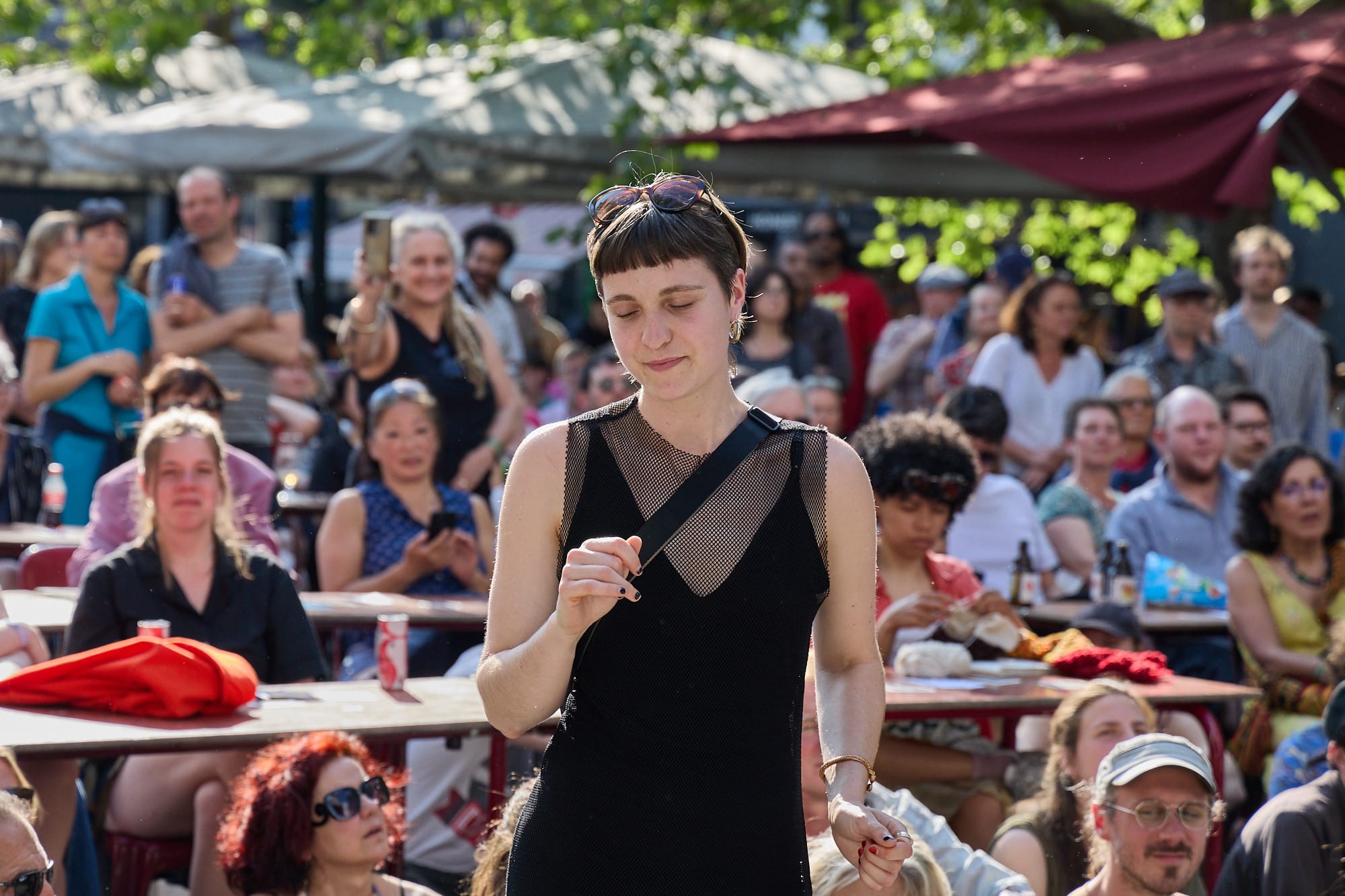
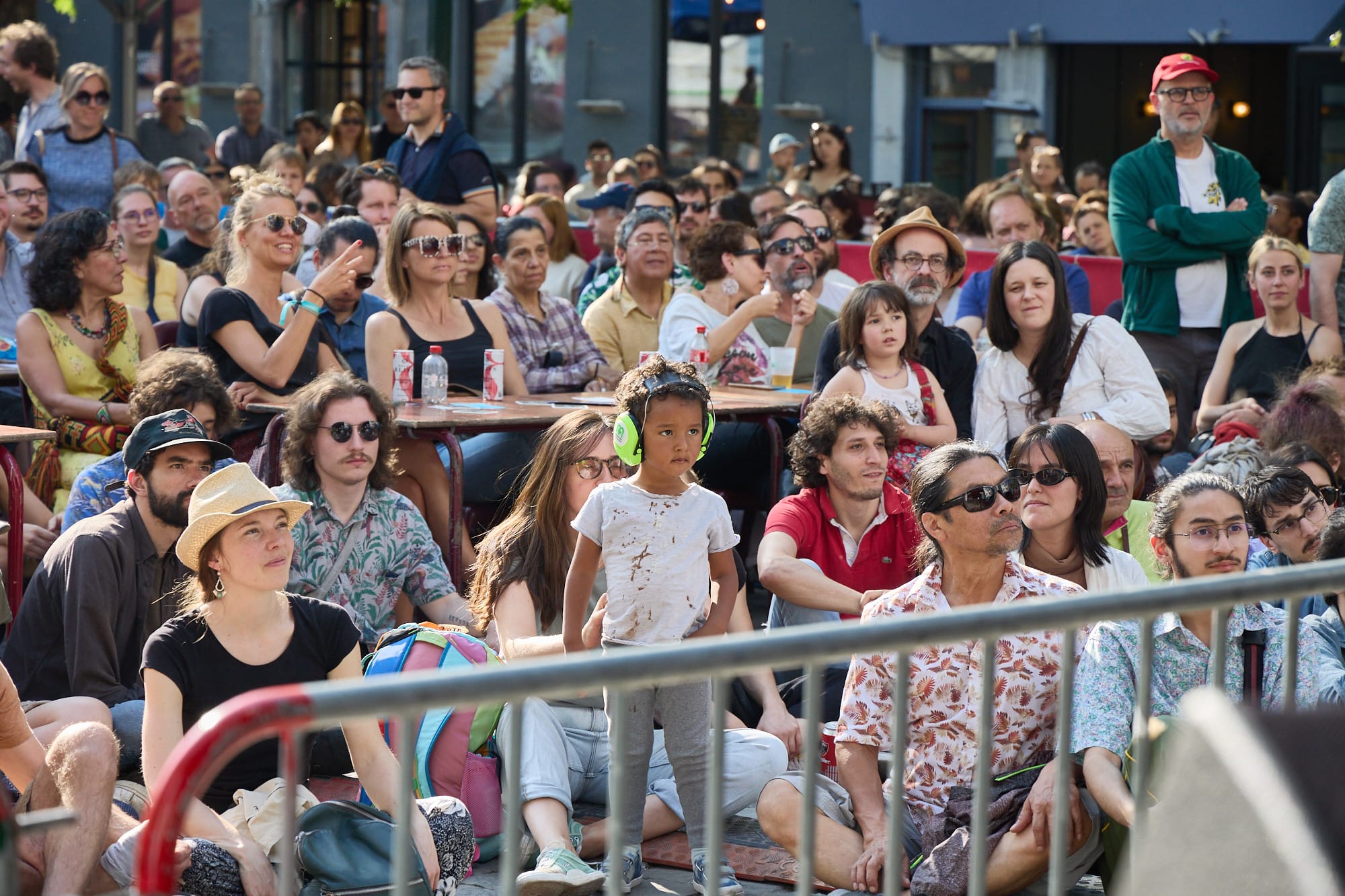
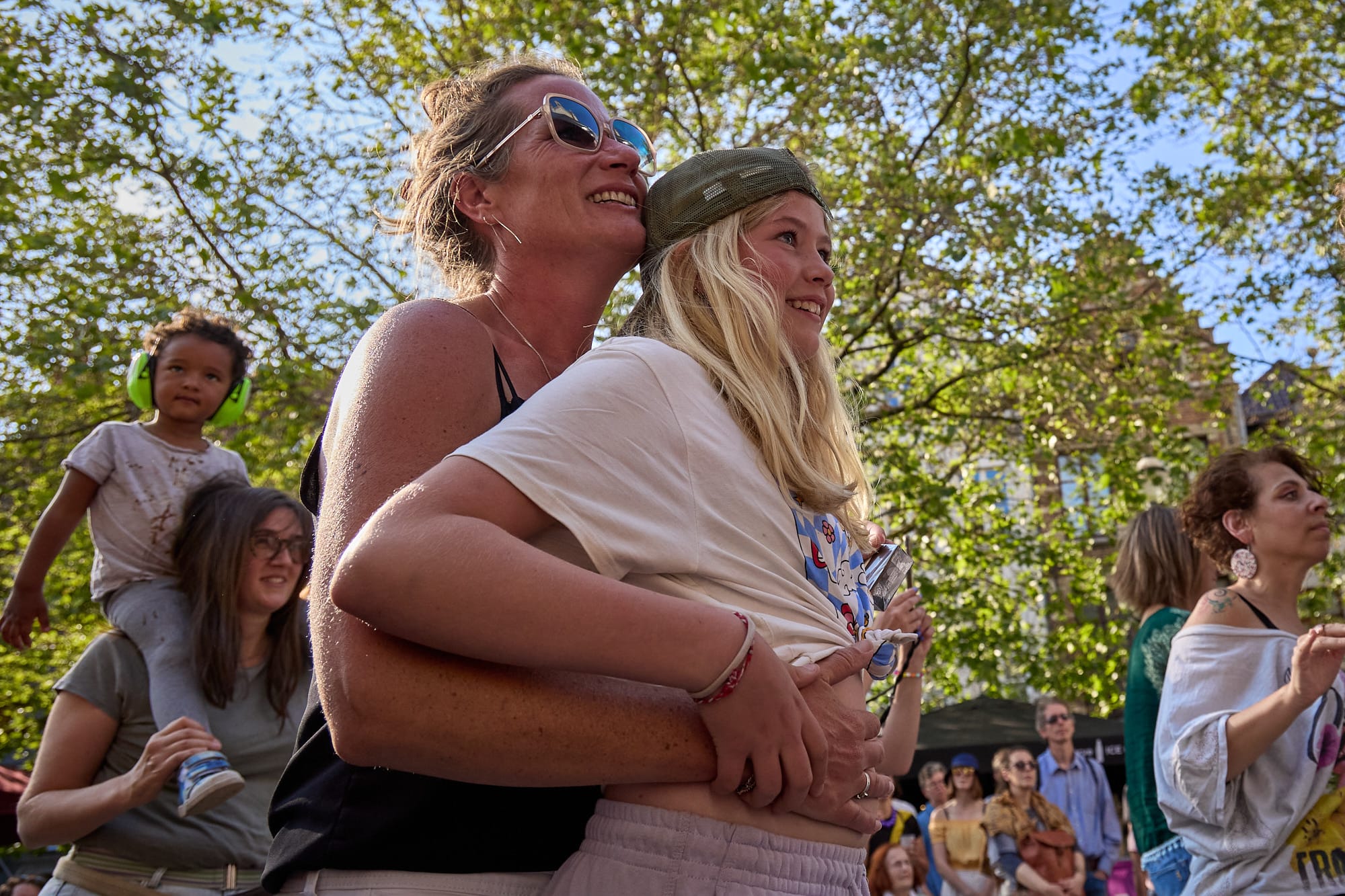
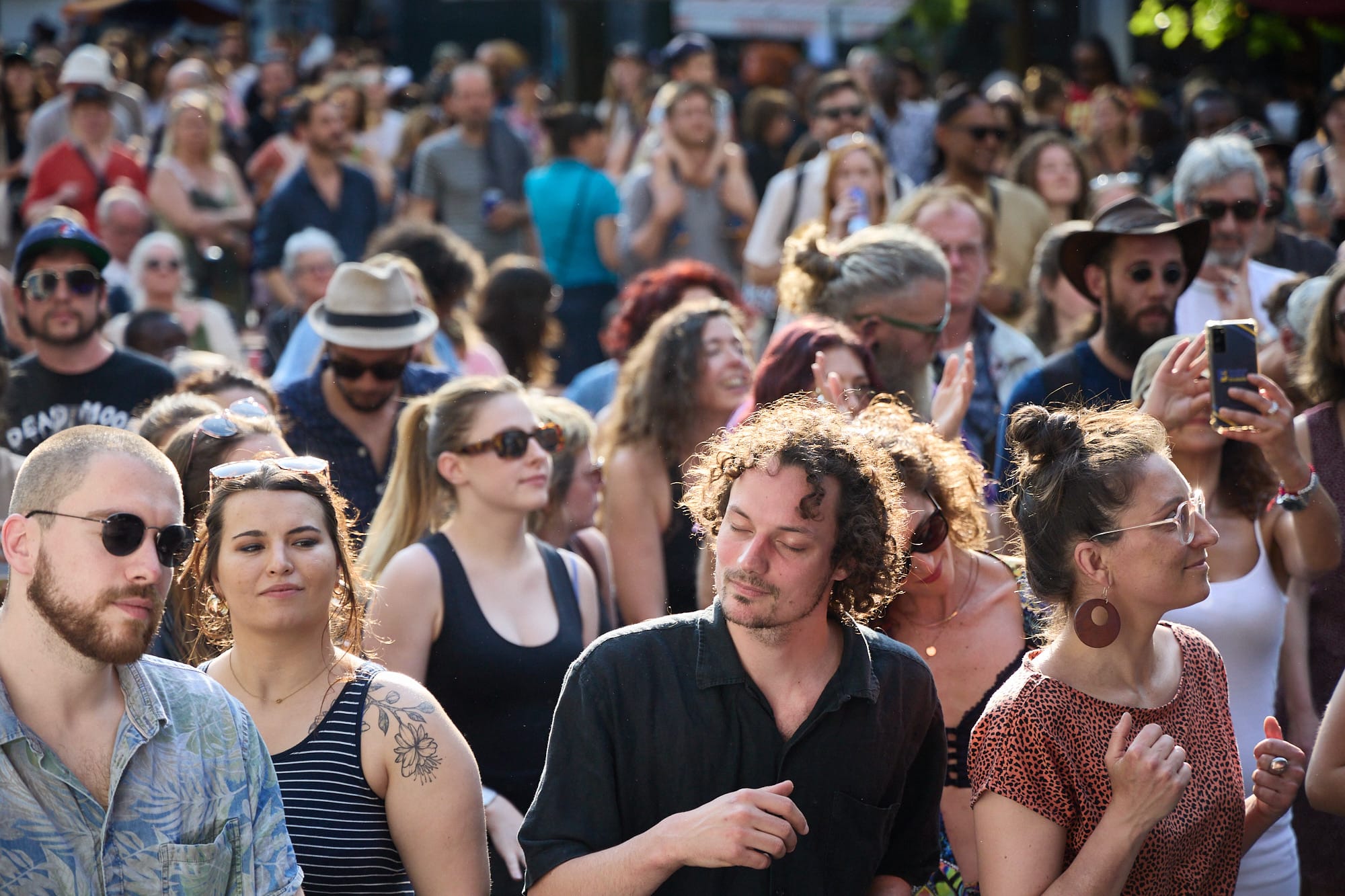
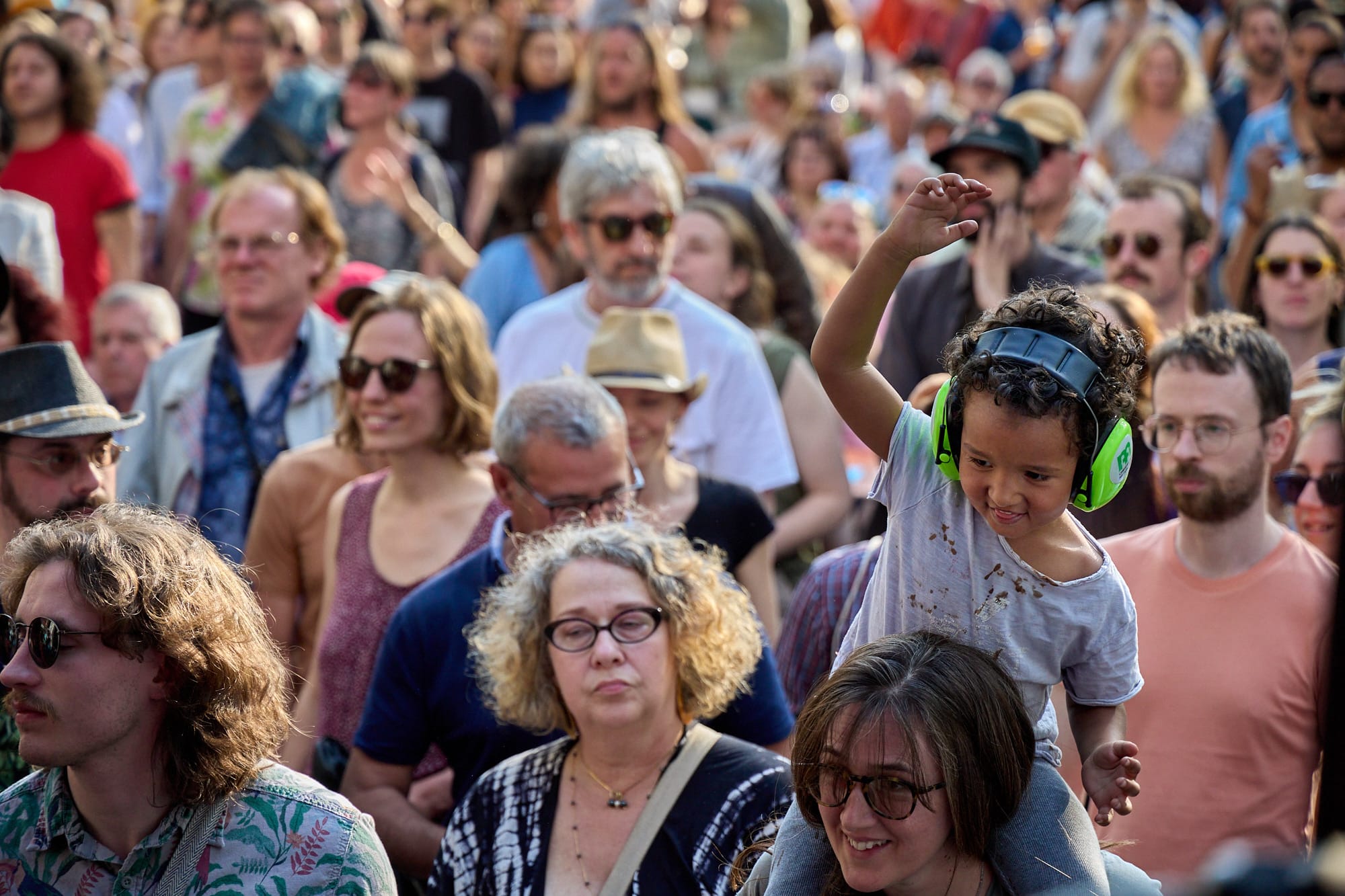
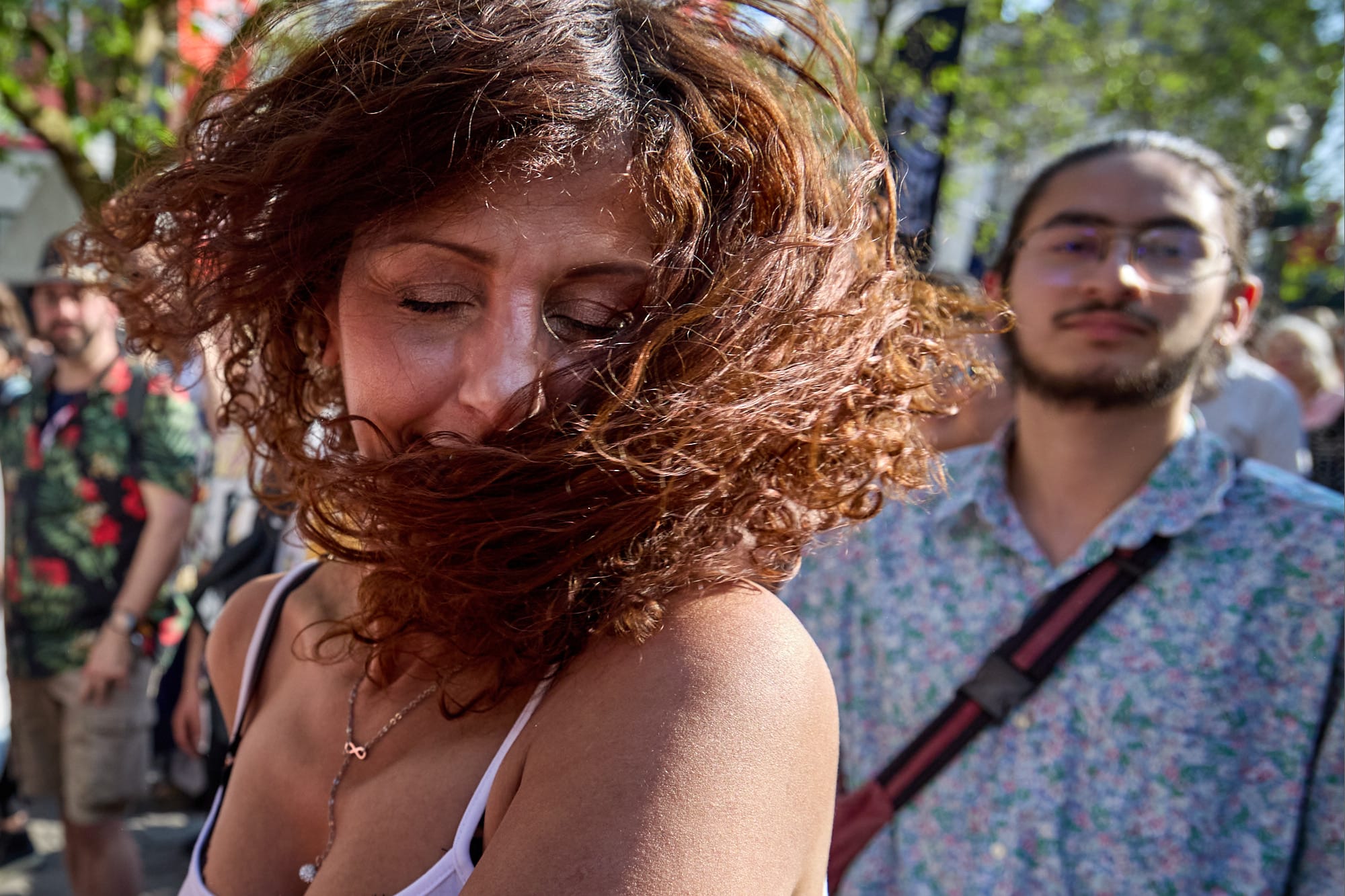
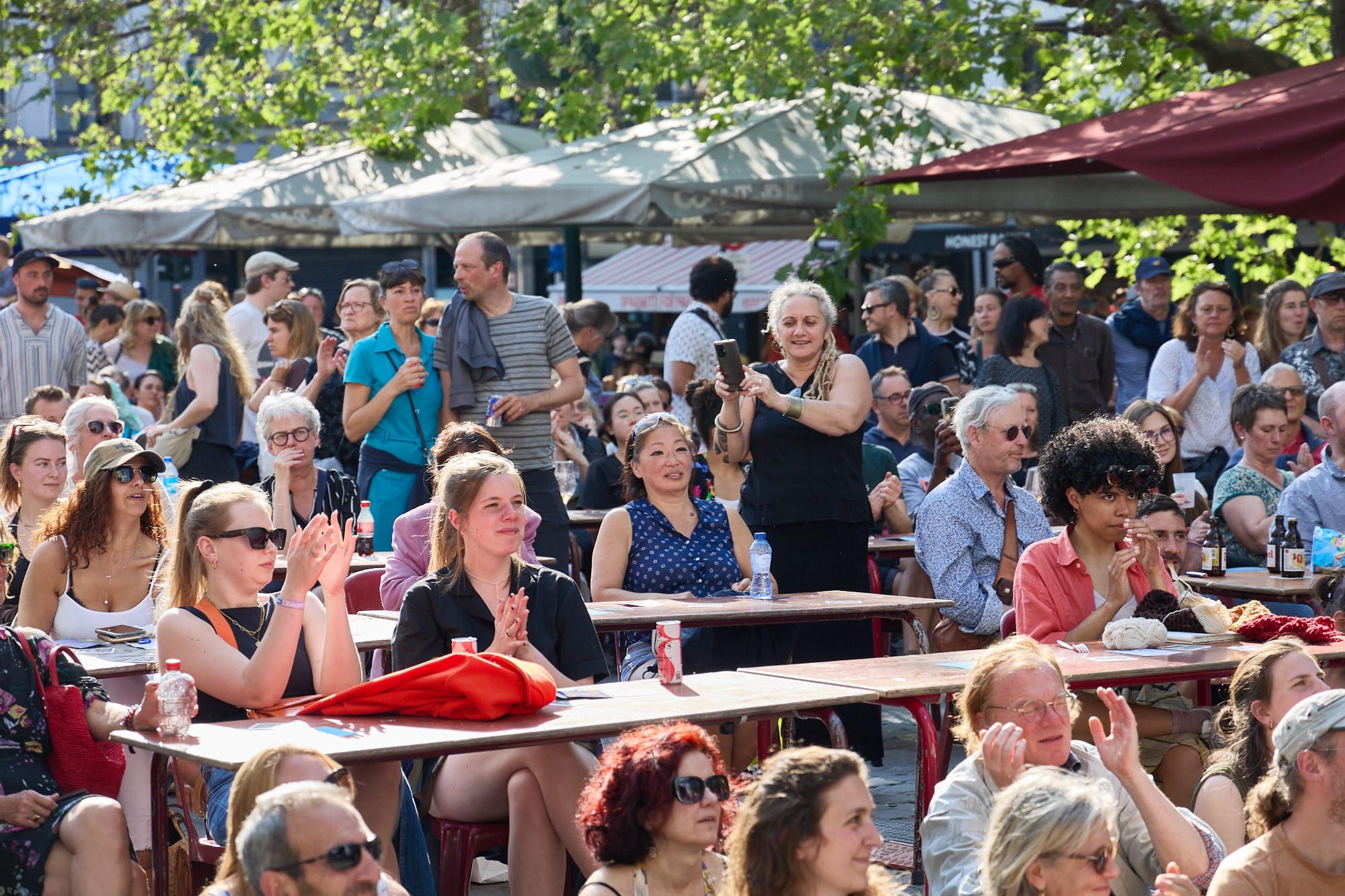
I return to Brussels. To our music. To rhythm. To a public space in which, from where I stood, people seemed for a time to be carried by the same musical current.
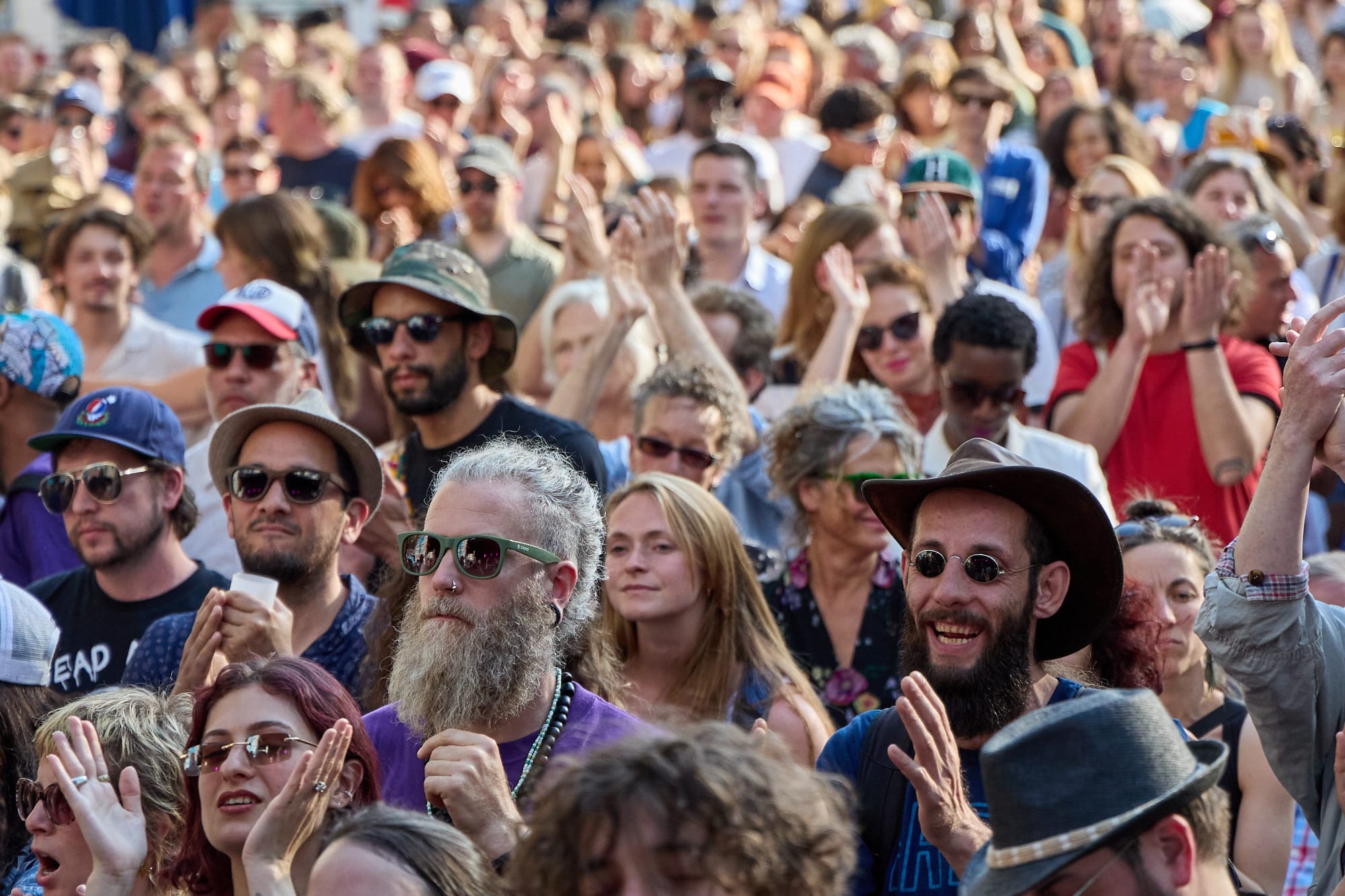
The photographs Claudio Maria Lerario made there preserve fragments of that encounter. It would be easy to look at them and write the familiar caption: music has no borders. But borders do not disappear because someone begins to play.
Neither do passports. Neither do inequalities. Neither do racism, social class, colonial history, prejudice, privilege, loneliness, or the very different freedoms with which people are able to move through the world.
If we claim that a concert erases these things, we ask music to perform a miracle it cannot perform. Worse, we may use beauty to avoid looking at what remains unresolved.
Yet what happened in that public space was not meaningless simply because it was temporary. For a while, people shared something. Not an ideology. Not an identity. Not a history. A rhythm. And perhaps we underestimate how extraordinary that is.
At Amu Les Griots, much of our work begins from this apparently simple possibility. Rhythm is learned together. Knowledge passes through listening, repetition, movement, oral transmission. The encounter does not require everyone involved to become culturally alike. On the contrary, difference remains present.
The purpose is not to manufacture sameness. It is to make relationship possible. There is an enormous difference between the two.
Unity is not innocence
The problem with saying that “art unites” is that the sentence is usually left unfinished.
Unity toward what? Unity on whose terms? What are we being asked to forget in order to achieve it?
Sometimes calls for unity are generous. Sometimes they are a request for the person with less power to stop making everyone else uncomfortable. We should be suspicious whenever harmony requires silence.
If music unites us only by asking us to forget who we are, what has happened, who holds power, who has been excluded, or what will resume once the concert is over, then that unity is very close to anesthesia.
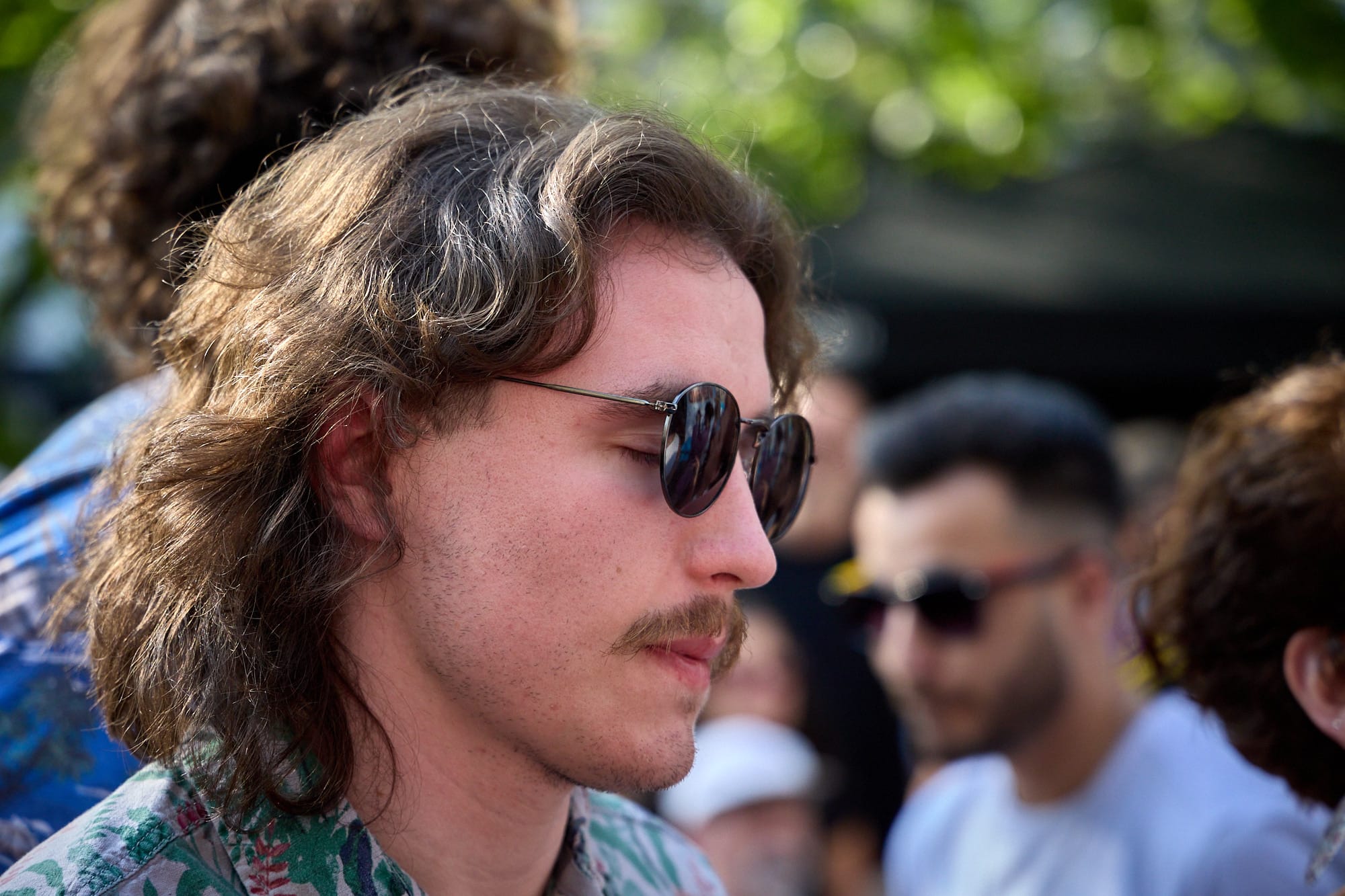
Art should be capable of something greater than anesthesia. A song can bring people into the same space and still leave their disagreements intact. A photograph can make us look at someone without pretending we completely understand them.
Dance can allow bodies with radically different histories to occupy a rhythm together. A story can enter the imagination of someone whose life is nothing like that of the person who told it.
None of these things guarantees goodness. Art does not automatically make us better people. History provides more than enough reason to abandon that comforting belief.
People capable of appreciating extraordinary music have also been capable of cruelty. Cultivated societies have produced violence. Beauty itself can coexist comfortably with power.
So perhaps the important question is not whether someone listens to the right songs. It is what happens when listening ends.
The possibility of being changed
There is another reason I would not want to decide who may enter a concert. We cannot know in advance what art will do to someone. Perhaps nothing. Perhaps a person listens to a song about freedom, applauds, goes home, and continues living exactly as before.
That happens. But perhaps one sentence remains. One rhythm. One face in a photograph. One doubt that was not there previously.
If we believe art has any transformative power at all, we have to accept the possibility that it may need to reach precisely the people with whom we disagree. Otherwise we are asking art merely to confirm the beliefs of those who already belong.
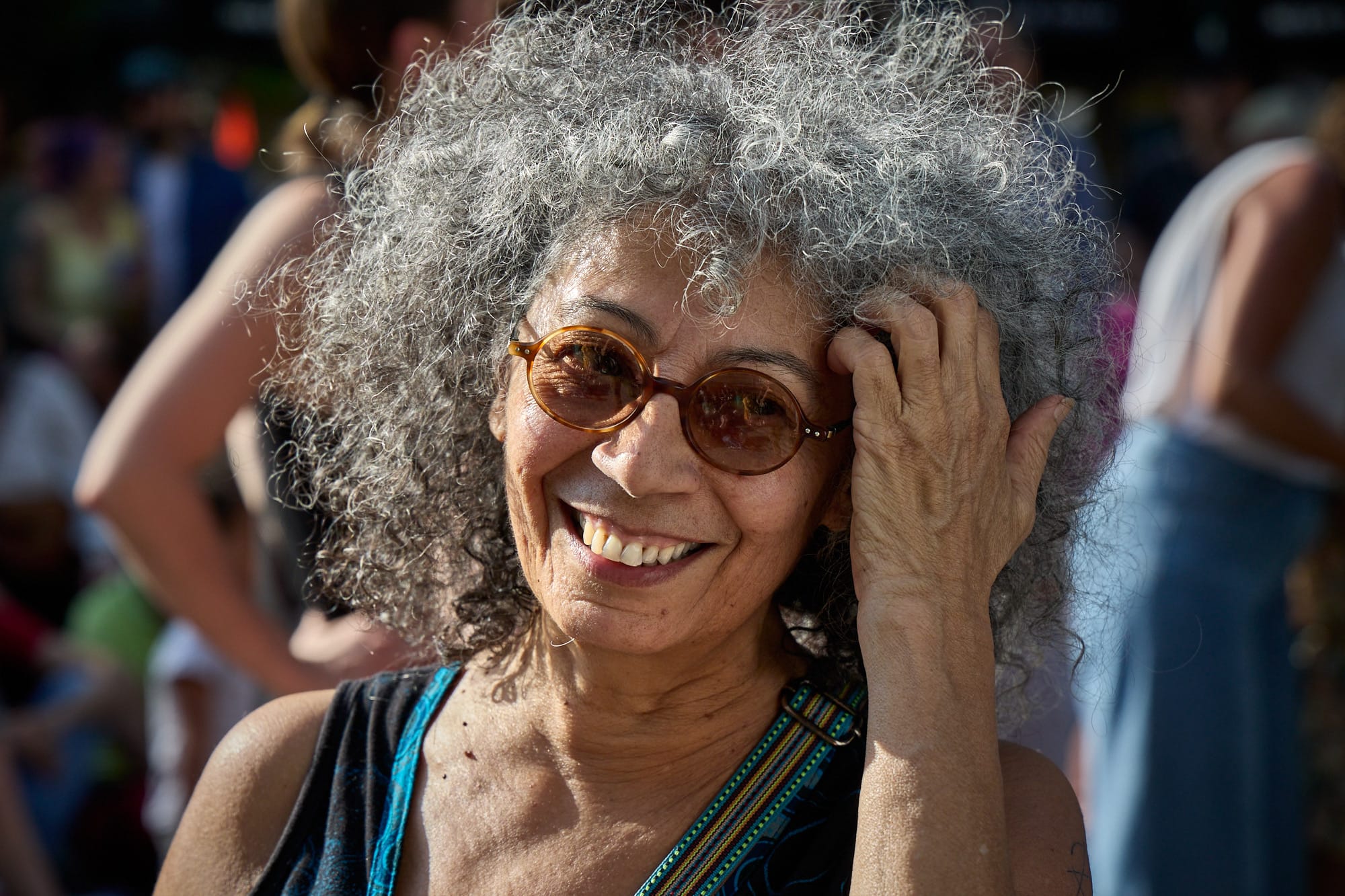
That is not dialogue. It is recognition among friends. There is nothing wrong with recognition among friends. We need those spaces too. But culture becomes more interesting when something unfamiliar crosses the threshold.
This is also why the encounter between cultures cannot simply mean presenting one group to another in the hope that everyone will celebrate diversity. Real encounters are less tidy.
They involve misunderstanding, curiosity, attraction, resistance, translation, awkwardness, pleasure, and occasionally conflict. If everyone leaves unchanged, perhaps no encounter actually happened.
Art does not reconcile us
So, does music unite? Yes. And no. It can synchronize bodies without synchronizing beliefs. It can create proximity without agreement. It can produce an experience of belonging that lasts three minutes, an evening, or a lifetime. It can also divide a room. And sometimes division is evidence that the work is alive.
Art that speaks seriously about freedom, injustice, desire, dignity, war, migration, love, poverty, power, or exclusion cannot simultaneously guarantee that nobody will feel challenged by it. To demand that would be to ask art to become decoration.
Perhaps we have confused unity with the absence of conflict for too long. Human beings do not become one by becoming identical. We become capable of living together when difference no longer automatically requires separation. This is much harder.
It asks us to listen without surrendering judgment. To oppose without dehumanizing. To remain present when someone unsettles us. To recognize another person's freedom without pretending every exercise of that freedom is harmless.
And it asks us to remember that sharing a cultural space with someone is not the same as endorsing them.
Encounter is not absolution. A politician does not become innocent because he listens to a beautiful song. A protester does not betray music by refusing silence. An audience does not fail because it disagrees. Perhaps the measure of art's capacity to unite us lies somewhere else entirely.
Not in whether we all applaud at the same moment, but in whether a space can remain open enough for us to encounter one another without demanding that difference disappear.
After the last note
When a concert ends, the temporary community dissolves. People leave. They return to different neighborhoods, different homes, different incomes, different histories, different passports, different convictions. The political world that existed before the first note is still there.
The square has not been healed. But something happened in it. For a short time, strangers paid attention to the same thing. That is modest compared with the promises we often make for art. It is also enormous.
Because perhaps art does not have to unite the world. Perhaps its more radical task is to remind us that sharing a world with people who are not like us is possible. Not because our differences are imaginary. Not because politics does not matter. Not because every position deserves agreement.
But because no society can exist if the only people with whom we are willing to share a song, a square, a table, or a future are those who already think as we do.
A common rhythm is not a common mind. It should never have to be. What matters is whether, while the rhythm lasts, we become capable of hearing one another. And what we choose to do after it stops.


Member discussion