


The night the sky opened
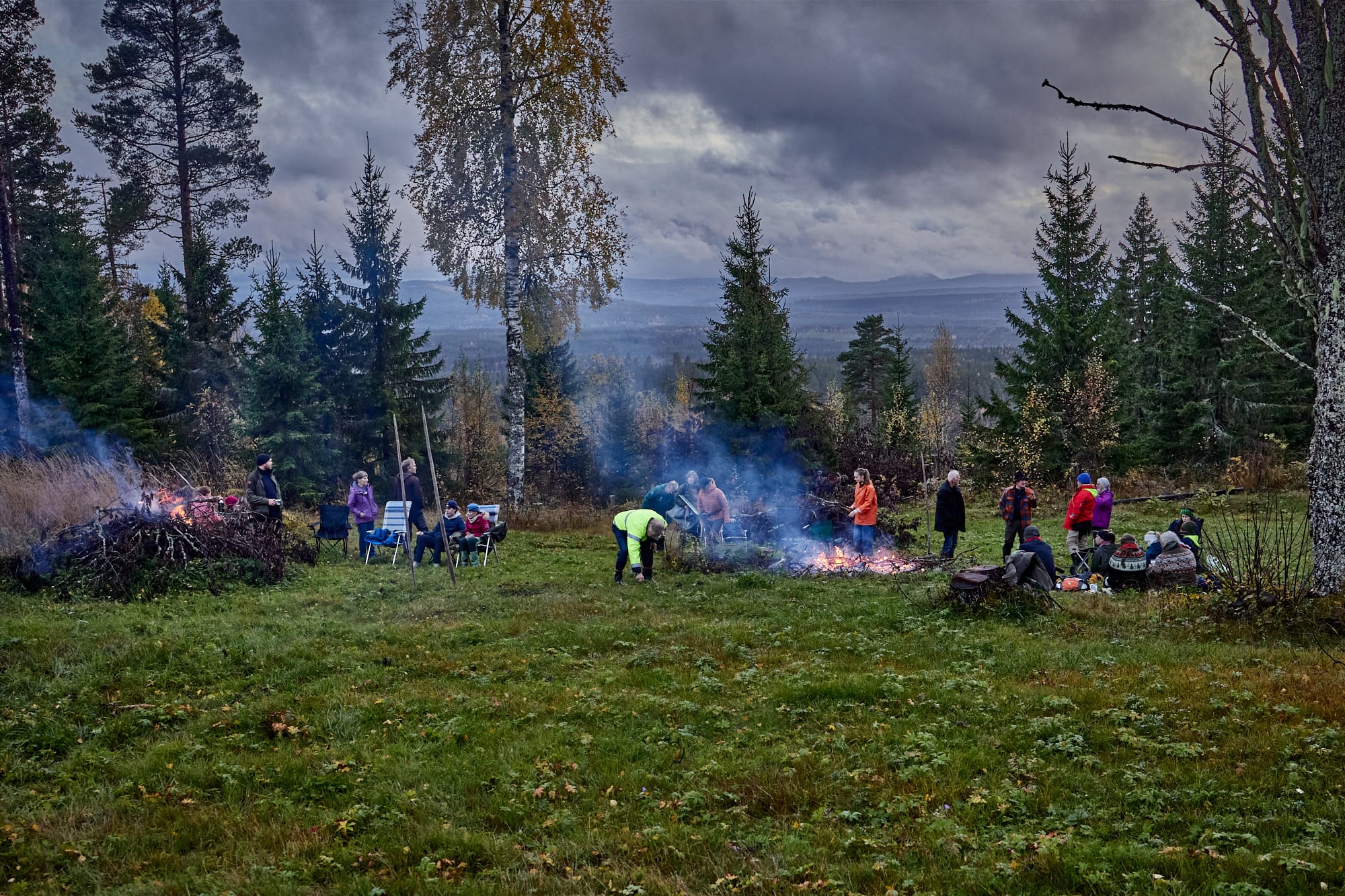
On the evening of October 3, 2026, people gathered around a fire in Finnskogen, the forested borderland between Norway and Sweden. Among them were young people who had come to listen to stories belonging to a history much older than the national boundaries surrounding them.
Tove Elise Ihler stood near the flames. She is a storyteller, and that evening her stories concerned the cosmology and mythology of the Forest Finns, particularly the stars and the relationship between the visible world and the beliefs through which earlier generations had tried to understand it.
A composition called Stjernene over Oppigard — The Stars Above Oppigard — had been created for the occasion by Rune Lindberg. Music moved through the gathering as people listened, while the fire illuminated faces and the surrounding darkness concealed the forest.
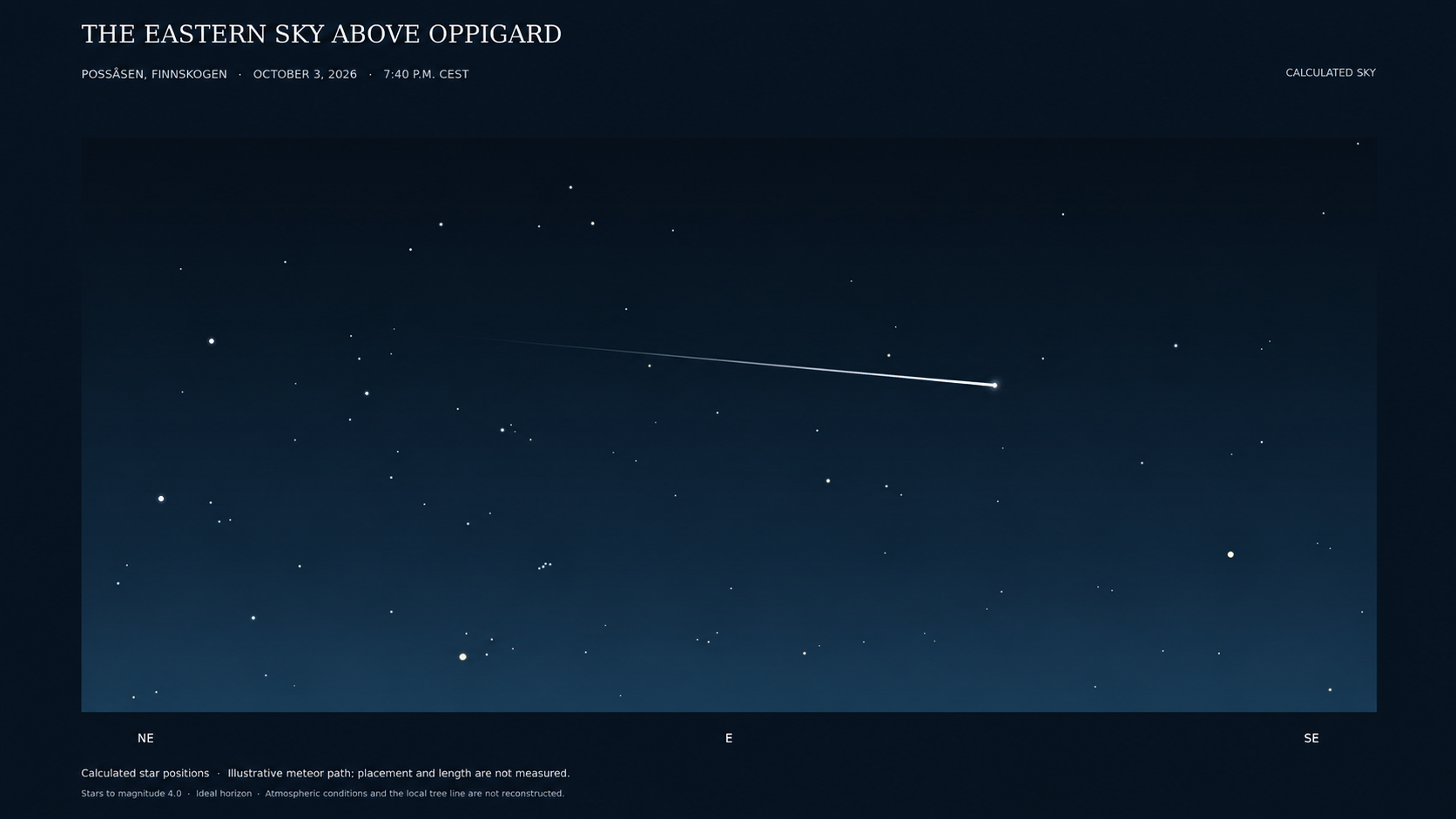
Then, at around 7:40 p.m, something unexpected happened. A brilliant object crossed the eastern sky, traveling almost horizontally from left to right. It appeared large and close, and disappeared within seconds; it was probably a fireball meteor.
There was no need to assign it a supernatural meaning. The coincidence was extraordinary enough: on a night devoted to the old stories of the stars, the sky had briefly become part of the gathering.
The people around the fire had come to listen to stories handed down across generations. Above them, for a few seconds, another event unfolded, witnessed by those present and then carried away into memory.
To understand why such a gathering matters, one must leave that October night for a while and travel backward, across centuries, through the forests of northern Europe.
A country made of forest
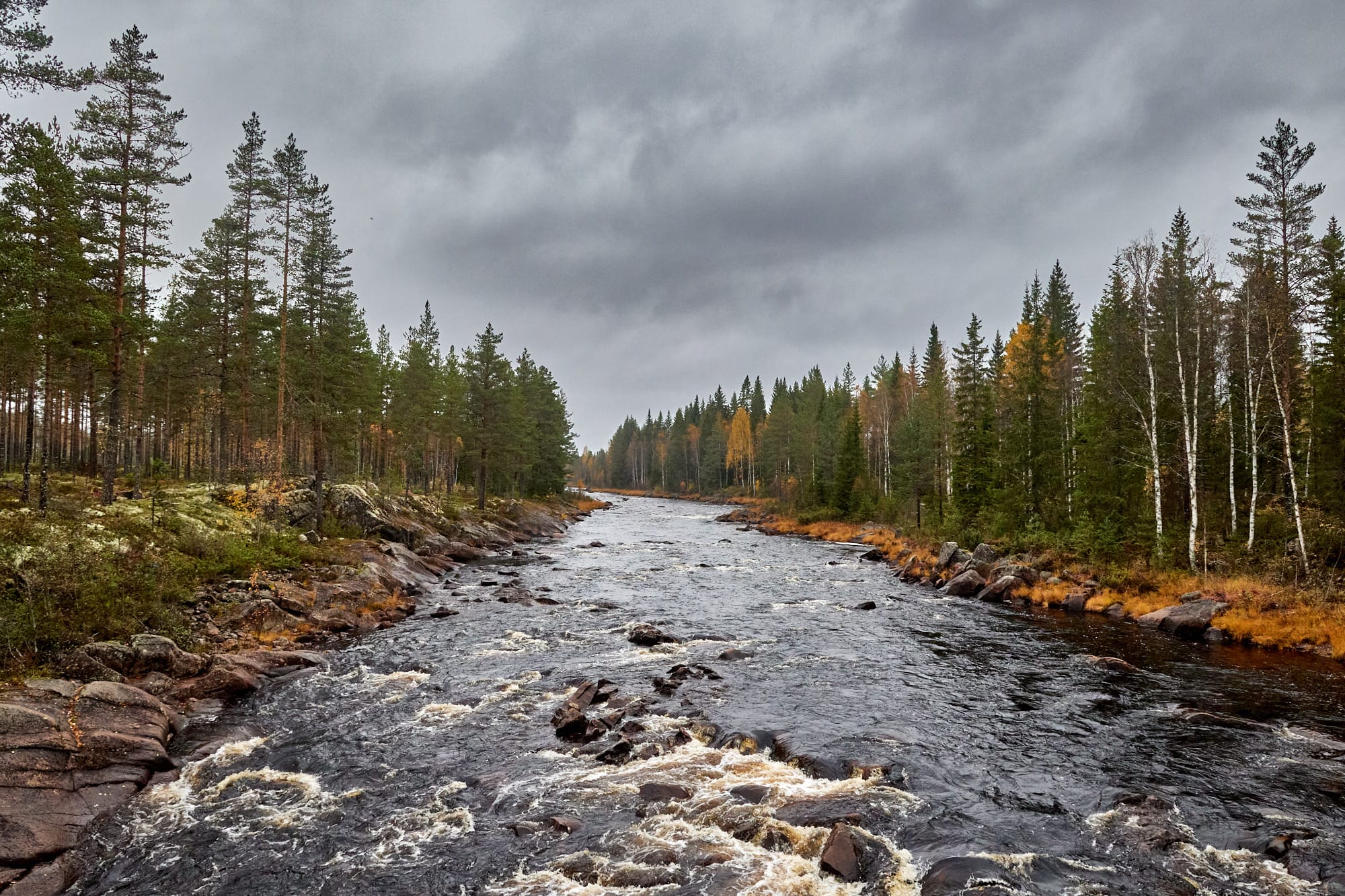
Finnskogen is a geographical name, but geography alone does not explain it. Its forests extend across the Norwegian–Swedish border, through a landscape of lakes, woodland, scattered settlements and roads that often seem to belong to the terrain rather than impose themselves upon it.
For a visitor arriving from elsewhere, the first temptation is to describe the silence. Yet silence is a poor measure of a place whose history is unfamiliar to us. What appears empty may have been cultivated, crossed, named, defended, abandoned, remembered and inhabited over centuries.
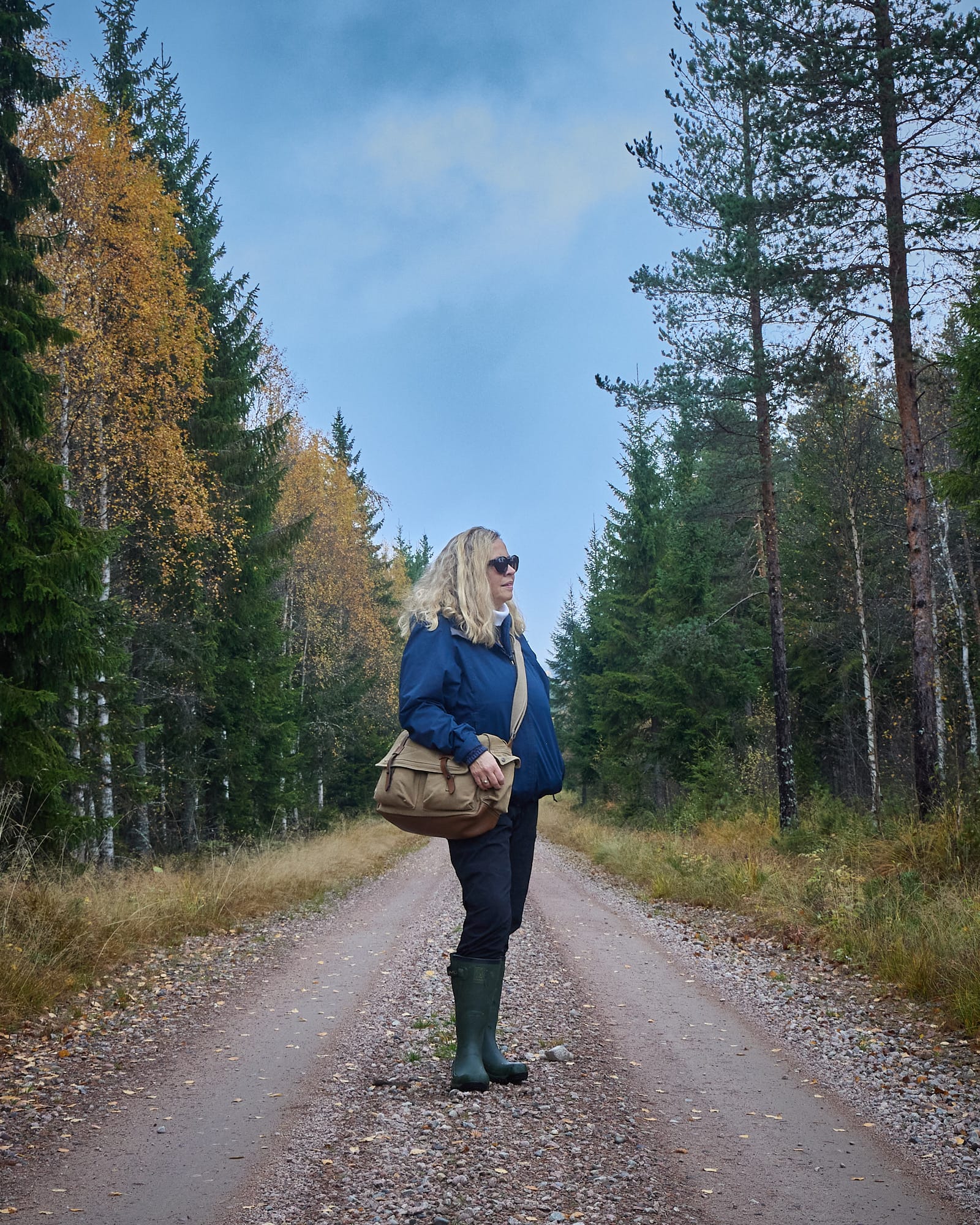
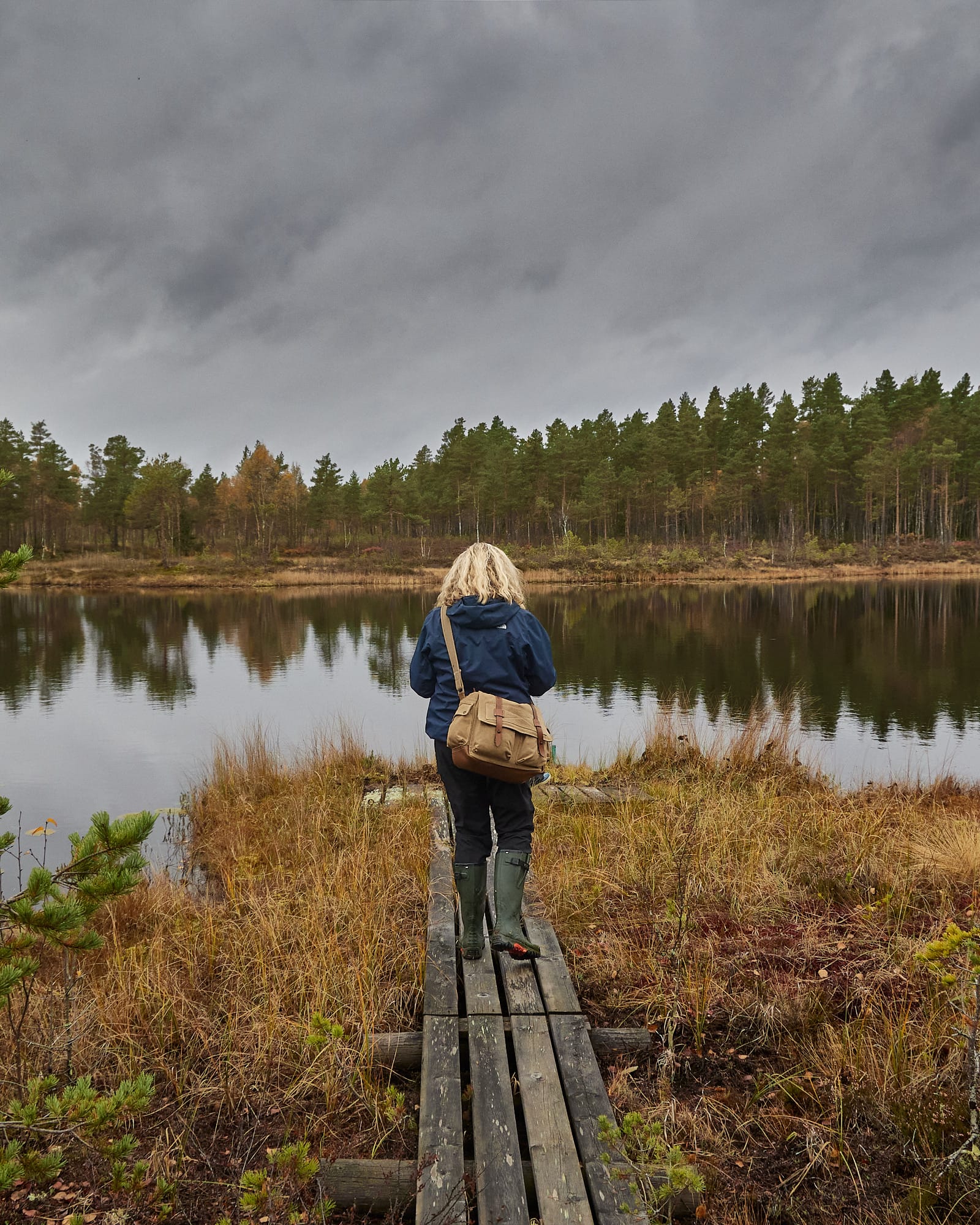
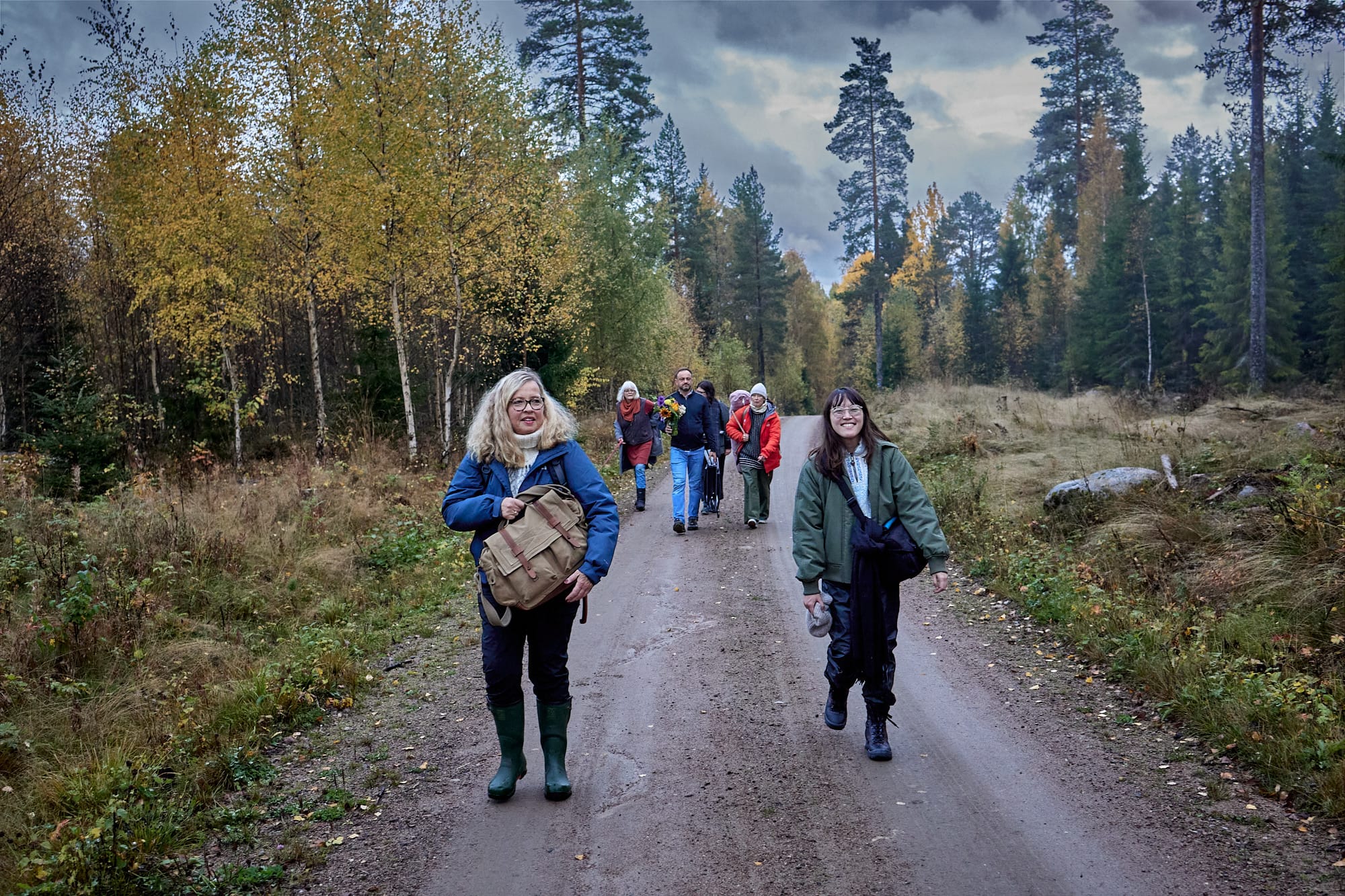
Exploring Finnskogen. Ann-Jorid walks along a forest road and pauses beside a small lake in the Norwegian-Swedish borderlands. Between dense woodland, open water, and the first colors of autumn, the landscape reveals the quiet diversity of a region whose history has long been shaped by its forests.
The forest has been a source of timber and fuel, a place for hunting and gathering, a difficult environment in which to establish farms, and a territory through which families and knowledge moved.
Its history is recorded in buildings and place names, in the remains of agricultural practices and in the memories of people who continue to identify with the Forest Finn heritage.
The distinction matters because the word "wilderness", so often used to describe northern landscapes, can erase human history as effectively as a road can erase an old path.
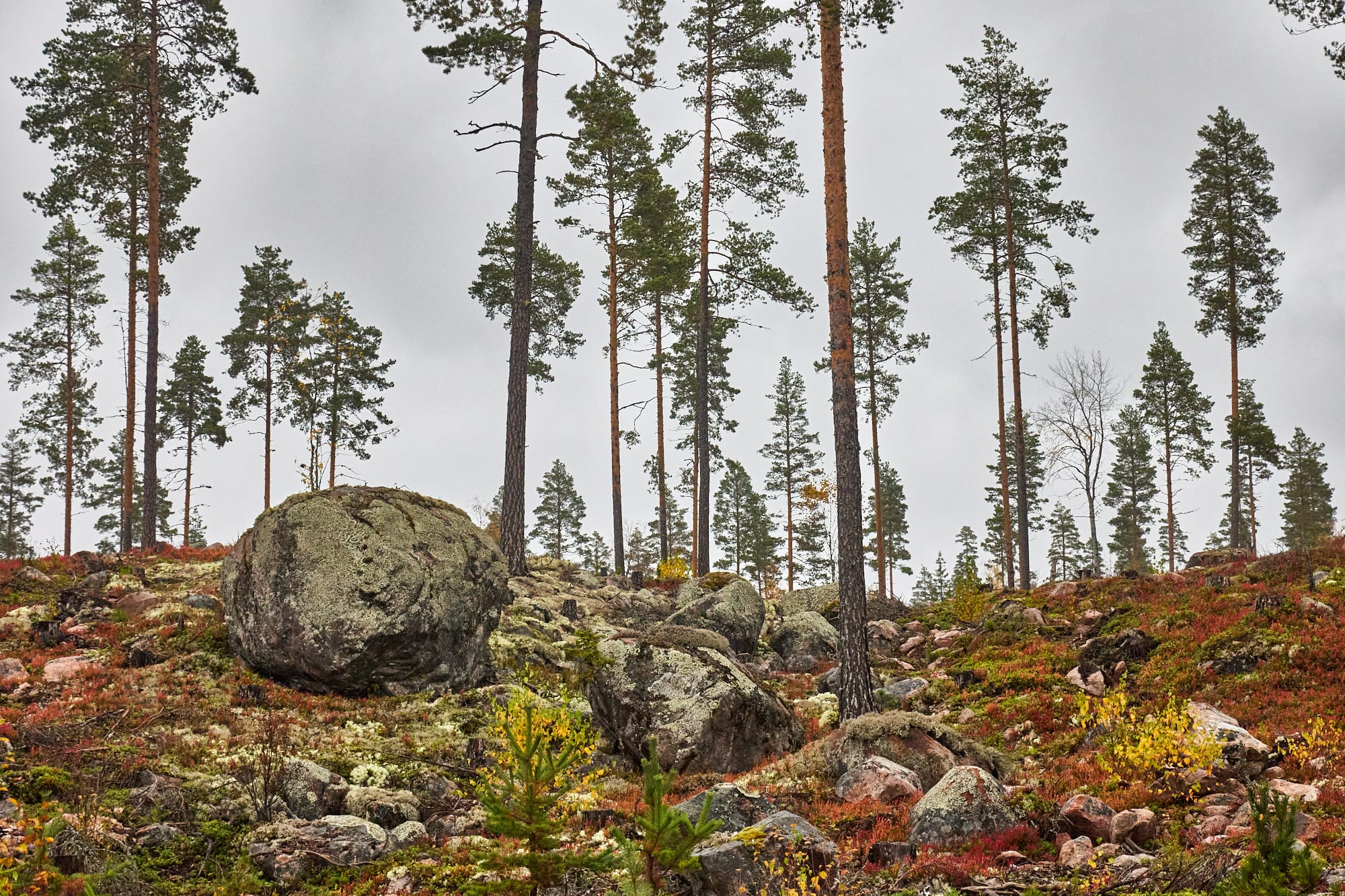
Finnskogen was never simply a distant green expanse awaiting discovery. It was a place where people made lives, where work required particular knowledge, and where the relationship between human settlement and the surrounding environment was negotiated every day.
Today, the border between Norway and Sweden gives this territory two national administrations, but its Forest Finn history precedes the modern understanding of that division. The landscape belongs to a cultural geography that cannot be reduced to a line on a map.
The people who came from the east
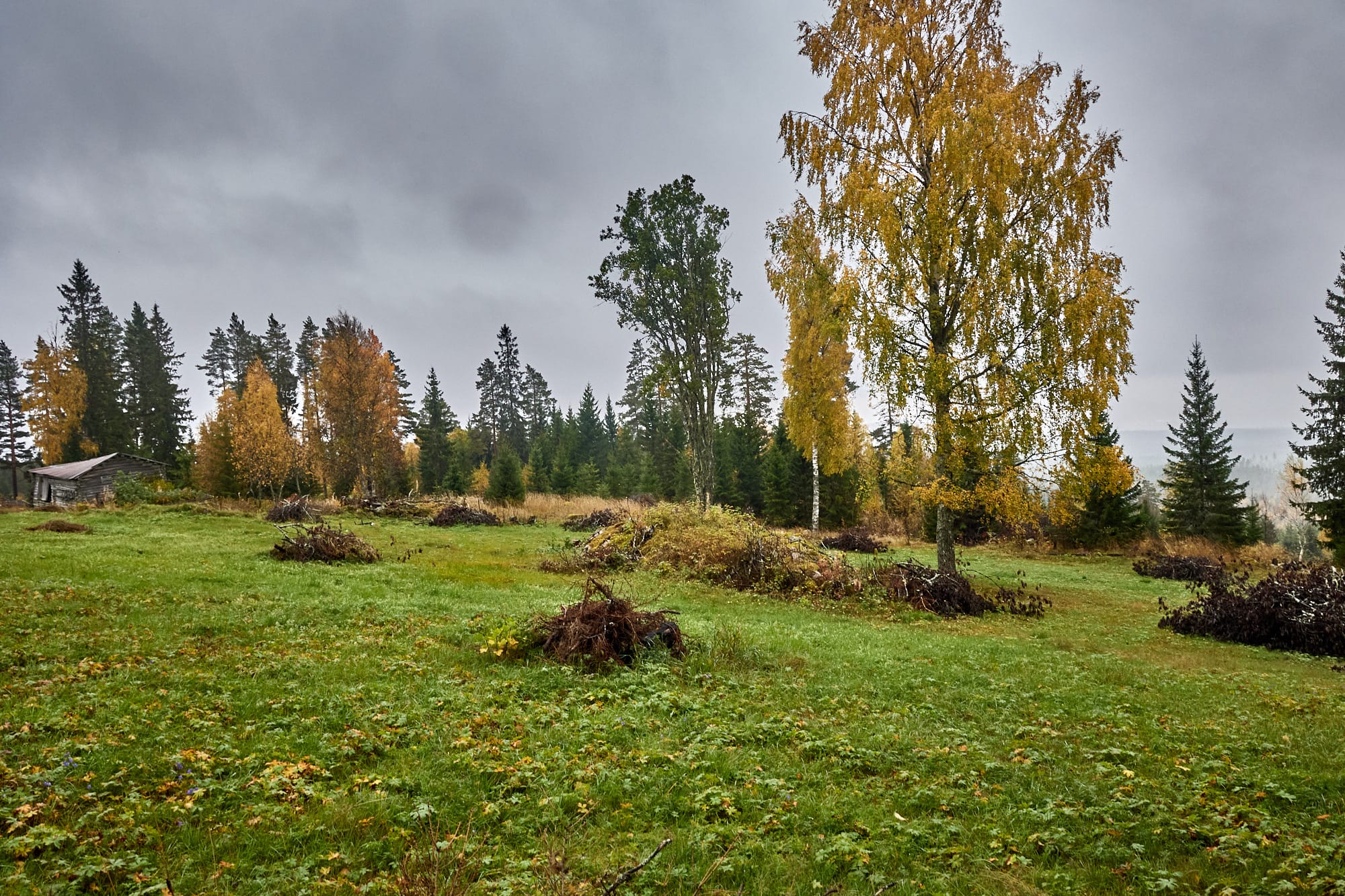
Beginning in the late sixteenth century and continuing into the seventeenth, Finnish-speaking farming families migrated westward from regions of eastern Finland, particularly Savolax, into the forested areas of Sweden and what is now Norway.
They brought agricultural knowledge suited to particular kinds of woodland, together with their language, household practices, beliefs and ways of organizing family and community life. Over time, these migrants and their descendants became known as Forest Finns.
The journey was part of a larger history of migration, settlement, opportunity, hardship and changing political authority. It should not be imagined as a single movement of one people from one place to another.
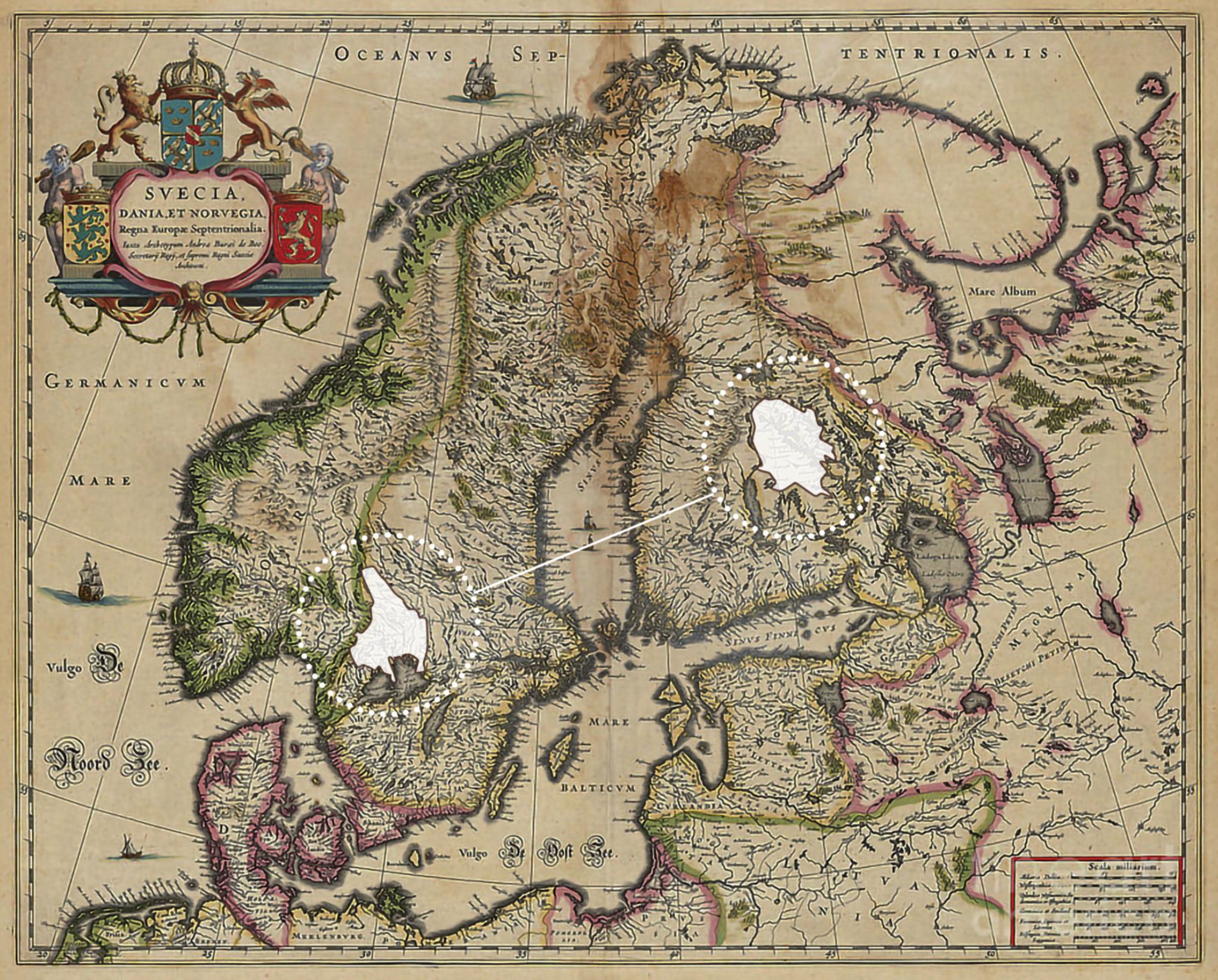
Families traveled at different times and under different circumstances, establishing settlements and adapting their practices to new environments.
One of the most distinctive elements of their agricultural life was a form of slash-and-burn cultivation associated especially with rye. Forest was cleared and burned, and the resulting ash helped create conditions for cultivation. This demanded extensive knowledge of trees, soils, seasons, weather and the time required for land to recover.
From a contemporary distance, the method may appear destructive. Its historical logic was more complicated. The cultivation system depended on particular forest conditions, labor arrangements and access to land, and it shaped both the landscape and the relations between settlers and surrounding authorities.
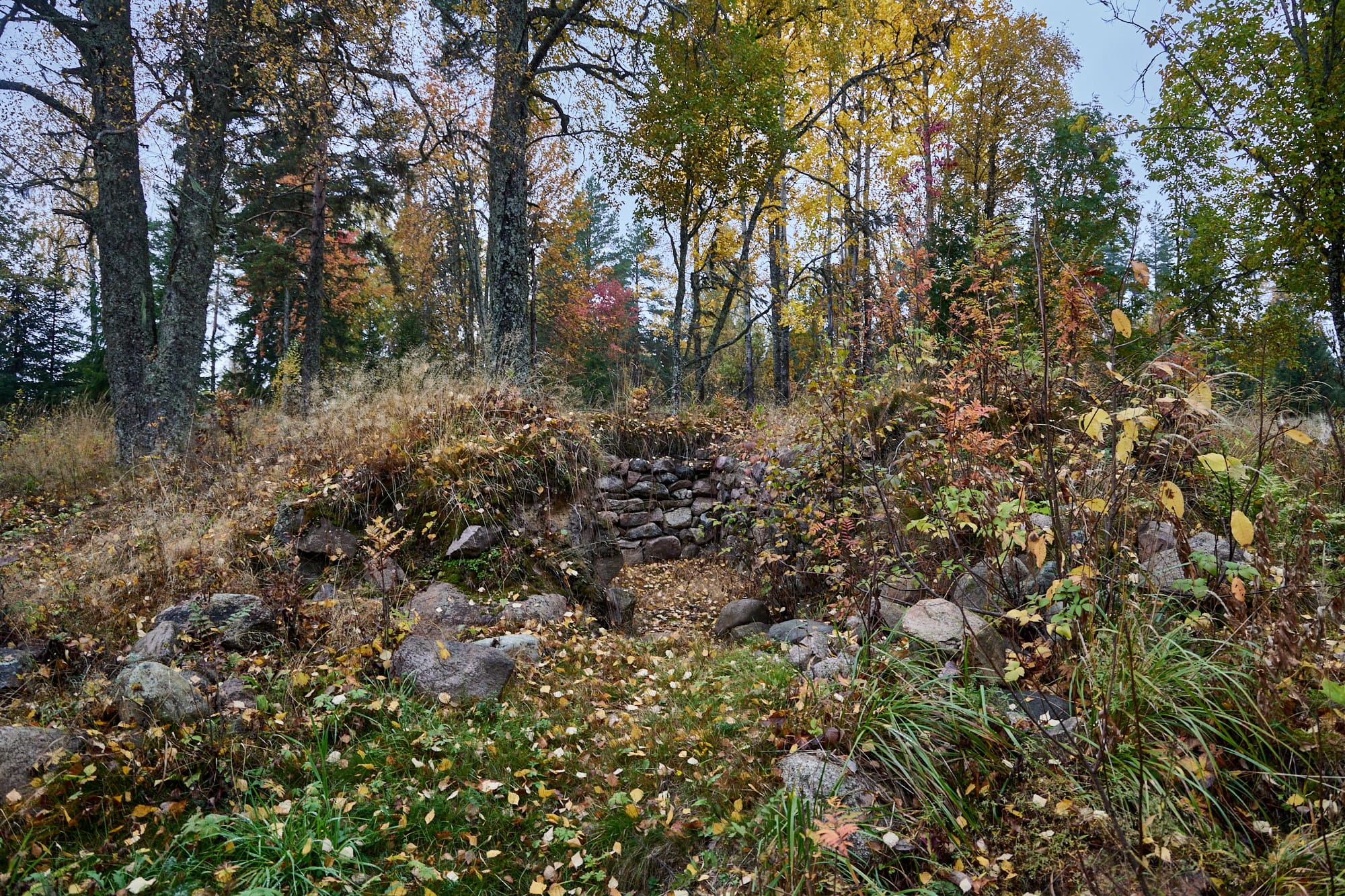
Fire, in this history, was a practical force before it became an image through which later generations might reflect on their ancestors.
The Forest Finns did not enter an uninhabited world. Their settlement took place within territories already governed, used and understood by other populations. Over time, their distinctive agricultural practices, language and cultural traditions became subjects of curiosity, negotiation, regulation and, in some periods, suspicion.
The history of Finnskogen therefore belongs to a wider European story: the movement of rural populations across borders, the adaptation of inherited knowledge to unfamiliar territories, and the gradual pressure exerted by states and dominant languages upon minority communities.
But the evidence of this history does not reside only in archives. It can still be encountered in wood.
Houses that remember the smoke
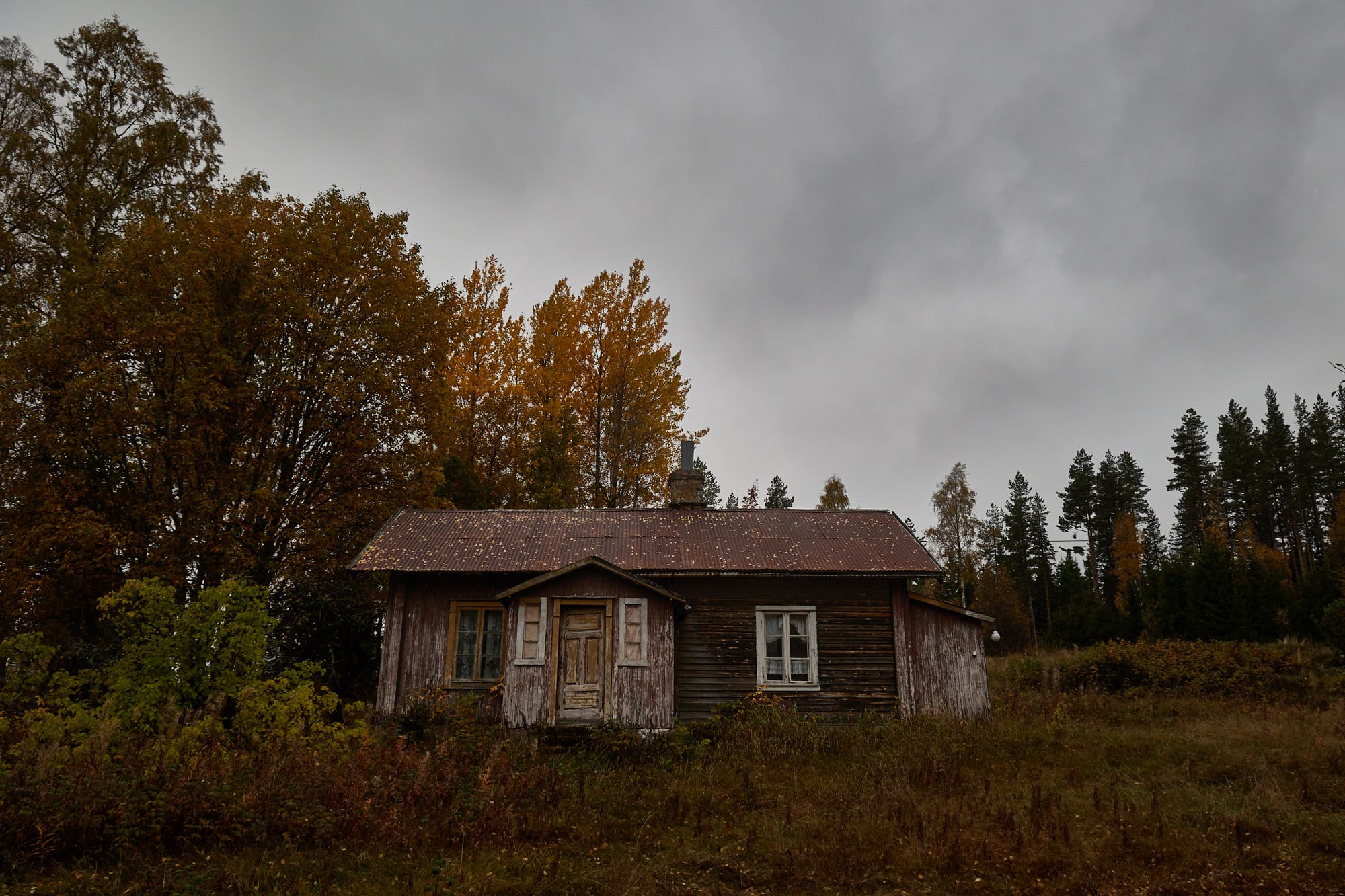
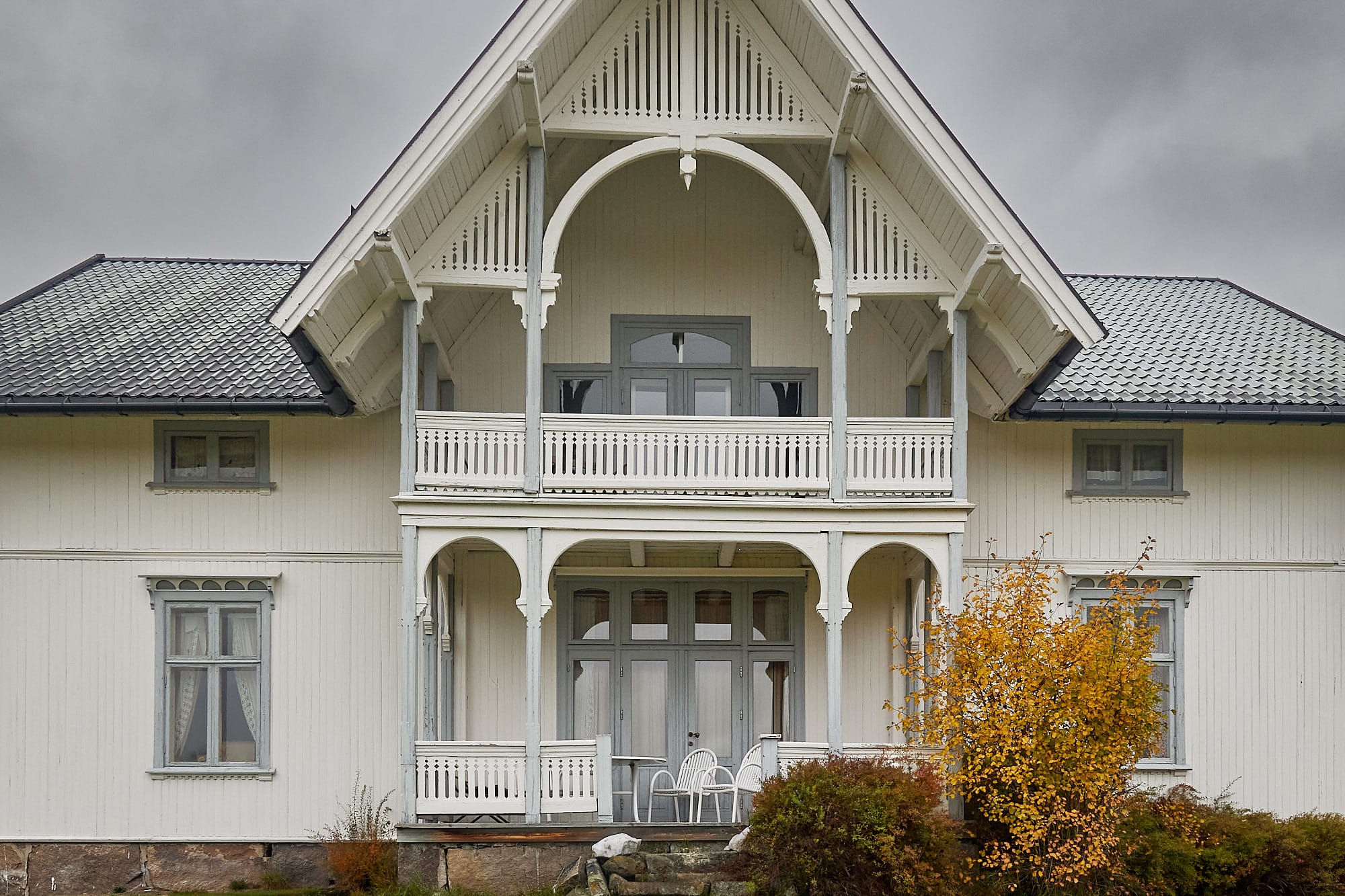
Among the characteristic buildings associated with Forest Finn settlement are smoke-heated dwellings, smoke saunas and structures used for drying grain.
Their architecture developed in close relationship with climate, available materials, agricultural practices and household life.
The røykstue, or smoke-heated dwelling, used a masonry stove without the conventional chimney arrangement familiar in many later houses. Heat accumulated in the structure, and smoke was managed through the design and use of the interior.
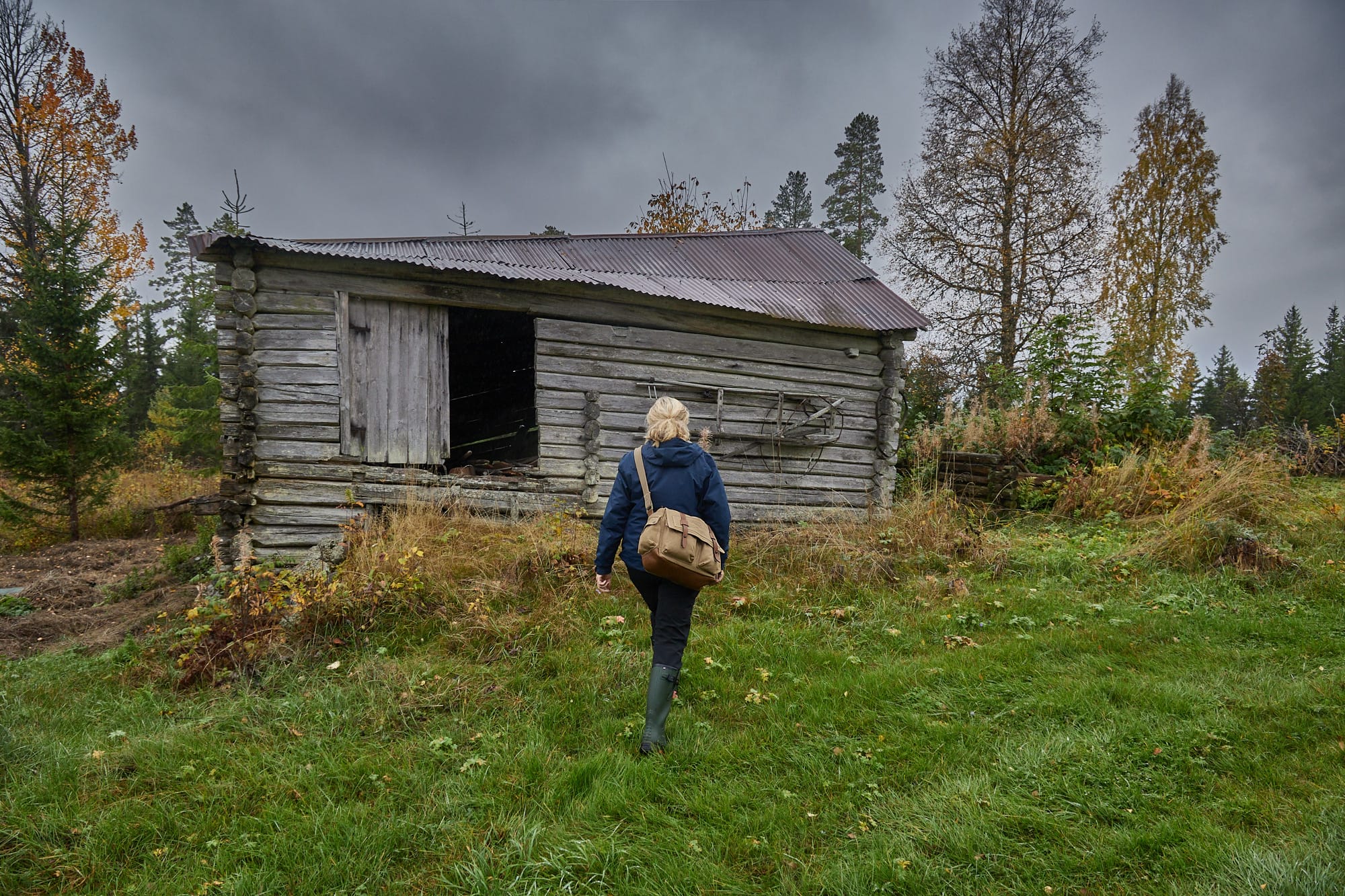
Such buildings tell us something about the intelligence embedded in everyday construction. A house is an accumulation of decisions: how to retain warmth, where to store food, how to protect materials, how to organize labor and family life.
The smoke sauna, likewise, occupied a place in domestic and social practice. In Finnish cultural traditions, saunas have been associated with washing, bodily care and significant moments in the human life cycle.
Where particular customs are attributed specifically to Forest Finn communities, they deserve careful historical documentation rather than automatic generalization from Finnish tradition as a whole.
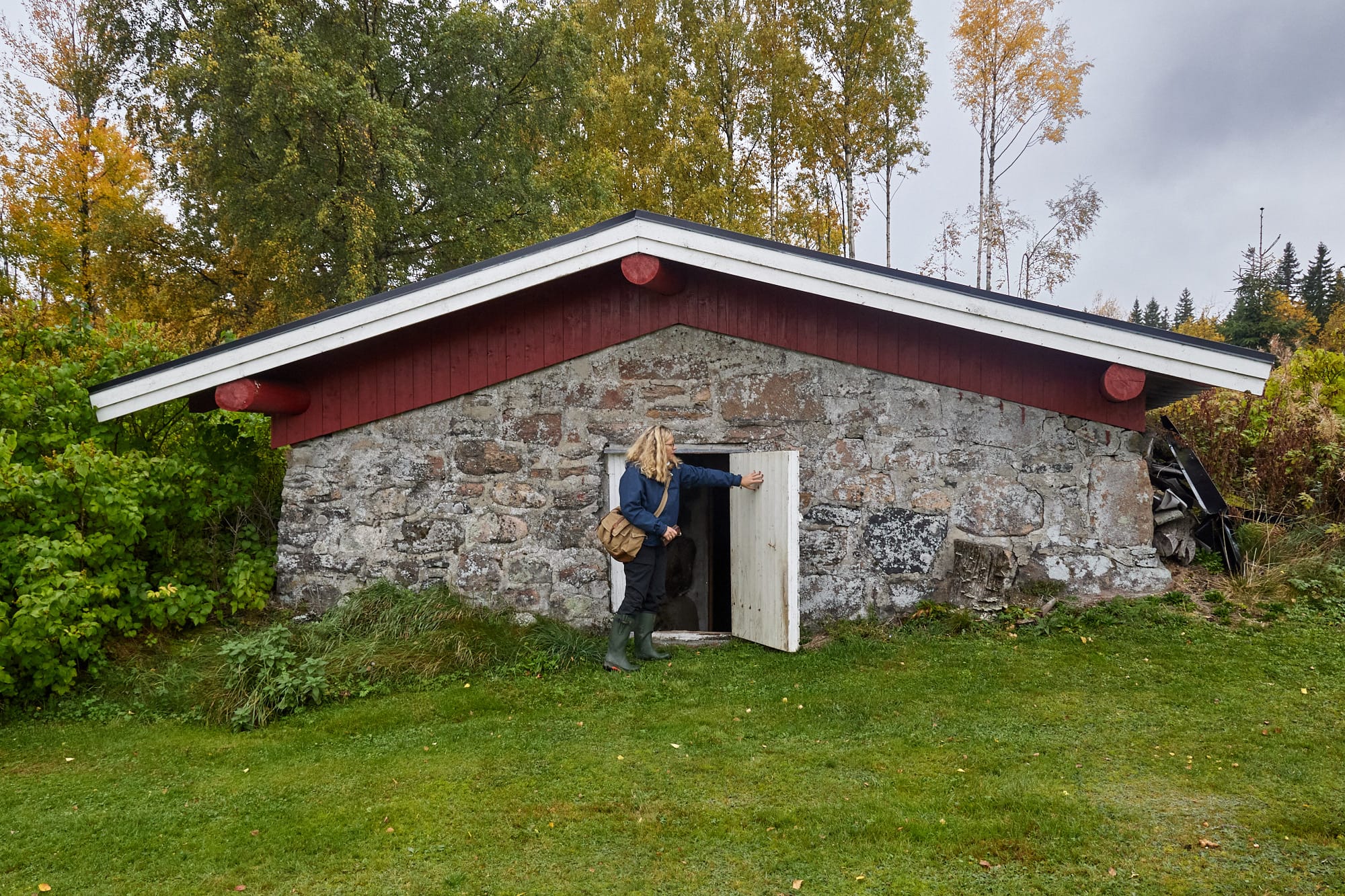
The old buildings of Finnskogen are therefore valuable for reasons extending beyond their appearance. They preserve evidence of how people organized their existence in a demanding environment, often using techniques and materials that required considerable skill.
Wood changes with time. Surfaces darken; roofs are repaired; buildings acquire additions or disappear. Preservation can slow these processes, but it cannot return a structure to the life it once contained.
A museum can protect a building. It cannot reproduce every conversation that occurred inside it, every winter spent near its stove, every decision made by the people who lived there. That absence is part of what makes the surviving architecture so important.
What a language leaves behind
For generations, Finnish remained part of life in Forest Finn communities, even as the surrounding societies spoke Swedish or Norwegian. Language carried practical knowledge, family relationships, place names, songs, beliefs and ways of describing the natural world.
Over time, assimilation and the growing authority of majority languages weakened its transmission. The old Forest Finn variety of Finnish eventually ceased to be a living community language in Norway.
A language rarely disappears in a single dramatic moment. Its retreat can occur across generations, through schooling, administration, marriage, employment, social pressure and the everyday calculations families make about their children's futures.
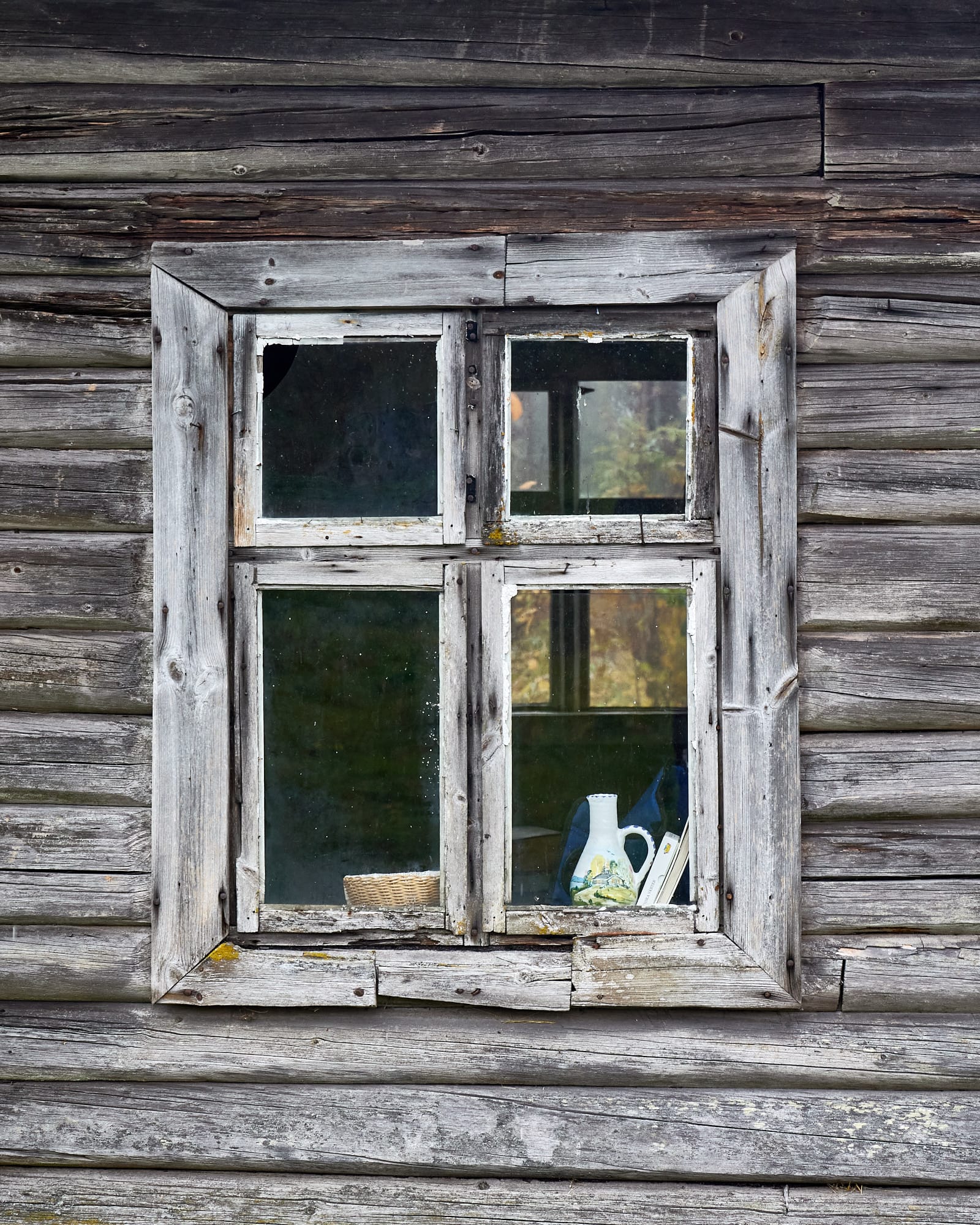
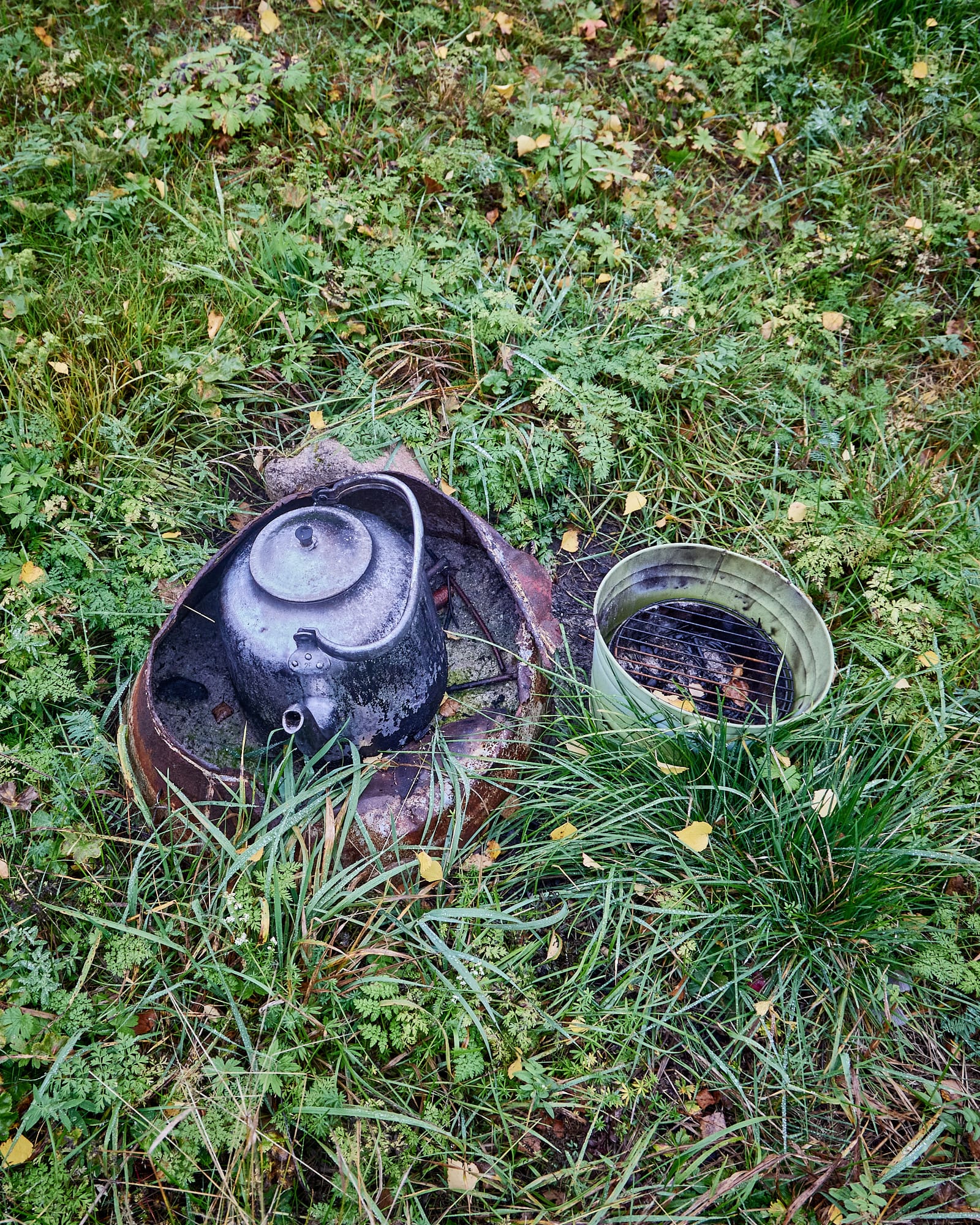
Traces of everyday life. Objects left inside and outside a traditional wooden house in Finnskogen: a jug and a basket behind the window, an old kettle resting among the grass. Small remnants of domestic life, preserved without ceremony as time and nature slowly reclaim the space around them.
The process may be difficult to recognize while it is happening. A grandparent knows words a grandchild no longer uses. A place retains a name whose meaning is no longer understood. A familiar expression survives without the larger linguistic world from which it came.
The loss is cultural as well as linguistic, because language preserves distinctions and relationships that cannot always be carried intact into another vocabulary.
Yet disappearance is never absolute. Words remain in documents, place names, recordings and recollections. Material objects retain names associated with their use. Historical research and community initiatives recover fragments of knowledge that earlier generations may have considered ordinary.

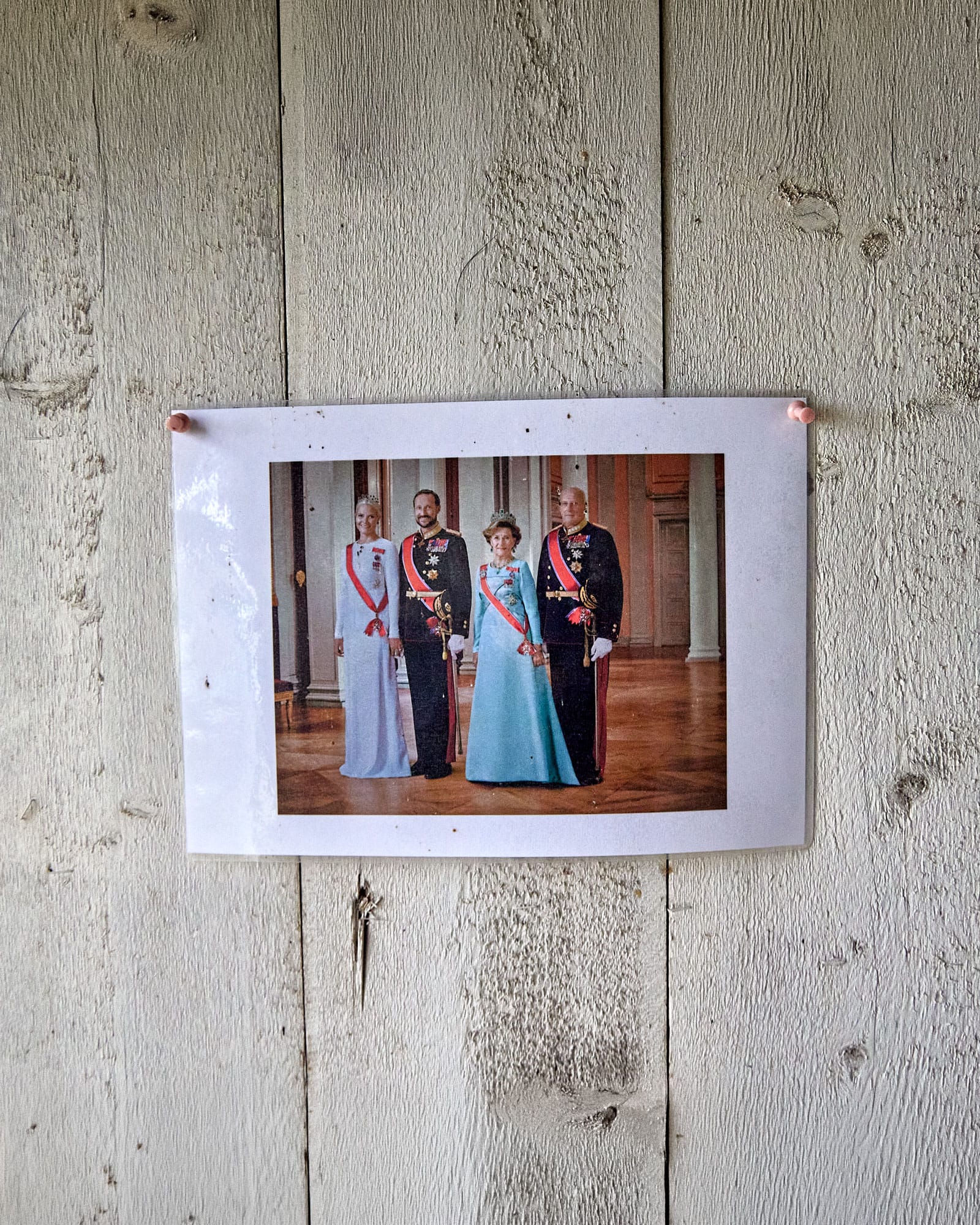
An unusual royal tradition. Inside an outdoor toilet in Finnskogen, a photograph of the Norwegian royal family recalls an old custom: before toilet paper became commonplace, newspaper pages were often used instead. A royal portrait served as a reminder never to use a page bearing the monarch’s image.
In Norway, the Forest Finns are recognized as a national minority. That recognition has helped provide a public framework for cultural preservation, education and historical awareness, although recognition cannot by itself reverse centuries of language shift.
The present task is different from recovering an untouched past. No community can return unchanged to an earlier century, nor should its cultural identity depend on demonstrating that nothing has changed.
What can be done is to make knowledge available, to protect the evidence that survives, and to create circumstances in which younger generations can decide what this inheritance means to them. This is where museums become important. And where architecture, unexpectedly, enters the story.

A flag for a living culture
The Forest Finn flag was unveiled on December 29, 2022, after Forest Finn organizations in Norway and Sweden organized a joint design competition. Designed by Frédéric M. Lindboe and Bettina Gullhagen, it was conceived as a symbol of shared origin and belonging.
Its colors return to the landscape and practices that shaped Forest Finn life: green for the forest; yellow for the rye grown through slash-and-burn agriculture; red for fire and the rowan tree, traditionally regarded as sacred; black for the soot left by burning and for the darkened walls of smoke houses, smoke saunas, and drying barns. At its center, the black rhombus takes the form of an old Forest Finn fertility symbol.
The flag is recent. What it gathers is not: a history carried across borders, farms, names, buildings, and memory.
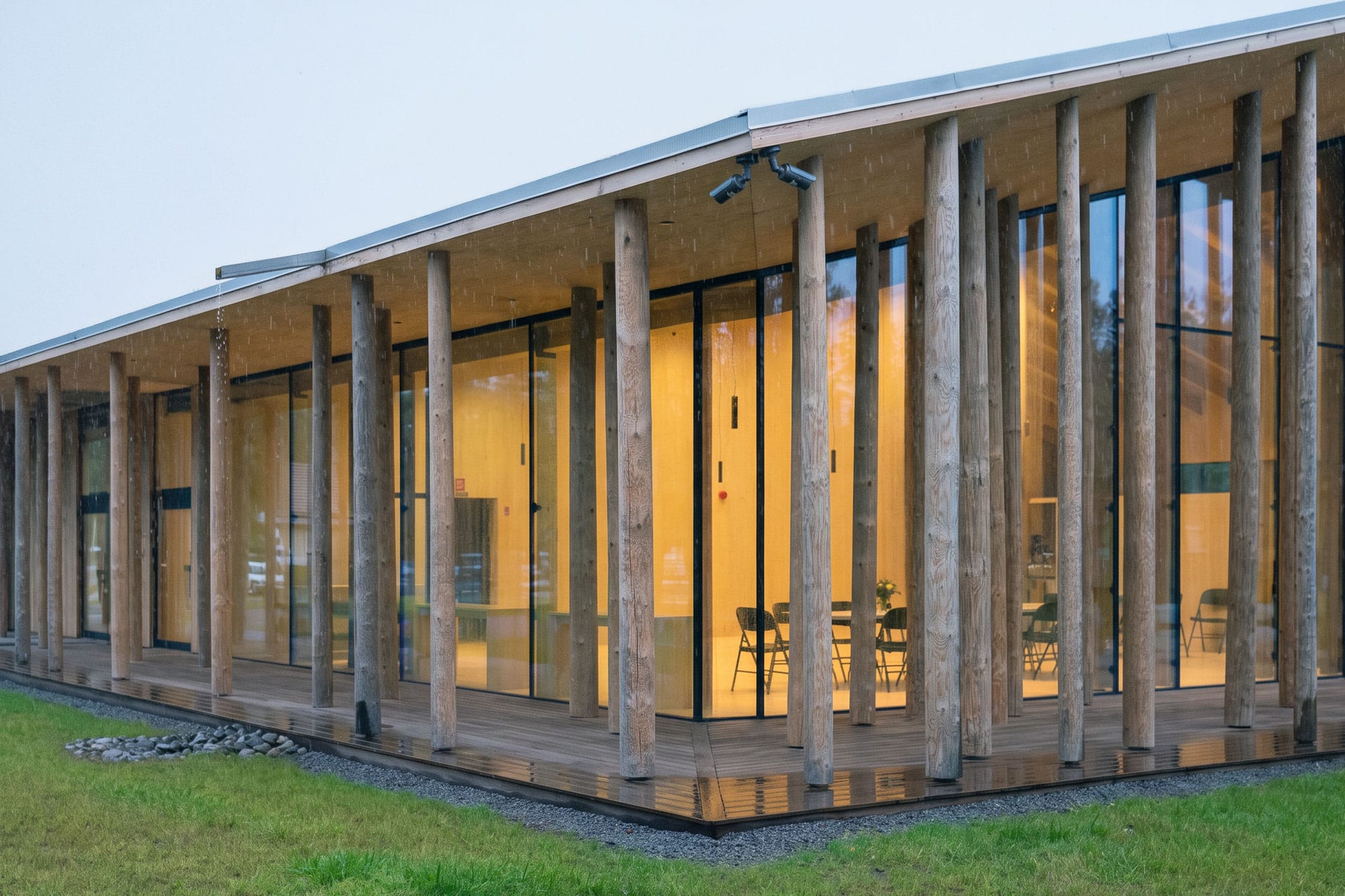
The architecture of memory
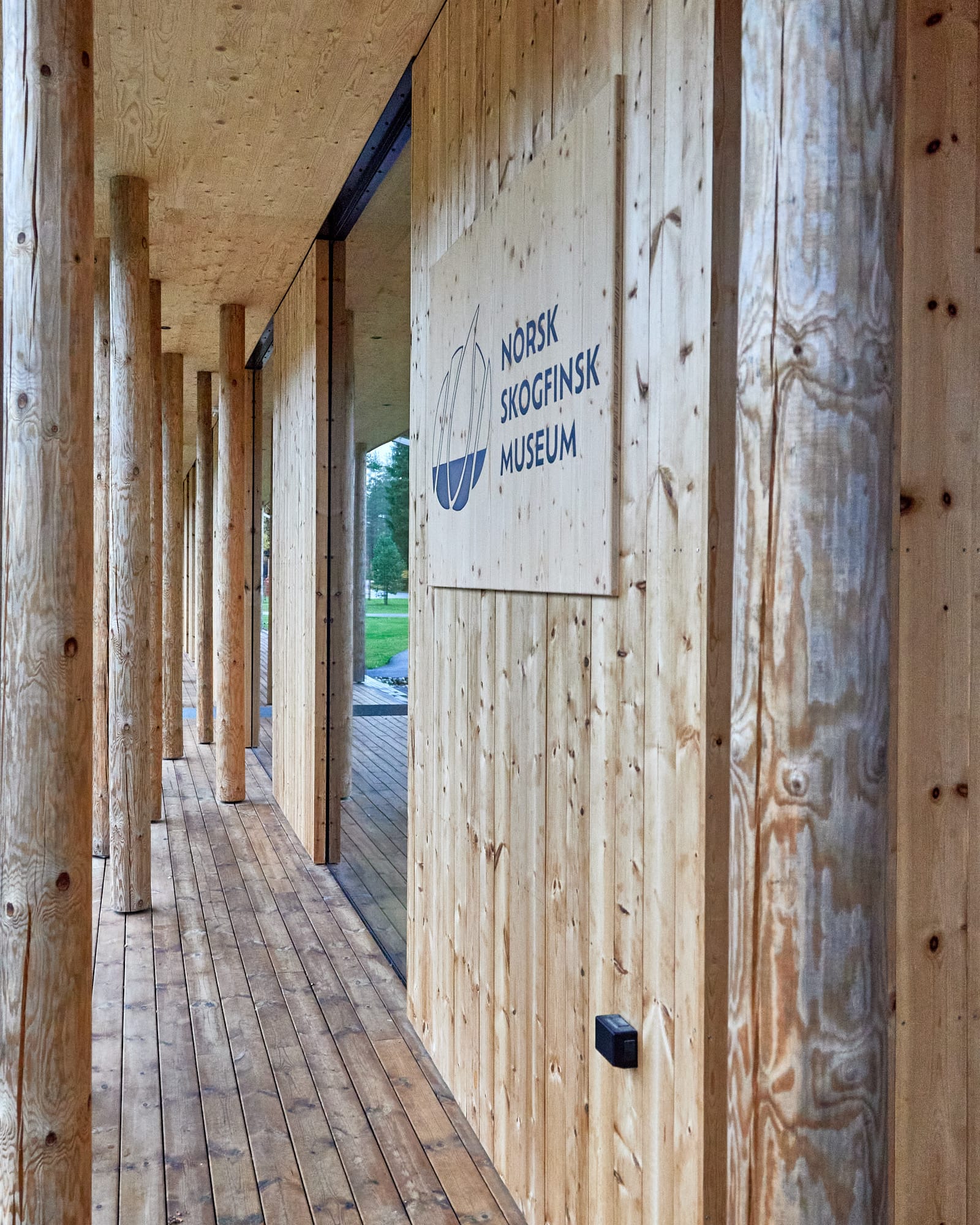
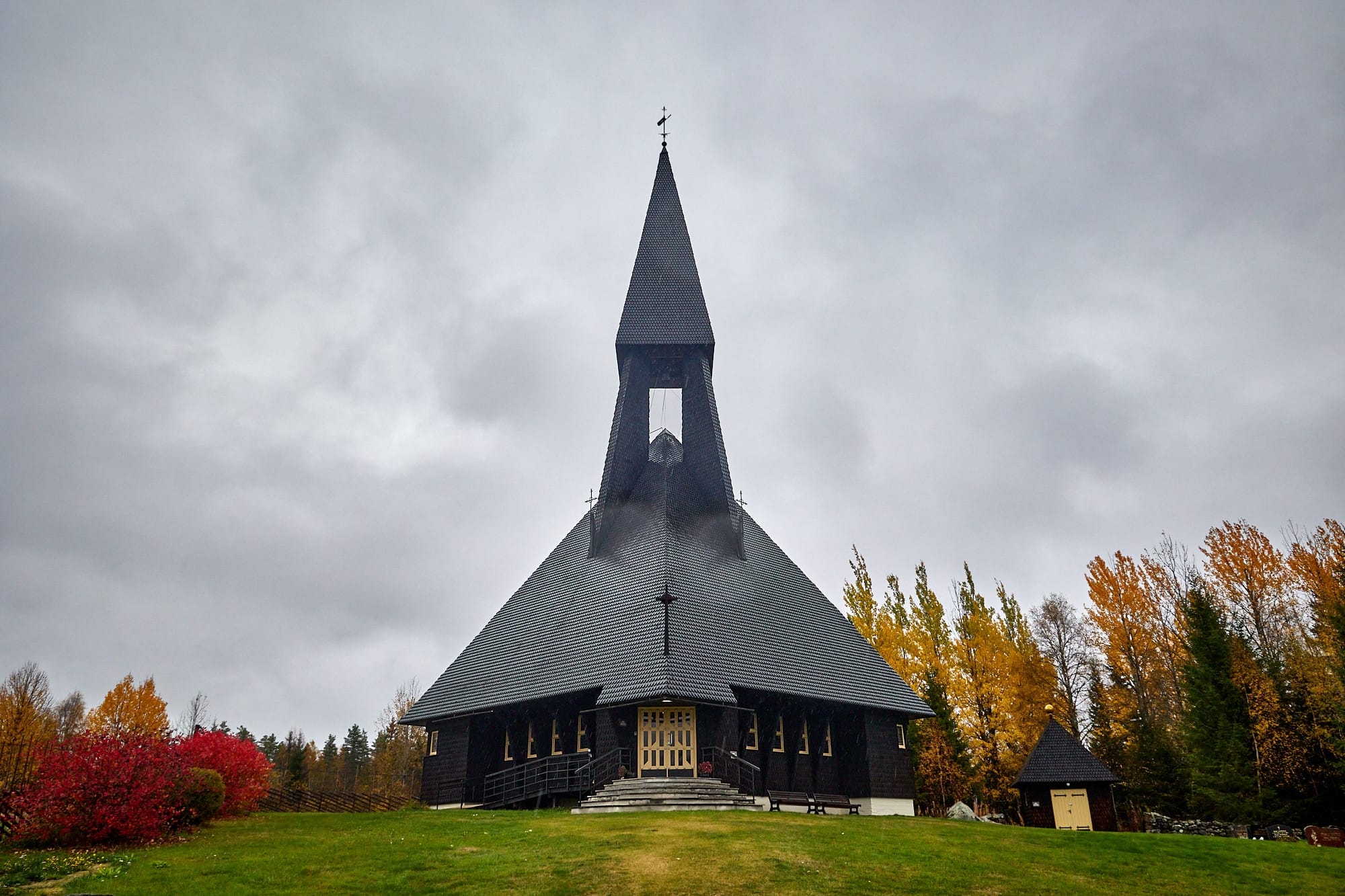
In Svullrya, the new Norsk Skogfinsk Museum introduces a different architectural language into the history of Finnskogen.
Designed by Lipinski Lasovsky Johansson — the team of Filip Lipinski, Juráš Lasovský and Hanna Johansson — the building emerged from an international architectural competition. Its conception draws upon the forest and the cultural history the institution exists to preserve.
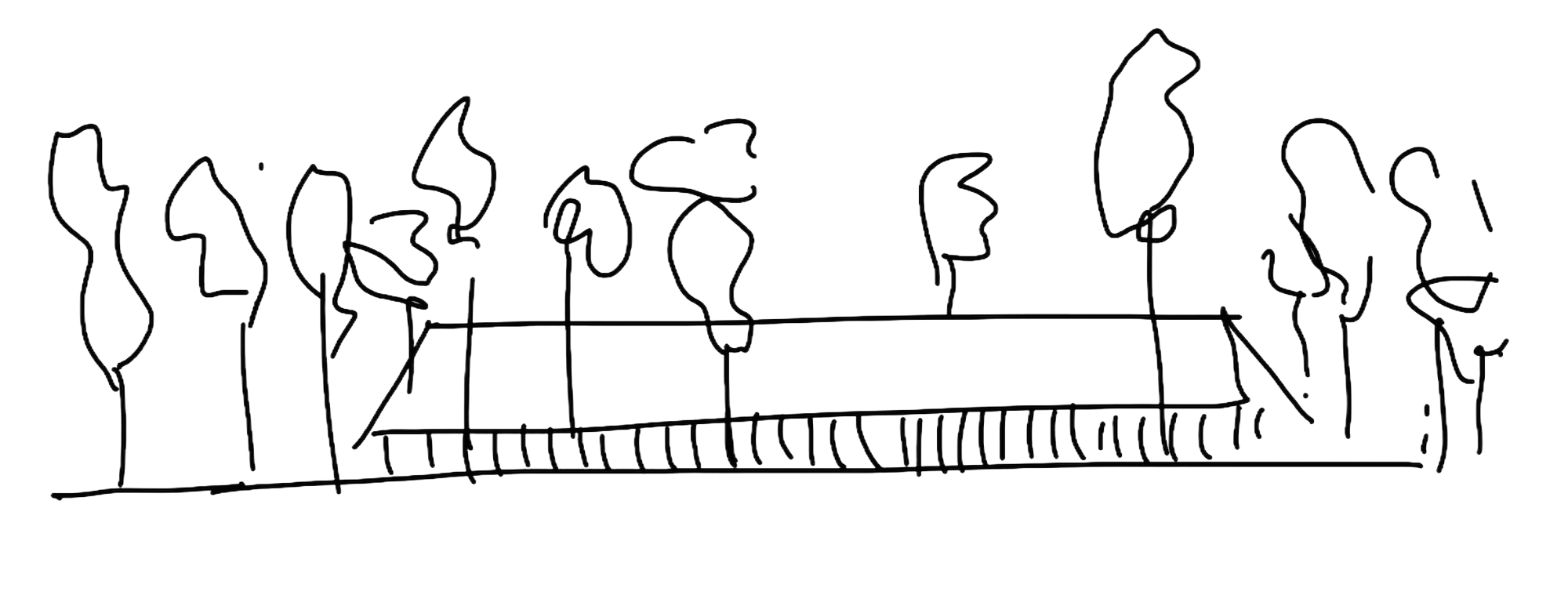
The project establishes a dialogue between contemporary architecture and inherited forms of knowledge. Its roof, columns, timber surfaces and spatial organization are intended to evoke relationships with the surrounding woodland and the building traditions of the Forest Finns.
There is something particularly compelling about the decision to make the forest an architectural reference. The museum is situated within a landscape whose trees once provided the materials for dwellings, agricultural structures, fuel and livelihoods. In the contemporary building, that relationship is reconsidered through design.
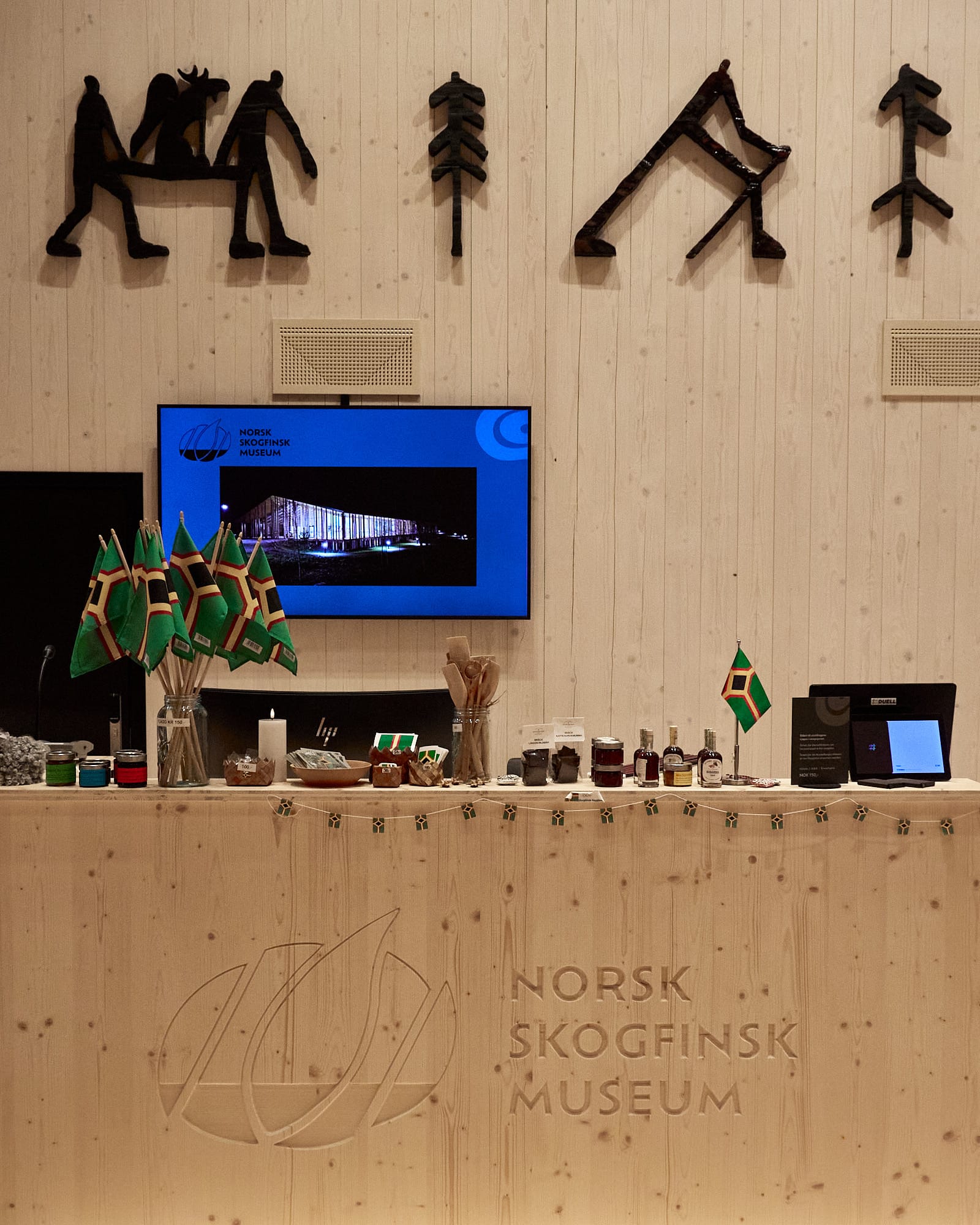
Symbols of an enduring tradition. The entrance and reception area of the Norsk Skogfinsk Museum. Above the counter, traditional symbols associated with Forest Finn folk beliefs recall a world in which protective signs, ritual practices, and knowledge passed between generations formed part of everyday life.
The architects' original proposal also explored the significance of charred wood, recalling the historical role of fire in Forest Finn agriculture.
The relationship between material and memory is especially suggestive here, although the precise correspondence between the competition proposal and the completed building should be checked against the final architectural documentation.
The museum raises a question that extends beyond Finnskogen: how should a contemporary institution represent a culture whose historical knowledge was largely developed through practice, language and oral transmission?
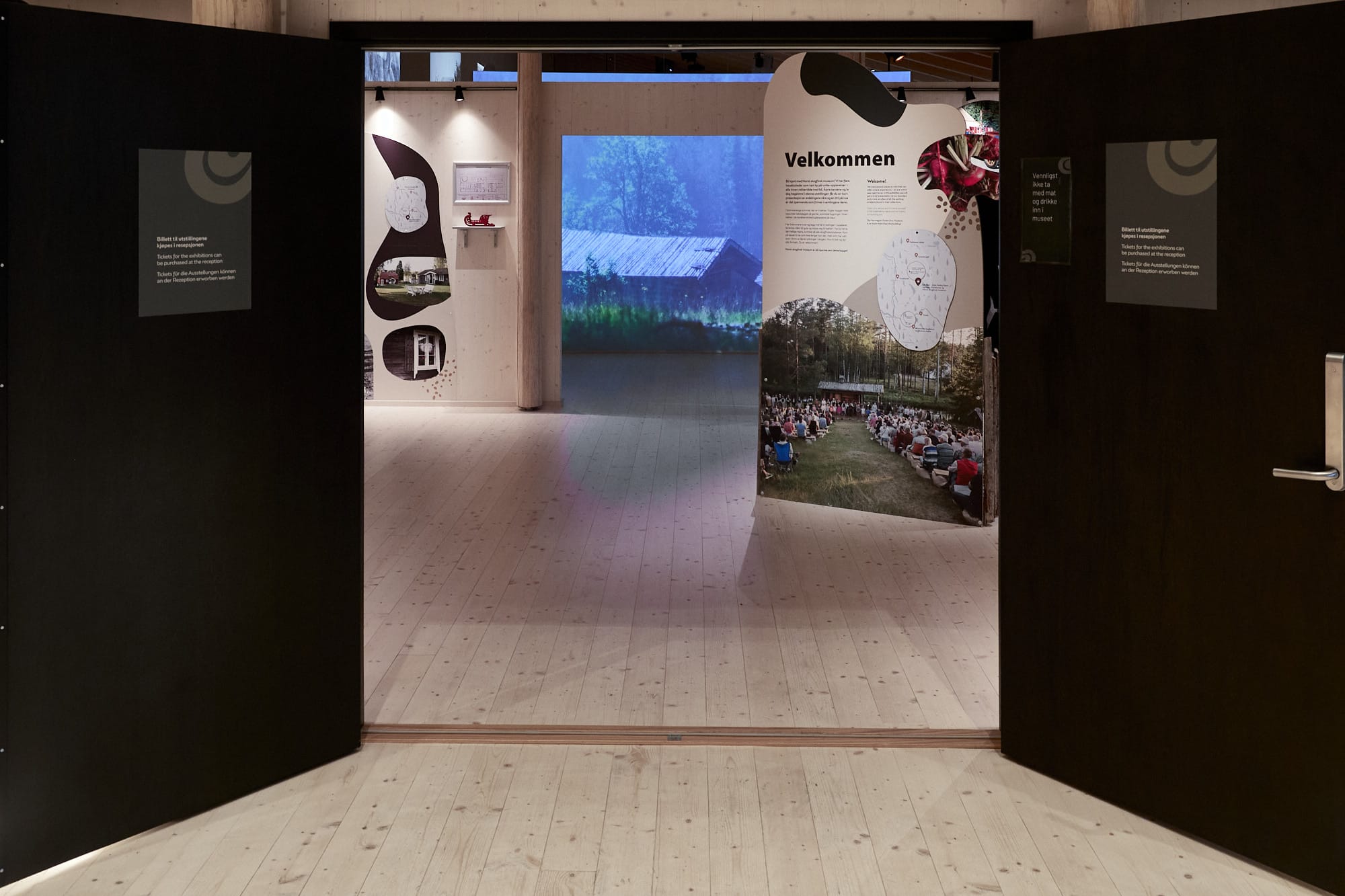
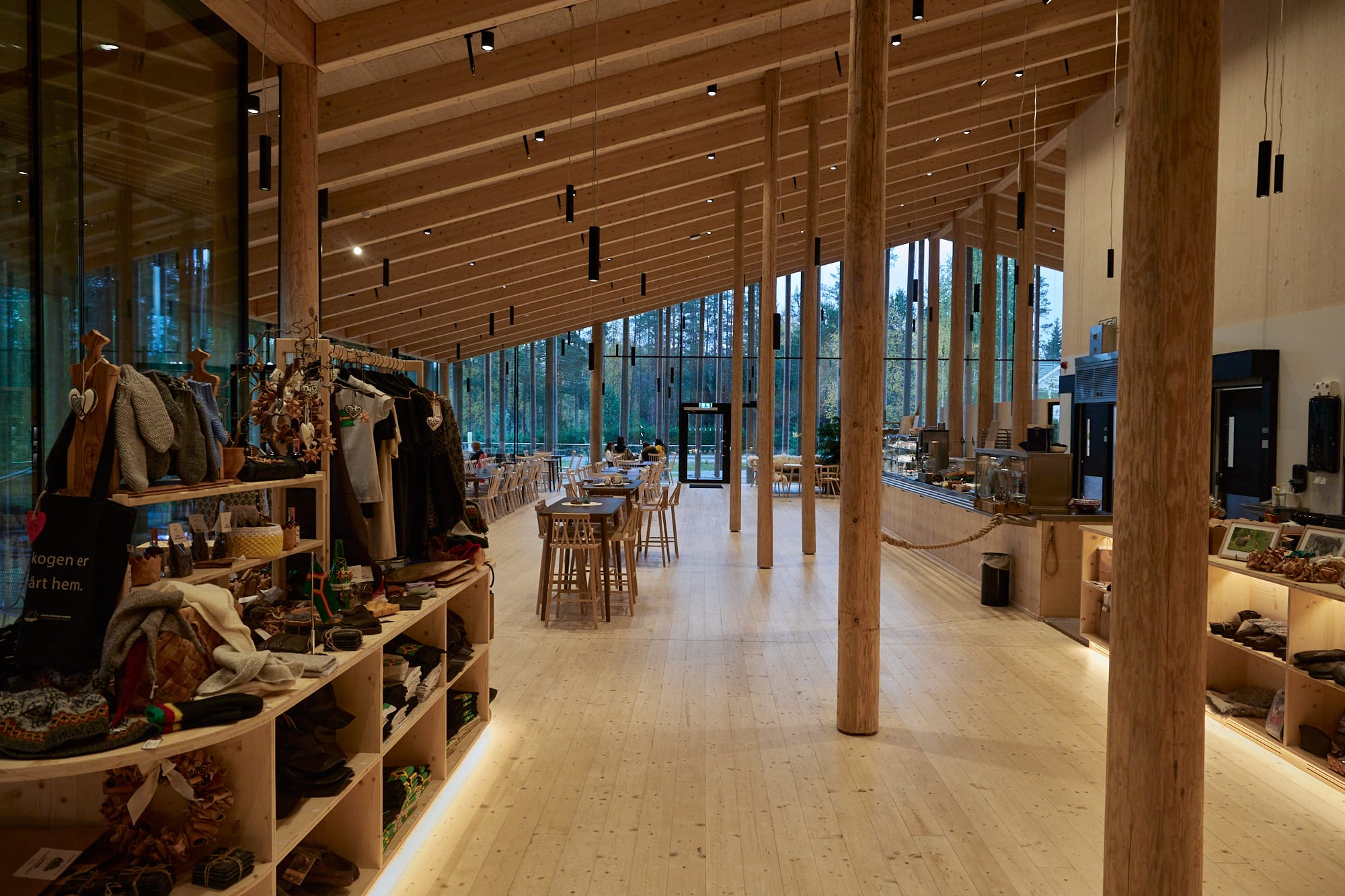
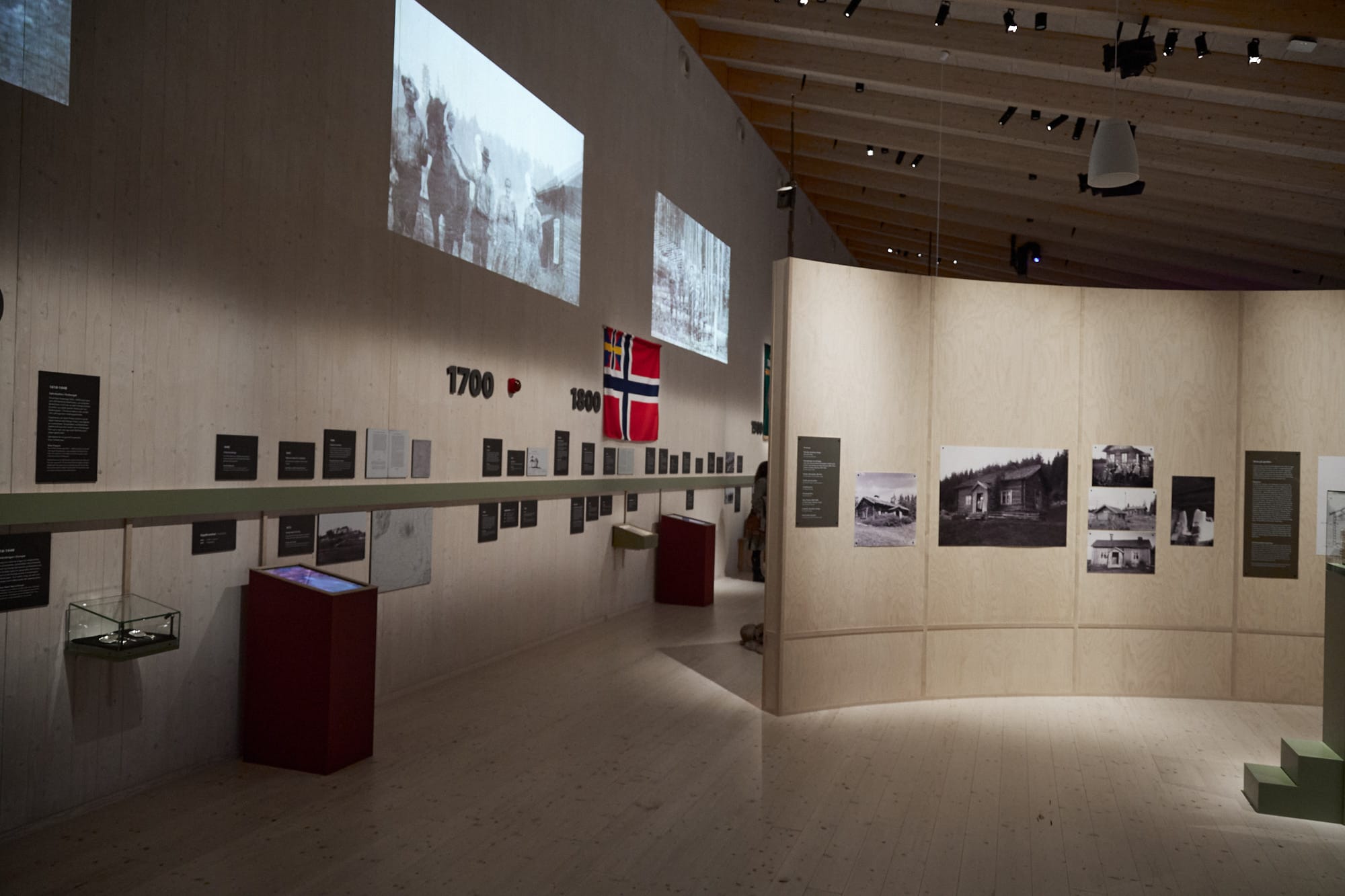
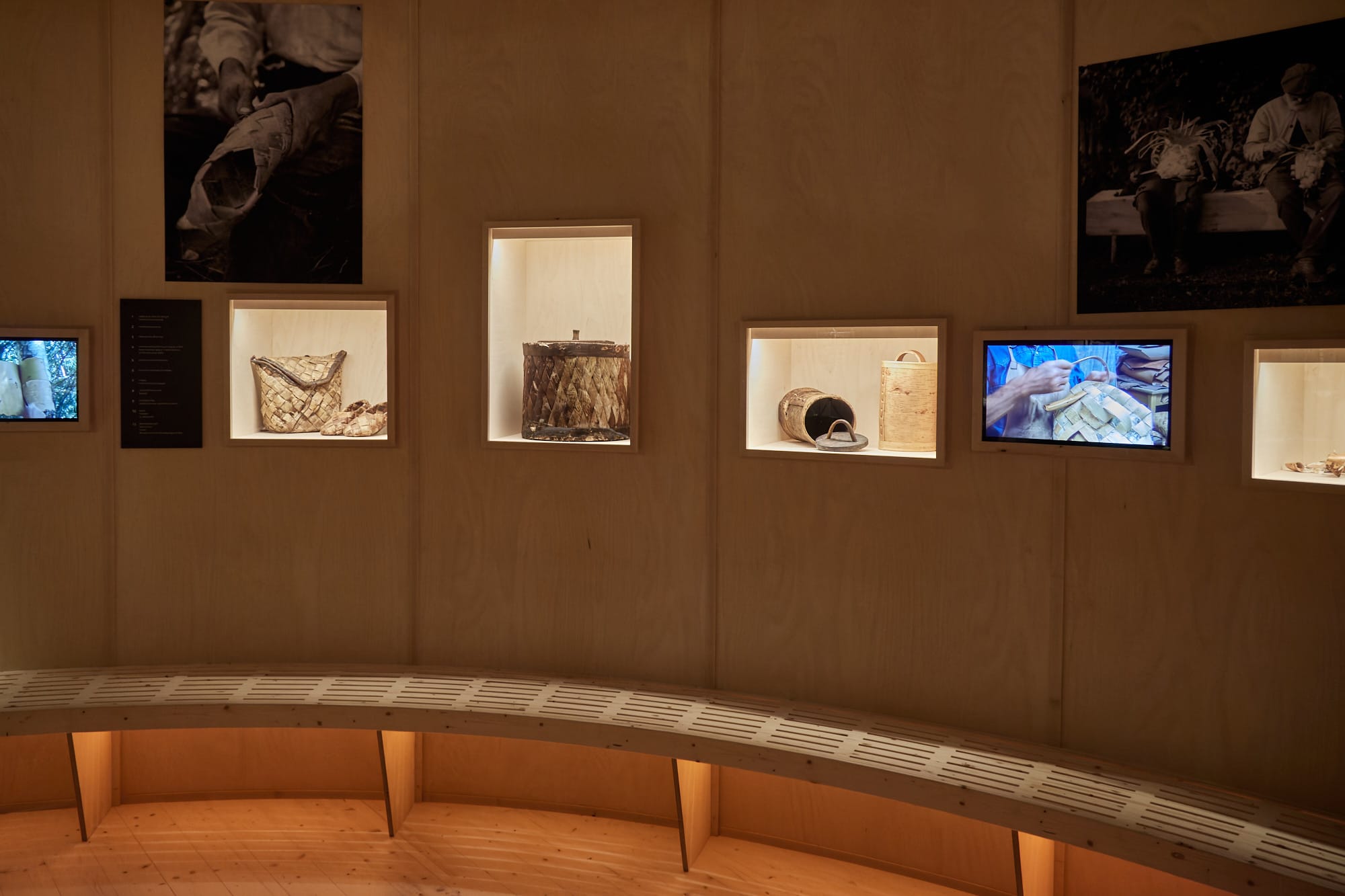
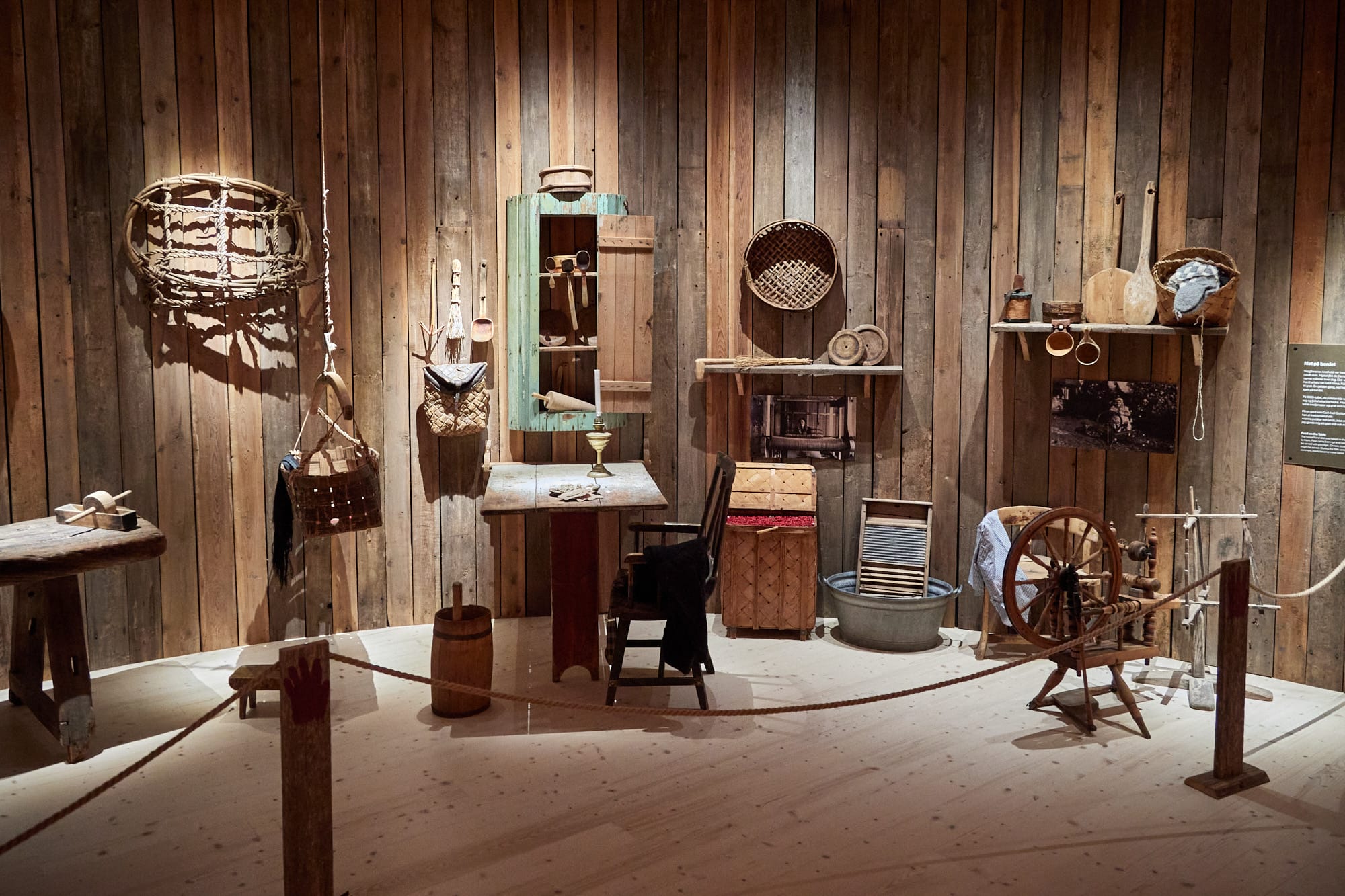
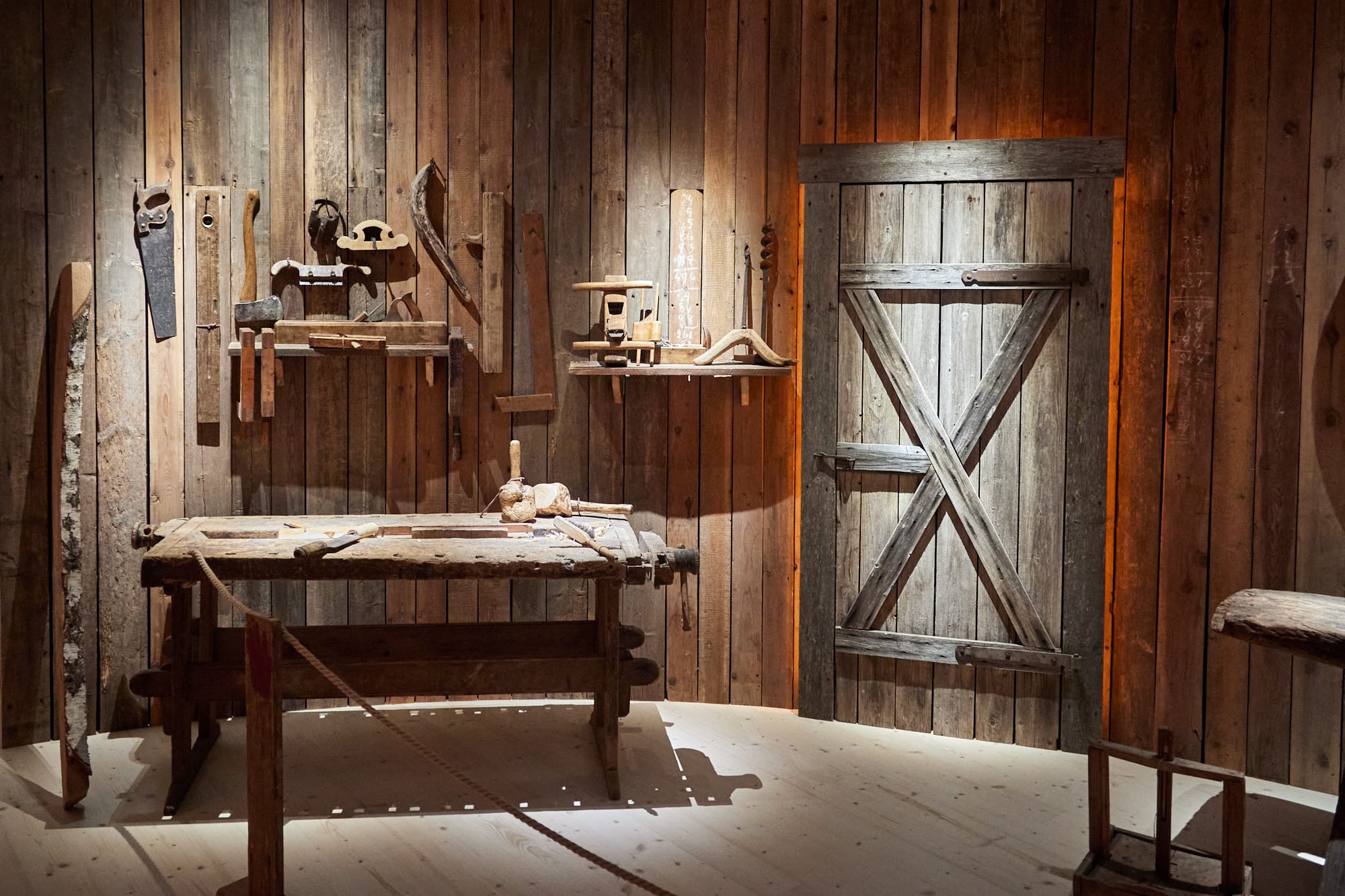
Inside the Norsk Skogfinsk Museum. The permanent exhibition traces the history of the Forest Finns through photographs, archival materials, traditional tools, and objects of everyday life. From migration and settlement to farming, craftsmanship, and cultural identity, the museum brings together the material evidence of a community whose history extends across the Norwegian-Swedish border.
A collection can preserve objects. An exhibition can explain their use. Architecture can create a physical setting in which these forms of knowledge are encountered together.
But a museum also makes choices. It decides what to display, which histories to emphasize, how to describe difficult periods and how to connect the past with the lives of people who identify with that heritage today.
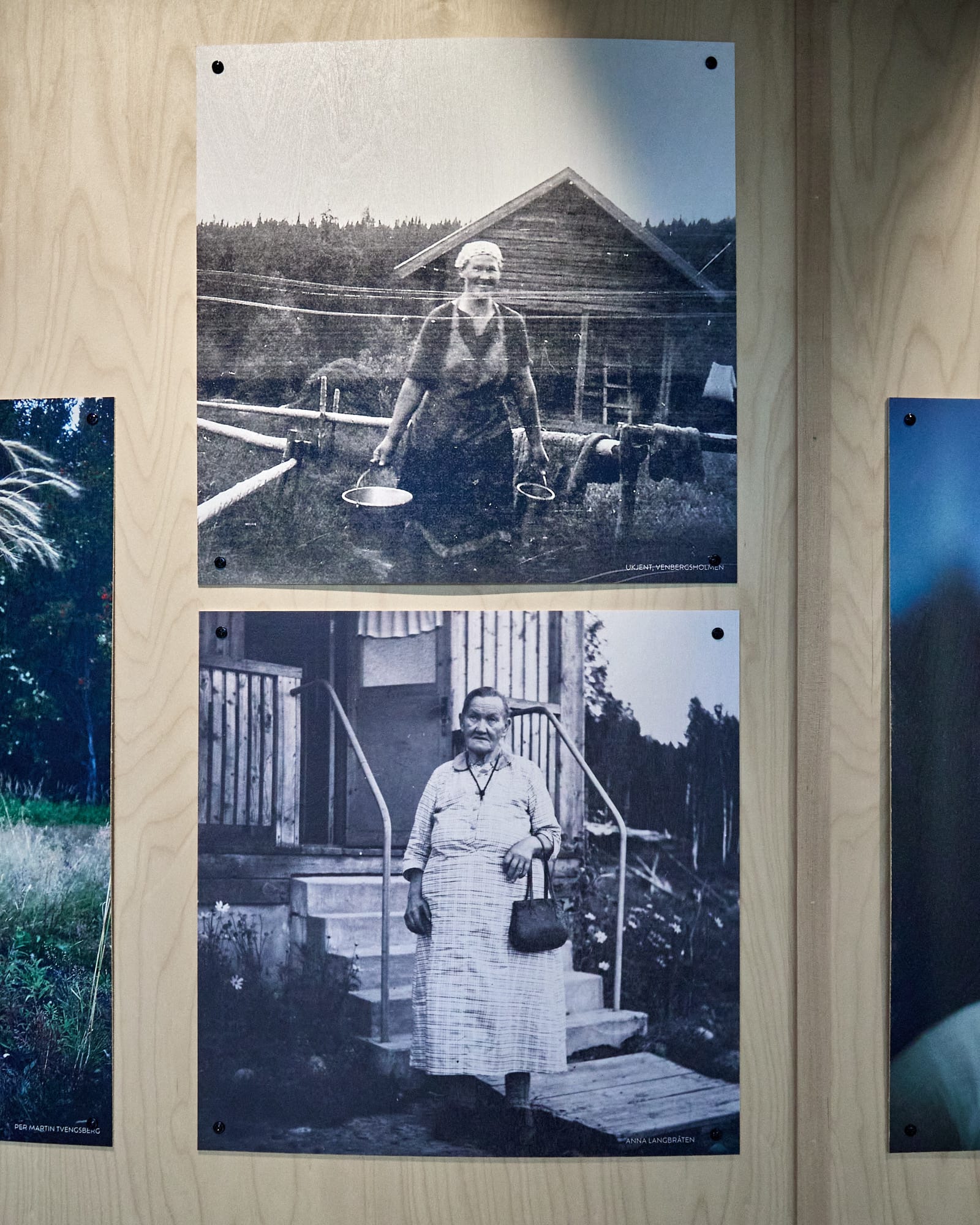
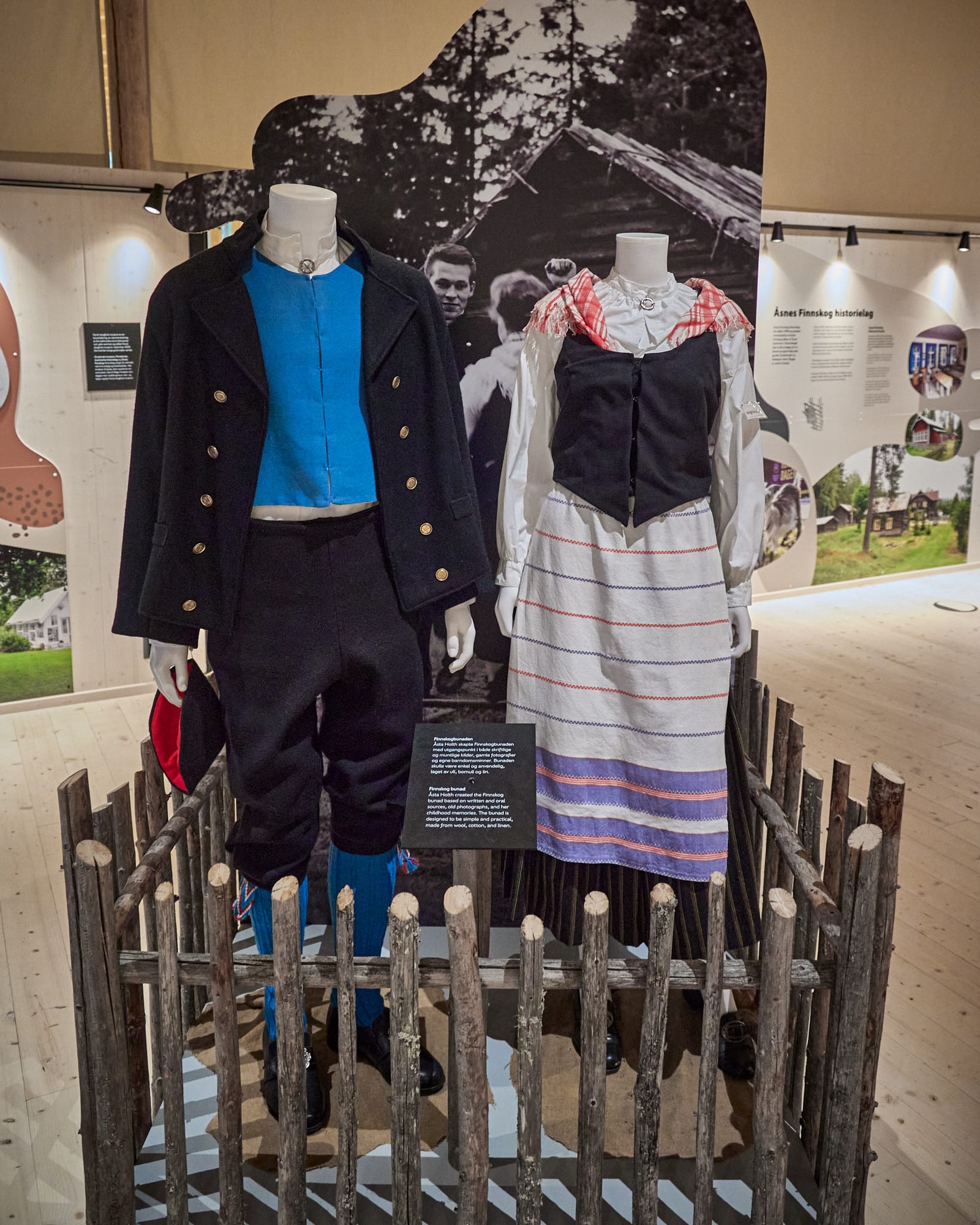
Faces and clothing of the Forest Finns. Historical portraits of Forest Finn women alongside traditional garments displayed at the Norsk Skogfinsk Museum. Together, the photographs and clothing offer a glimpse into everyday life, personal identity, and the ways cultural traditions were expressed and preserved across generations.
These choices are particularly consequential when the institution concerns a minority culture: the people whose history is being represented must remain participants in its interpretation, rather than become figures enclosed within a completed historical narrative.
For that reason, the new museum's importance cannot be measured by architecture alone. Its future will depend on the research, relationships, educational activities and cultural exchanges that take place within and around it.
The building offers a space in which such work can happen. And the forest remains immediately outside.
The smaller places of remembrance
Not every effort to preserve Forest Finn history takes place within a major cultural institution.
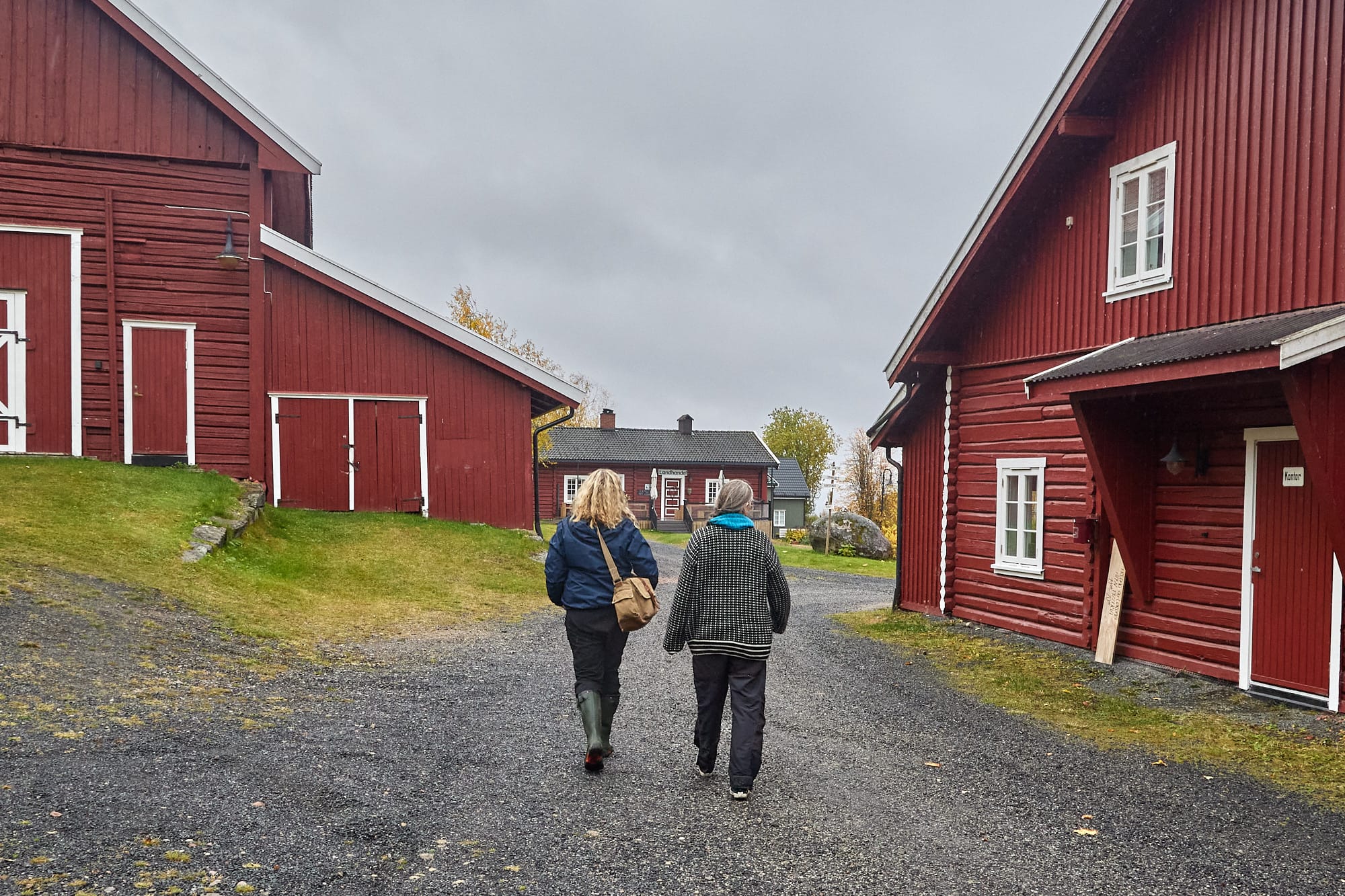
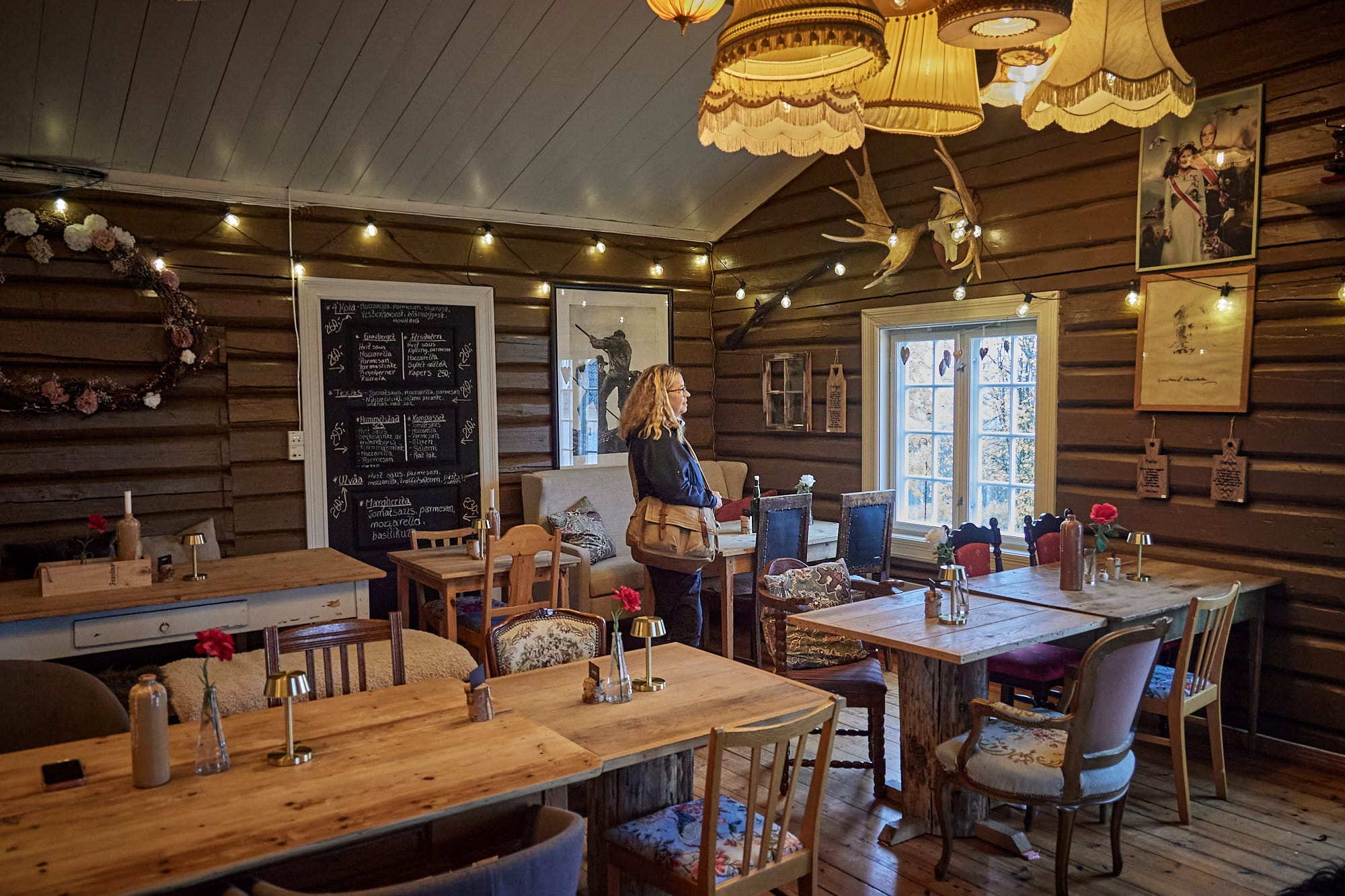
During our journey, we also encountered a much smaller museum – Gårdsmusem – established by a local hospitality complex, alongside its hotel and restaurant. Its scale was modest, but its presence suggested another way in which the region's history is made accessible to visitors.
There is a difference between a museum designed as a public cultural institution and a small collection assembled within a place of hospitality.
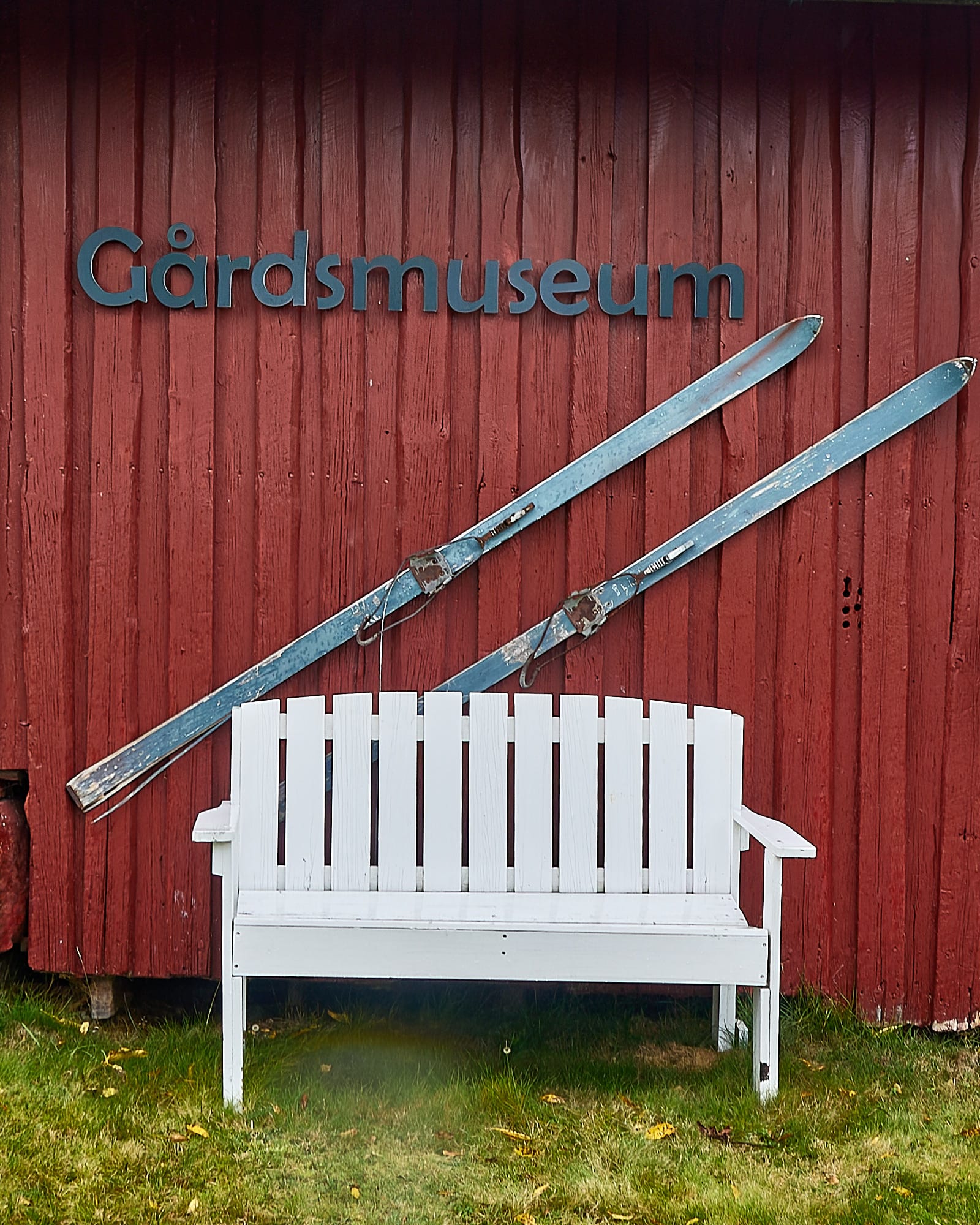
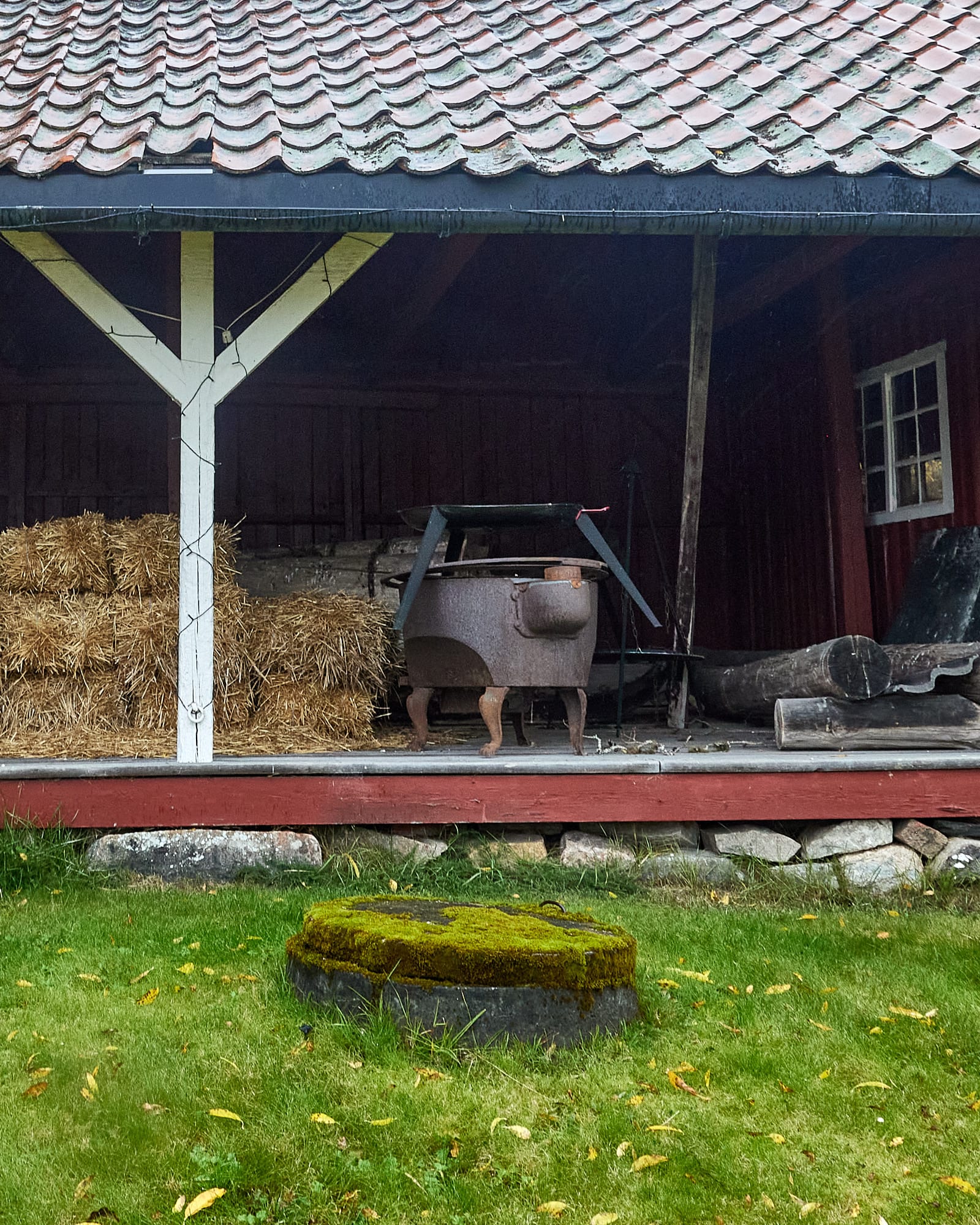
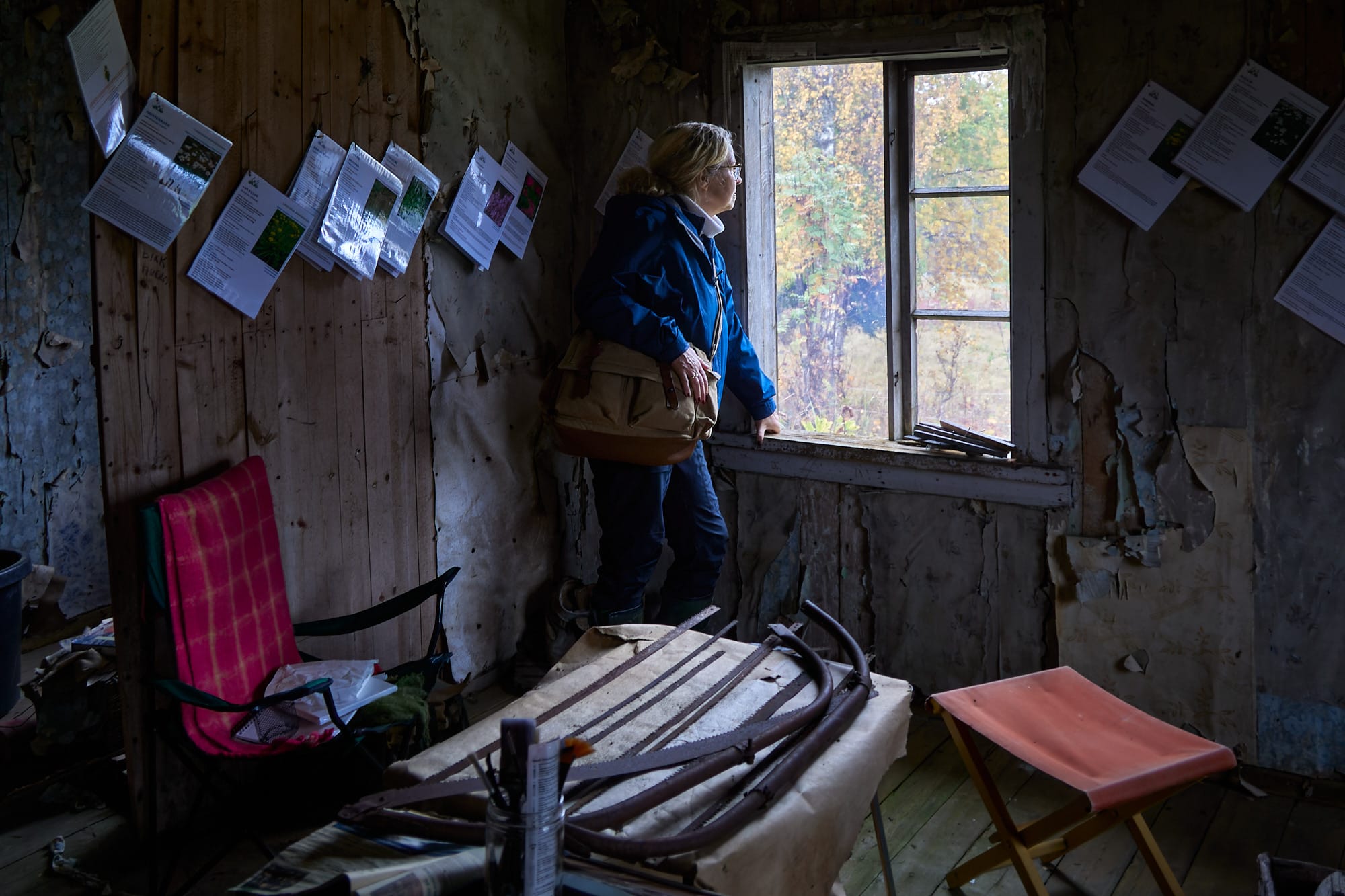
The farm museum at Gravberget Gård. A small museum within the historic farmstead preserves objects and equipment associated with rural life in Finnskogen. Old skis, agricultural implements, and everyday utensils offer a glimpse into the practical knowledge and skills that shaped life in this forested region.
Their resources, responsibilities and purposes may differ considerably. Yet both can become points of contact between visitors and the histories of the places through which they travel.
Small collections can bring together objects that would otherwise remain unseen. They can encourage questions, introduce unfamiliar practices and prompt people to visit larger institutions or explore the surrounding territory.
They also require care. Objects separated from their original contexts need accurate identification; cultural traditions need explanation; and the histories of communities should not become picturesque accessories to a tourist experience.
The value of such places depends on the quality of the relationships they establish with local knowledge and with the people whose heritage they present.
In Finnskogen, where settlements are scattered and the landscape itself contains many traces of historical life, these smaller spaces may contribute to a wider geography of remembrance.
The past is encountered in different forms: a museum exhibition, an old house, a road sign, a family account, a building preserved on its original site. And sometimes, it is encountered in a story told aloud.
The forest and its invisible inhabitants
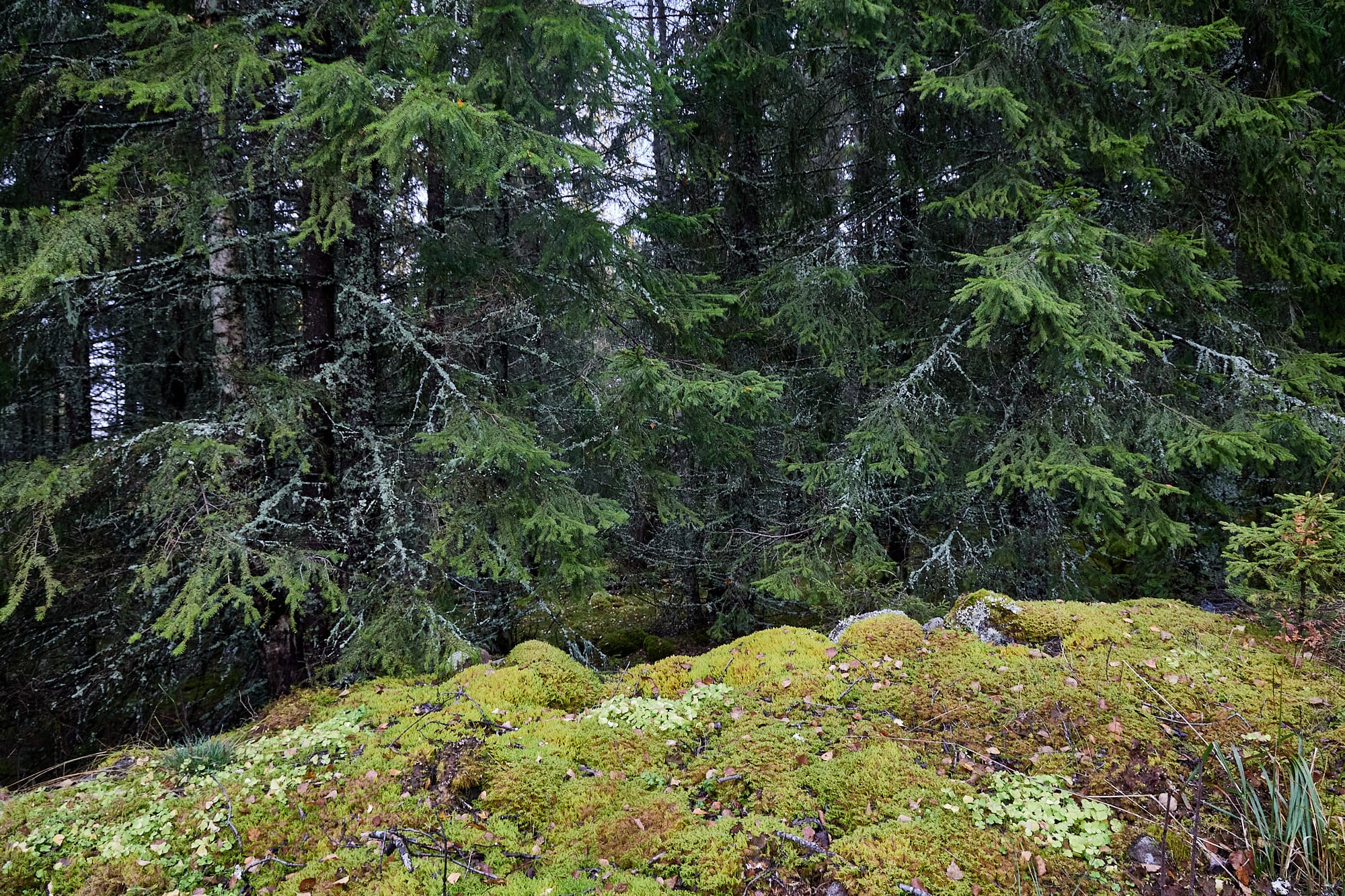
The traditional beliefs associated with the Forest Finns belong to a wider world of Finnish and Baltic-Finnic folklore, shaped by the experience of living in close dependence upon woodland, water, animals, crops and seasonal change.
In that world, the forest could be understood through relationships extending beyond its material resources. The traditions of eastern Finland include accounts of powerful forest beings, protective knowledge, incantations and the need to observe particular forms of conduct when entering or using the natural environment.
Tapio, often described in Finnish mythology as a master of the forest, and Mielikki, associated with woodland and hunting traditions, belong to this broader mythological inheritance. So does metsänpeitto, a condition described in folklore in which a person becomes hidden or disoriented within the forest.
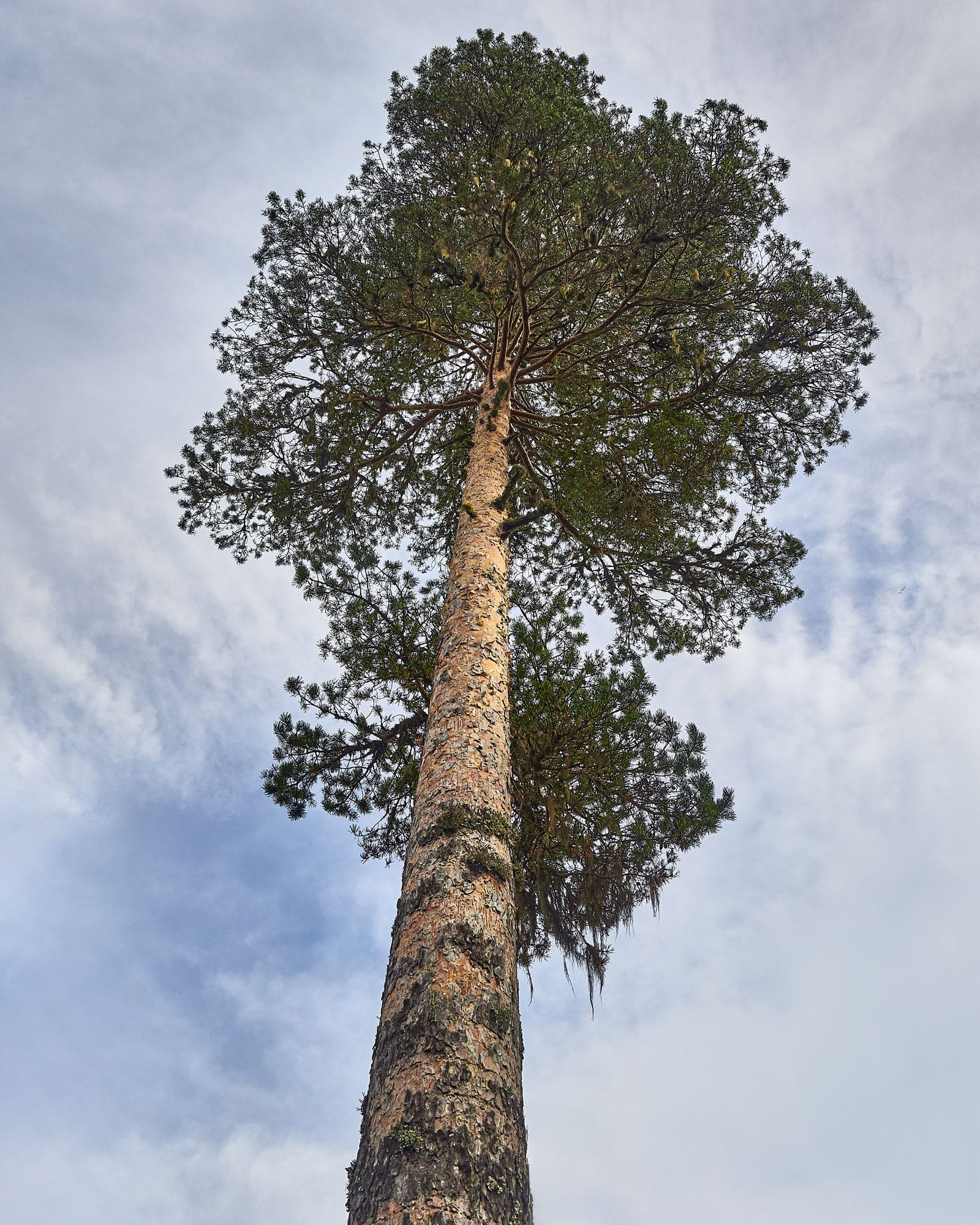
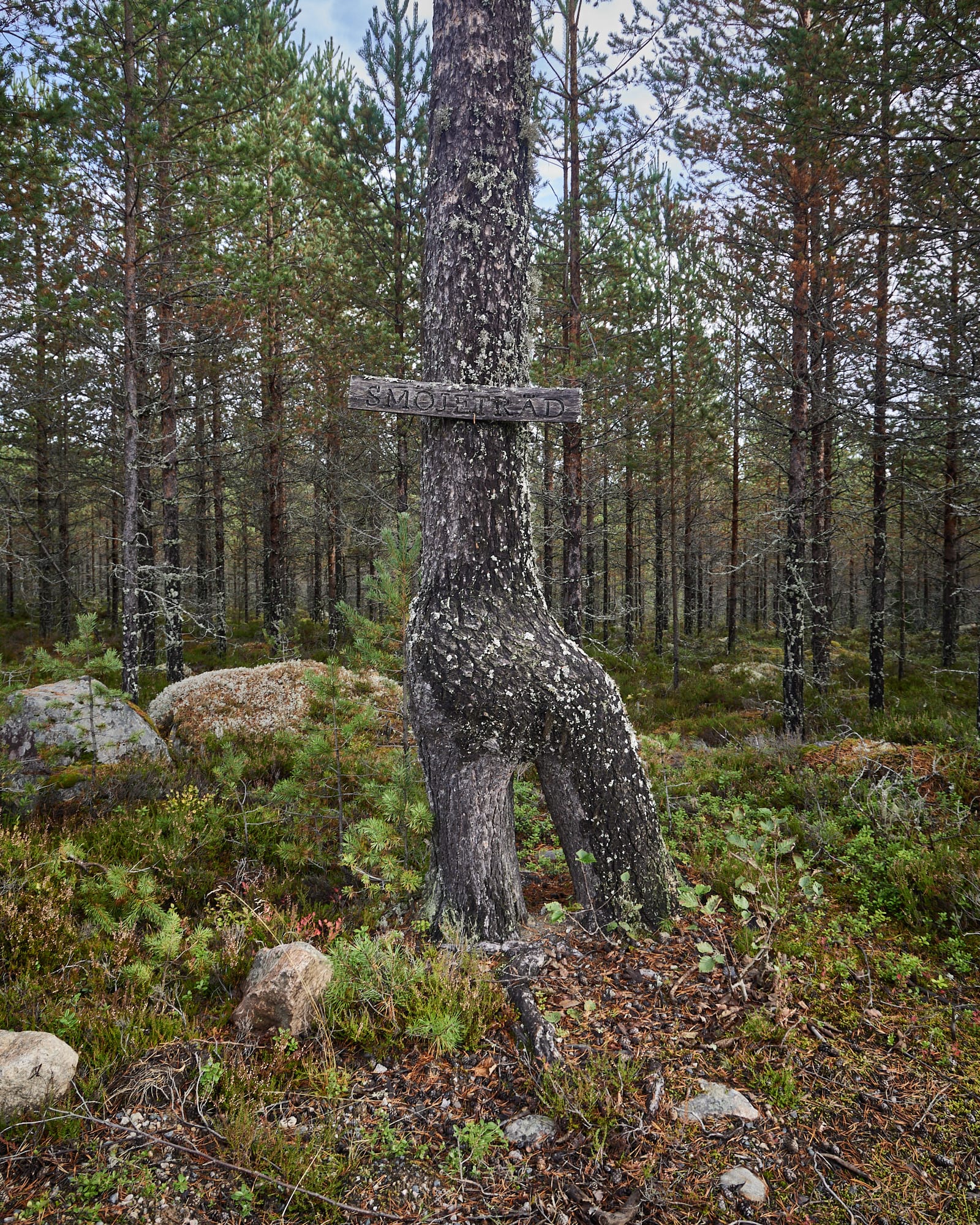
The healing tree. In the forests of Finnskogen, an unusually shaped pine stands as a reminder of the region’s traditional folk beliefs. According to local tradition, passing through the opening at the base of its trunk can help cure certain ailments. Such beliefs reflect a worldview in which trees, natural formations, and particular places could possess healing powers.
These traditions cannot all be attributed without qualification to every Forest Finn settlement. Folklore changes as it travels, and the evidence preserved in Finnskogen must be distinguished from material collected elsewhere in Finland.
Nevertheless, historical accounts of Forest Finn folk belief include protective practices, healing knowledge and ritual language. Symbols marked on buildings and objects provide material evidence of ways in which protection and belief entered everyday life.
Such practices should not be treated as evidence that the people who used them lived outside rational experience. Agricultural communities possessed detailed empirical knowledge of weather, soils, animals and forests, while also interpreting uncertainty through inherited beliefs and ritual traditions. The two forms of understanding could coexist.
A farmer might know precisely when to clear land and how to prepare it for cultivation, while also observing a customary formula intended to protect a household or harvest. Knowledge acquired through work and knowledge received through tradition belonged to the same life.
This is one reason to approach the word "shamanism" with care. It has been used in discussions of northern Eurasian religious traditions, but it can obscure important differences between communities, historical periods and forms of ritual practice.
The Forest Finns deserve a history described in their own terms, with the complexity and contradictions that accompany every living culture. And their cosmology cannot be separated entirely from the sky.
The stars above the forest
Long before electric light altered the appearance of the night, stars provided a means of orientation and a recurring subject of explanation, observation and storytelling.
Across northern Eurasia, celestial bodies entered the mythologies of many peoples. In Finnish and related traditions, accounts of the world's origins, the structure of the heavens and the relationship between earthly and celestial realms took different forms.
Some describe a cosmic egg from which the world emerged. Others belong to traditions concerning a world pillar or cosmic axis associated with the turning of the heavens.
These are elements of a broad mythological heritage, not a single, uniform system that can automatically be assigned to the Forest Finns of Norway. Their significance for Finnskogen requires attention to the specific stories preserved and transmitted there.
Yet the persistence of celestial themes is understandable. The stars were visible above the same forests where people worked, traveled, raised families and confronted the uncertainties of ordinary life.
The sky offered patterns that returned across generations, even while settlements changed and human lives passed.
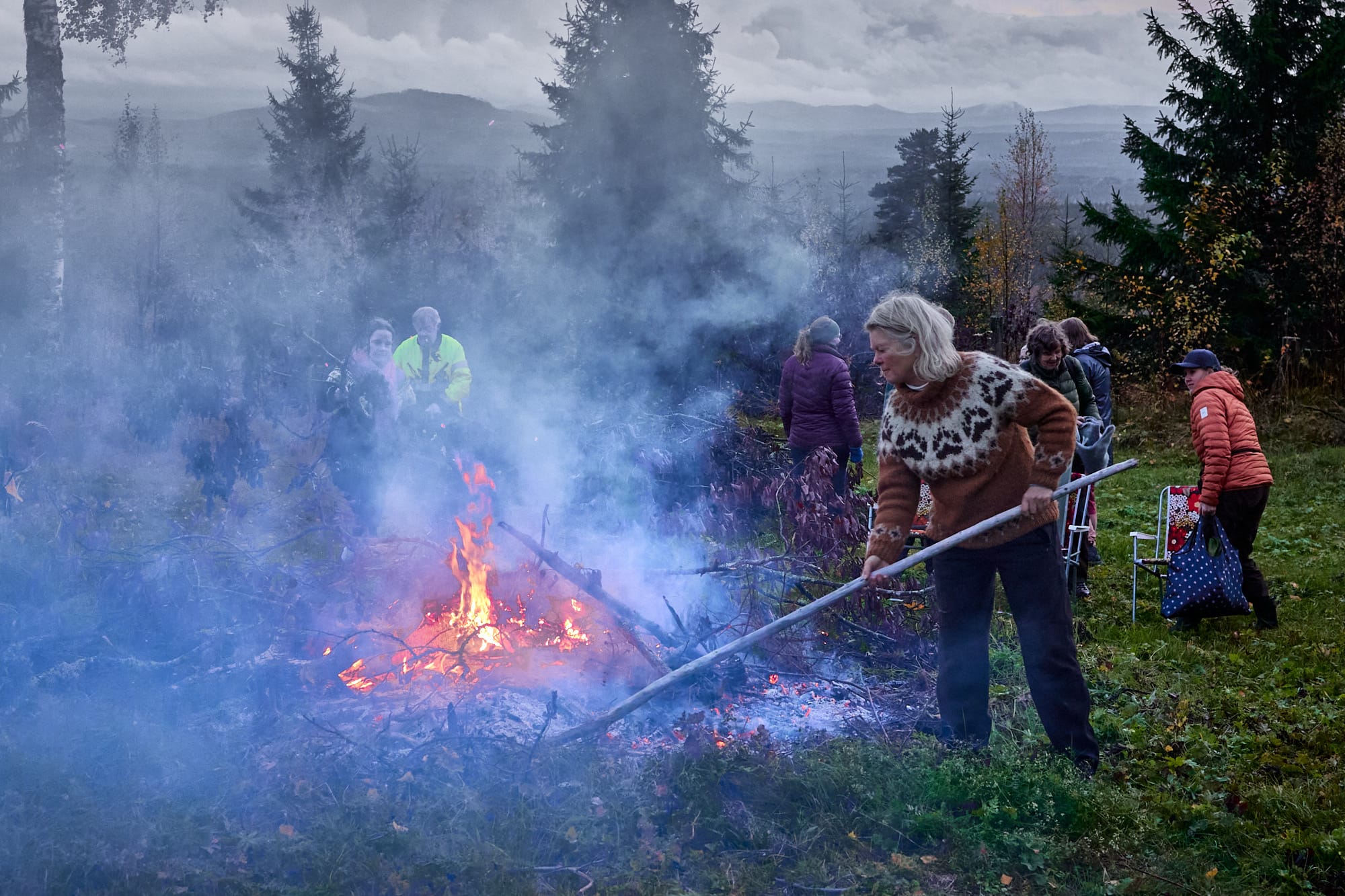
A story about the stars could be carried from one place to another without requiring the transport of an object. Its words might change, its meaning might be reinterpreted, and the language in which it was told might eventually disappear. But the practice of looking upward and asking questions could continue.
On the night of October 3, this relationship between sky and storytelling became the central theme of a gathering in Finnskogen.
Tove Elise Ihler told stories concerned especially with the stars and the cosmology of the forest. The audience included many young people, interested in the history and traditions of the place.
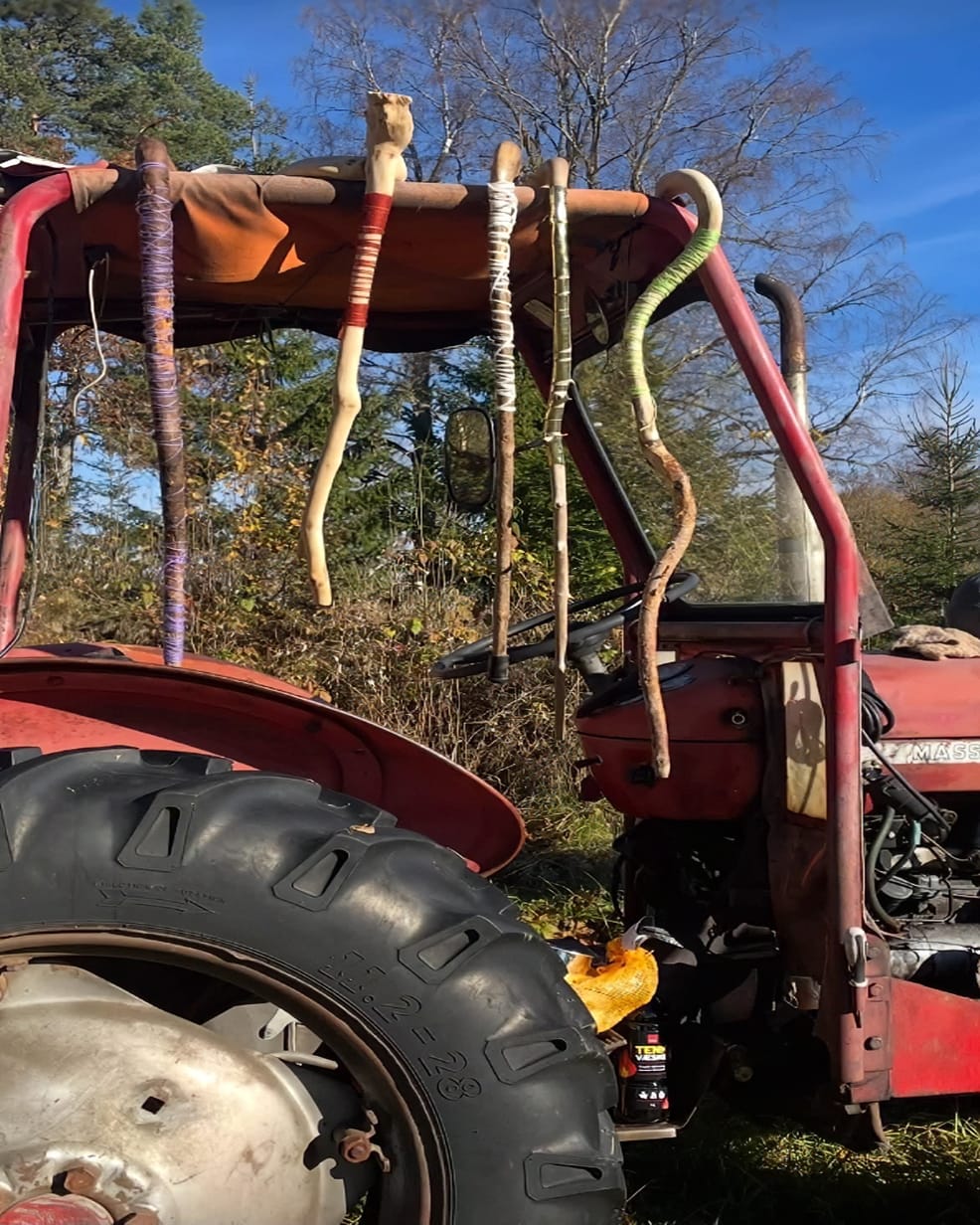
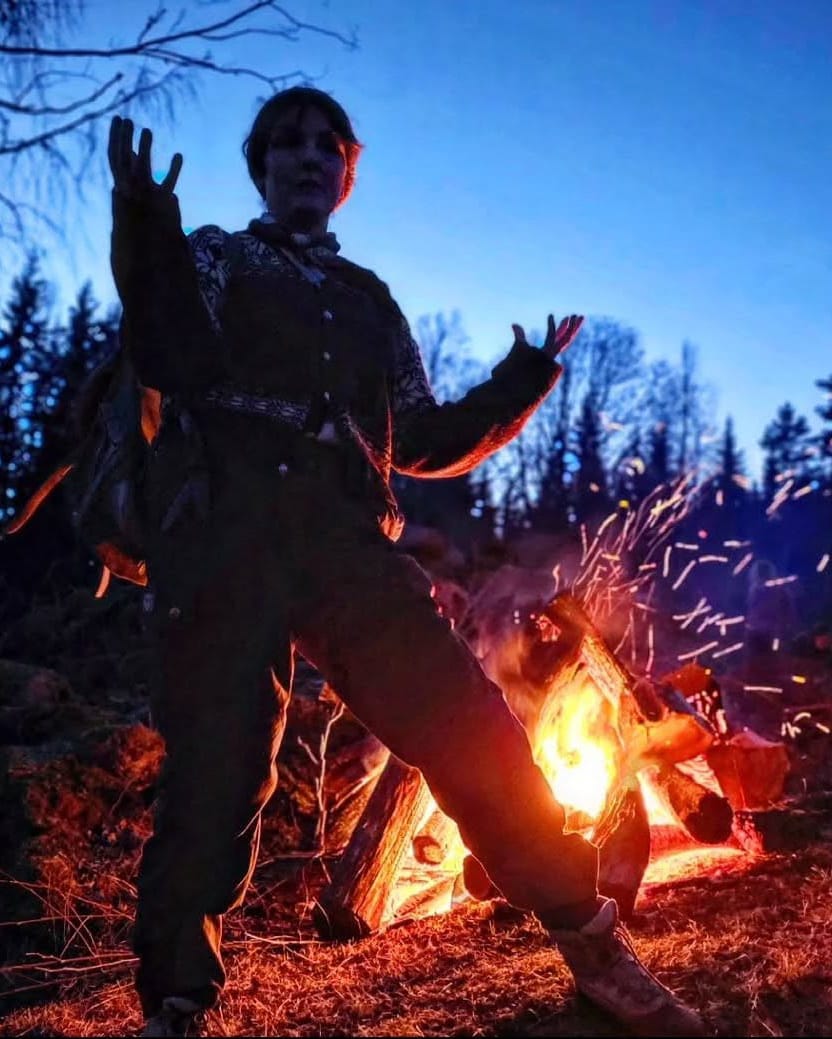
Tove Elise Ihler brings the stories and legends of Finnskogen to life beside the bonfires. The staff she holds is part of the storytelling, connecting her gestures and words to the oral traditions of the Forest Finns / Photographs: Tove Elise Ihler (left) and Dag Vavik (right). Courtesy of Tove Elise Ihler.
It would be easy to describe the occasion as the survival of something ancient, as though the past had simply remained undisturbed in the woods. But traditions do not continue without people choosing to participate in them.
Someone must learn a story, decide how to tell it, organize a gathering and invite others to listen. Someone must come, perhaps out of curiosity, perhaps because of family history, perhaps because the place itself has become important to them.
The meaning of a tradition changes with those who receive it. What was once an explanation of the world may become a way of approaching cultural history. A story formerly told within a household may now be shared at a public gathering. A language no longer spoken by the community may leave traces in names, songs and remembered expressions.
Continuity does not require that every generation understand an inherited story in precisely the same way. It requires the possibility of telling it again.
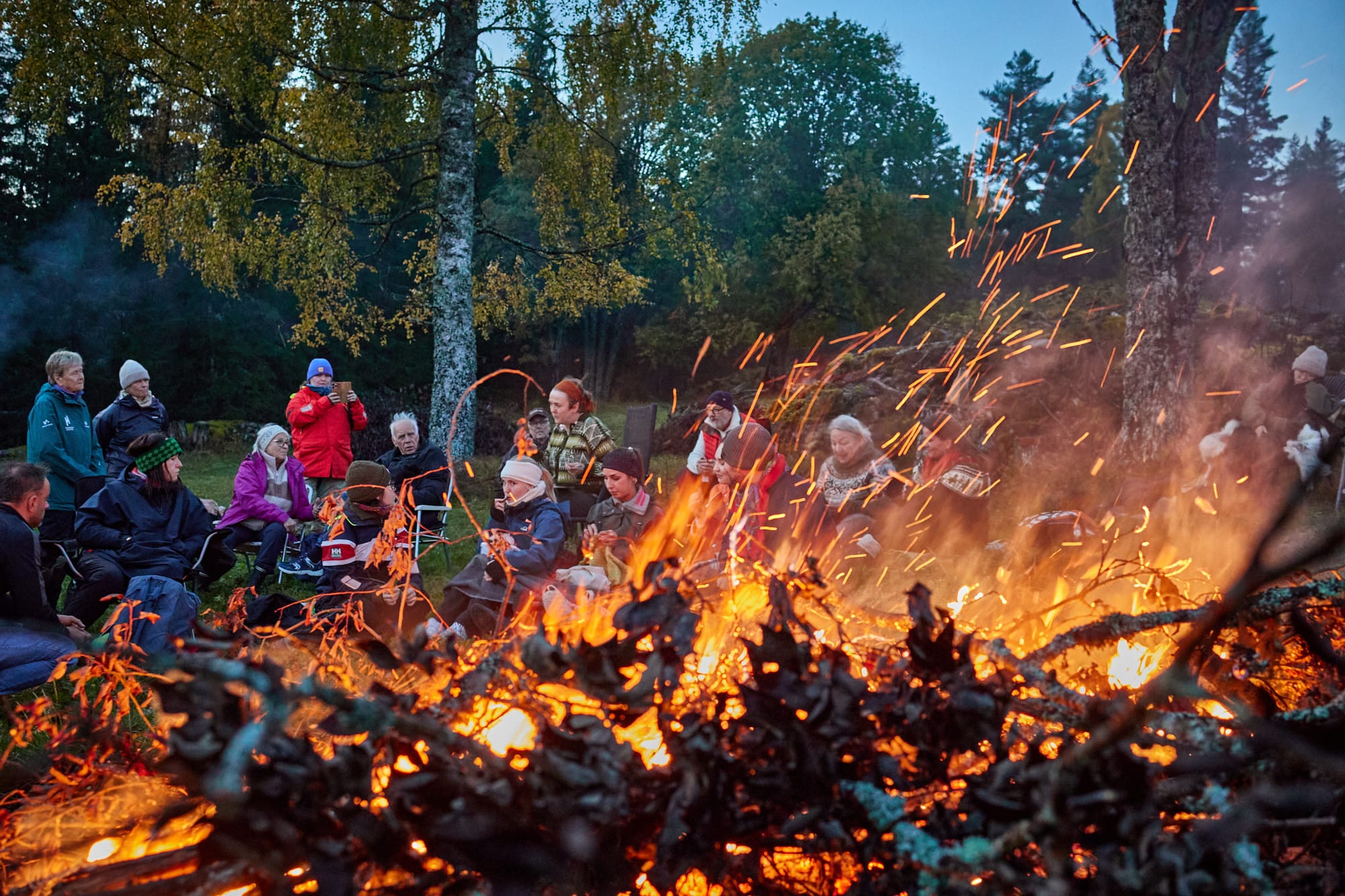
The people around the fire
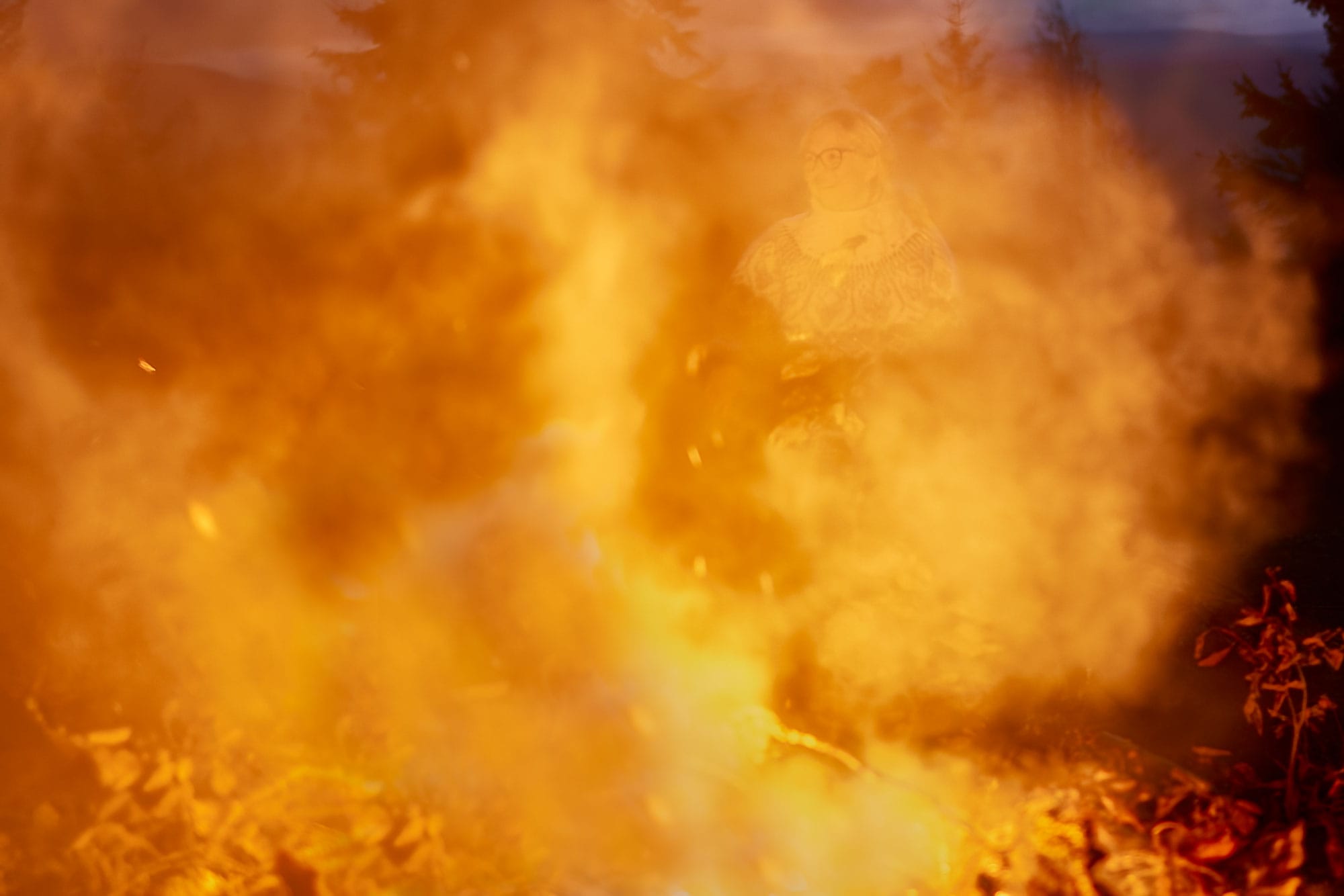
As darkness settled over the gathering, the fire became the visible center of the scene. In the photographs, people stand and sit around the flames.
Some are close enough for their faces to emerge clearly from the darkness; others remain at the edge of the light. The trees are present, but increasingly difficult to distinguish.
Tove Elise Ihler occupies the space of the storyteller. Around her, people listen. There is a particular form of attention required by oral storytelling.
Unlike a book, which can be closed and reopened, or a recording that can be replayed, a story told in person unfolds within a shared period of time. Its rhythm depends upon the person speaking and the people gathered to hear.
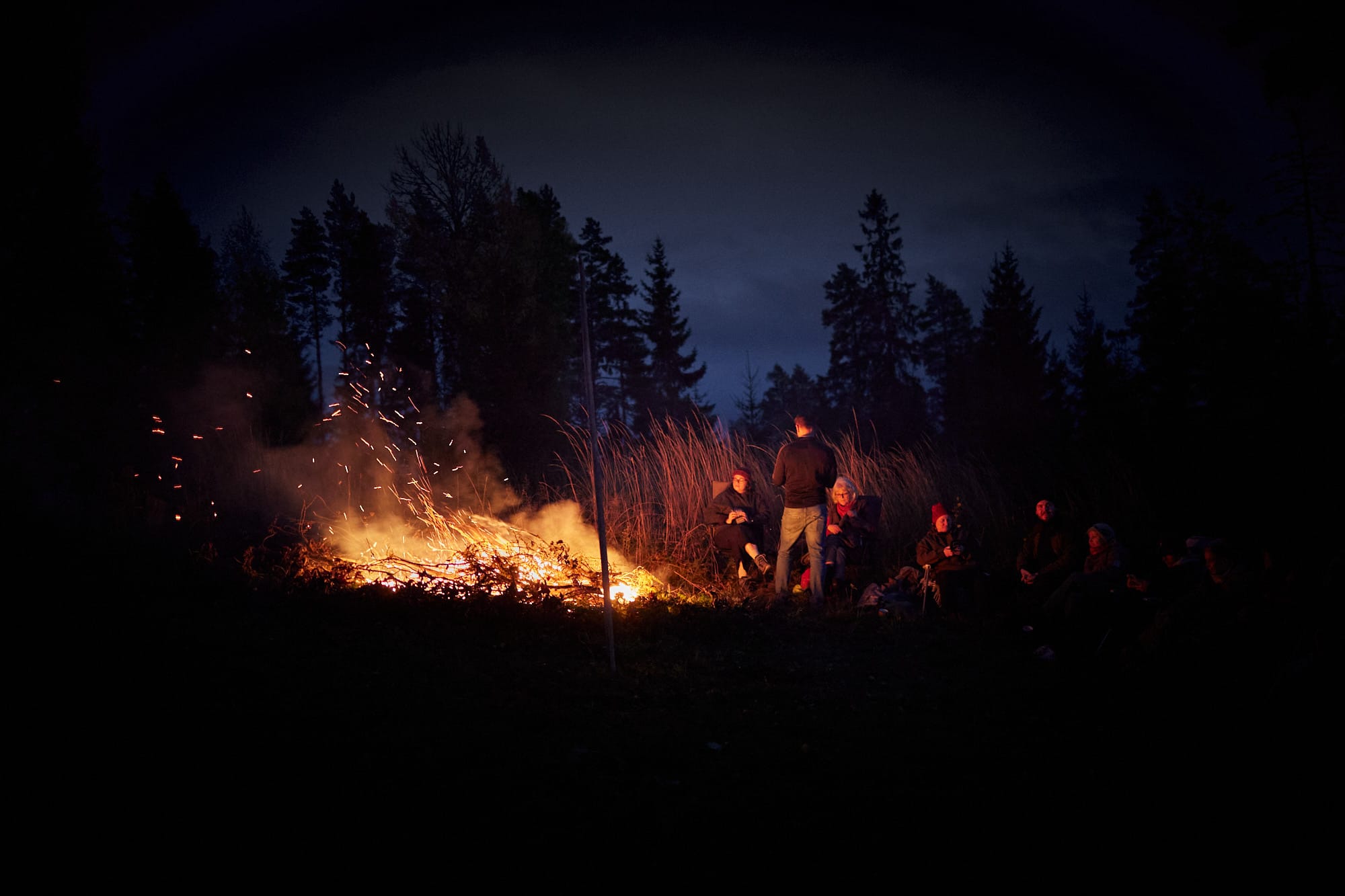
That relationship has changed considerably in contemporary life, but it has not disappeared.
At Finnskogen, the presence of younger listeners offered a visible reminder that cultural memory does not belong exclusively to those who have lived longest.
It also belongs to those who are beginning to ask what a place means, where its stories originated and why they should continue to be told.
We should be careful not to imagine that every young person present shared the same motivation. Curiosity, belonging, interest in mythology, attachment to the forest and the simple pleasure of gathering with others may all have played a part.
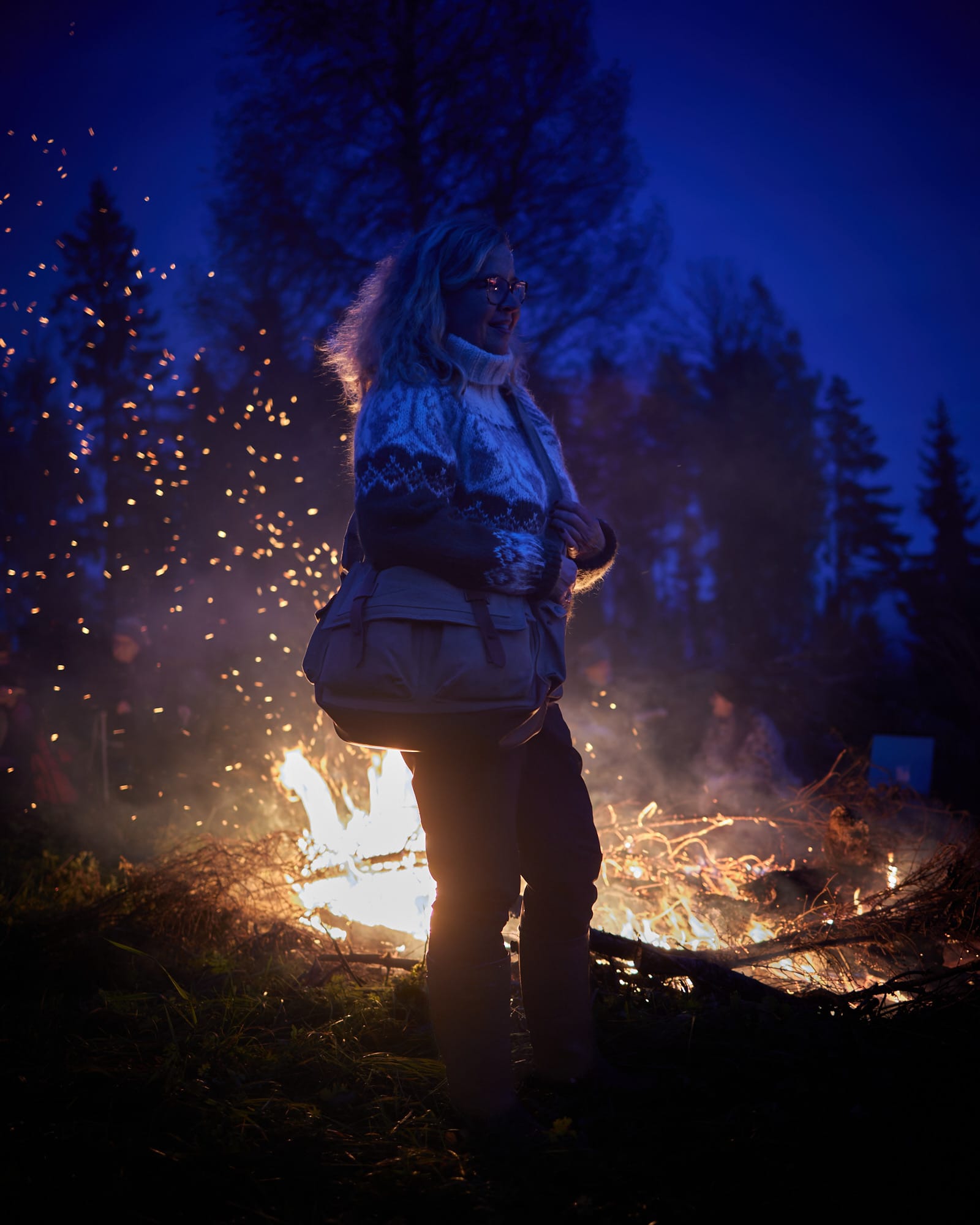
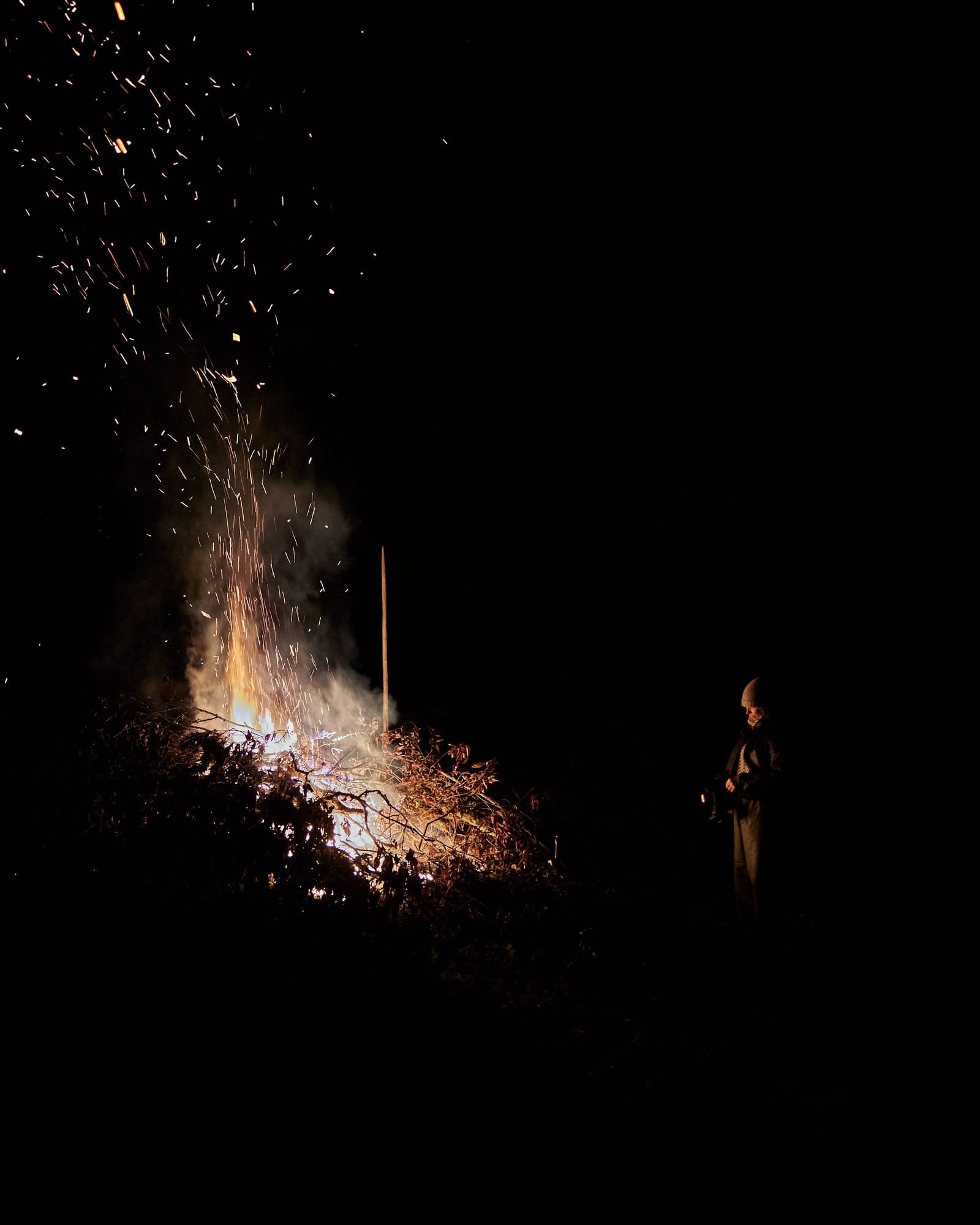
Ann-Jorid and Mette beside the bonfires in Finnskogen. As evening gives way to darkness, sparks rise into the forest sky and the gathering continues, with the warmth of the flames and the pleasure of being together.
What the photographs establish is their presence. What the evening established is that people were willing to spend time together listening.
There is an important distinction between preserving a tradition and making room for it in contemporary life. Preservation can protect documents, recordings and objects. A living gathering creates the possibility of exchange, interpretation and participation. The two activities need one another.
Without historical knowledge, stories risk losing their context. Without occasions to hear and discuss them, that knowledge risks remaining confined to institutions and archives.
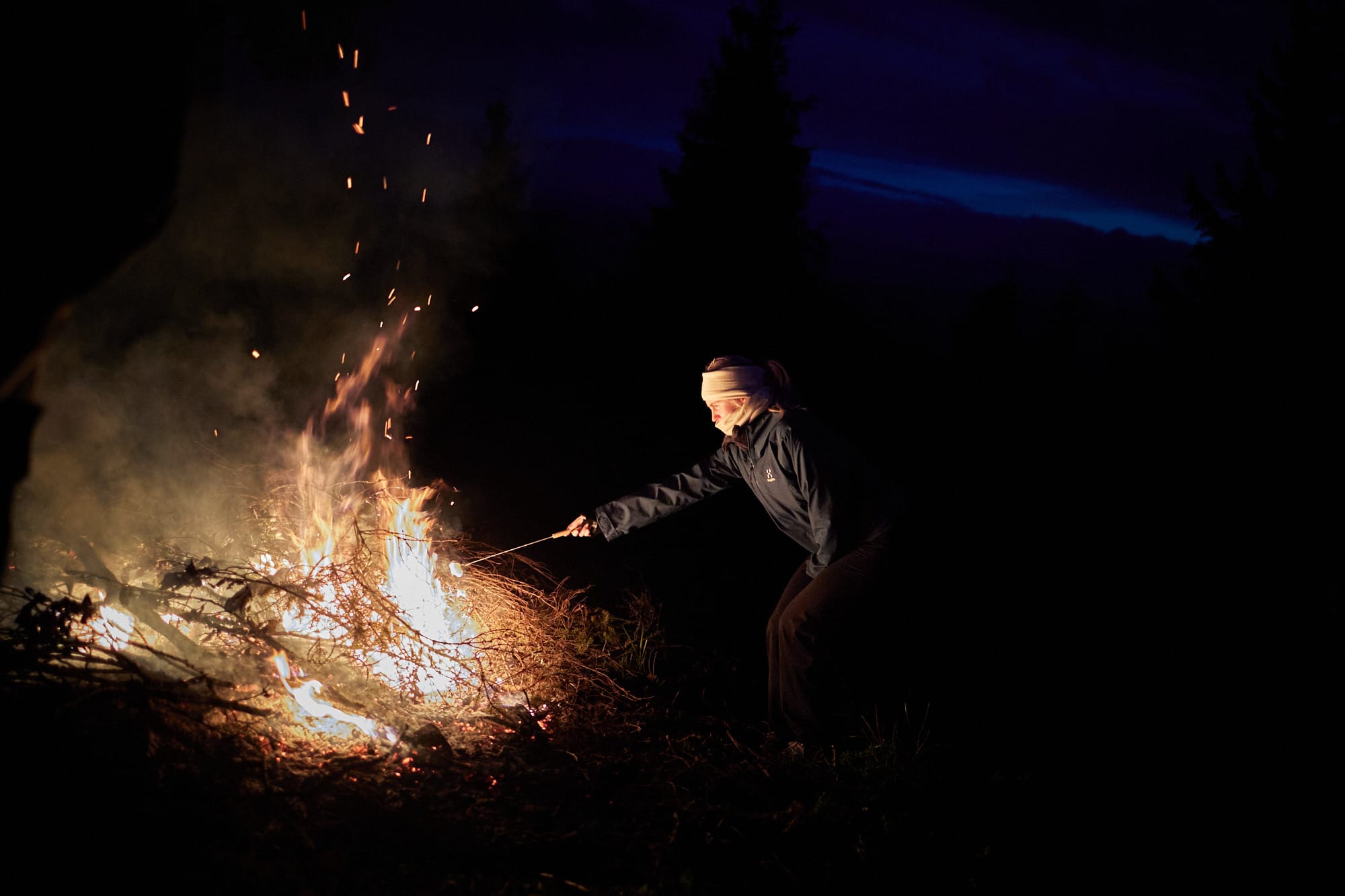
The fire illuminated a meeting point between these different responsibilities. It also recalled, without reproducing, another history of fire in Finnskogen: the agricultural fires through which earlier settlers transformed parts of the forest into fields.
The distance between those two uses of fire is immense. One belonged to an agricultural system and the struggle to establish livelihoods; the other to a contemporary cultural gathering. They should not be confused.
Yet their presence within the same landscape creates an association that is difficult to ignore. Centuries ago, people used fire to make a living here. On this October night, people gathered around fire to listen to the history and imagination of those who came before them.
A composition for the stars
The music played during the gathering had been composed specifically for the occasion.
Its title, Stjernene over Oppigard, means "The Stars Above Oppigard". It brings together the celestial subject of the evening and the name of a particular place.
The title alone establishes a relationship between the immensity of the night sky and the intimacy of a local geography. The stars belong to no single community, but the act of looking at them always takes place somewhere.
A piece of music can accompany a story without attempting to illustrate every word. It can establish duration, create intervals and leave space for listeners to experience the atmosphere of an occasion.
In the longform, we have chosen to give this composition a space of its own, accompanying photographs taken during the gathering. The music is presented with authorization, as recorded in the reporting notes.
The sequence is an invitation to spend a few minutes with the people who were there, to observe faces, gestures, flames and darkness without requiring every photograph to carry an explanatory caption.
English translation of “Stjernene over Oppigard”
INTRO – Whispered
Come closer to the fire. Come in from the forest.
There are stories here that no one ever wrote down.
But the forest remembers.
VERSE 1
Where Possåsen rests by the border in the east,
And the spruce forest whispers in an unfamiliar voice,
Oppigard lies silent as the daylight fades,
With memories in the earth and darkness bringing peace.
VERSE 2
Where rye once stood golden on slash-and-burn fields,
Where people lived and left few written words,
Their eyes turned upward when night arrived,
Towards the stars their ancestors had learned to understand.
CHORUS 1
So light a fire beneath the night sky of Finnskogen,
Let the sparks rise towards the treasures of the heavens.
For names may disappear and languages fade into the earth,
But the forest can remember every single word.
Come, sit beside the flames, quietly and close,
Perhaps the old world is still here among us.
When the stars awaken and the forest turns blue,
Forgotten stories may be discovered once again.
VERSE 3
We know Andromeda, the path of Pegasus,
Cassiopeia shines, but who can tell us
What the Forest Finn saw when he raised his eyes,
When the night itself was clock, calendar and written word?
VERSE 4
What names did they give the stars above their homesteads?
What did they see in the darkness beneath the winter moon?
Was the hunter there? Was the bear there too?
Were their signs written across the heavens and the forest?
BRIDGE
No book can give us all the answers tonight,
Only fragments of a past that still survives.
A word from a grandmother, a name from a place,
A story someone carried with them through the forests.
CHORUS 2
So light a fire beneath the night sky of Finnskogen,
Let the sparks rise towards the treasures of the heavens.
For names may disappear and languages fade into the earth,
But the forest can remember every single word.
Come, sit beside the flames, quietly and close,
Perhaps the old world is still here among us.
When the stars awaken and the forest turns blue,
Forgotten stories may be discovered once again.
INTERLUDE – Whispered
Listen. The spruce trees are creaking.
Someone is coming along the path.
Is it only the wind?
Or is it those who sat beside the fire before us?
VERSE 5
At Oppigard we wander from one campfire to another,
As the night turns black above the forest-covered hills.
Tove Elise tells her stories while the flames leap high,
Of traces left by people, of lives through passing years.
VERSE 6
And young Forest Finns stand together here tonight,
So that history may be carried forward once again.
For what is told can continue to live and grow,
From old to young, between people and the land.
VERSE 7 – With a Touch of Humour
And perhaps someone is standing in the darkness, laughing,
For apparently, love can still be found here in Finnskogen.
Beside the open fire, something seems to be glowing rather suspiciously,
A young man arrived alone — and apparently never quite left.
For beneath the ancient stars, among soot-covered faces,
Even the toughest Forest Finn
Can find himself feeling considerably warmer
Than the campfire alone could explain.
BEFORE THE FINAL CHORUS
But when the laughter fades and the night grows vast,
The stars remain above the forest and the earth.
FINAL CHORUS
So light our fires beneath the night sky of Finnskogen,
Let the sparks rise towards the treasures of the heavens.
Let the old stories find their voices once again,
And pass them on from friend to friend.
For languages may disappear and names may fade away,
But something will remain, even so.
In the smoke above the homesteads, in the whispering spruce trees,
Along the ancient narrow paths and in the timbermen's houses.
OUTRO
So quietly lift your eyes as the fire burns low.
Watch the stars move across the sky. Let the forest rest.
And if you hear a whisper from somewhere in the darkness:
Do not be afraid.
It is Finnskogen telling its stories.
Lyrics by Rune Lindberg
A light crossing the sky
At approximately ten o'clock that evening, while the gathering was taking place, a brilliant object crossed the eastern sky. We saw it move from left to right, almost horizontally. It appeared unusually large and close, and was gone within seconds.
The description is consistent with a bright meteor, often called a fireball or bolide. Without a confirmed observation record, its precise trajectory, altitude and physical characteristics remain unknown. Its apparent proximity was part of the experience, rather than a measurement of distance.
There is a temptation, when an event like this occurs during an evening devoted to mythology, to turn coincidence into revelation. The storyteller speaks of the heavens; the heavens respond. It would make an irresistible ending to a certain kind of tale.
But that would be to impose a meaning upon an event whose significance is already considerable. A meteor enters the atmosphere according to physical processes that have no knowledge of human gatherings. People on the ground, meanwhile, carry histories, memories and ways of interpreting what they see.
For a few seconds, those two realities occupied the same field of vision. The event became part of the evening because people witnessed it, remembered it and could later recount it to others. That is enough.
The ancient stories of the sky had traveled across generations. Now the people gathered in Finnskogen had a new story of the sky, belonging to one particular Saturday night in October.
What remains
The history of the Forest Finns cannot be reduced to a story of disappearance. Their traditional language ceased to be transmitted as a living community language in Norway.
Agricultural systems changed. Buildings were abandoned, altered or preserved. Beliefs and customs underwent the transformations that accompany changing economic, social and political conditions.
These losses matter, and they should be described without softening their consequences. But cultural history also consists of decisions made in the present.
A building is preserved because someone considers it worth maintaining. An archive becomes useful because someone studies it. A museum opens because people decide that a history deserves public attention. A storyteller prepares an evening because there are stories she wishes to share, and people willing to hear them.
None of these actions can restore an earlier world. They can, however, prevent the surviving evidence of that world from becoming inaccessible, and they can create new relationships between people and the places they inhabit.
The young listeners gathered in Finnskogen on October 3 did not live the lives of the families who migrated westward four centuries earlier. They belong to a different society, with different possibilities and concerns.
Their interest in the forest's history does not require them to imitate their ancestors. It gives them the opportunity to understand something about the place they have inherited, and to decide how that knowledge might matter in their own lives.
This may be the most consequential form of cultural continuity: the freedom of a new generation to approach its inheritance with knowledge rather than obligation.
During our journey, we encountered the material traces of earlier lives, the architecture of a new museum, collections assembled to preserve local history, and people gathering to listen to stories about the stars.
These were different ways of addressing the same question: what should be carried forward? The answer cannot be contained in a single object, institution or ceremony. It emerges from the relationships between them.
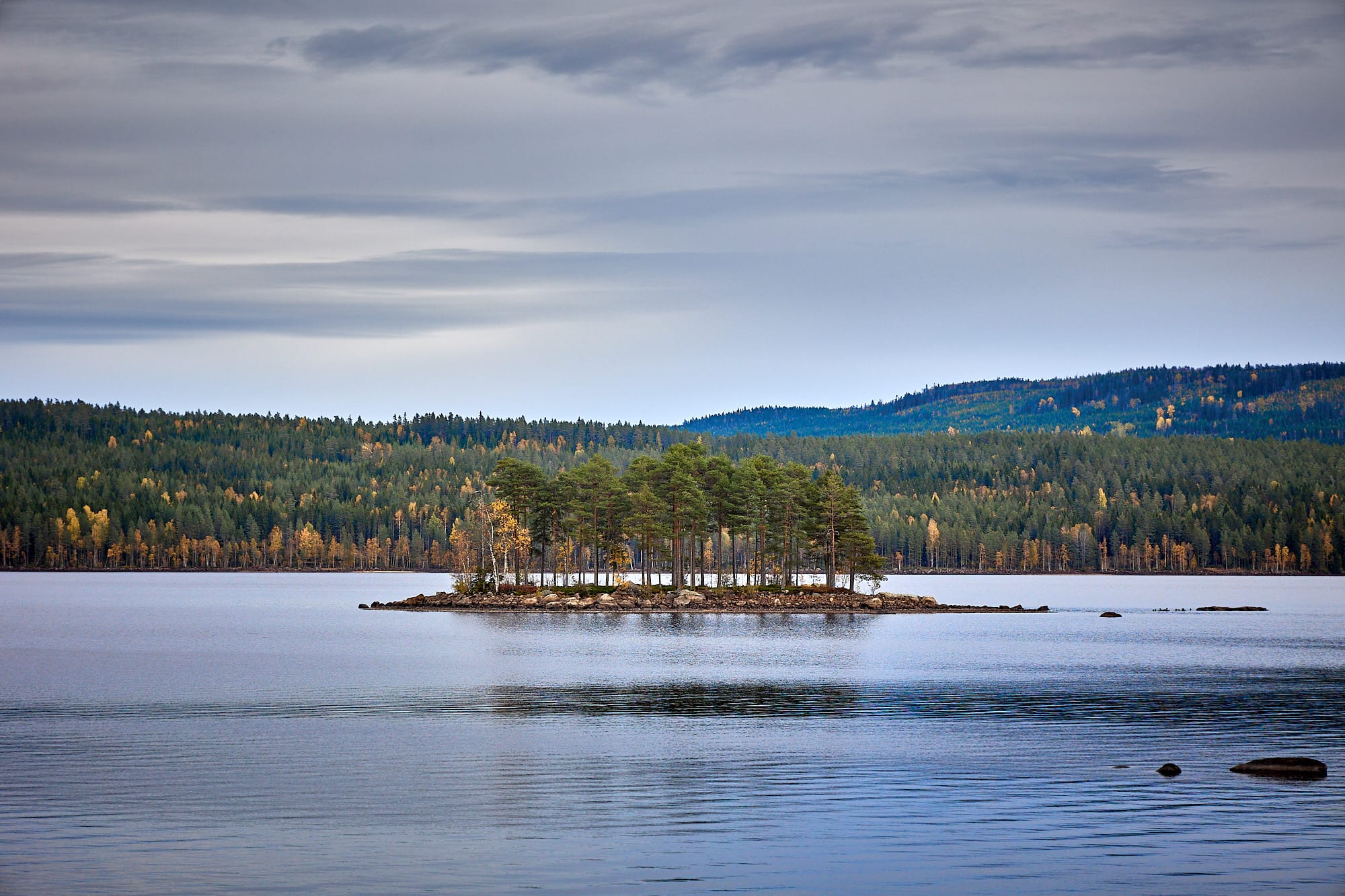
The forest after the fire
There is one last image from Finnskogen. A lake lies beneath a broad sky. Near its center, a small wooded island rises from the water. The surrounding forest continues beyond the frame.
There are no visible figures, no museum walls, no objects arranged for display. Nothing in the photograph explains the history of the Forest Finns.
Without the preceding journey, it might appear to be simply another northern landscape. But places change as we learn to read them.
The water and trees remain what they are, while our understanding of the human histories associated with them becomes more complicated. The forest no longer appears separate from the people who have lived within it. The quiet no longer suggests an absence of stories.
The people who migrated here centuries ago could not have imagined the institutions, roads, national borders and forms of communication through which their descendants and other visitors would encounter Finnskogen today.
Nor could they have known that, on an October evening in 2026, people would gather around a fire to hear stories of the stars, accompanied by music composed for the occasion.
The past does not continue unchanged: it travels through people, places and acts of attention, acquiring new meanings as it moves. And somewhere in Finnskogen, the forest remains, holding the traces of lives that can still be studied, remembered and told.
Where the Stories Took Place
Finnskogen stretches across the Norwegian–Swedish border, a landscape of forests, scattered settlements, and memories that have traveled between generations.
Music Credits
Stjernene over Oppigard
Lyrics: Rune Lindberg
Music: Created with AI assistance
Creative direction: Rune Lindberg
Photo credits
All photographs © Ayzoh!, except where otherwise credited.
Acknowledgments
Our sincere thanks to Marcin Szczesniak for his generous hospitality; to Mette Synnøve Bråthe for her invaluable help with local arrangements; and to Ann-Jorid Pedersen for kindly agreeing to model an AFAR bag during our journey.
We also thank AFAR, whose support made this journey possible.


Member discussion