


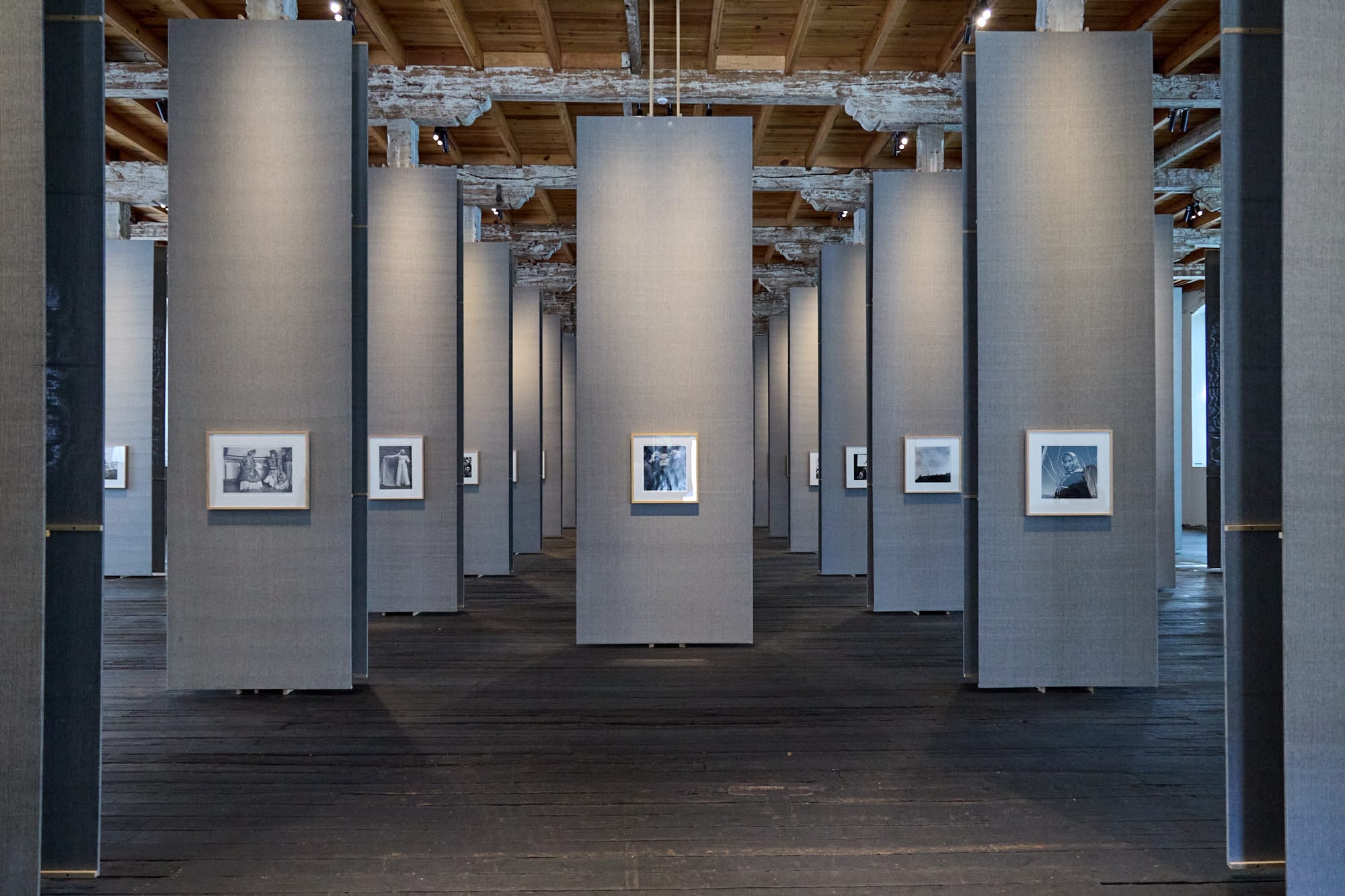
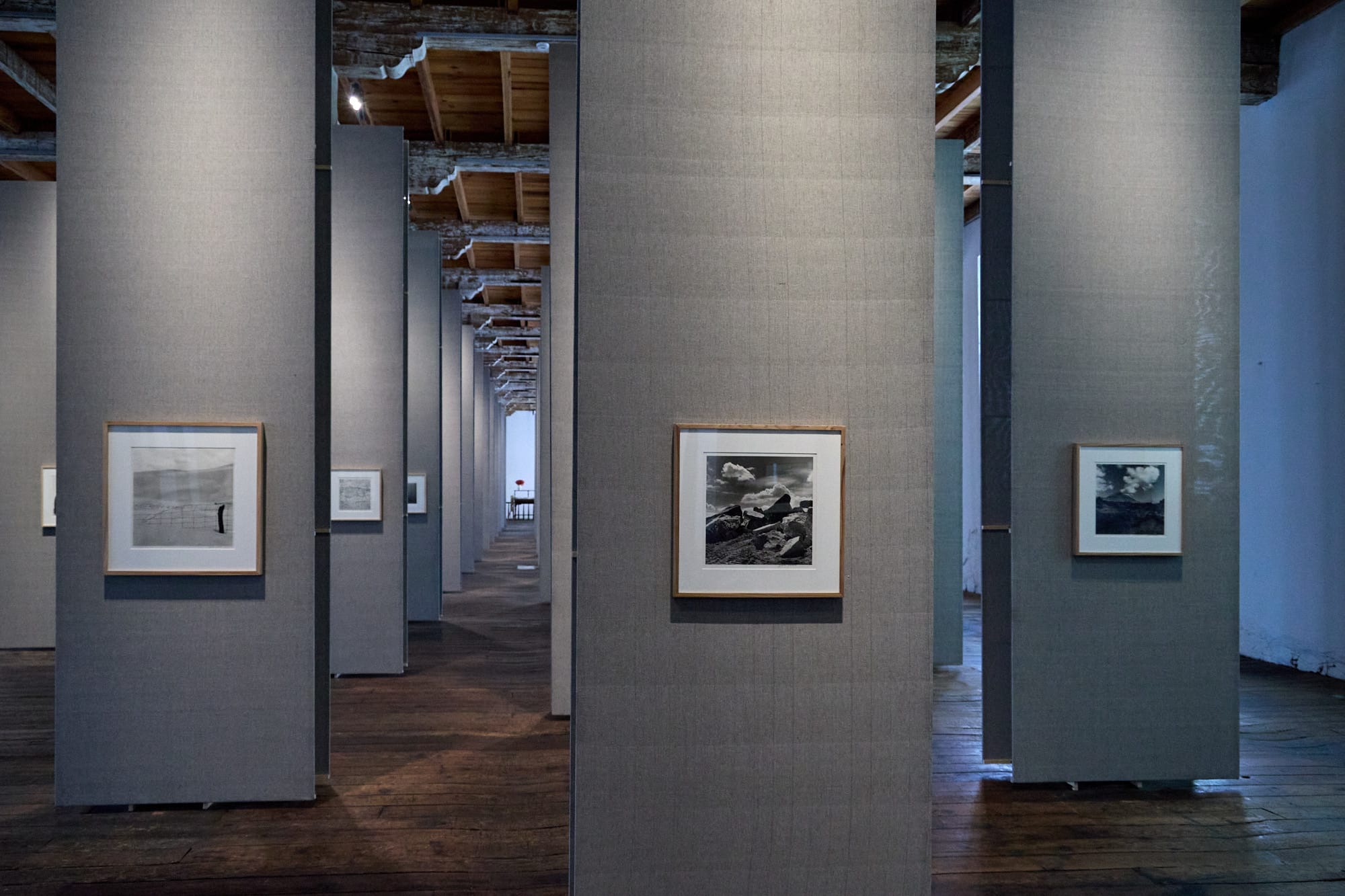
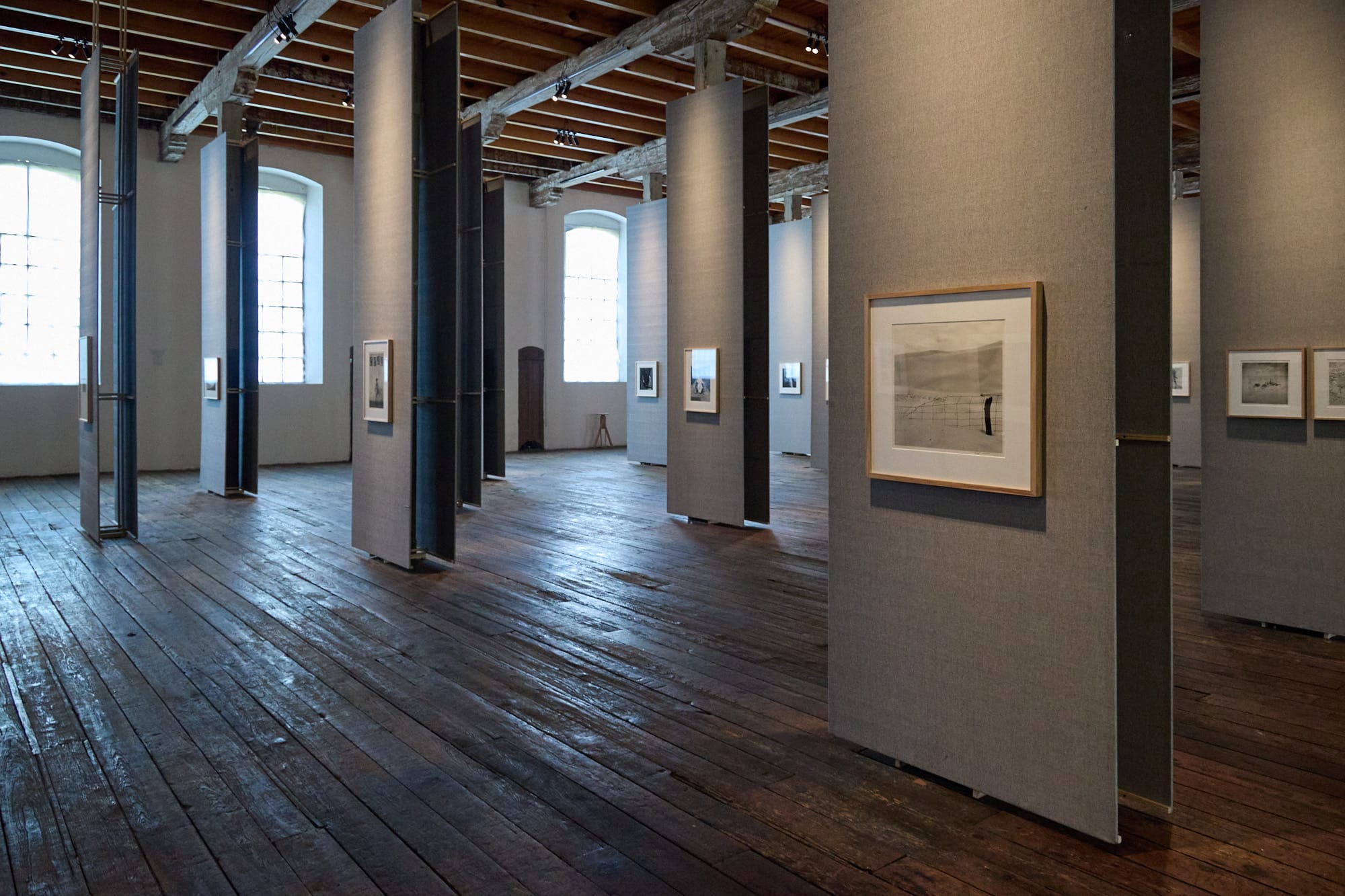
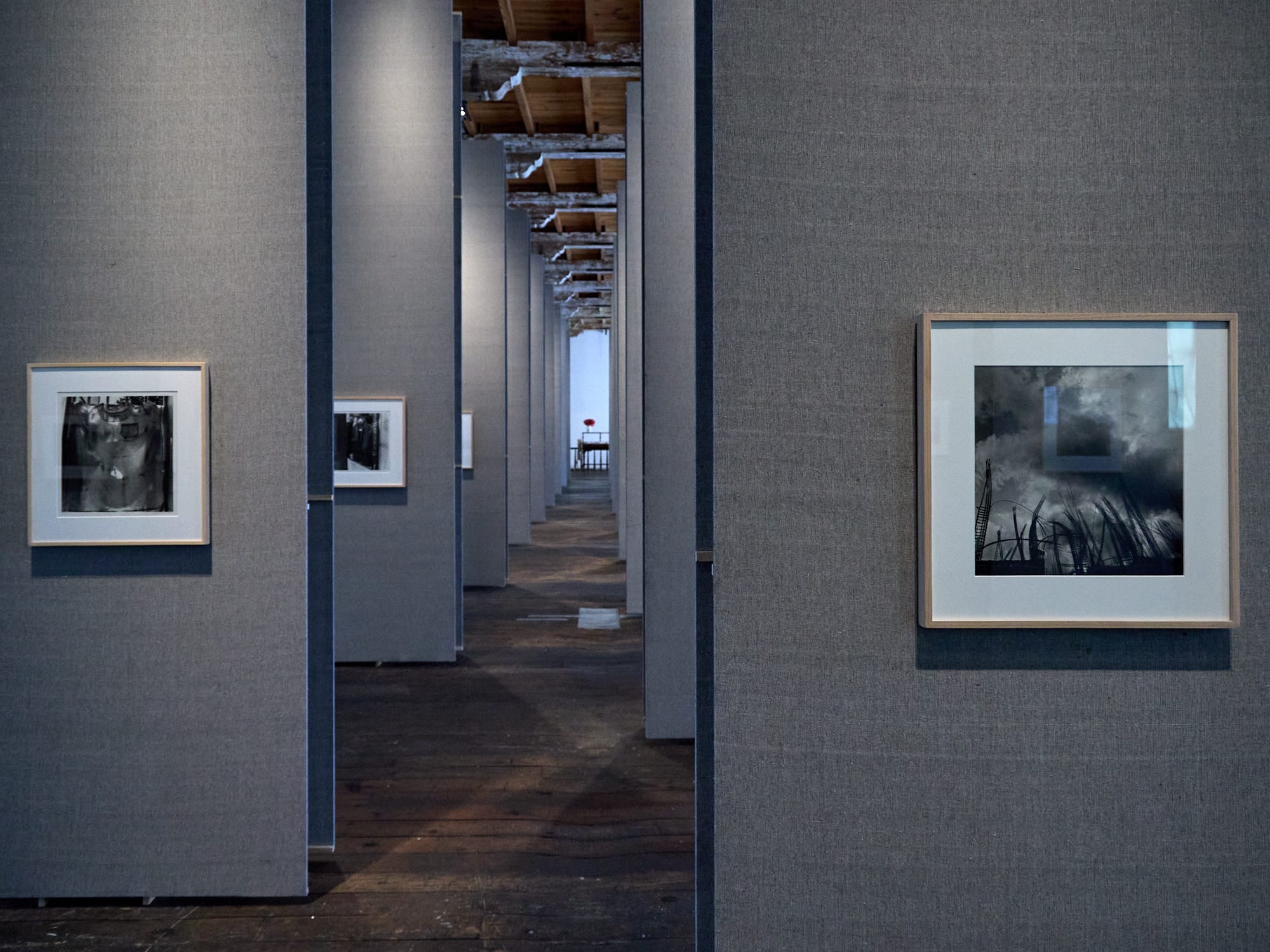
The first thing I notice is the distance between the photographs. At the Fábrica de San Pedro in Uruapan, there is no conventional sequence of frames running obediently along a wall. Instead, tall grey structures rise from the wooden floor beneath the old beams of a former textile mill.
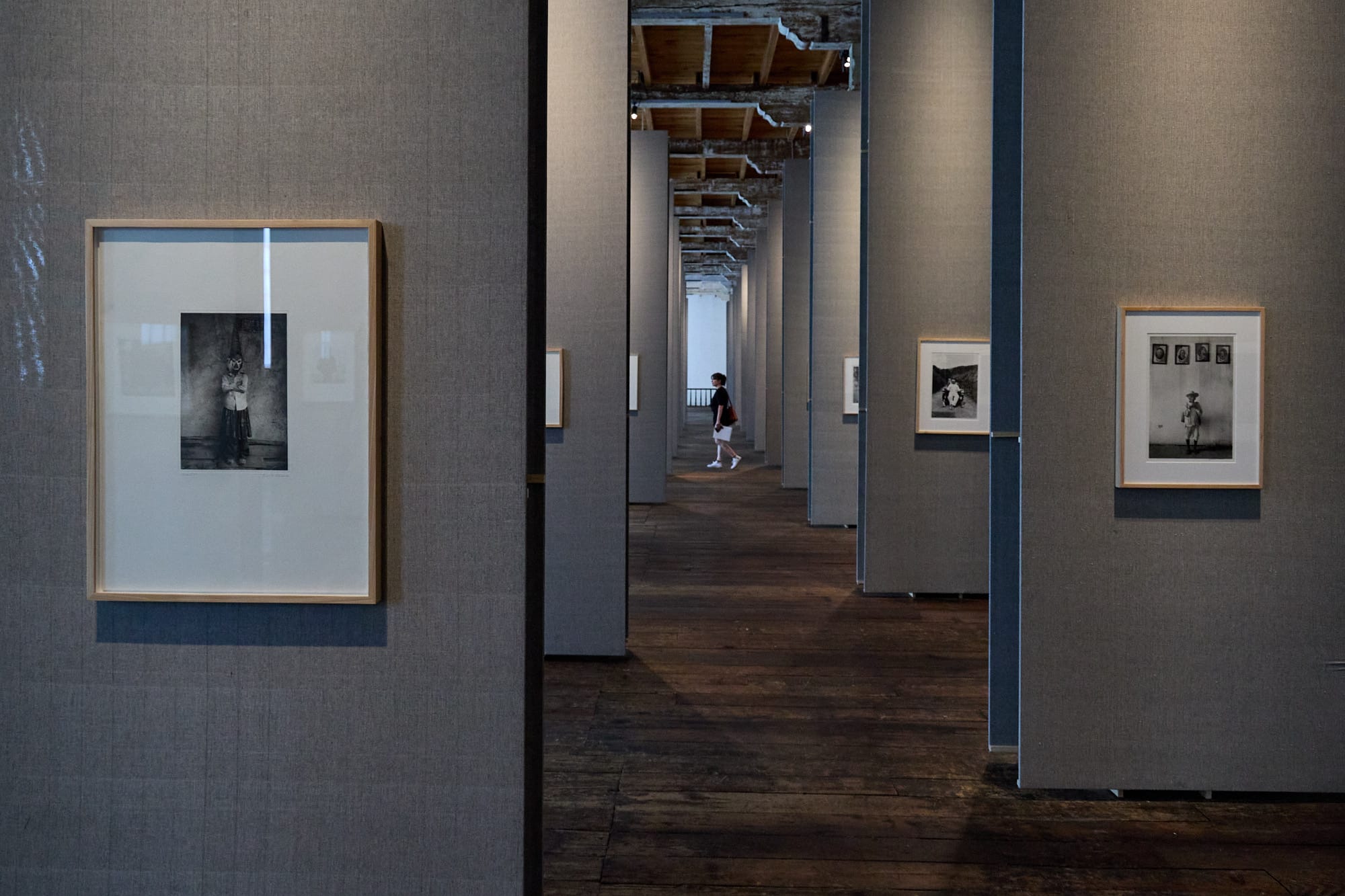
Photographs appear on one surface, disappear behind another, return farther away. Sometimes I can see several images at once. Sometimes only one. Sometimes another visitor crosses the narrow opening between two panels and becomes, for a second, part of the composition.
The exhibition brings together 200 photographs made by Graciela Iturbide across more than fifty years. Architect Mauricio Rocha, her son, designed a museography composed of 180 freestanding stelae; the tall surfaces are covered with textiles woven at the factory itself. Manuel Rocha, another of her sons, created the sound environment that moves through the installation.
The result is described as a forest of columns. Walking through it, the expression feels literal., You do not stand outside this exhibition and survey it: you enter it.
Learning to approach an image
There are exhibitions that bring photographs toward us. This one makes us go toward them. The prints are often modest in scale compared with the structures holding them. They do not dominate the architecture. A photograph can appear almost small against one of those high textile surfaces, which means that the visitor has to cross the floor, choose a direction, come closer.
Photography usually asks us to think about framing: what the photographer includes and what remains outside. Here, the exhibition adds another frame: the physical distance between a photograph and the person who wants to see it.
I find myself slowing down. The images do not arrive in strict chronology. The exhibition instead moves through recurring elements in Iturbide’s work: ritual, travel, death, nature, plants, animals, and the encounters accumulated through decades of moving between Mexico and elsewhere. Some of the photographs had never been exhibited before.
There are famous pictures here, of course. Nuestra Señora de las Iguanas. Mujer Ángel. Images reproduced so often that they have acquired lives independent of the circumstances in which they were made.
But the architecture refuses to turn them into altars. They remain among other photographs. You find them; then you continue walking.
Perhaps this is an appropriate way to encounter Graciela Iturbide, because her photography has never seemed to me to begin with the declaration: this is important. It begins with attention.
Complicity, not innocence
Iturbide has photographed Indigenous communities throughout her career, and this inevitably places her work inside one of photography’s most complicated histories.
The camera did not arrive innocently in Indigenous territories. Photography has been used to classify people, measure them, catalogue them, turn difference into spectacle and cultures into evidence of an imagined past. Colonialism did not only occupy land; it also produced images.
Anthropology, tourism, journalism and art have all inherited parts of that history. No photographer simply escapes it by having good intentions. What interests me about Iturbide is therefore not the claim that her gaze is somehow pure. It is the method she describes.
When photographing Indigenous communities, she says, “I have to seek complicity.” It is a small word carrying a large idea. Complicity requires another person. It assumes that the photographer cannot create the relationship alone.
Her work in Juchitán began in 1979 after Francisco Toledo invited her to photograph the Zapotec community there; she returned over a period of years rather than treating the place as a brief assignment.
You cannot measure respect in days spent somewhere, and time itself guarantees nothing. A photographer can remain for months and still fail to see beyond what they arrived expecting to find. But proximity changes the possibilities. People begin to recognize the photographer. Conversations continue after the camera comes down. The subject of one photograph can become the person who questions the next.
The difference is not between photographing and not photographing. It is between extracting an image and entering a relationship in which the photographer is no longer the only person with agency.
That distinction feels particularly important when I stand before photographs that have themselves become icons.
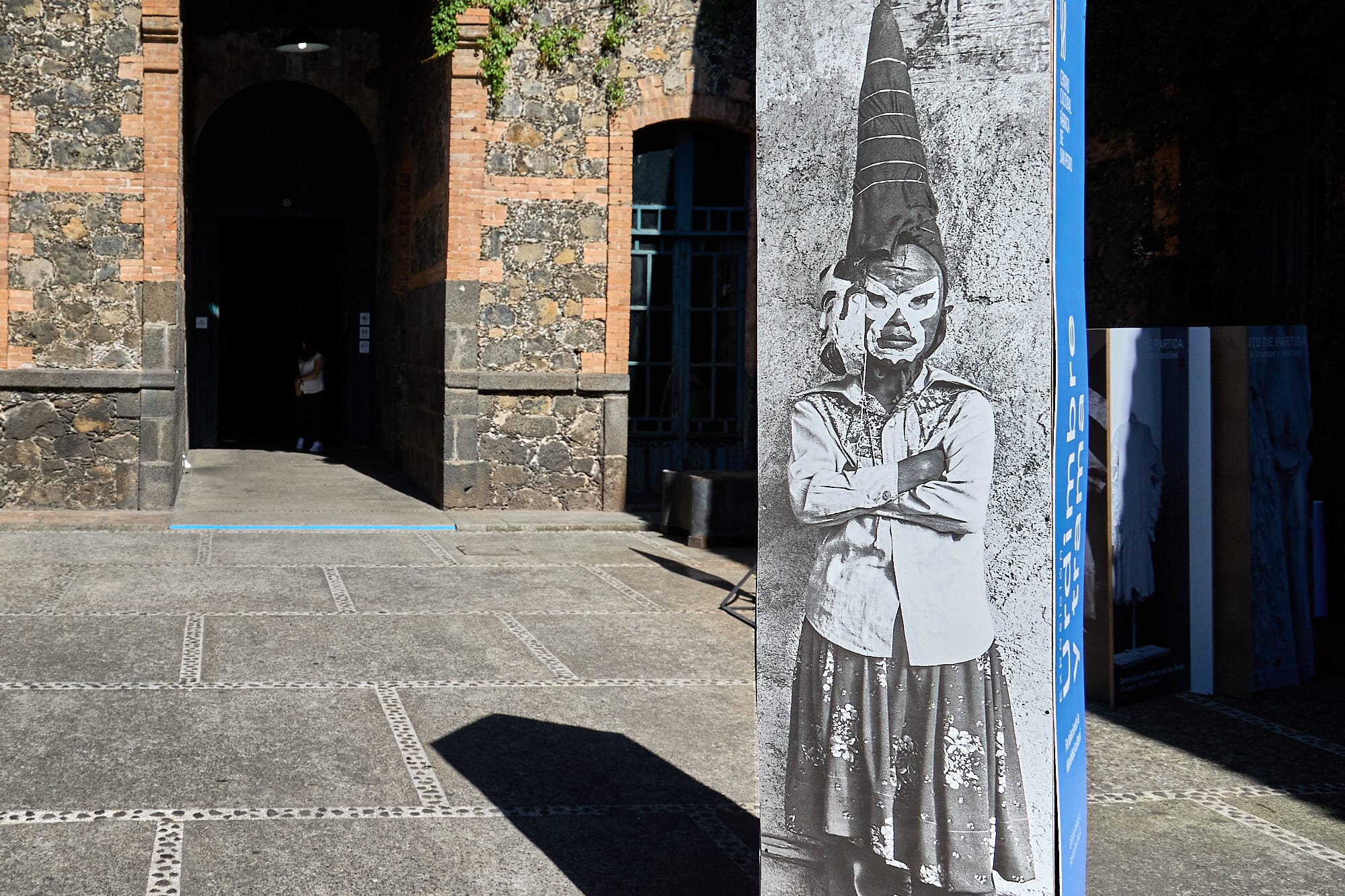
Nuestra Señora de las Iguanas is now far more than a frame made in a market in Juchitán. The woman photographed, Sobeida Díaz, became recognizable through it; the image subsequently entered sculptures, murals and other forms of local visual culture.
At some point, a photograph stops belonging only to the photographer. Perhaps it never did.
The danger of knowing what we are looking for
After many years with a camera, a strange danger appears. You become better at recognizing photographs.
Light falls in a certain way and you know what it can become. A person enters a doorway and you anticipate the geometry. Someone makes a gesture and part of your mind immediately understands how the frame might close around it.
Experience helps. But experience can also become a trap. Eventually, we risk photographing what we already know how to photograph. This is one reason Iturbide’s insistence on surprise interests me so much.
When she describes her working process, she does not begin with categories such as documentary, anthropology or poetry. She talks about what interrupts her attention, what makes the mind and the heart react. Photography, for her, begins with “what surprises me in life.”
I keep thinking about that sentence as I move between the panels. Surprise is not the same as exoticism. In fact, they may be opposites: exoticism occurs when we encounter something unfamiliar and immediately force it into a familiar category: strange, primitive, colorful, authentic, timeless.
We think we are surprised, but in reality we have already decided what we are seeing: genuine surprise is more difficult. It means allowing what is in front of us to disturb the picture we had prepared for it. That can happen in another country. It can also happen outside our house. The distance travelled has nothing to do with it.
Film is not an ethic
Iturbide still works primarily with black-and-white film. She speaks about contact sheets almost as a ritual: the moment when she can return to what happened and discover what the camera actually recorded.
There is a temptation, particularly now, to turn this into a morality tale. Film is slow. Digital is fast. Film is thoughtful. Digital is careless. The darkroom is authentic. The screen is superficial. I do not believe any of that.
A photographer can work slowly with a phone and thoughtlessly with a Leica. Technology does not confer seriousness. Cameras have never possessed ethics; photographers do.
What matters in Iturbide’s attachment to film is not that analogue photography is somehow purer. It is that the process corresponds to the way she works. She photographs; later she looks again.
The contact sheet creates a second encounter with the event. Memory and image confront each other. Something she thought important may turn out to be empty; something almost unnoticed may suddenly insist on being seen.
That space between taking a photograph and understanding it interests me. We live in a photographic culture increasingly designed to eliminate that interval. Take the image. See it immediately. Select it. Publish it. Receive a response.
Nothing about this is inherently wrong. But something changes when every stage collapses into the same minute. Sometimes a photograph needs to become slightly foreign to us before we can really see it.
The archive argues back
An exhibition spanning fifty years inevitably creates another encounter: the photographer meeting earlier versions of herself.
An archive is often presented as confirmation. Here is the career. Here are the important photographs. Here is the coherent trajectory that hindsight has constructed. But no life is lived that coherently.
Photographers change their minds. They abandon subjects, return to them, recognize weaknesses in photographs they once loved, discover value in negatives they ignored.
The official presentation of the Uruapan exhibition describes a selection stretching across more than half a century and including previously unseen work.
I like thinking of the archive in this way: not as a mausoleum of successful photographs, but as accumulated evidence of looking. Some photographs survive. Some fail. Some become famous for reasons the photographer could never have anticipated. Some wait quietly for decades.
Perhaps an archive becomes interesting precisely when it stops proving how good we were and begins showing how much we changed.
Birds
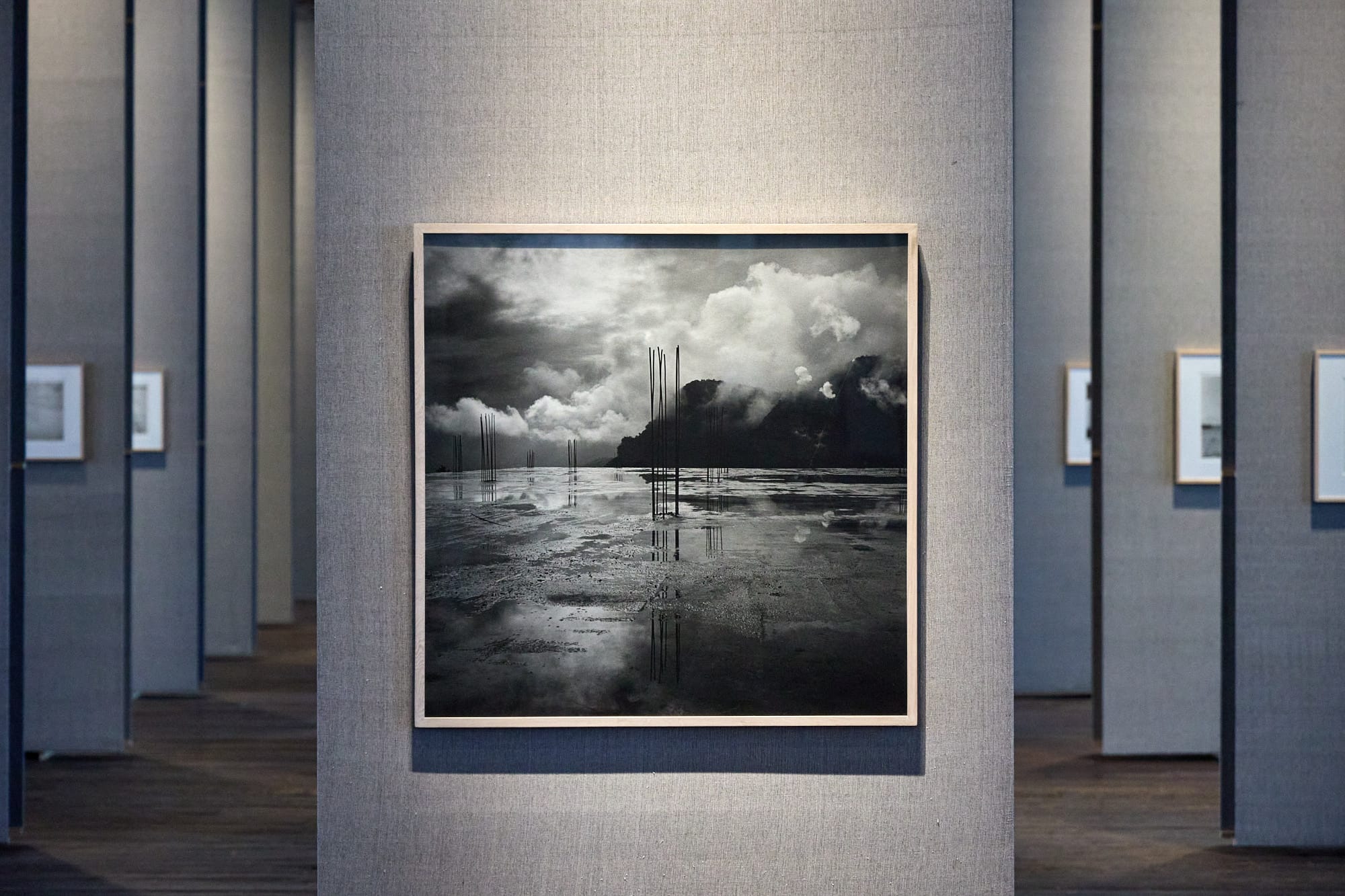
Eventually, the birds begin appearing. They have followed Iturbide for decades: sometimes individually, sometimes in enormous dark congregations, sometimes little more than marks interrupting the sky.
It would be easy to turn them immediately into symbols: freedom, death, migration, the soul. Photography does this all the time: it turns what exists into what it supposedly means. But perhaps the bird should first be allowed to remain a bird.
This seems close to something essential in Iturbide’s work. She is often associated with symbolism, dreams and the apparently surreal moments that occur throughout her photographs, yet she has repeatedly resisted easy classifications of what she sees.
The strange thing does not always require invention. Sometimes life itself is strange enough. The photographer’s responsibility may simply be to notice.
What the photographer brings home
I have spent much of my life photographing in places that were not mine. After enough years, certain questions become impossible to avoid.
Why this person? Why this moment? Why am I here? What do I understand about what I am photographing? What am I missing? What happens to this photograph after I leave?
None of these questions has a permanent answer. Perhaps the moment we believe we have solved them is the moment we should become suspicious of ourselves.
Walking through this exhibition, I realize that what interests me most about Iturbide is not her black and white, her famous compositions, the birds, the rituals or even the extraordinary consistency of her visual language.
It is something less visible: curiosity without the need to conquer what is being observed. She approaches the world, but does not seem interested in exhausting its meaning. That matters because photography is an extraordinarily possessive medium.
We say take a photograph, capture an image, shoot someone. Our language tells us more than we may want to know about the history of the medium. But the best encounters I have had through photography have rarely felt like possession.
They felt more like being allowed to remain somewhere for a while. To watch. To listen. To be changed slightly by what was there. And sometimes, if circumstances permitted, to make a photograph.
At the Fábrica de San Pedro, the last thing I carry away is therefore not an image. It is a question: after years of learning how to photograph, can we still approach the world without demanding that it become a photograph we already know how to make?
I think we have to try. Otherwise experience becomes style, style becomes habit, and eventually the camera sees before we do. Graciela Iturbide’s photographs remind me of something simpler. Keep looking long enough for the world to surprise you. Then decide whether you need the photograph.
Originally published by Ayzoh! in 2024. Revised and expanded for A Bag of Stories in 2026.


Member discussion