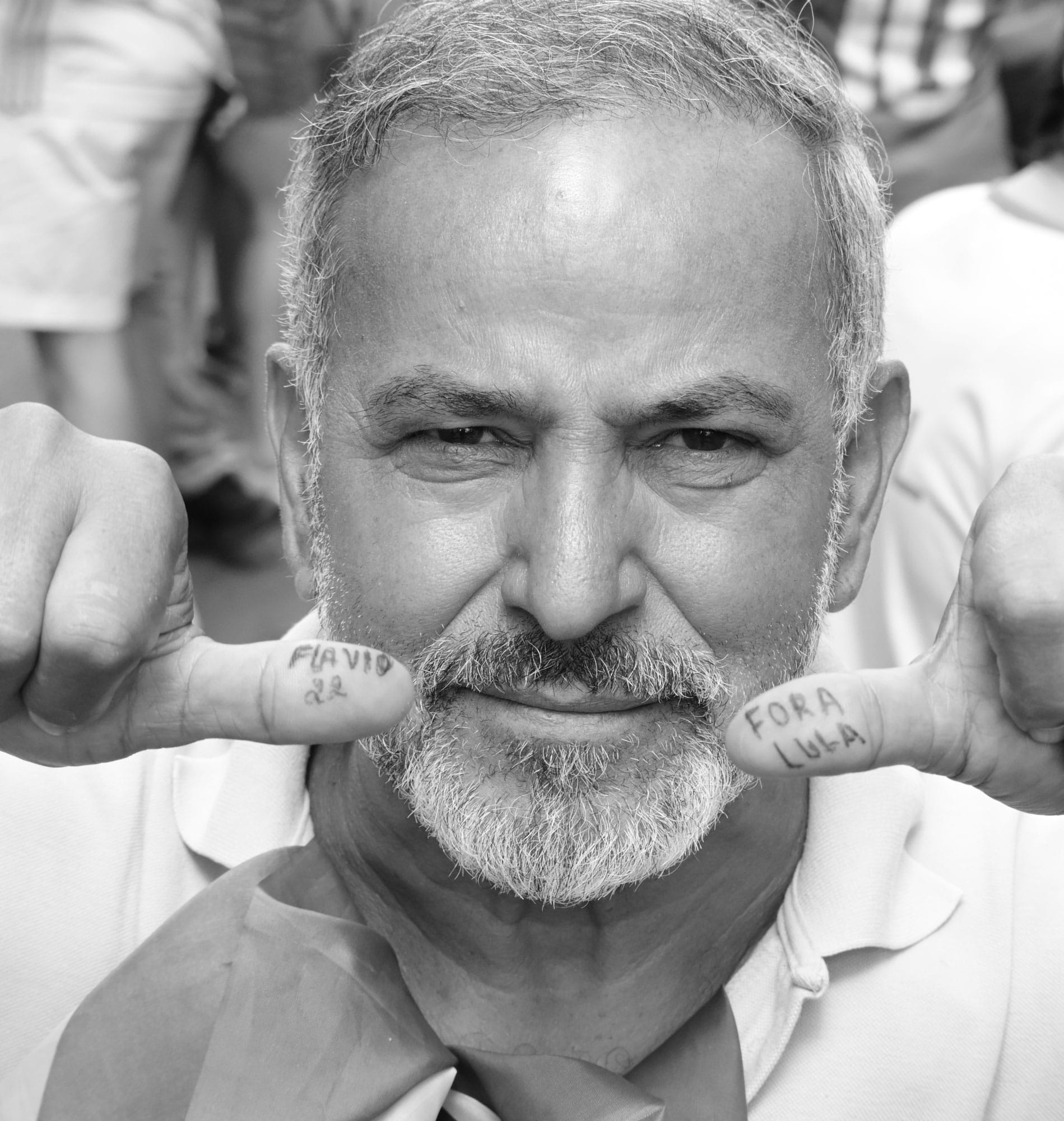
The man came towards me with both thumbs raised. I was photographing people around a rally on Avenida Paulista when he stepped in front of the lens and presented his hands...
There was writing on his thumbs, including a candidate’s name and a message directed at a political opponent. He looked straight at the camera. I took the photograph he was offering, although it was not the one I had been looking for a moment earlier.
A man approaches the photographer and raises both thumbs towards the camera, displaying handwritten political messages on his skin. His direct response to the lens contrasts with the unposed activity elsewhere in the series. The photograph records an encounter initiated by the person being photographed; it does not establish the full extent of his political views.
I had the camera; he supplied the gesture. For that moment, we both participated in the photograph, although neither of us discussed what might happen to it afterwards. I cannot tell from the encounter everything he believed, but his willingness to be photographed was unmistakable.
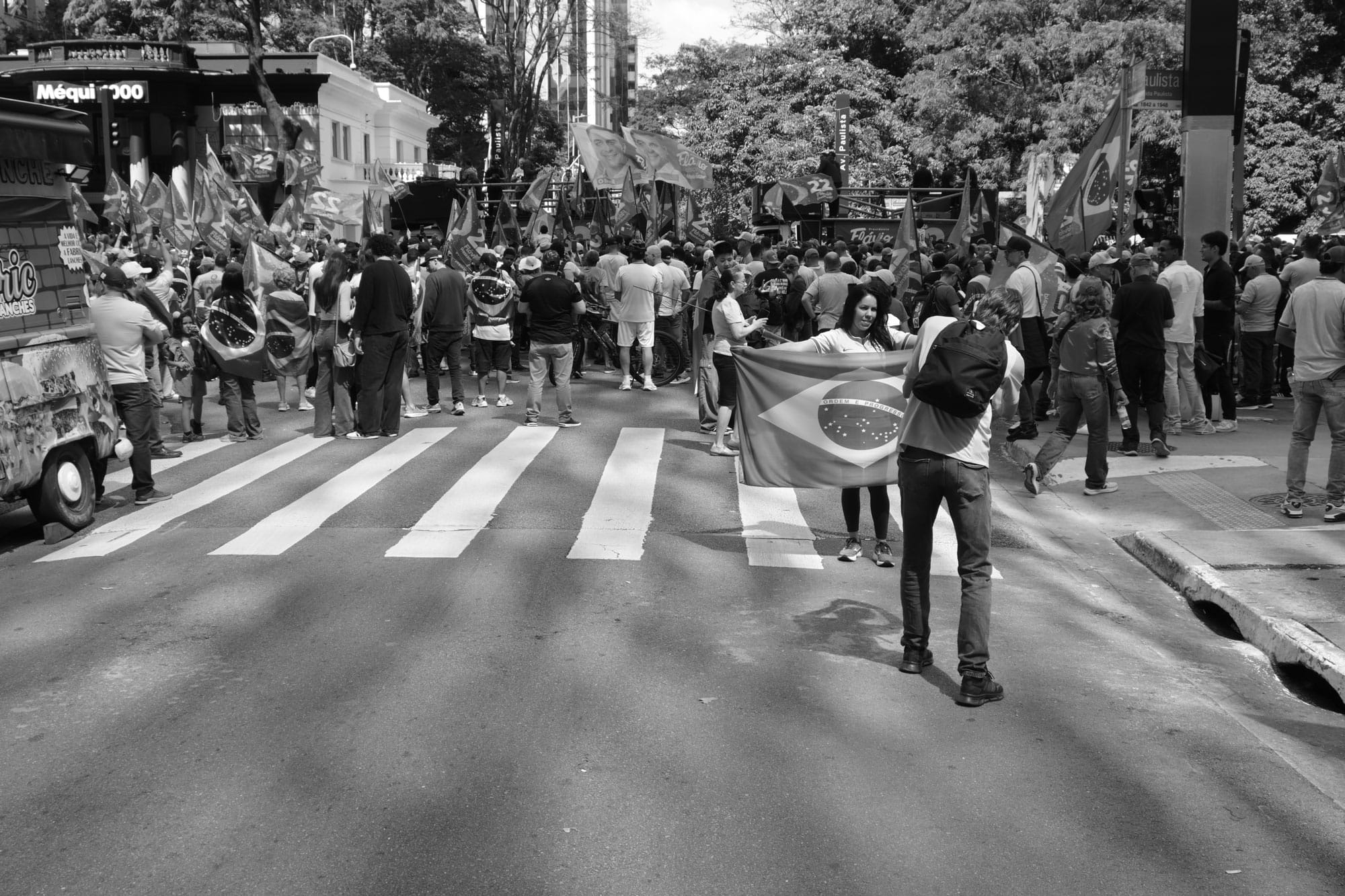
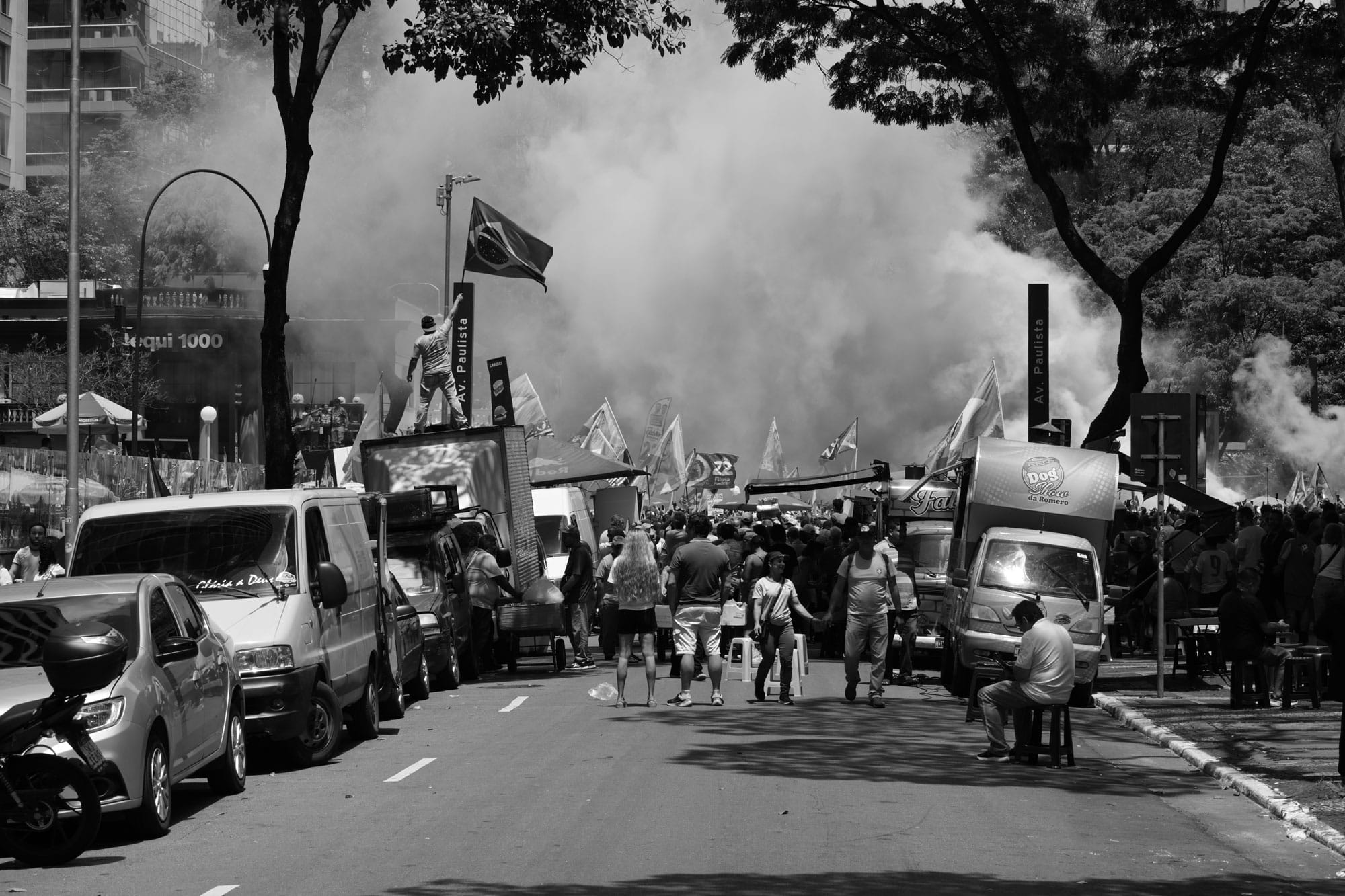
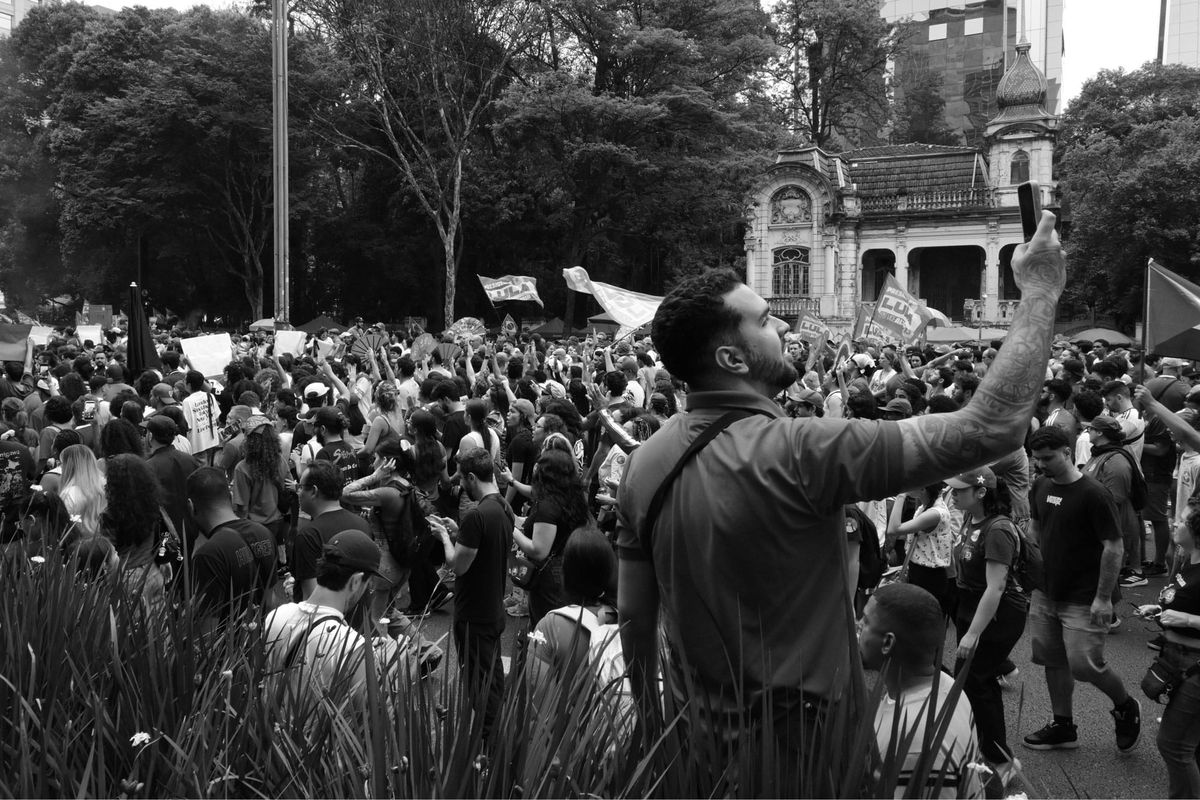
On 18 October 2026, a rally in support of Flávio Bolsonaro occupied part of Avenida Paulista. Flags, campaign shirts, police vehicles and a raised platform established the political occasion. I photographed the gathering, but as I moved around the avenue, my attention increasingly turned towards the people and activities surrounding it.
People occupy Avenida Paulista during a demonstration in support of Flávio Bolsonaro on 18 October 2026. The photograph establishes the public occasion around which the other pictures were made, before attention moves to the surrounding streets and individual encounters.
The event in view
A wider view establishes the setting. People move through a stretch of avenue temporarily occupied by a political gathering. It provides context for the photographs that follow, some of which contain almost no visible evidence of the rally.
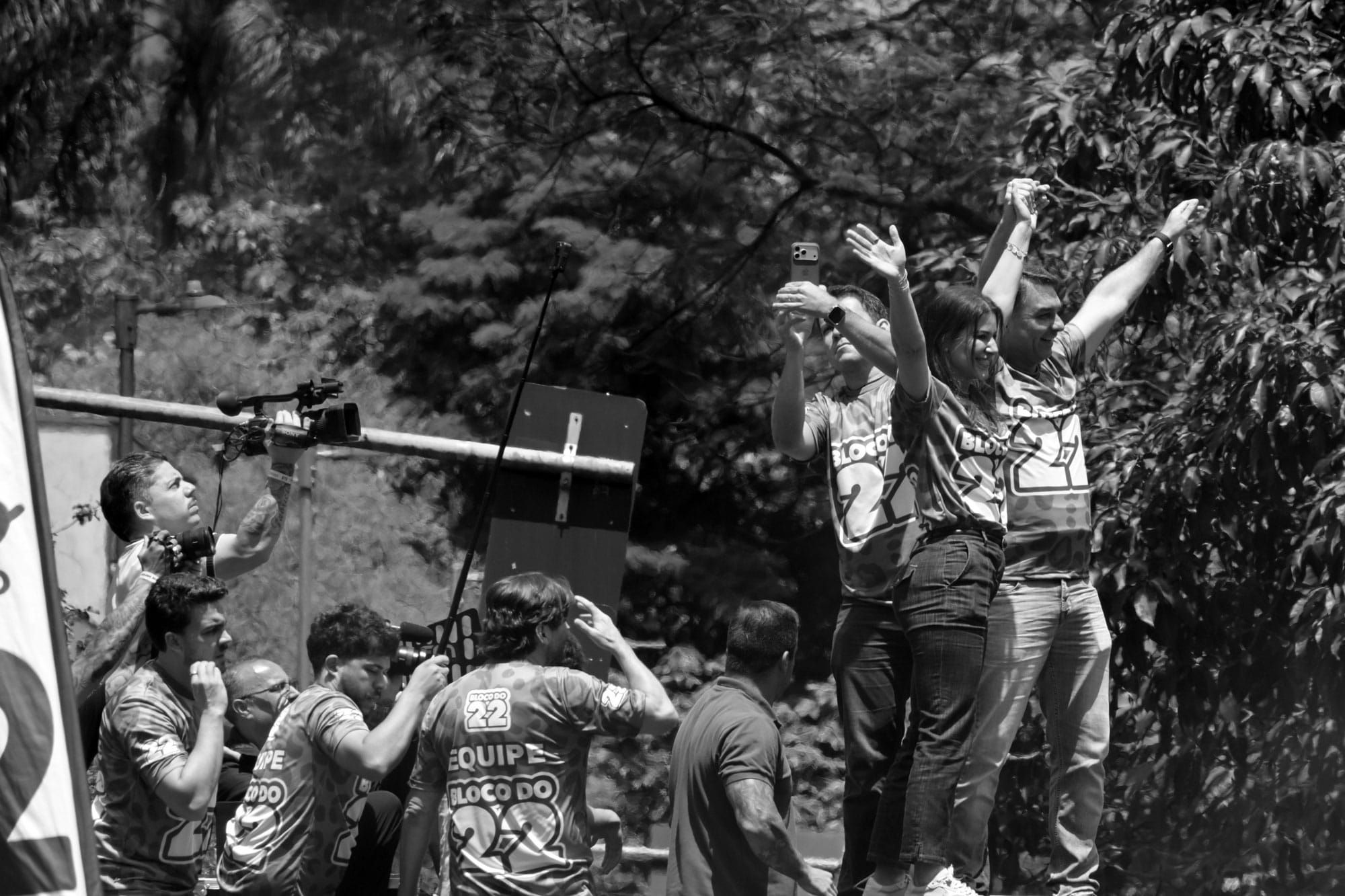
Flávio Bolsonaro appears with other people on a raised platform at the demonstration. The photograph provides the political context for the series while remaining its only image centred on the rally platform.
Flávio Bolsonaro appears on the platform among other people addressing or accompanying the crowd. The political centre of the event is visible here, although most of my photographs were taken elsewhere.
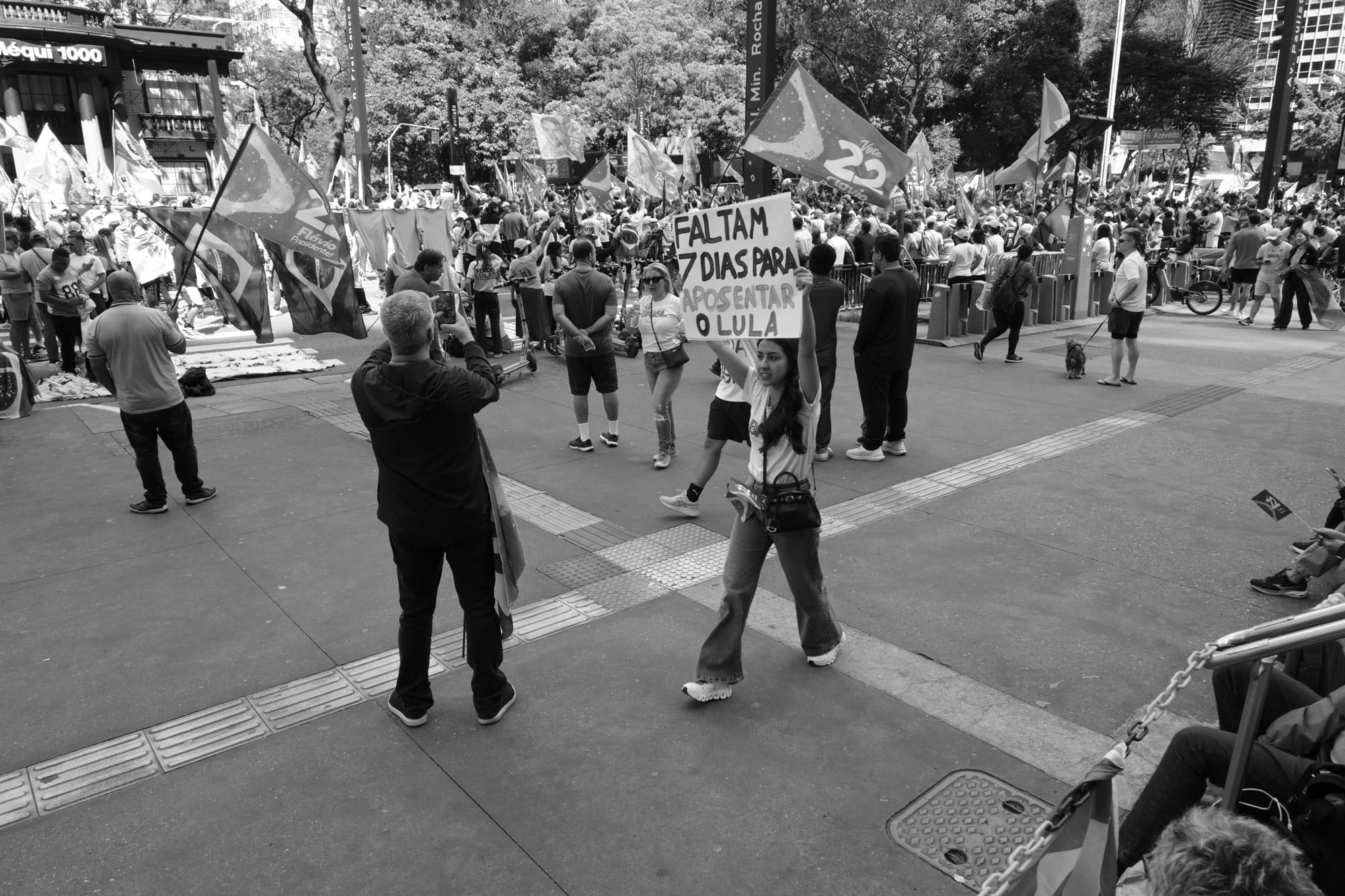
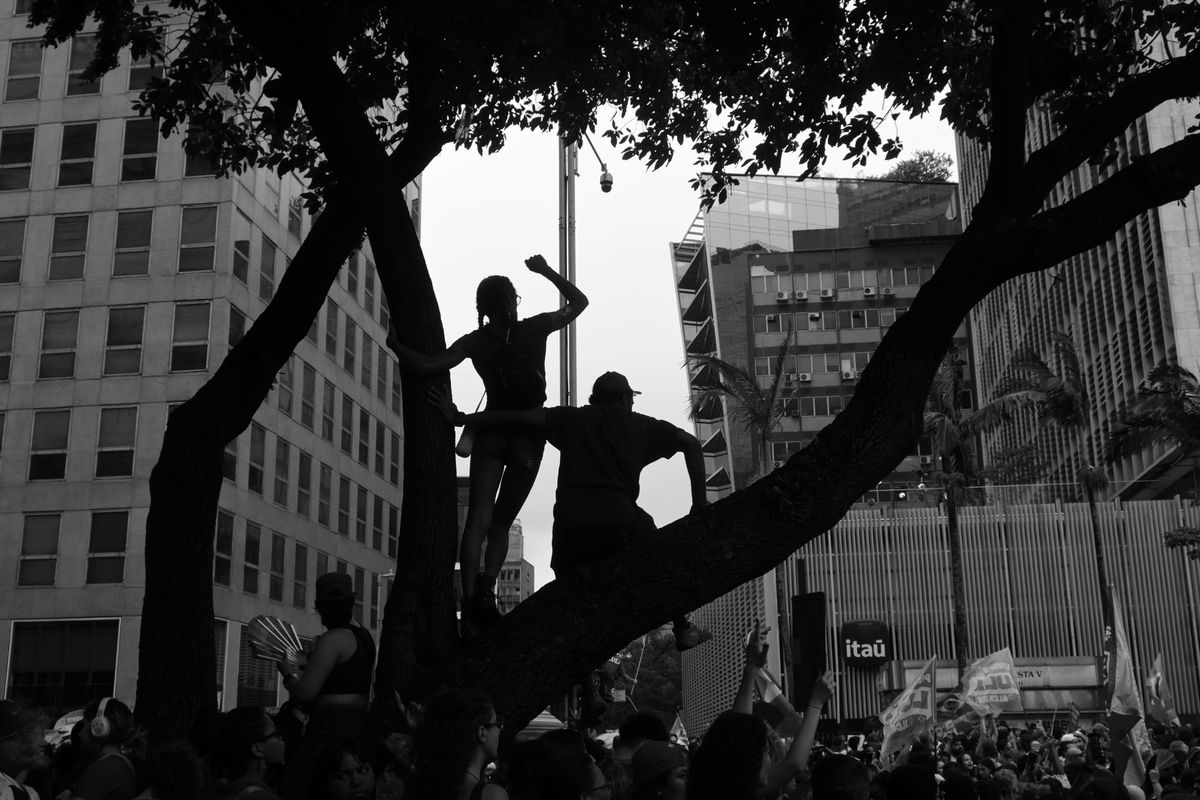
People, banners and campaign material share the space of the demonstration on Avenida Paulista. The photograph records the visible presence of supporters and observers within the gathering without attributing individual beliefs beyond what their actions show.The gathering is seen from farther along the avenue, with smoke or haze visible in the distance. The viewpoint places the event within the broader streetscape rather than concentrating on the speakers or platform.
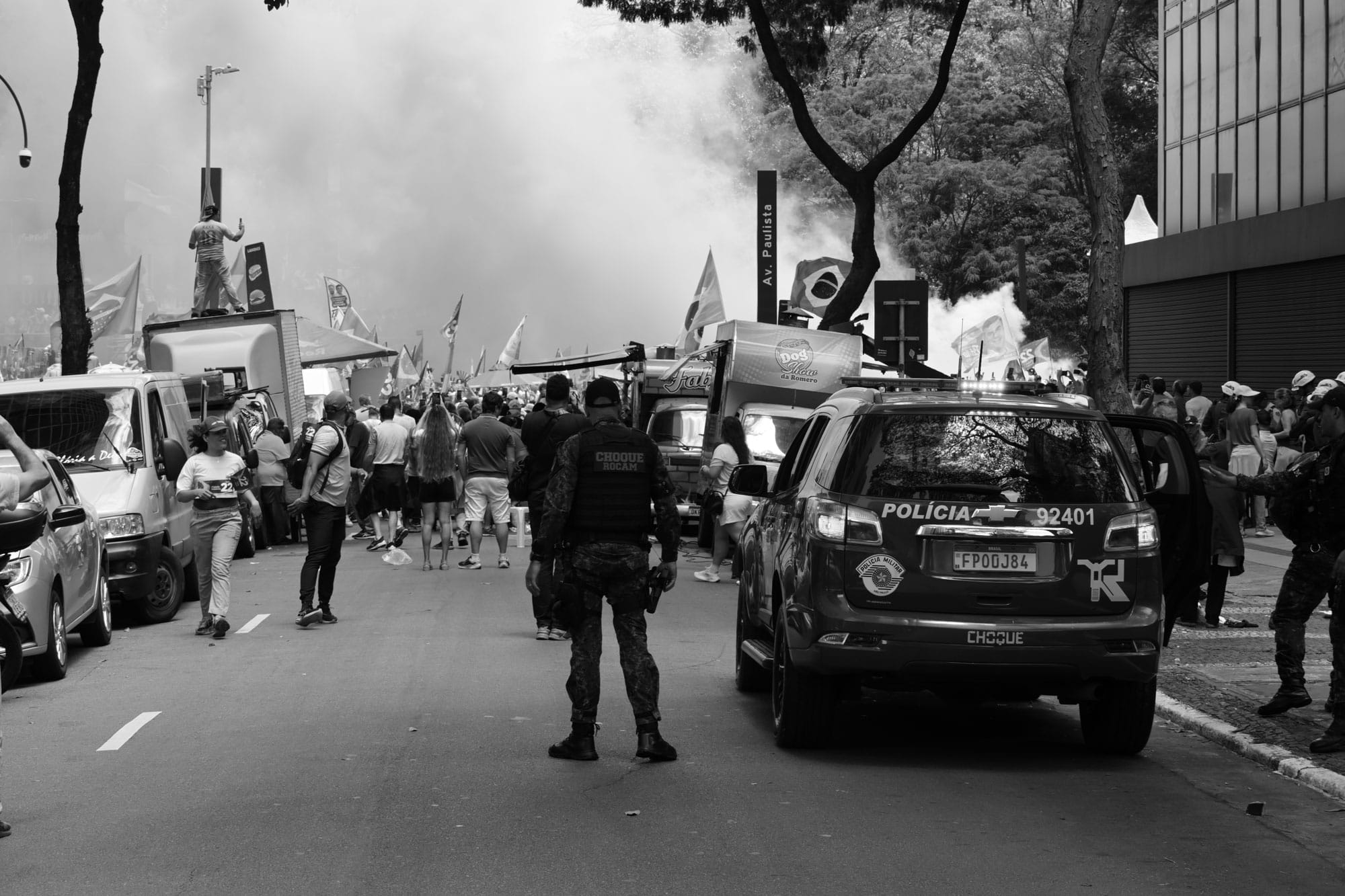
Farther along the road, the gathering became less concentrated. Vehicles, barriers and passing figures interrupted the view. The rally had changed the ordinary use of the street, but the people moving through it were not necessarily there for the same reasons.
Police personnel and vehicles are visible around the demonstration. The photograph records the public-order presence and changes to ordinary street activity accompanying the event.
Away from the centre
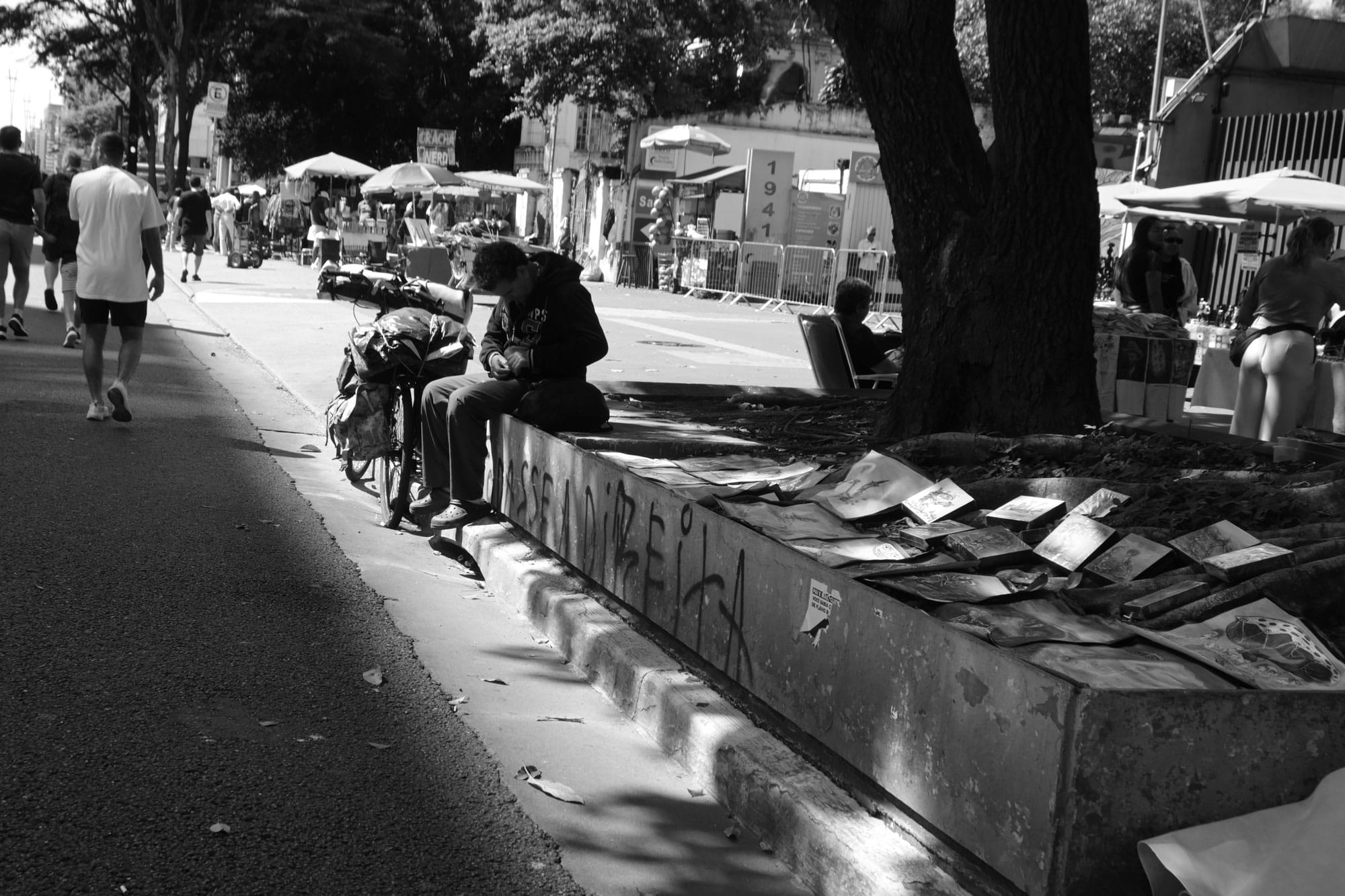
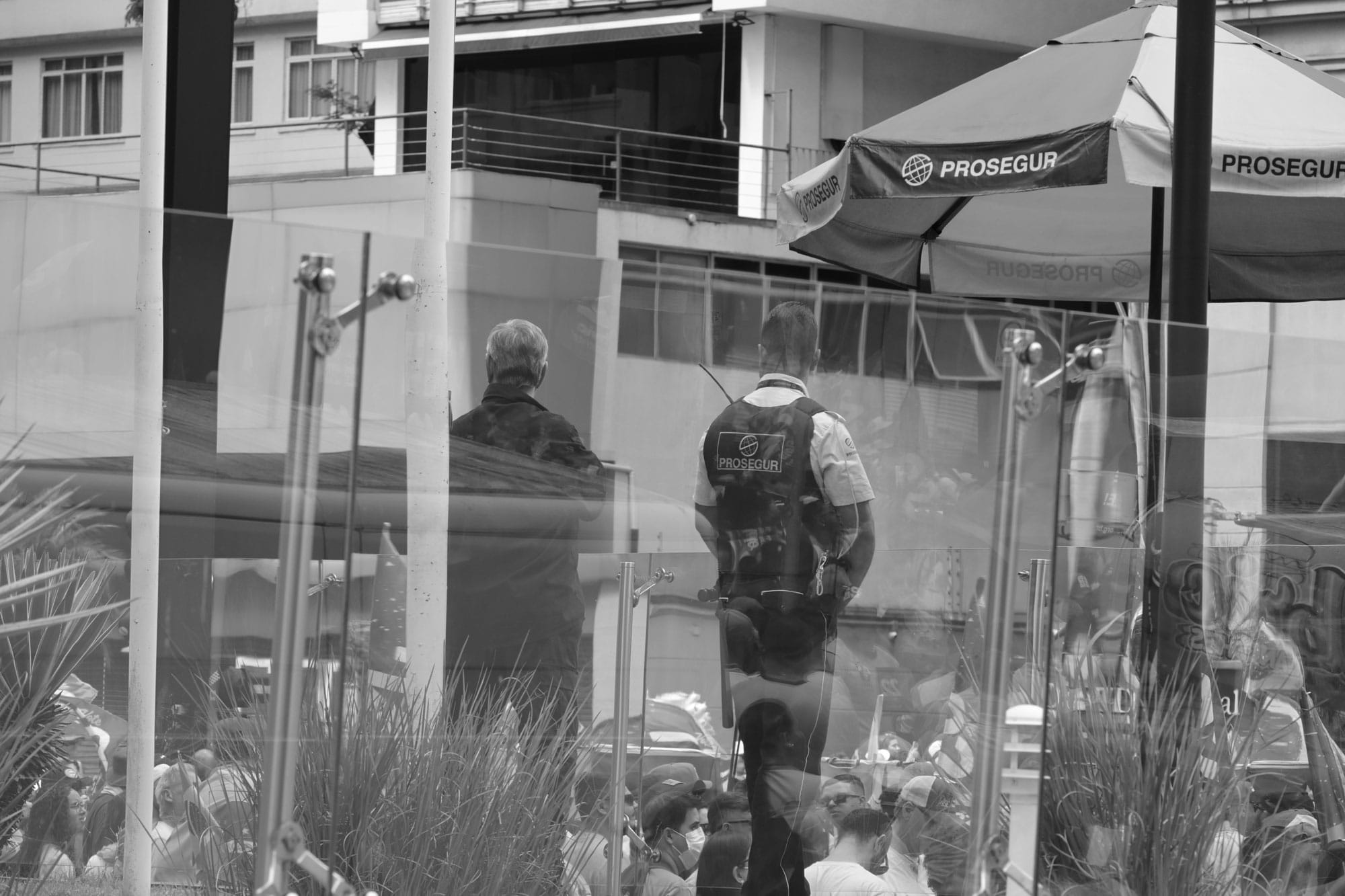
Beyond the densest parts of the crowd, shopfronts, shaded pavements and spaces between people became more visible. These were not necessarily quiet places, but they offered a different view of the afternoon.
A shaded stretch of pavement contains people and everyday objects near the demonstration. The photograph redirects attention from the central gathering to the details of the surrounding street.People pass through an area adjoining the demonstration. Their movement forms part of the street scene, although the photograph alone does not establish their reason for being there.Figures and elements of the urban streetscape overlap within the frame. The photograph uses the surrounding structures and lines of sight to examine how people remain visible at the edge of the gathering.
Some of these photographs might have been taken on another afternoon, without a rally nearby. Their connection to the event lies partly in the circumstances in which I encountered them, rather than in what they show.
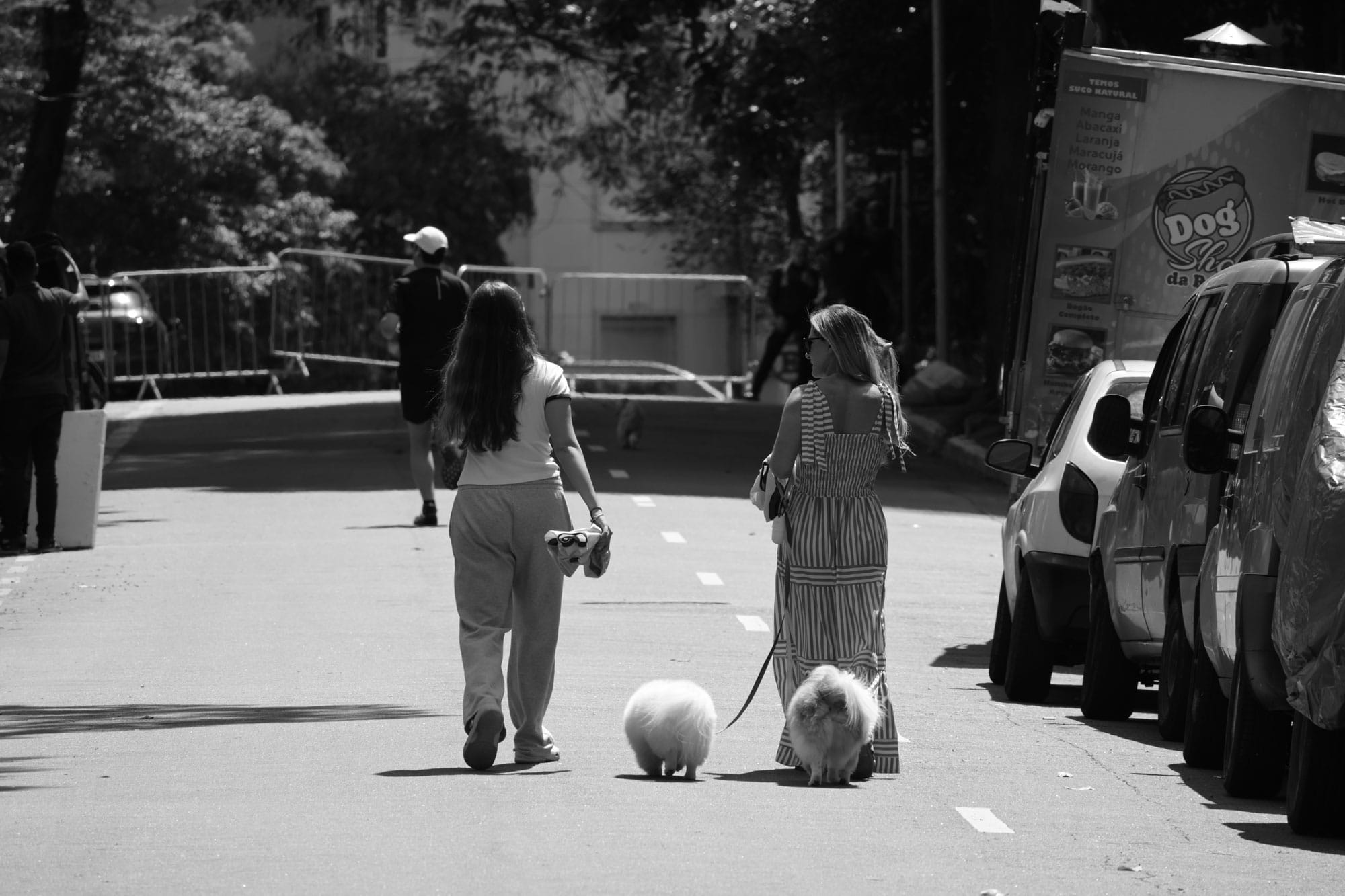
Two women walk with dogs away from the busiest part of the demonstration. Their ordinary activity continues within the same urban setting as the political gathering, without any implication about their opinions of it.
The two women moved through a comparatively open stretch of roadway. I did not speak to them or establish whether the rally had influenced their route. What interested me was the ordinary activity continuing within a part of the city whose usual character had briefly changed.
People occupy the pavement beside a closed shopfront. The shuttered frontage gives the photograph a quieter setting than the centre of the rally and draws attention to people whose activities are not explained by the public event.
People beside the event
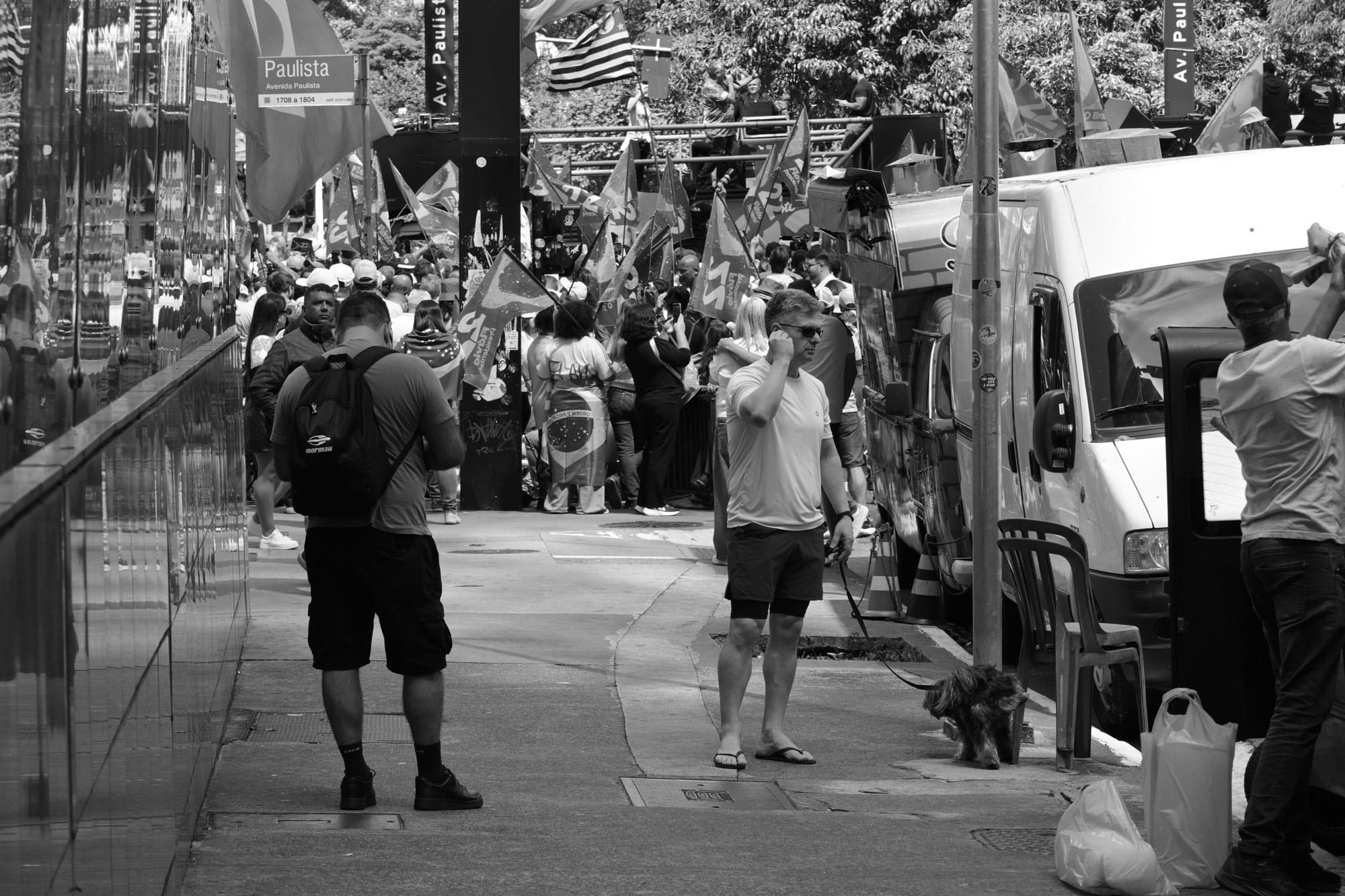
People occupied the smaller spaces beside shopfronts and barriers while the gathering continued nearby. Some stood, others sat or passed through. Their presence belonged to the same afternoon, although the public event did not necessarily explain what they were doing.
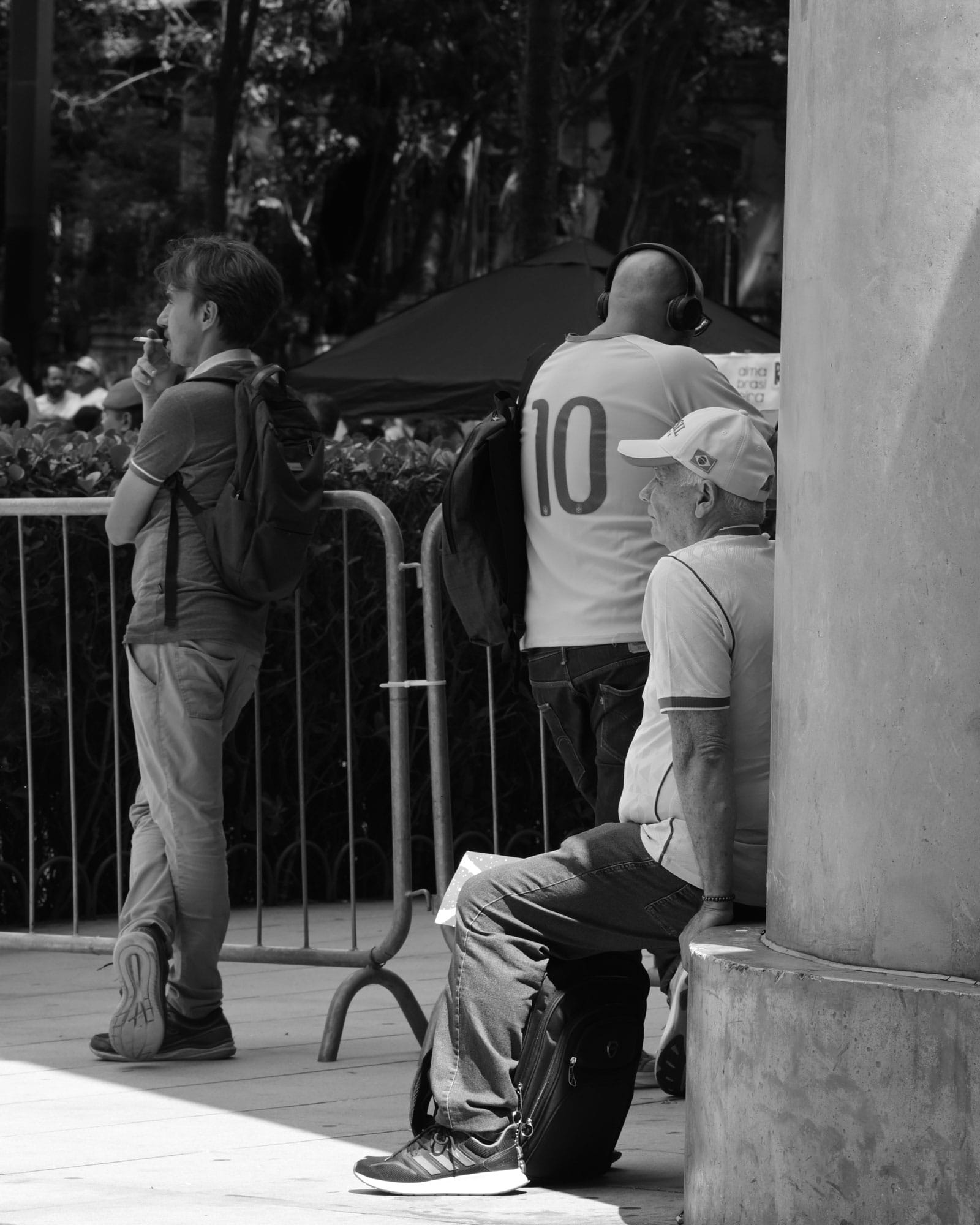
People stand or move near a column and a barrier beside the gathering. The photograph records the arrangement of bodies and street infrastructure through which people navigate the area.
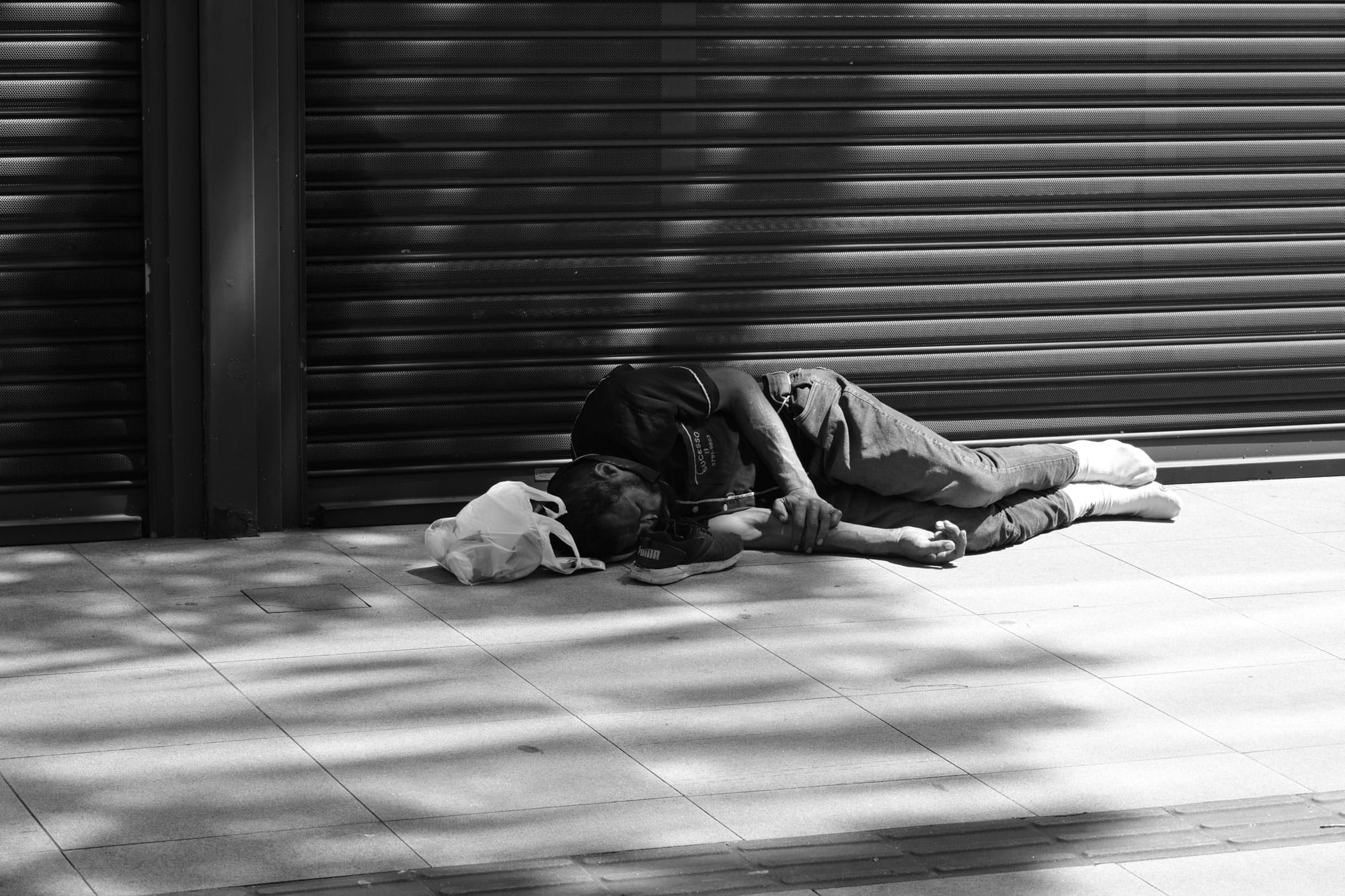
The photograph of a person lying beside a shutter requires particular care. The strong lines of the frontage and the position of the body create a striking composition.
A person lies beside a metal shutter near the demonstration. The photograph records the visible posture and setting but does not establish the person’s housing circumstances, health or relationship to the event.
Those same features could encourage the image to be read as a symbol of conditions in the city. I do not know the person's circumstances or whether the rally affected them. The photograph records their presence, but cannot explain their situation.
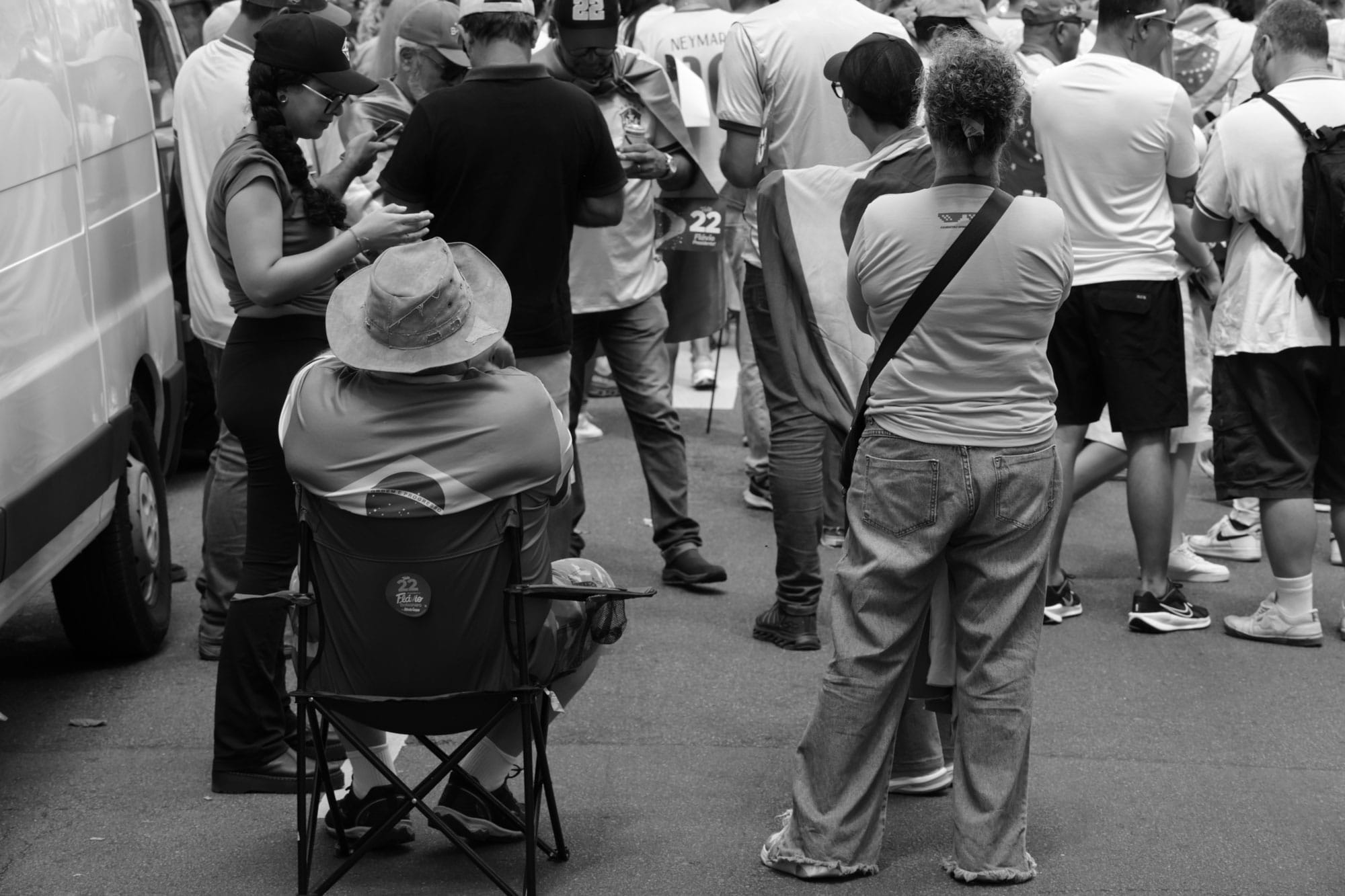
People stand and sit near the gathering, facing different directions and occupying the space in different ways. The photograph observes their presence without presuming what each person is waiting for or watching.
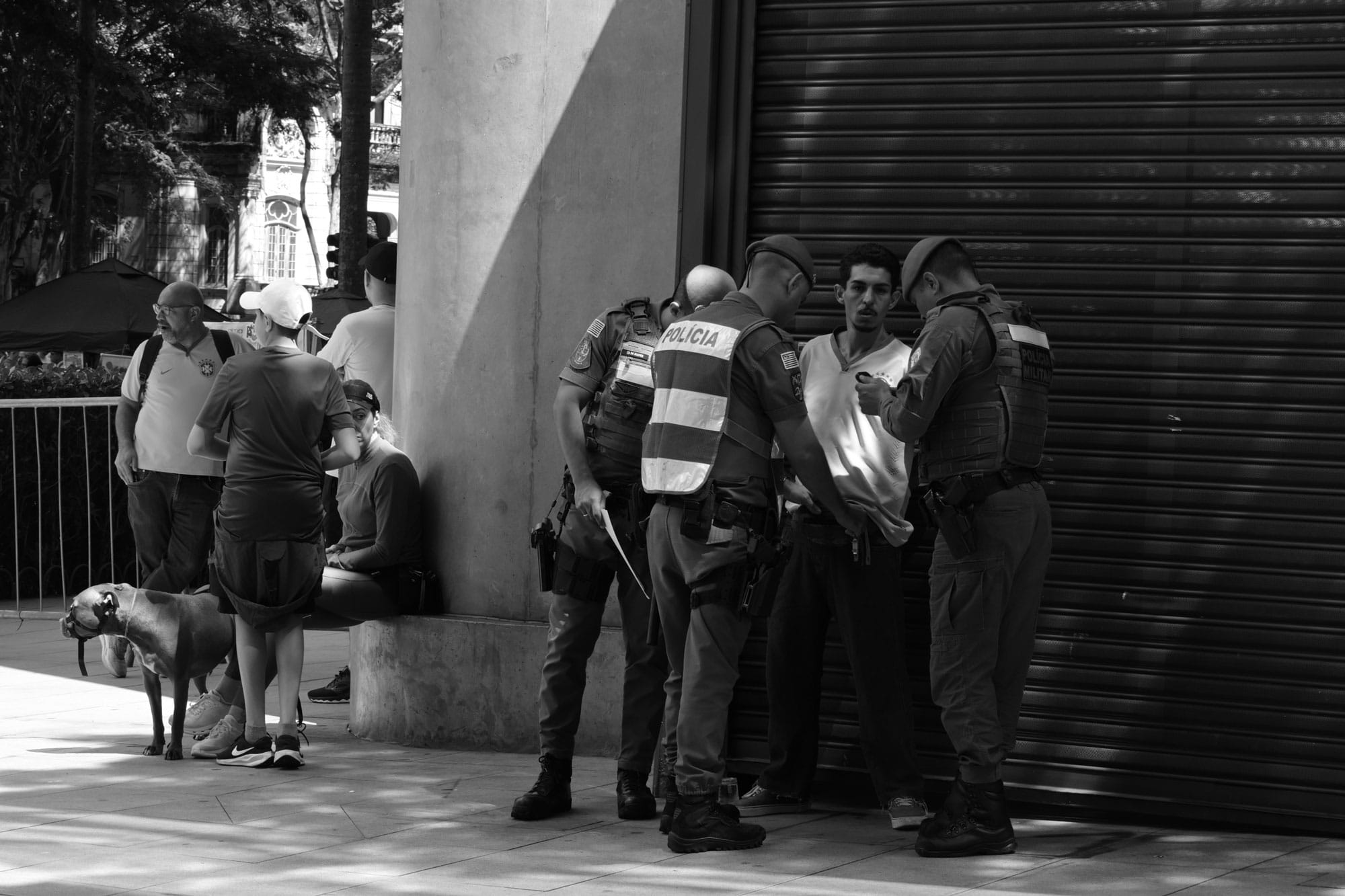
Uniformed police officers stood along another closed frontage. Nothing in the photograph establishes a particular incident. It records people working and waiting within an event that other photographs present as a spectacle.
Police officers stand beside a shuttered building during the demonstration. The closed frontage and police presence show how the event intersects with ordinary commercial and pedestrian space.
Within reach of the crowd
Closer to the gathering, hands, faces, signs and clothing competed for space within the frame. The political context was unmistakable, but individual gestures continued to draw my attention.
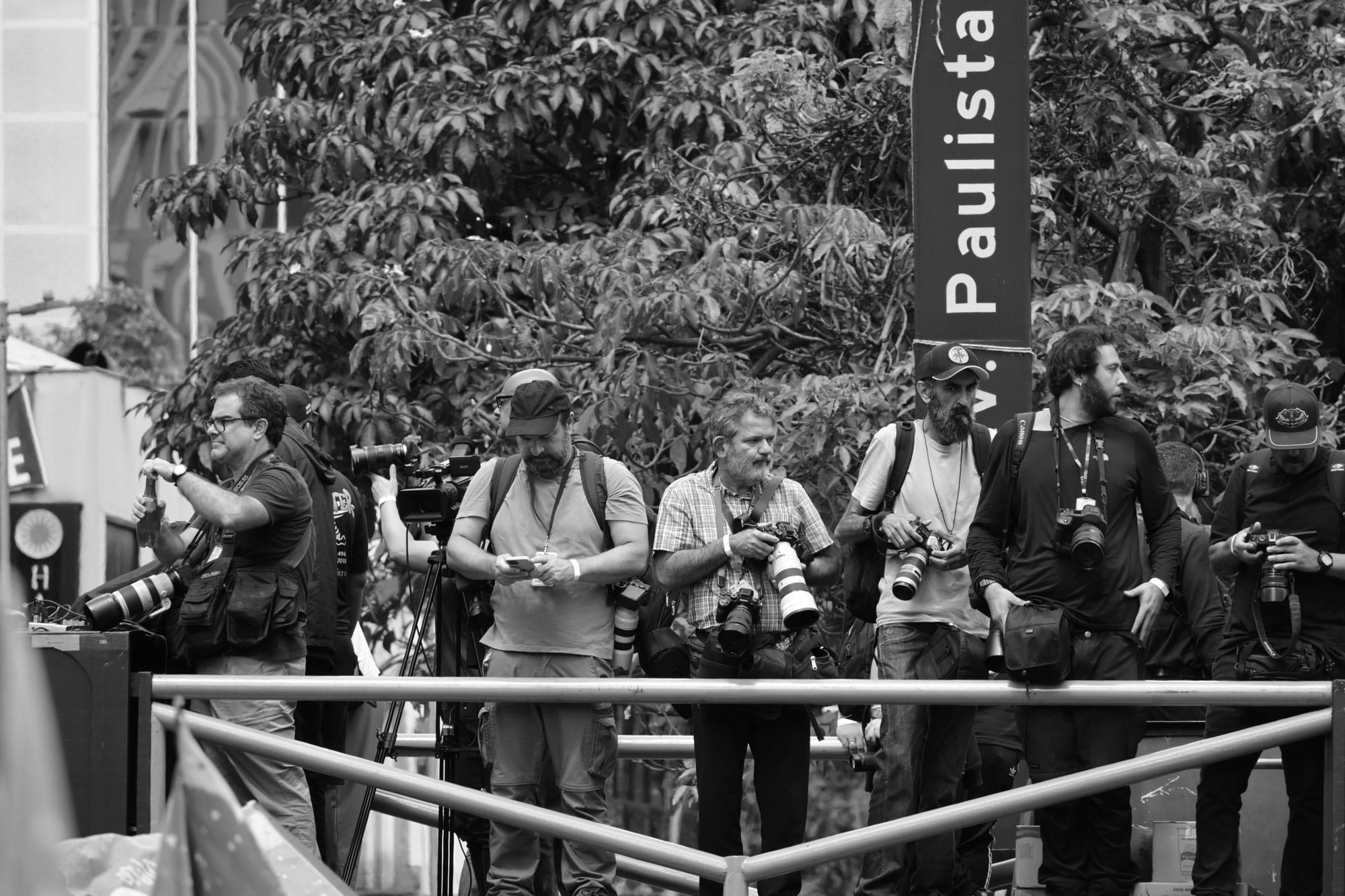
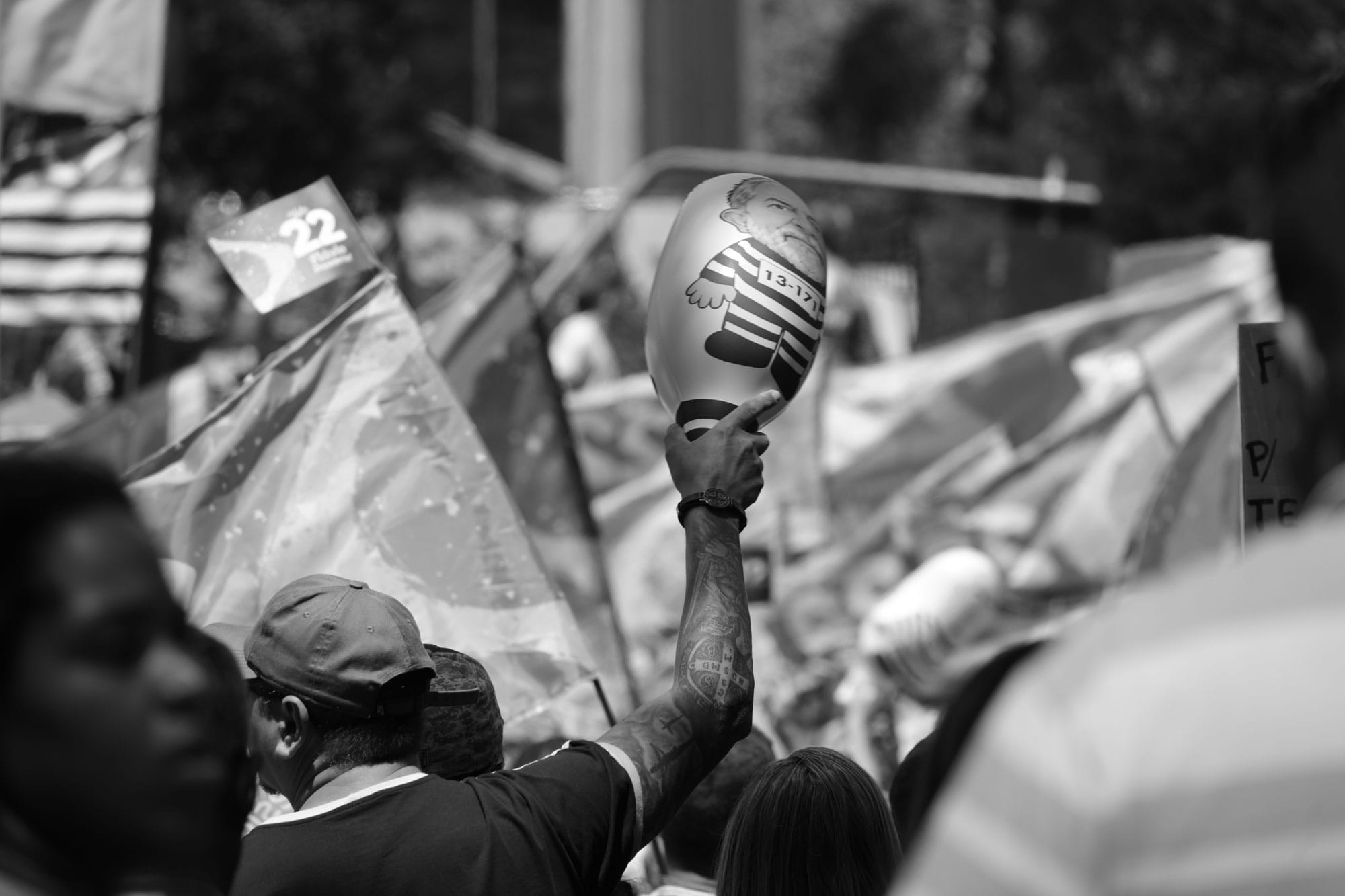
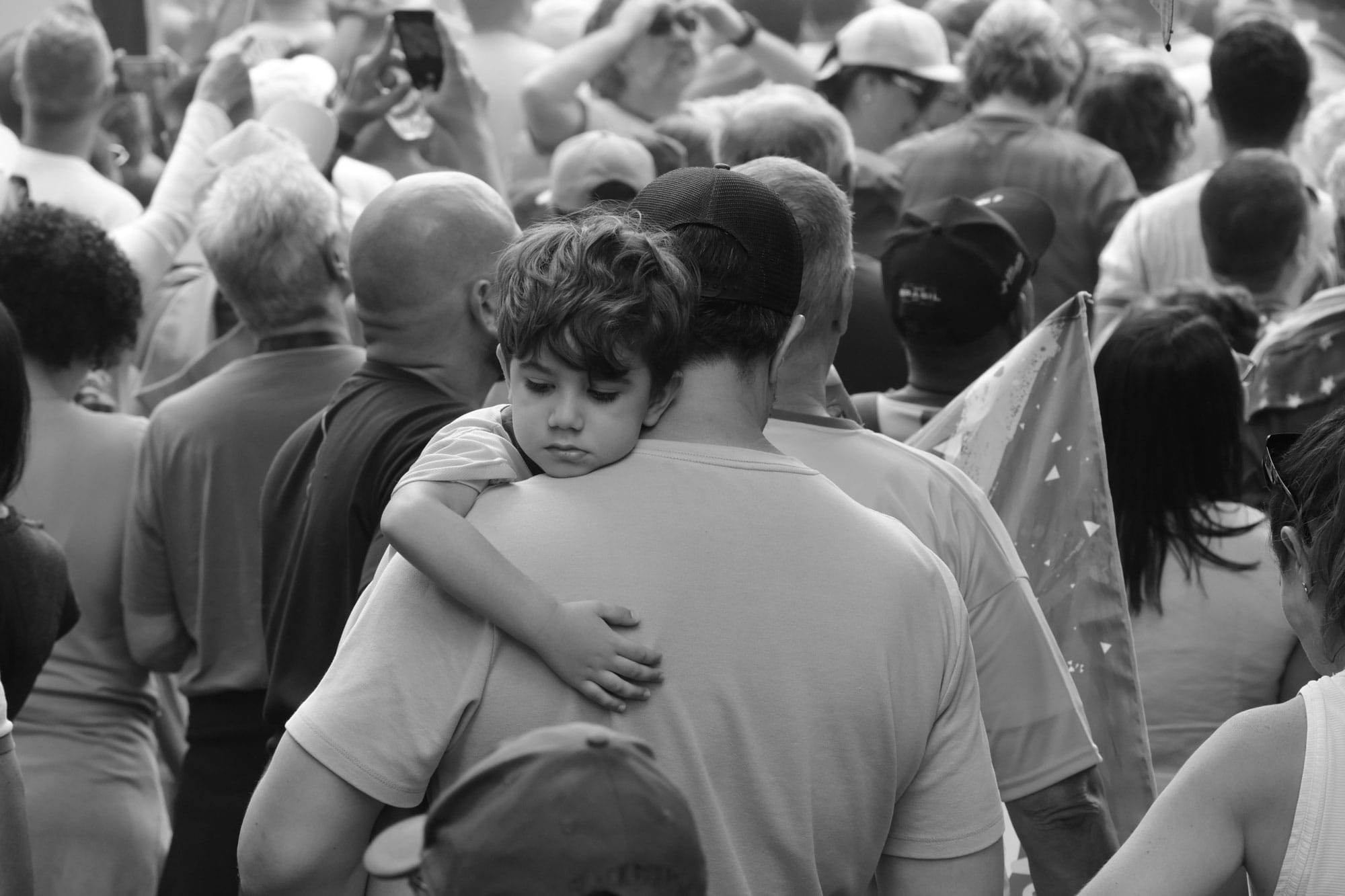
People watch activity on Avenida Paulista beneath or near a street sign. The photograph situates the onlookers within the recognisable urban setting of the demonstration.A political object is held above people gathered at the demonstration. The raised gesture draws attention within the crowd, while the rest of the frame places it among other participants and observers.A person moves among people gathered for the demonstration. The photograph isolates an individual action within a larger event rather than presenting the crowd as a single undifferentiated subject.An adult holds a child close amid the people gathered on Avenida Paulista. The photograph records their proximity and the surrounding crowd without assigning political intentions to the child.
An adult held a child close among the people gathered on the avenue. It was a small action within a crowded scene. The photograph records their proximity, but tells me little about why the adults attended or what the child understood of the occasion.
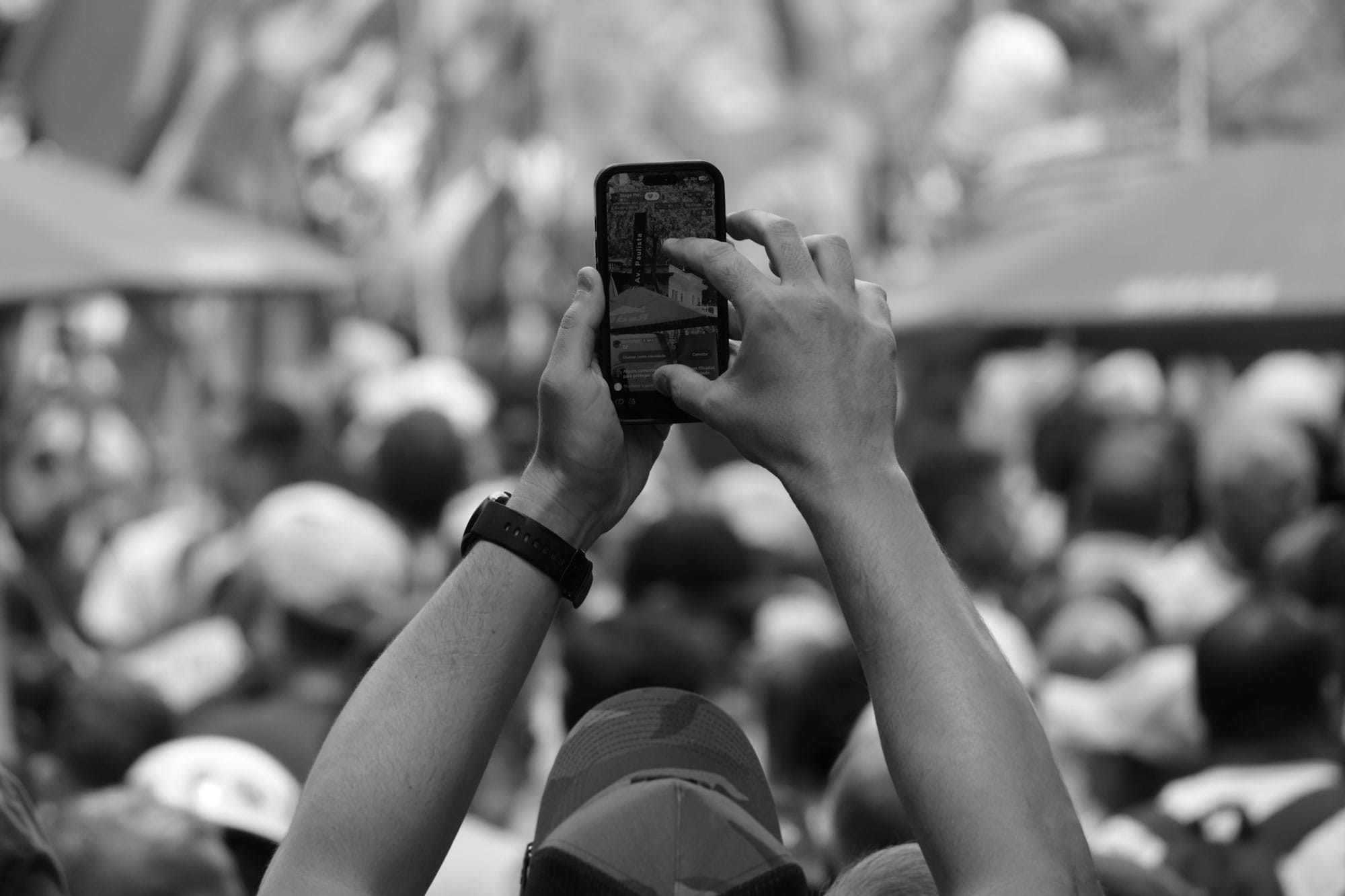
A person raises a mobile phone to record or photograph the demonstration. The gesture is another act of observation within the event and parallels the documentary photographer’s own activity.
A raised phone brought another camera into the scene. People were making their own records of the gathering. Sometimes my camera went unnoticed; at other moments, as with the man who raised his thumbs, the person being photographed actively shaped the encounter.
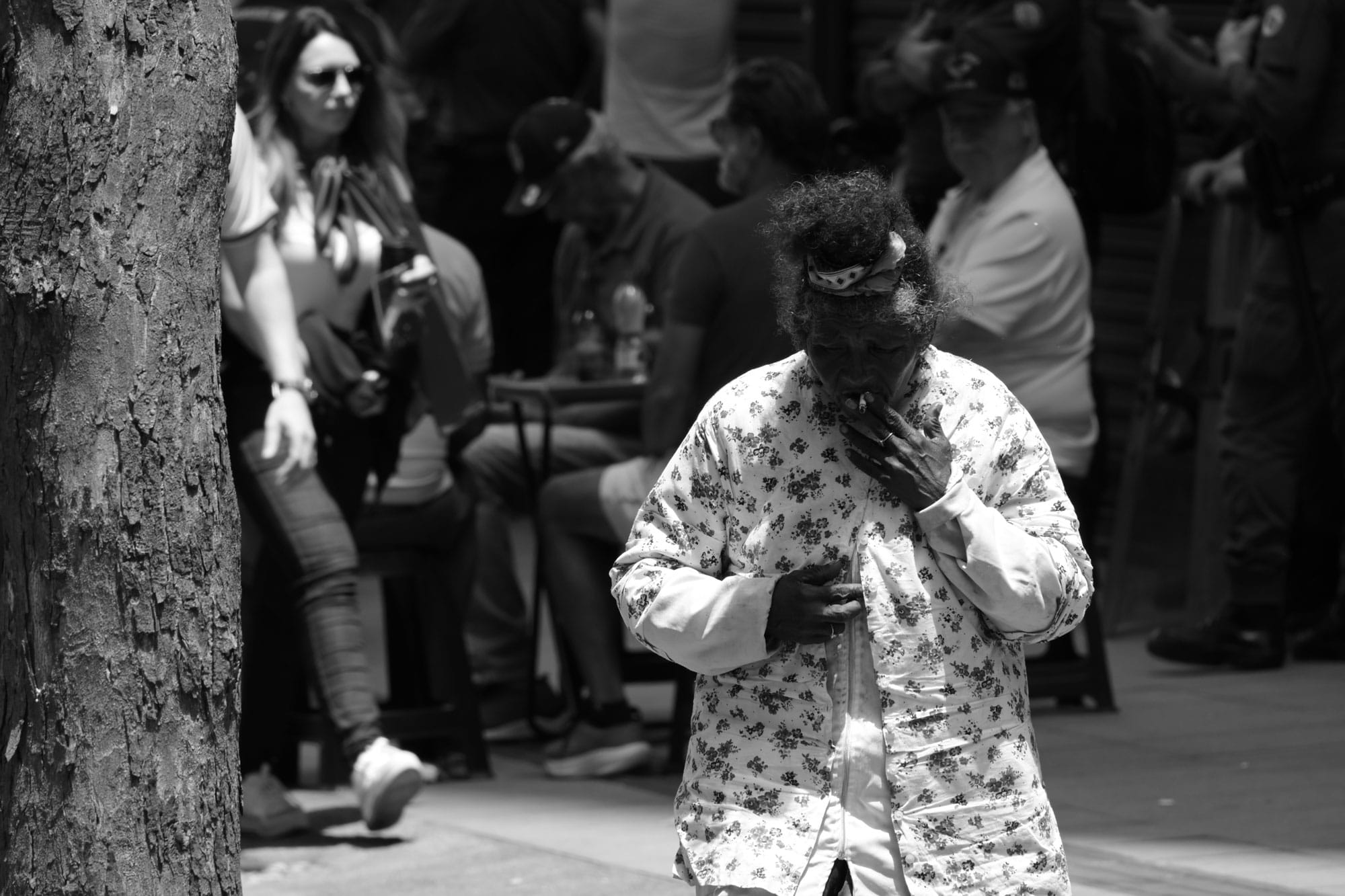
A person walks through a patch of sunlight near the gathering. The photograph closes the series with an ordinary movement through public space, away from the platform and the central political spectacle
Another encounter
Near the end of the selection, a woman passed through a patch of sunlight, looking down and attending to her clothing. She did not address the camera or appear to invite a portrait. I photographed the passing moment because I noticed it, not because I knew what she intended.
The first person in this series approached my camera and offered a photograph. The last walked past without doing so. Between those encounters, I photographed a rally and the ordinary activities continuing around it.
The pictures share a place and an afternoon, but not necessarily a common purpose. That difference is part of what I wanted to preserve.




 Neil Wildin
 Neil Wildin


Member discussion