


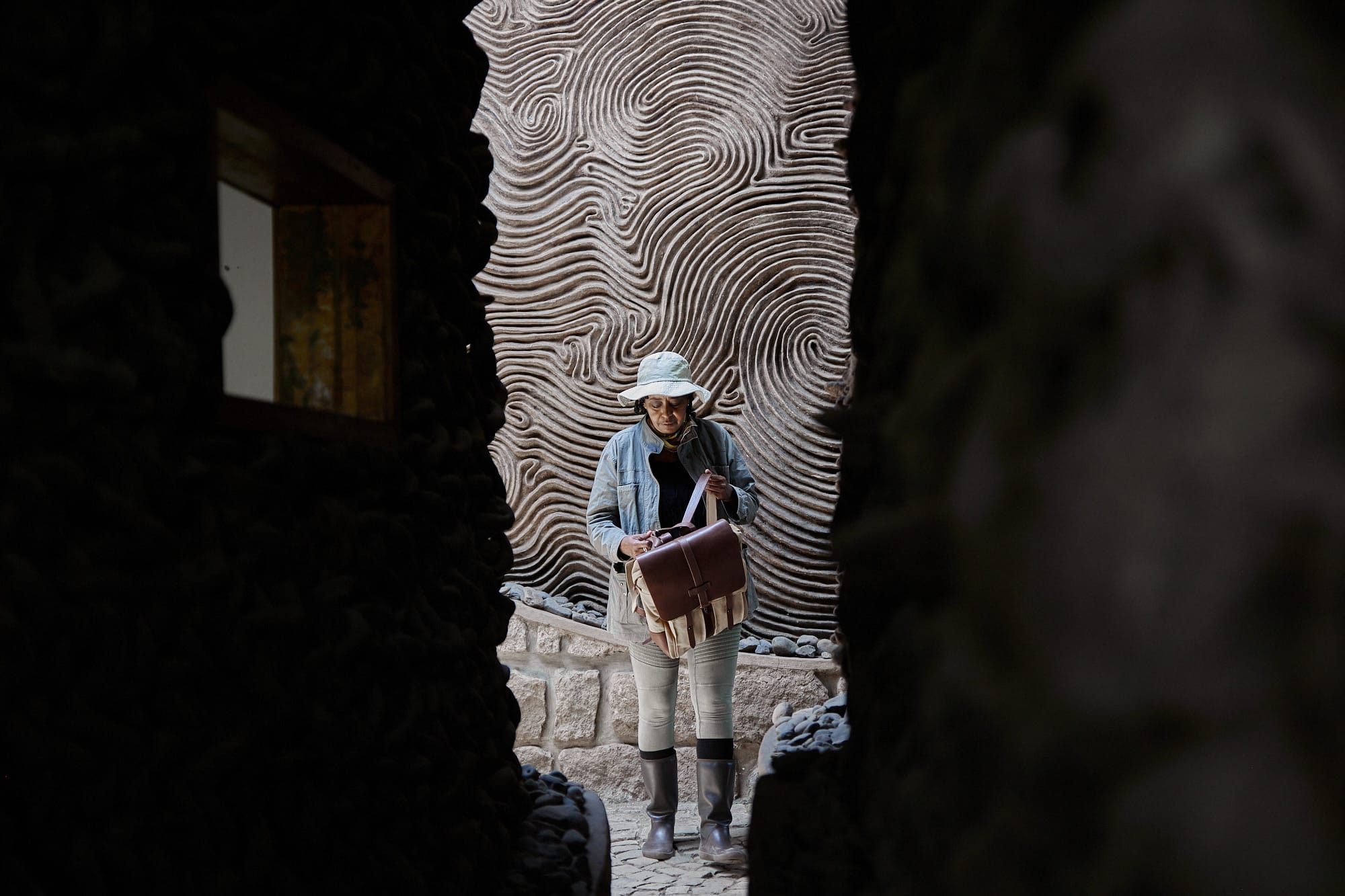
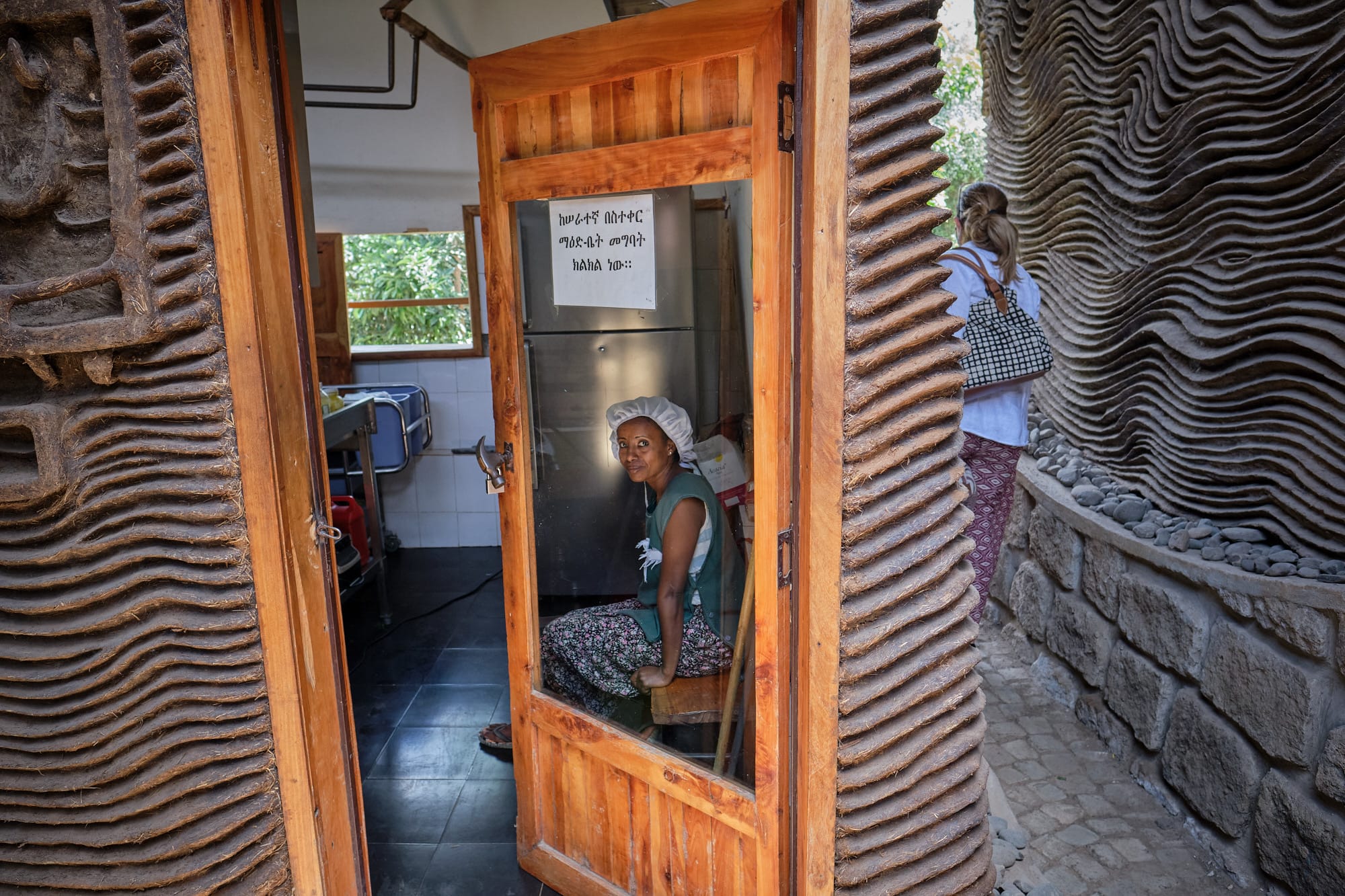
At Zoma, entering a building can feel like entering the material from which it was made. The passage narrows. Dark earthen walls rise on both sides, their surfaces shaped by hand into knots, ridges, hollows, and interlocking forms. Ahead, daylight falls across another wall, where long carved lines turn and return like currents on a map.
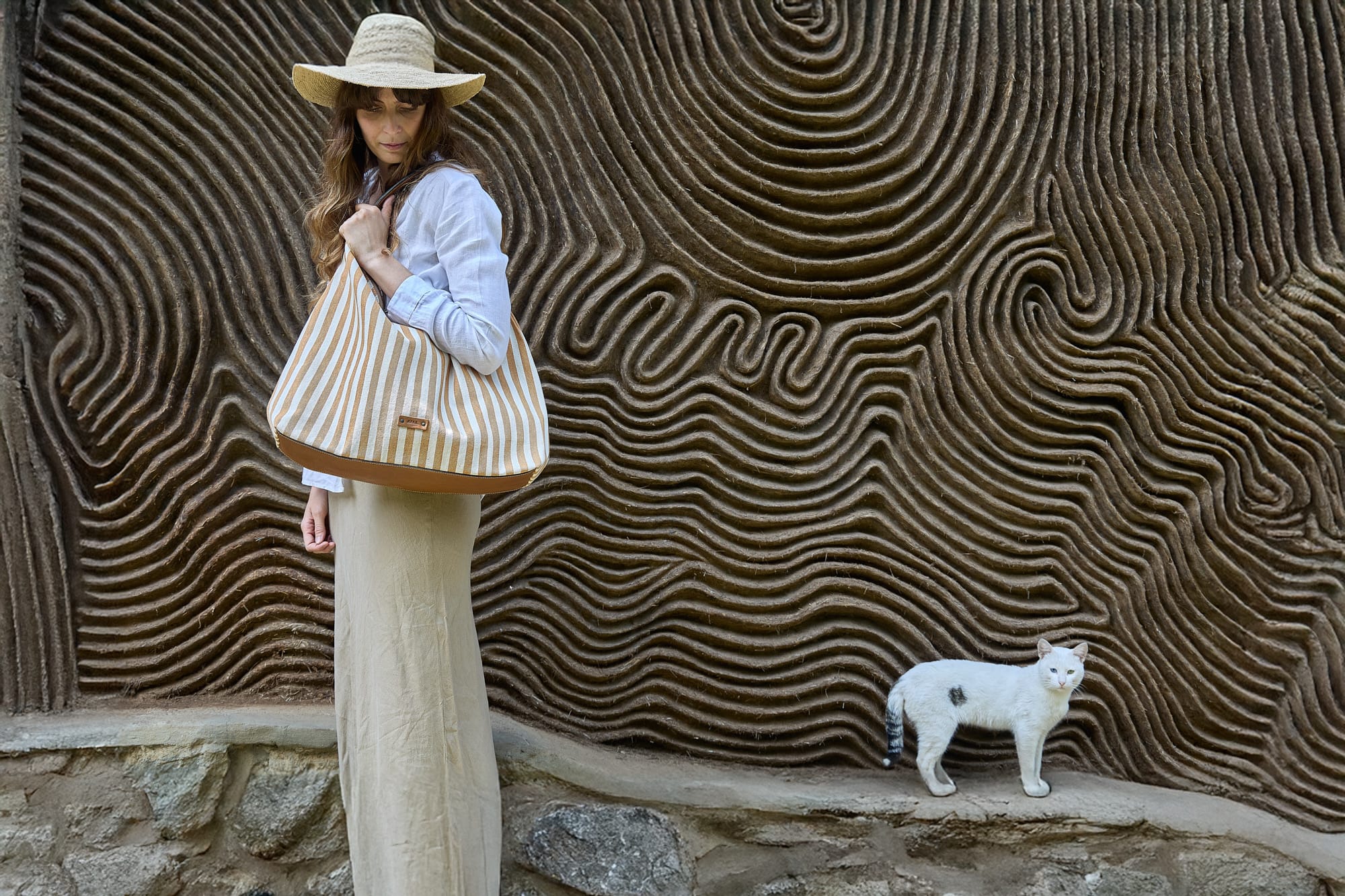
A person walks toward the light with an AFAR bag over one shoulder. The leather catches a little of the sun; the canvas absorbs the softer tones of soil and stone. Nothing in the image is perfectly smooth. The walls retain the movement of the hands that formed them, while the bag carries the small irregularities that accompany an object made to be used.
This is a useful way to enter Zoma Museum, and also a useful way to understand the relationship between Zoma and AFAR. Both begin with materials, yet neither treats materials as inert resources. Earth, straw, wood, leather, cloth, plants, discarded wires: each arrives with a history, a set of possibilities, and a responsibility attached to its use.
Built by Hand, Shaped by Time
Zoma Museum was founded by the artist Elias Sime and the curator and anthropologist Meskerem Assegued. The institution grew from a collaboration extending across decades and from a shared interest in contemporary art, vernacular knowledge, education, and the relationship between human life and the environment.
The present museum in Addis Ababa opened in March 2019, although its intellectual and artistic origins reach much further back. Named in memory of the Ethiopian artist Zoma Shiferraw, it was conceived as a place where experimental art could exist inside an architecture grounded in Ethiopian building traditions. Its structures use materials including mud, straw, stone, and wood, brought together through techniques whose resilience had already been tested by generations of builders. (jamescohan.com)
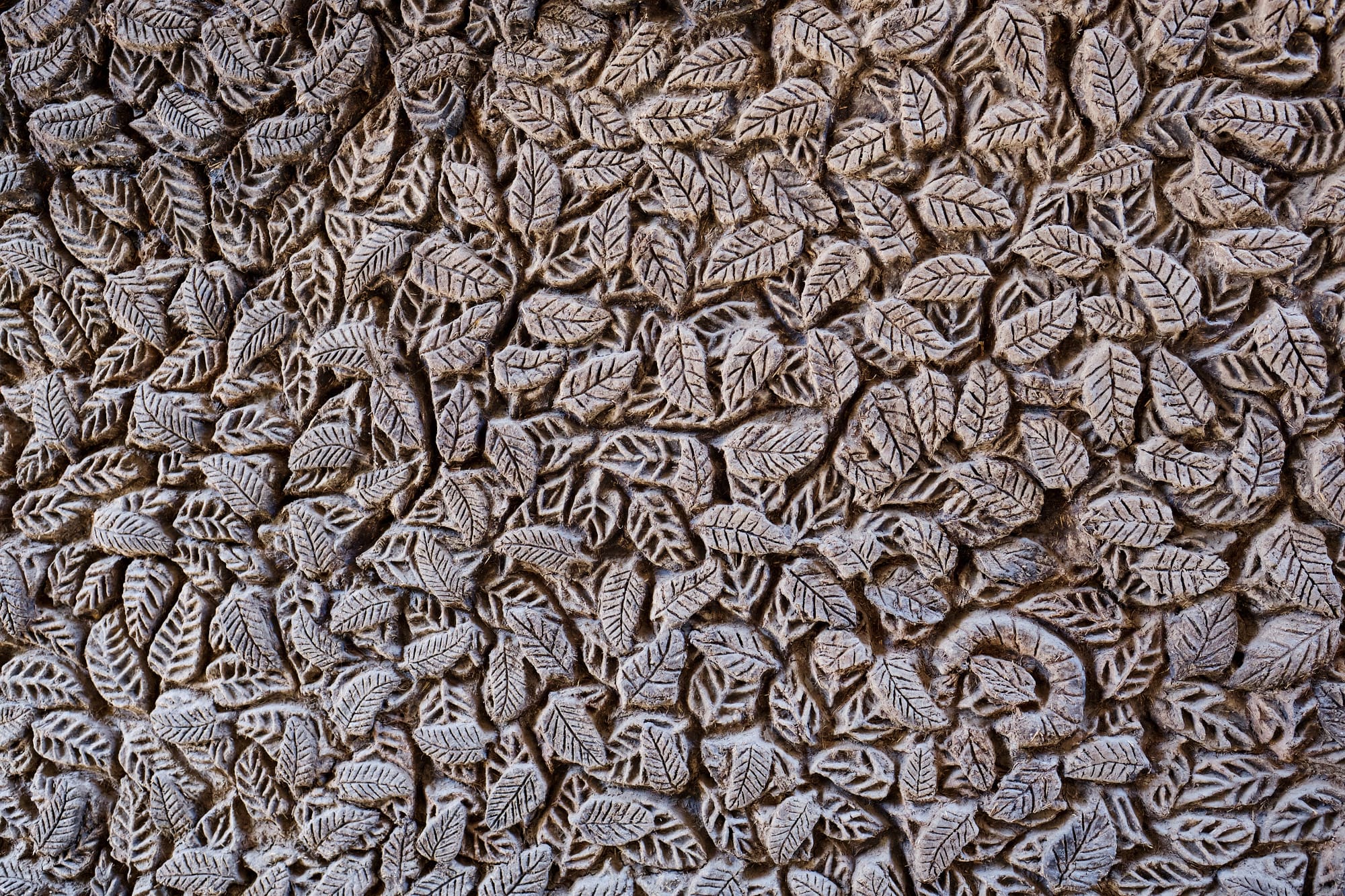
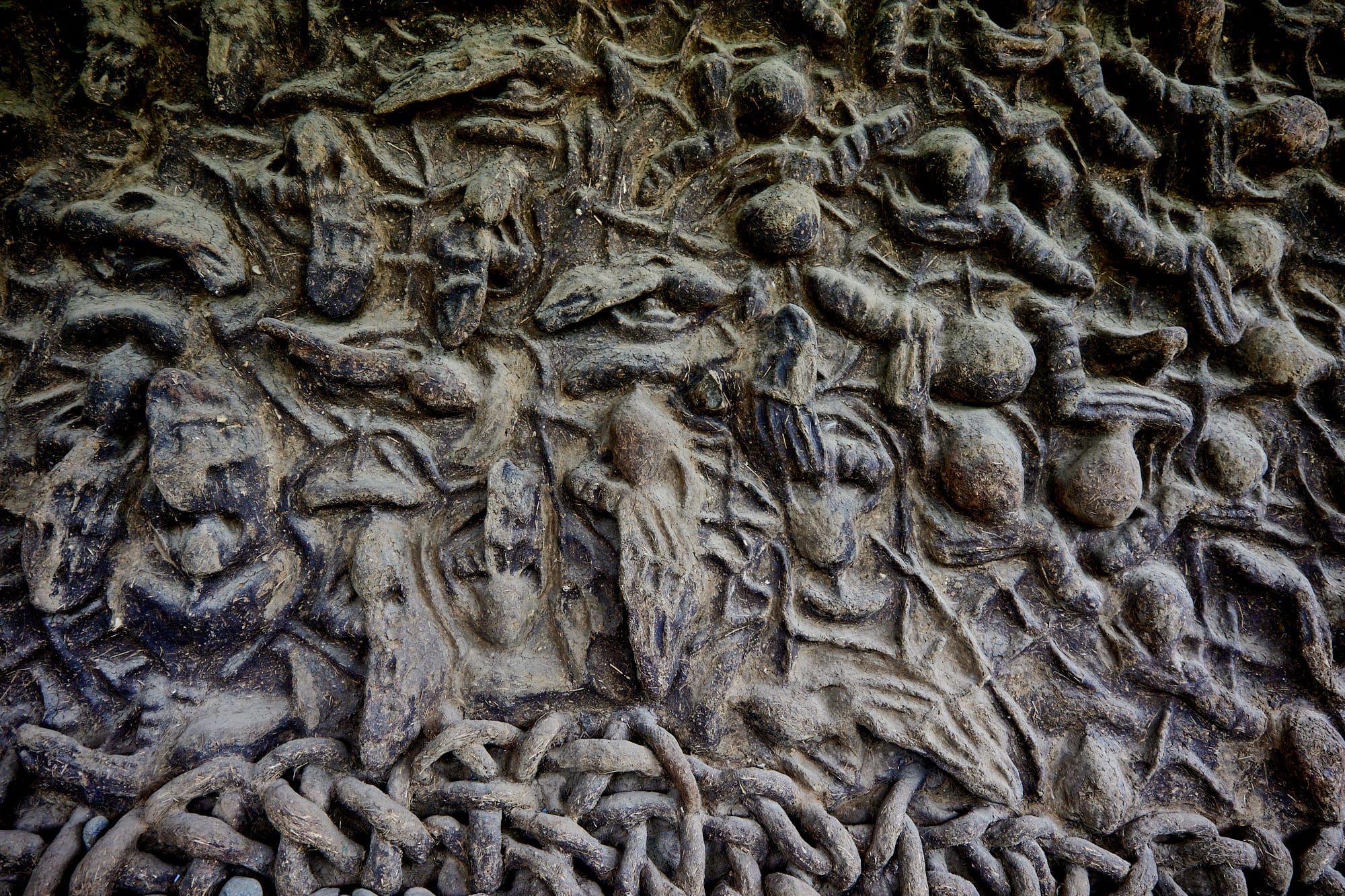
The result does not resemble the sealed neutrality of the conventional white-walled museum. At Zoma, the building remains visibly connected to the ground. Walls swell, curve, narrow, and open. Their surfaces hold spirals, leaves, chains, handprints, lines, and geometric fields. Some appear almost woven; others resemble bark, waterways, fingerprints, or archaeological traces whose meanings have yet to be deciphered.
These walls are part of the work. While the mud is still responsive, Sime carves and models it, allowing ornament, structure, and sculpture to occupy the same surface. His approach belongs to a wider practice built around transformation. In his internationally exhibited artworks, old electrical wires, circuit boards, computer components, and other discarded materials become dense compositions that suggest landscapes, networks, and systems under pressure. At Zoma, mud and straw enter that same field of attention: familiar matter is reconsidered through labor, patience, and form. (jamescohan.com)
The architecture never asks tradition to remain fixed. It places inherited knowledge in active conversation with contemporary needs. A technique survives because someone continues to test it, adapt it, teach it, and find reasons for using it now.
A Museum with a Daily Life
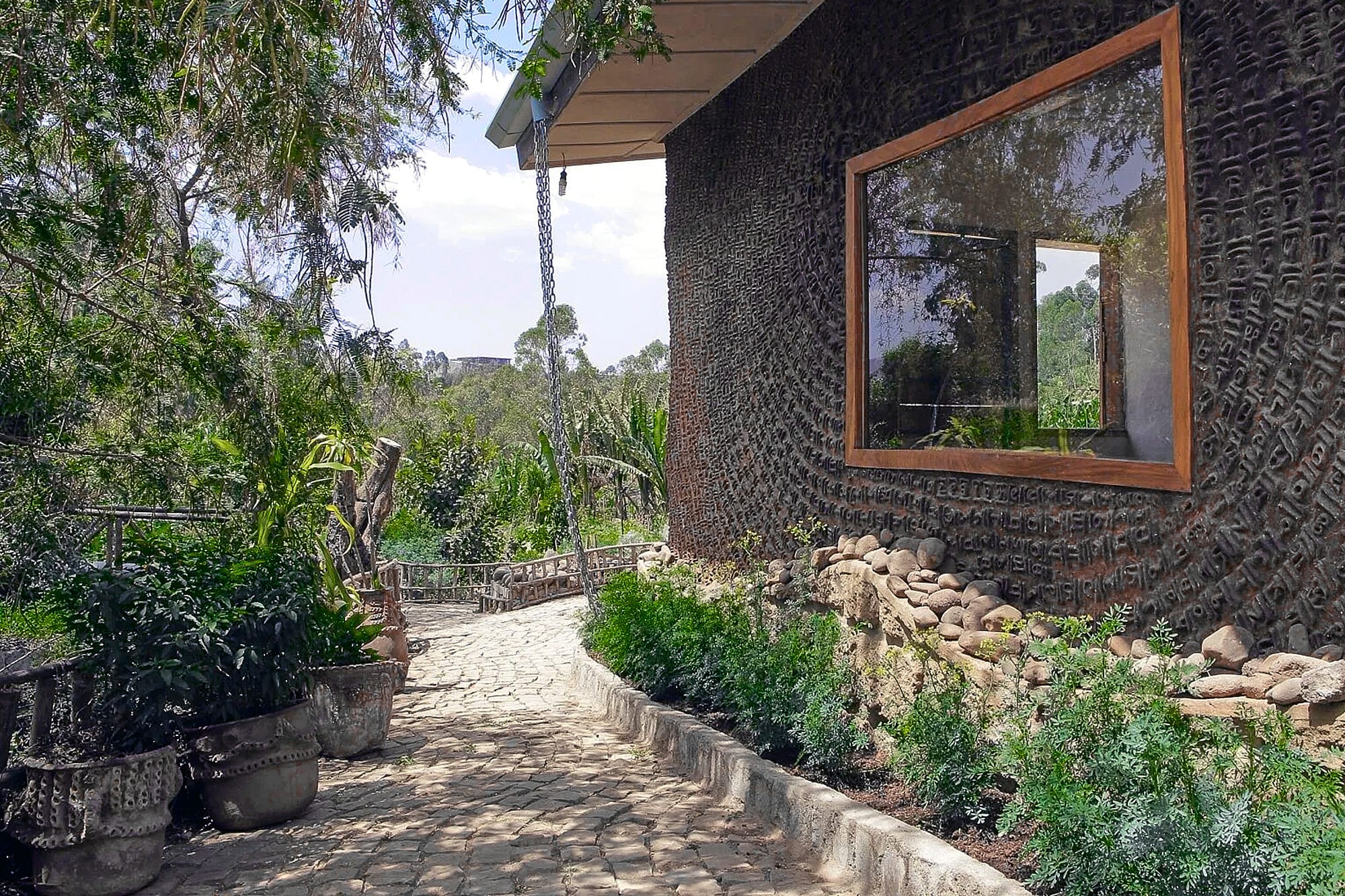
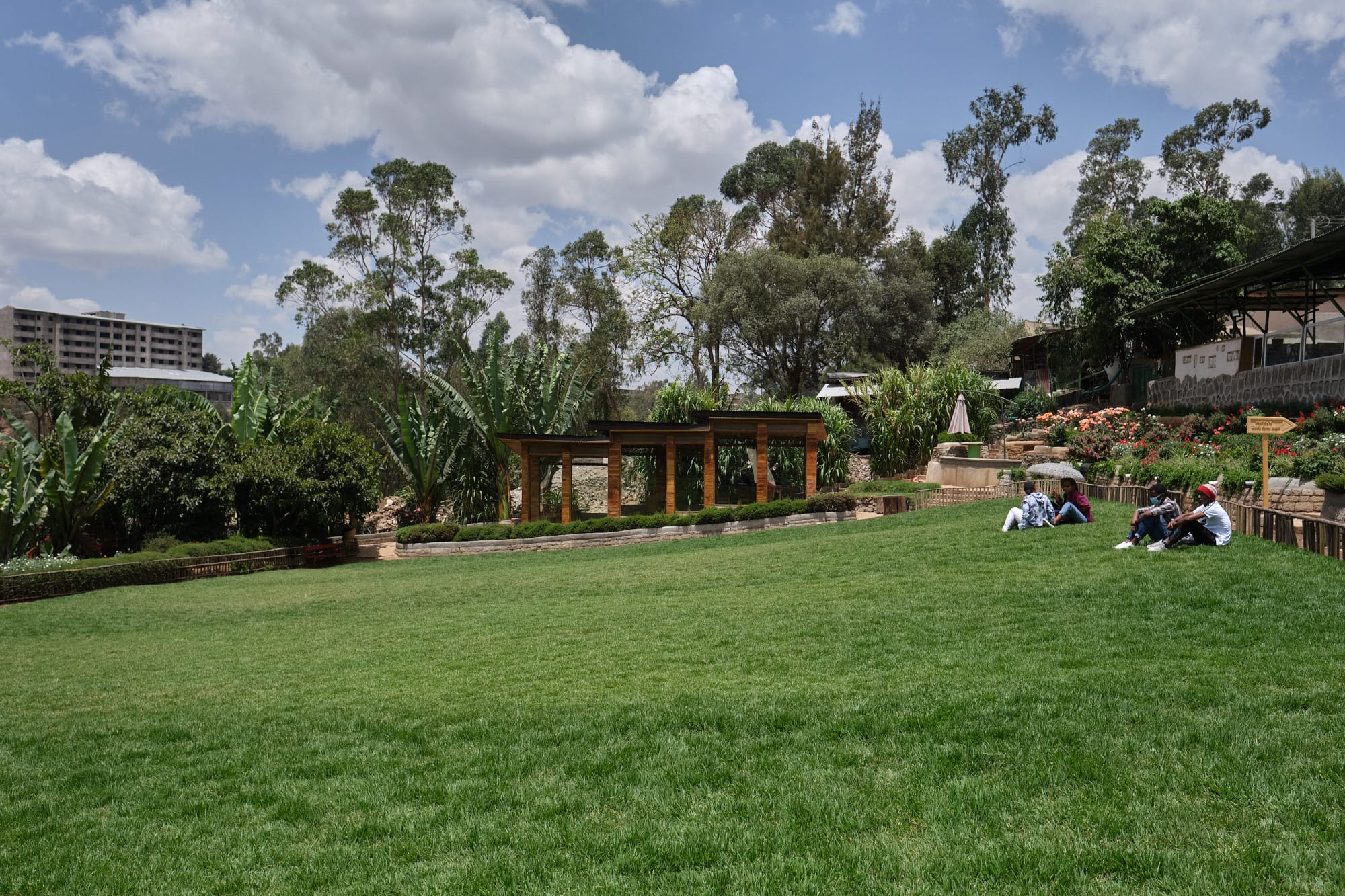
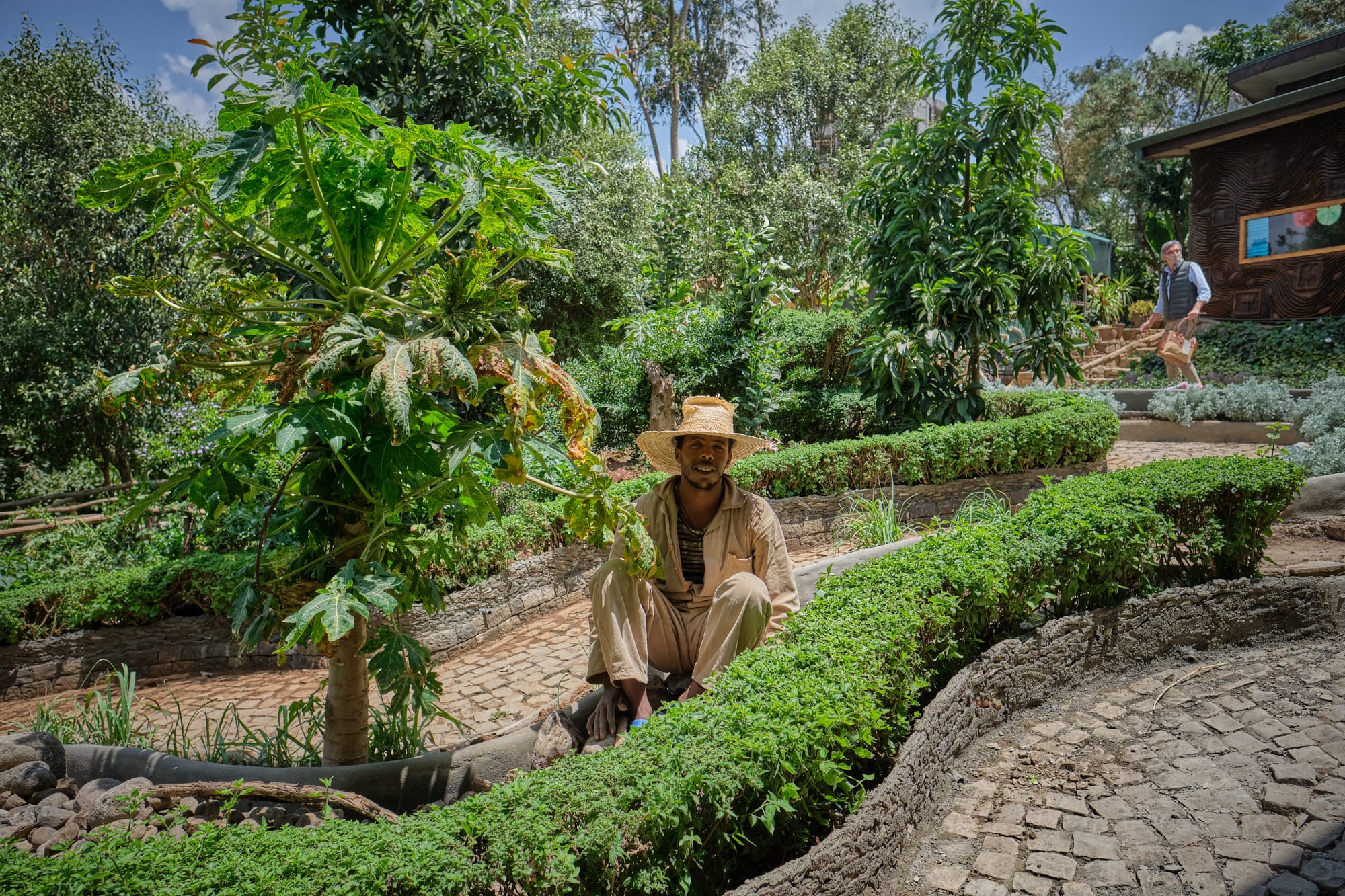
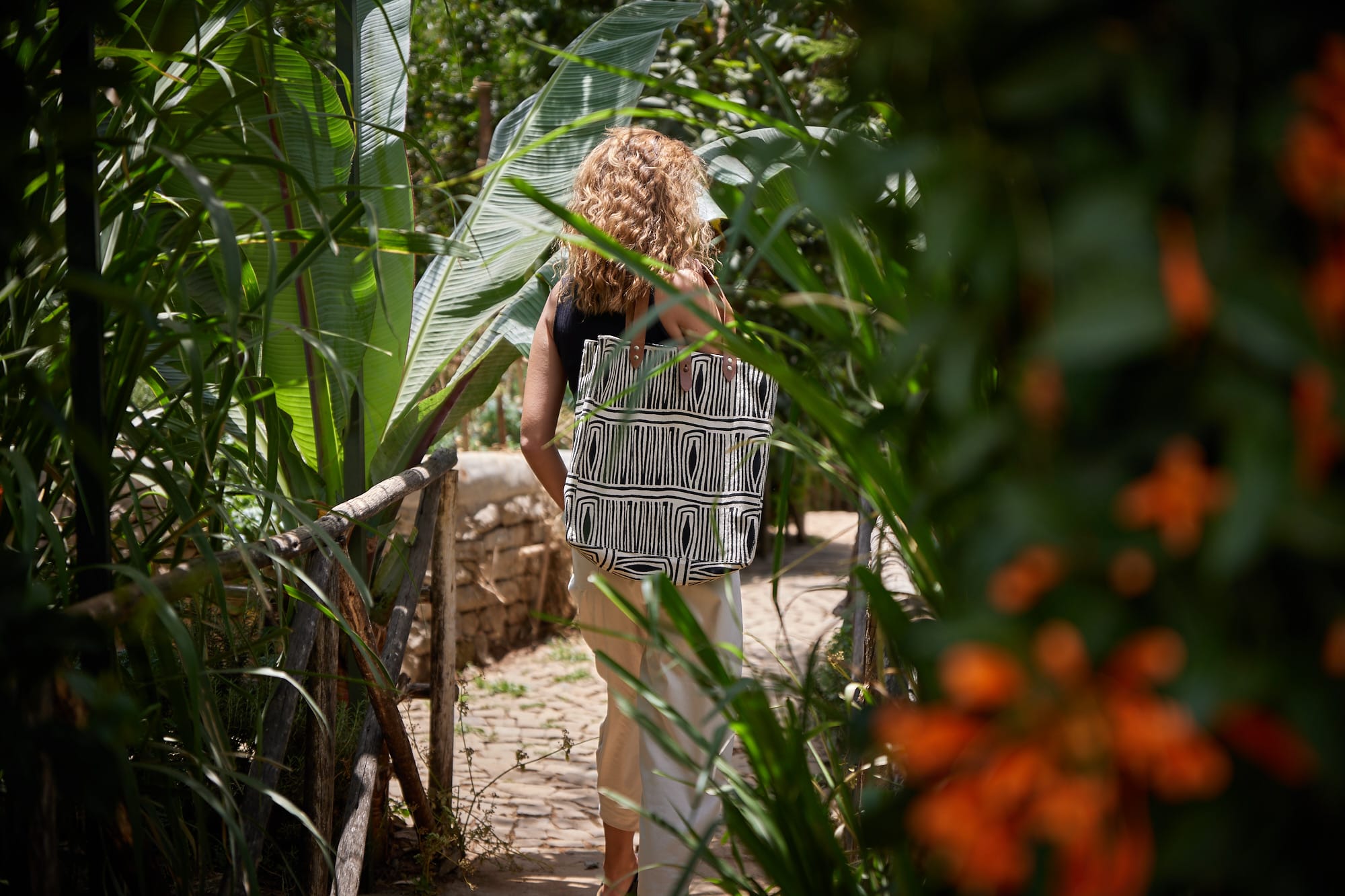
Beyond the walls, paths descend through thick vegetation. Banana leaves lean toward wooden railings. Medicinal plants, herbs, flowers, and food crops grow close to galleries and gathering spaces. Visitors cross grass, stone, earth, and timber as they move through the compound. The museum unfolds gradually, without insisting that art, architecture, landscape, and ordinary activity occupy separate territories.
Zoma includes exhibition spaces, a library, a children’s center, an amphitheater, a museum shop, gardens, and educational facilities. Zoma School connects learning with cultivation and food, giving children direct contact with plants, animals, and the processes that sustain everyday life. Art belongs inside this environment, alongside cooking, gardening, building, reading, conversation, and play. (jamescohan.com)
This breadth is central to Zoma’s significance. The museum proposes culture as something practiced rather than simply displayed. A child learning where food comes from, a builder working with earth, an artist reconsidering discarded material, and a visitor resting on the grass all participate in the life of the institution.
The garden provides another form of exhibition: growth takes time, seasons impose their own rhythm, and care must be repeated. Nothing remains complete for long. Leaves fall, walls weather, paths are walked, and the landscape changes in response to those who inhabit it.
In a city increasingly shaped by concrete, glass, construction, and traffic, Zoma offers another account of modernity. Progress here does not require the erasure of older knowledge. Contemporary culture can emerge through the recovery of practices that industrial development has often dismissed as outdated, although they may be locally available, environmentally intelligent, and remarkably durable.
Friendship Before Partnership
The relationship between AFAR and Zoma reaches back to the museum’s beginning. It grew from the friendship between AFAR founders Camillo Calamai and Flaminia Paternò and Zoma’s founders, Elias Sime and Meskerem Assegued.
That origin matters. The partnership was not designed as a temporary campaign or assembled around a marketing opportunity. It developed through familiarity, repeated visits, shared conversations, and a mutual respect for what each organization was trying to build.
Over time, the friendship took practical forms. Zoma began offering a limited selection of AFAR bags in its museum shop. AFAR, in turn, introduced clients, friends, and visitors to the museum, encouraging people arriving in Addis Ababa to spend time there. Zoma also became a recurring location for AFAR’s photographic campaigns.
None of these gestures is monumental by itself. Together, they describe a form of partnership rooted in reciprocity. Objects move through the museum shop. Visitors are directed toward a cultural institution. Photographs carry images of Zoma beyond its walls. Each organization extends the other’s reach while retaining its own identity and purpose.
This is how many meaningful cultural relationships endure: through modest actions performed consistently, without the need to turn every exchange into an announcement.
A Place of Return
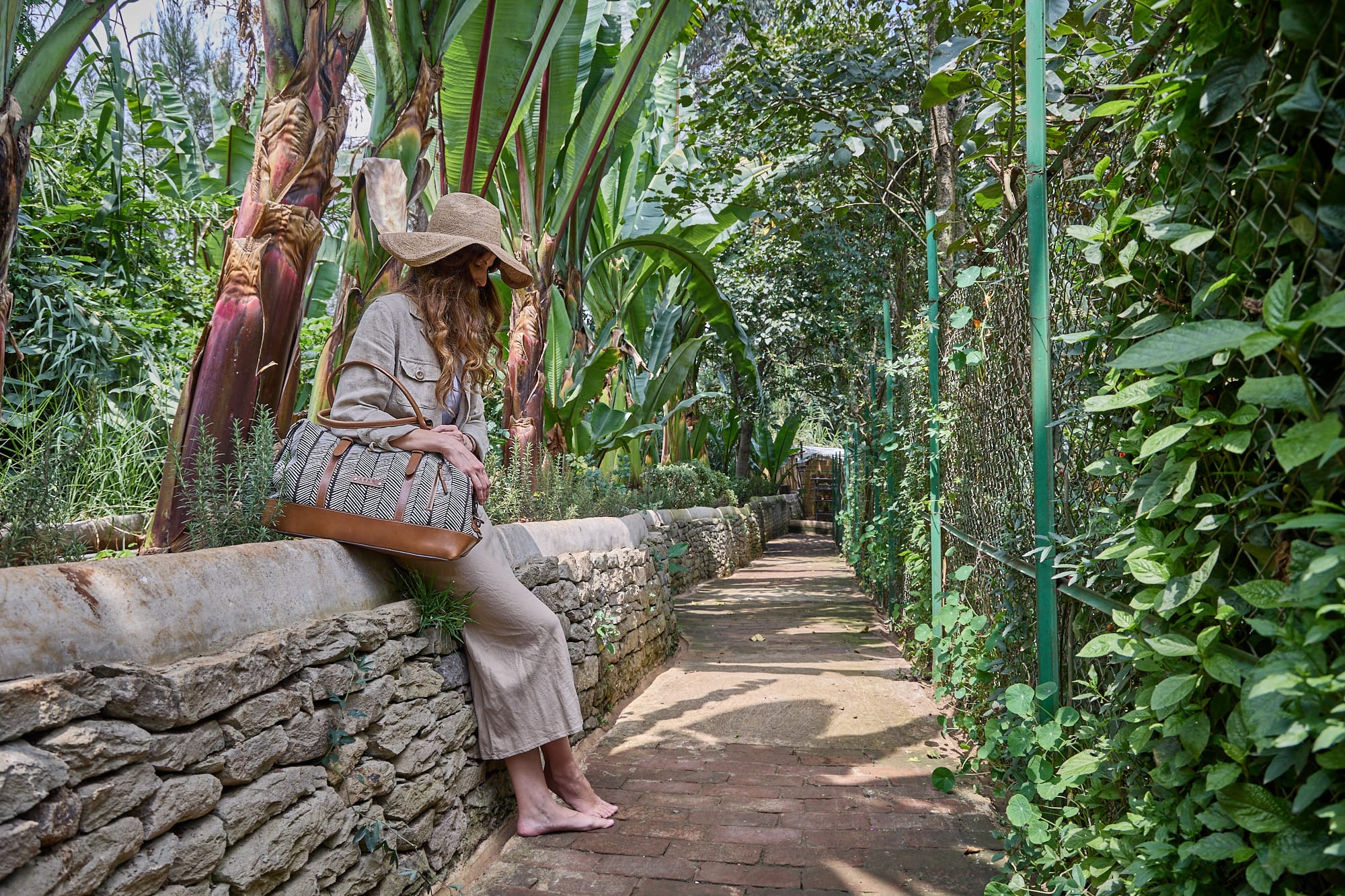
The photographs accompanying this story were made during AFAR campaigns at Zoma Museum. This explains why bags appear throughout the sequence: carried through narrow passages, held beside carved walls, placed against sculptural surfaces, or glimpsed among the plants.
Yet the photographs also record the museum.
They show the scale of a wall beside a human body. They reveal how light enters an earthen corridor and how vegetation changes the temperature and rhythm of a path. They register the contrast between rough mud, polished leather, woven textiles, smooth stones, weathered timber, and leaves moving in the sun.
Zoma was never used as a neutral background. Its architecture refuses that role. Every surface has a voice strong enough to alter the image. A bag photographed here enters into conversation with the place: the stitching meets carved lines; leather sits against earth; printed cloth encounters walls shaped into repeating patterns.
The affinities are real, although the two projects work at different scales. Zoma constructs spaces; AFAR constructs objects. Both depend on the intelligence of the hand. Both ask how local materials and inherited practices can remain useful within contemporary life. Both understand that durability involves cultural memory as well as physical strength.
This does not mean claiming that the museum and the brand are the same. Their purposes are distinct. The value of the relationship lies precisely in that difference. Zoma gives AFAR a cultural environment that challenges and enlarges its visual language. AFAR brings its own community of travelers, clients, collaborators, and readers into contact with Zoma.
The campaigns are therefore documents of return. The models change, the bags change, the light shifts, but the place remains present—recognizable through its walls, passages, gardens, and materials.
What Relationships Build
Partnership is an overused word. It can describe little more than two names placed beside each other. The relationship between AFAR and Zoma is easier to understand through what has happened over time: friendships have been maintained, visitors have crossed the museum’s threshold, bags have entered its shop, and photographic work has repeatedly returned to its grounds.
Zoma itself demonstrates that lasting structures are rarely produced by a single gesture. A wall grows from layers of mud and straw. A garden depends on continued attention. An institution takes shape through years of decisions, experiments, corrections, and human relationships.
The same is true of an object intended to travel. Its worth is revealed gradually: in what it carries, how it ages, whether it can be repaired, and whether someone still chooses to keep it close after years of use.
In the photographs, people pass between Zoma’s walls carrying AFAR bags. The images may have begun as campaigns, but they now form part of the record of a relationship. They show products, certainly. They also show a place that AFAR continues to return to, an institution it encourages others to discover, and a friendship that has acquired a visible form.
At Zoma, the ground becomes architecture, architecture becomes art, and art enters daily life. The lesson is quiet but persistent: what we inherit can still be transformed, and what we build together may carry memory further than any of us can travel alone.
The photographs accompanying this story were created during AFAR campaigns at Zoma Museum in Addis Ababa.


Member discussion