

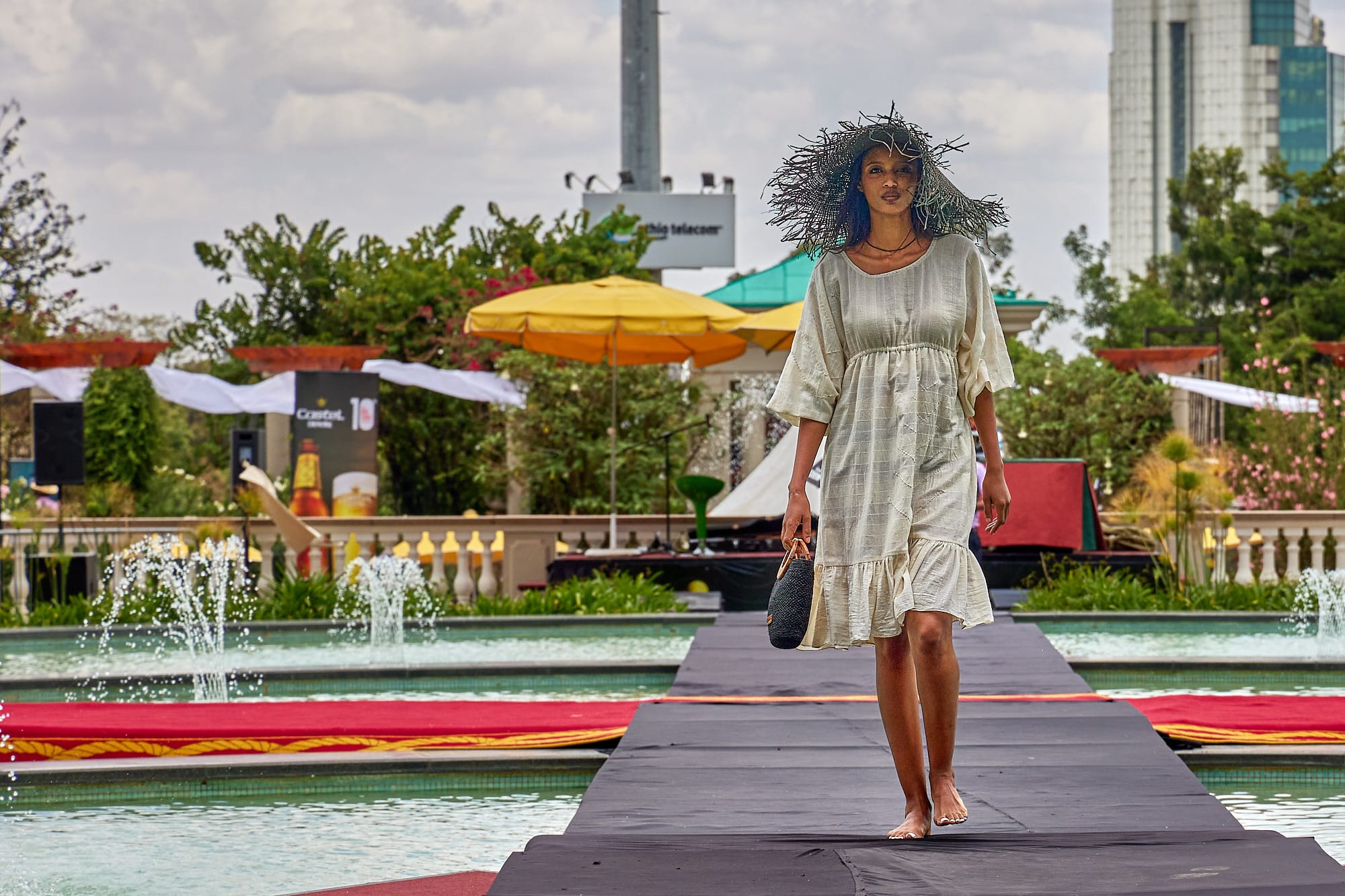
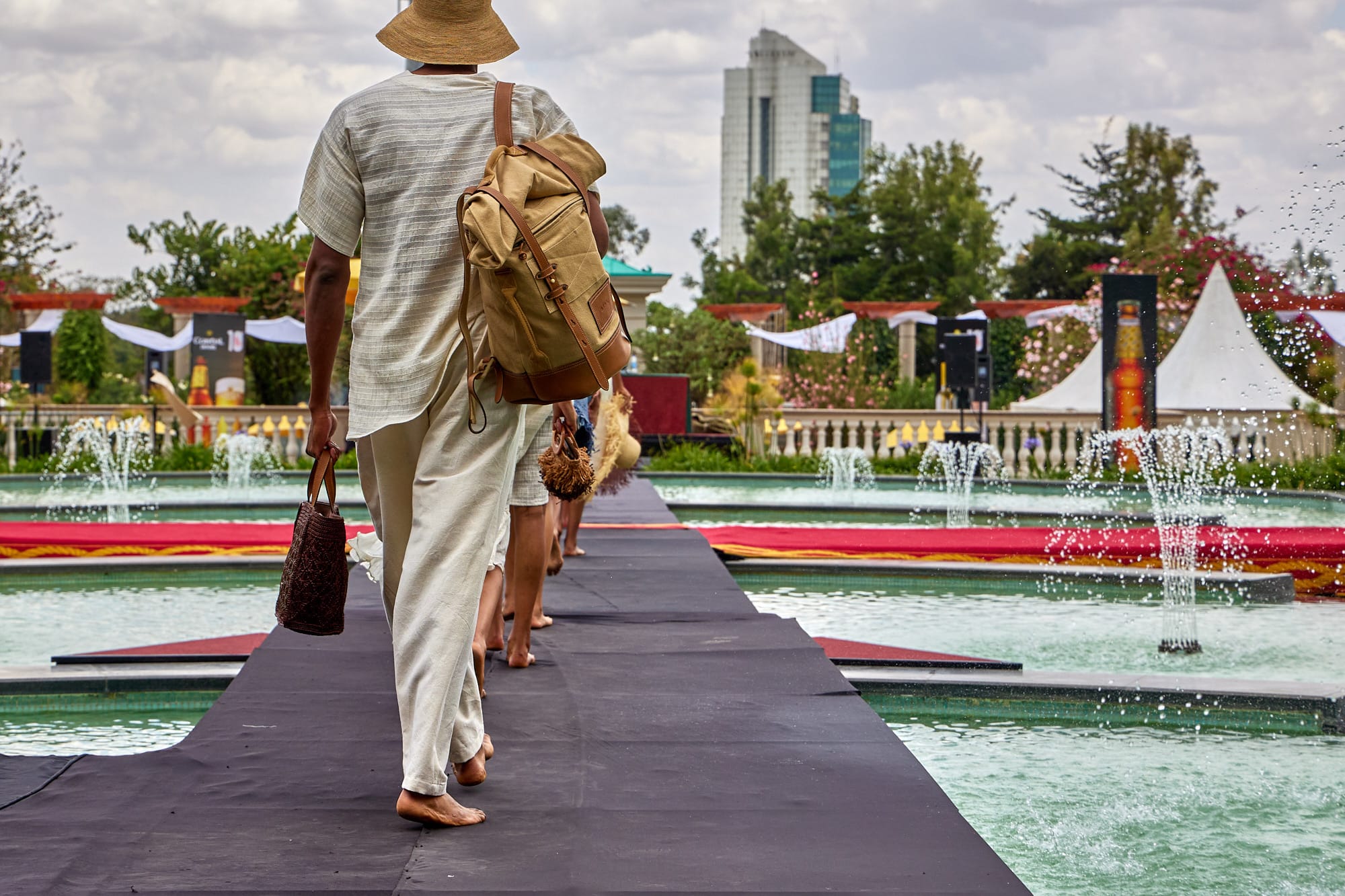
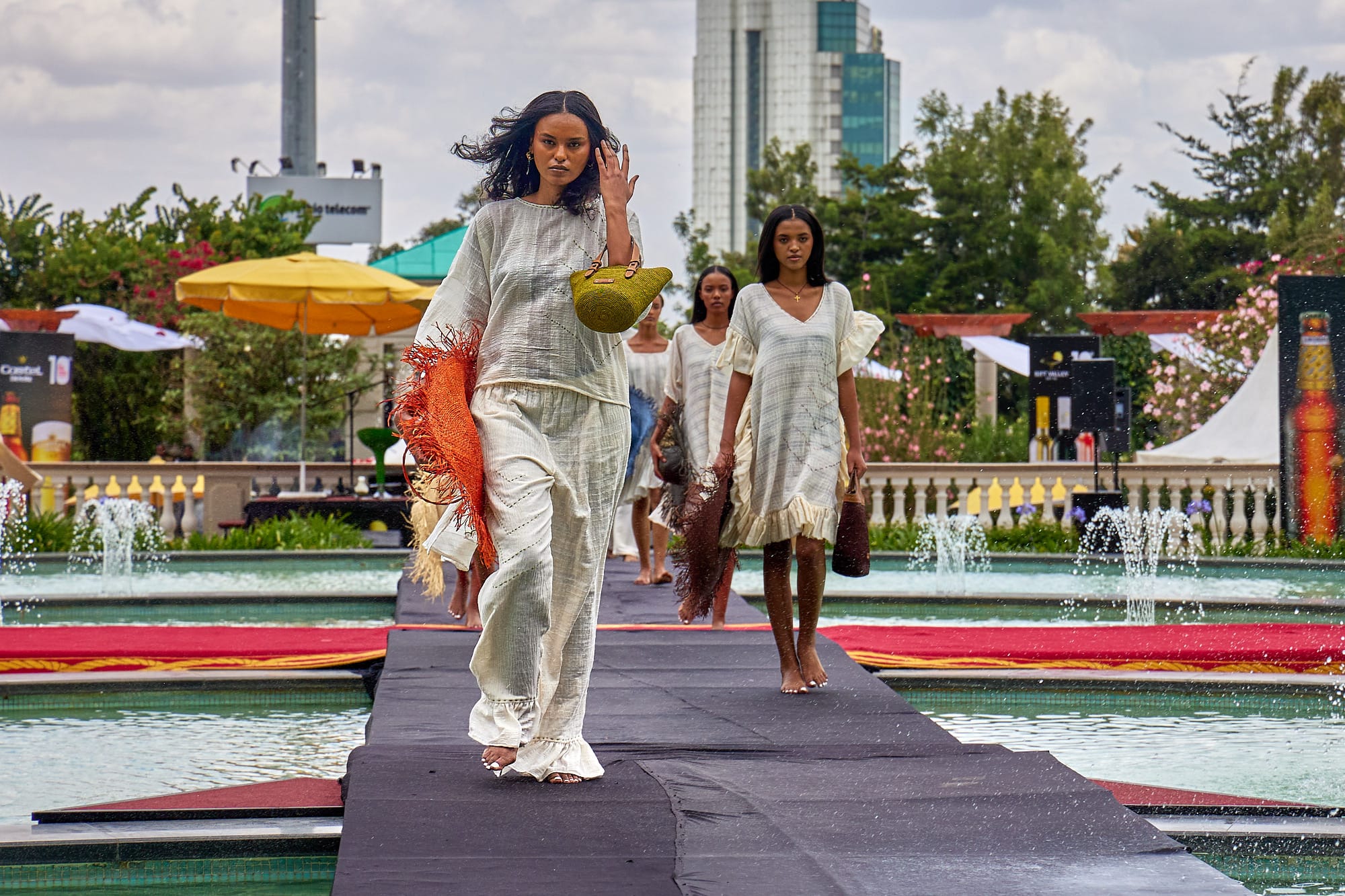
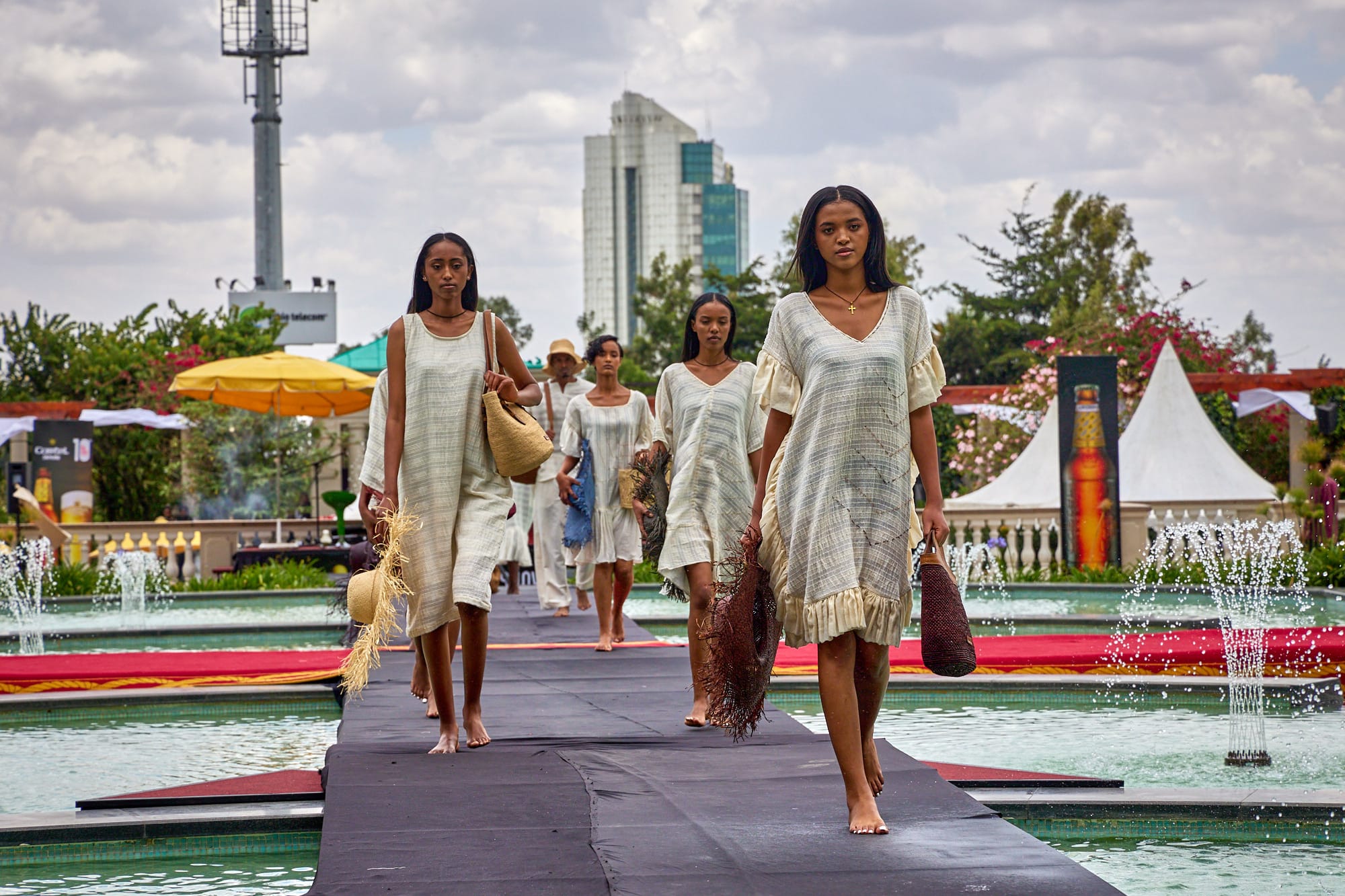
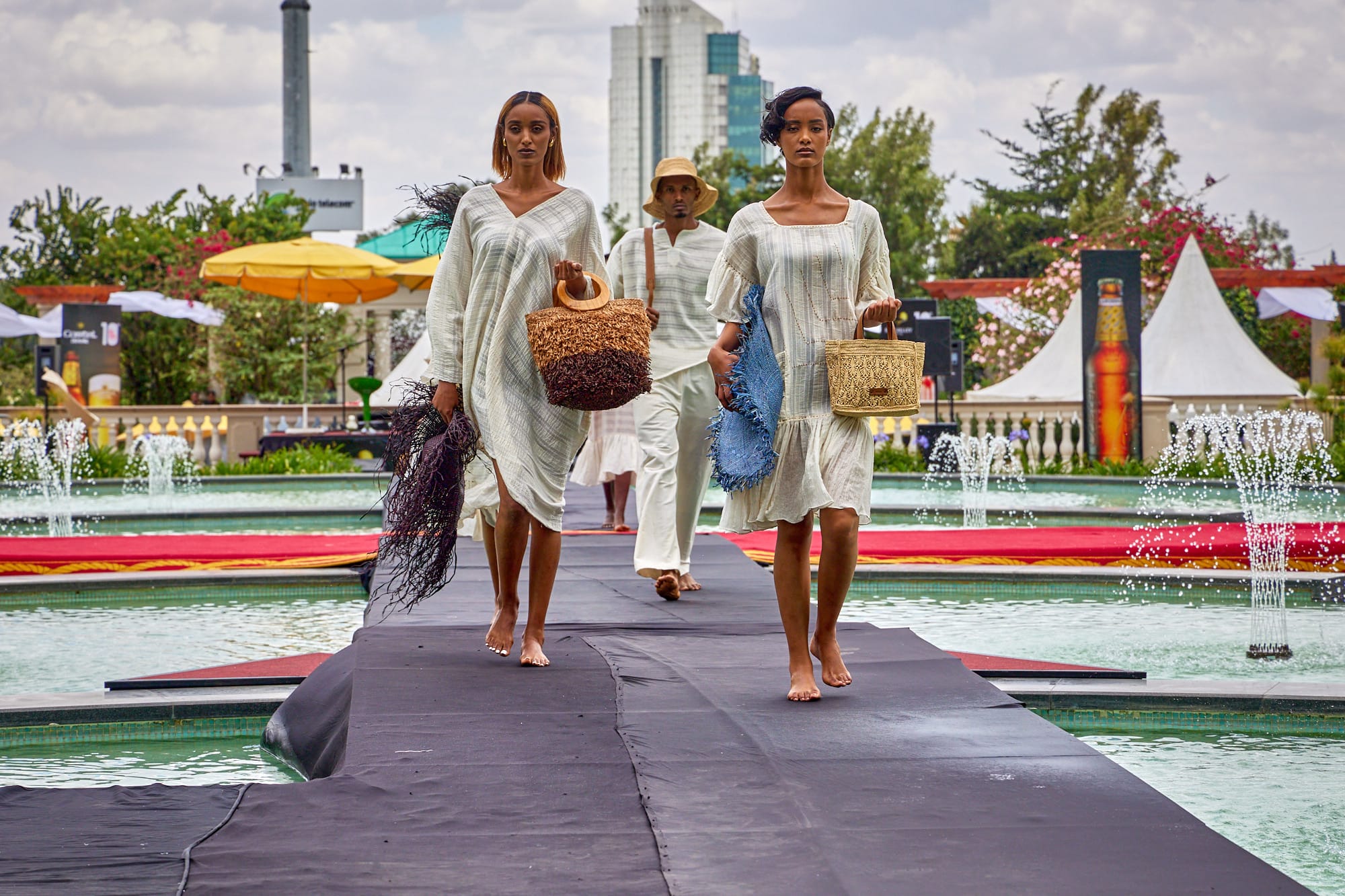
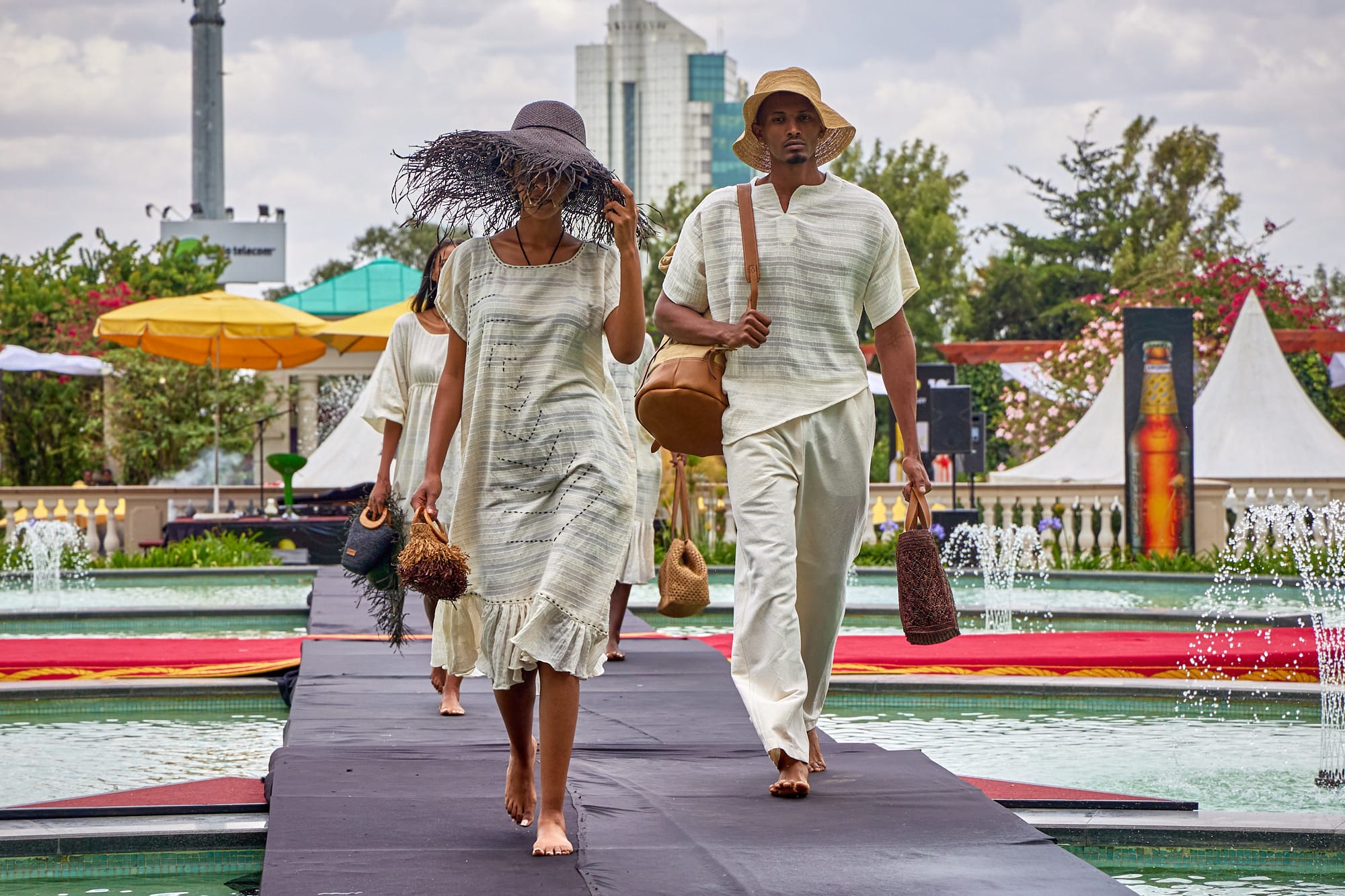
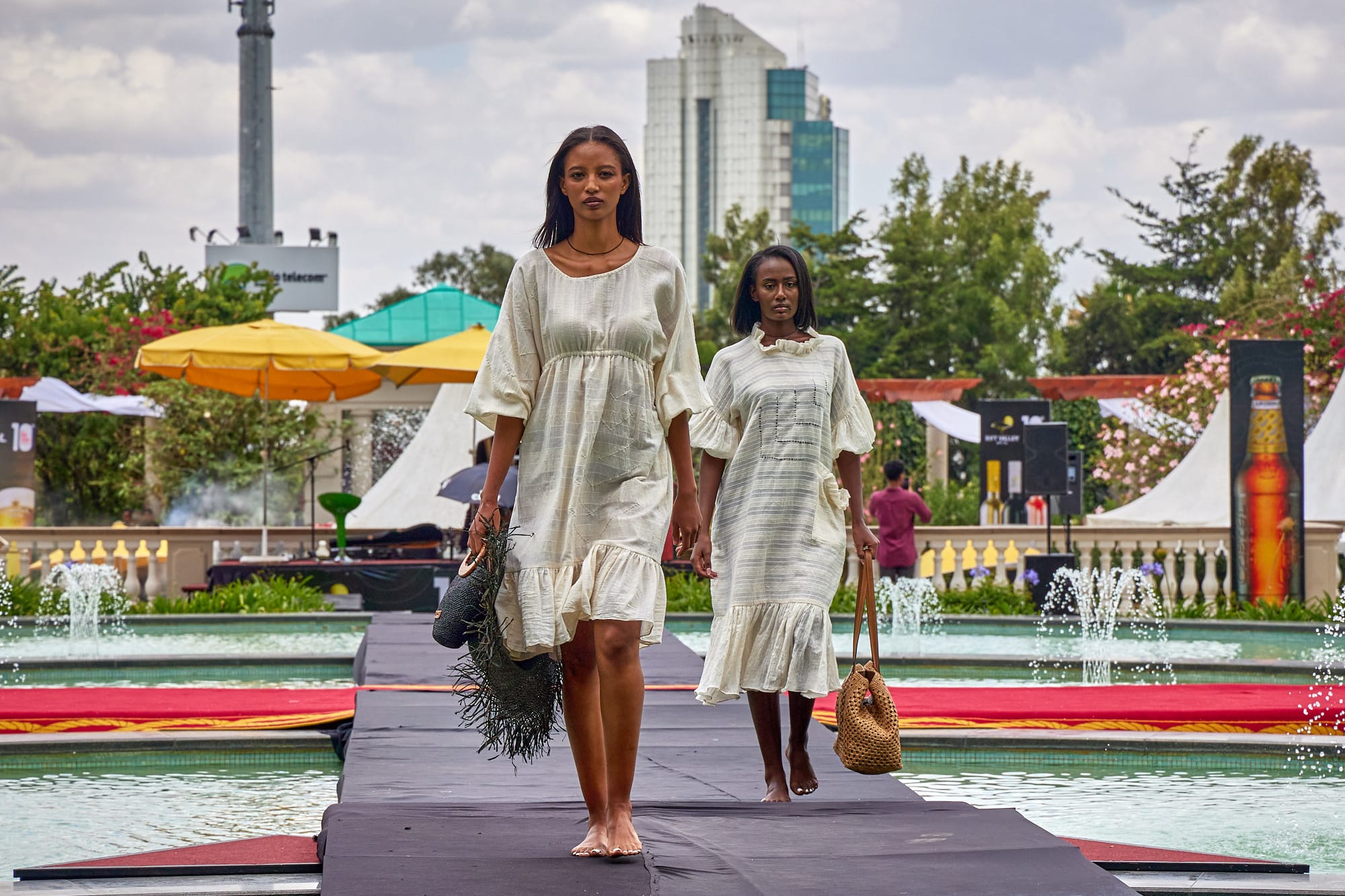
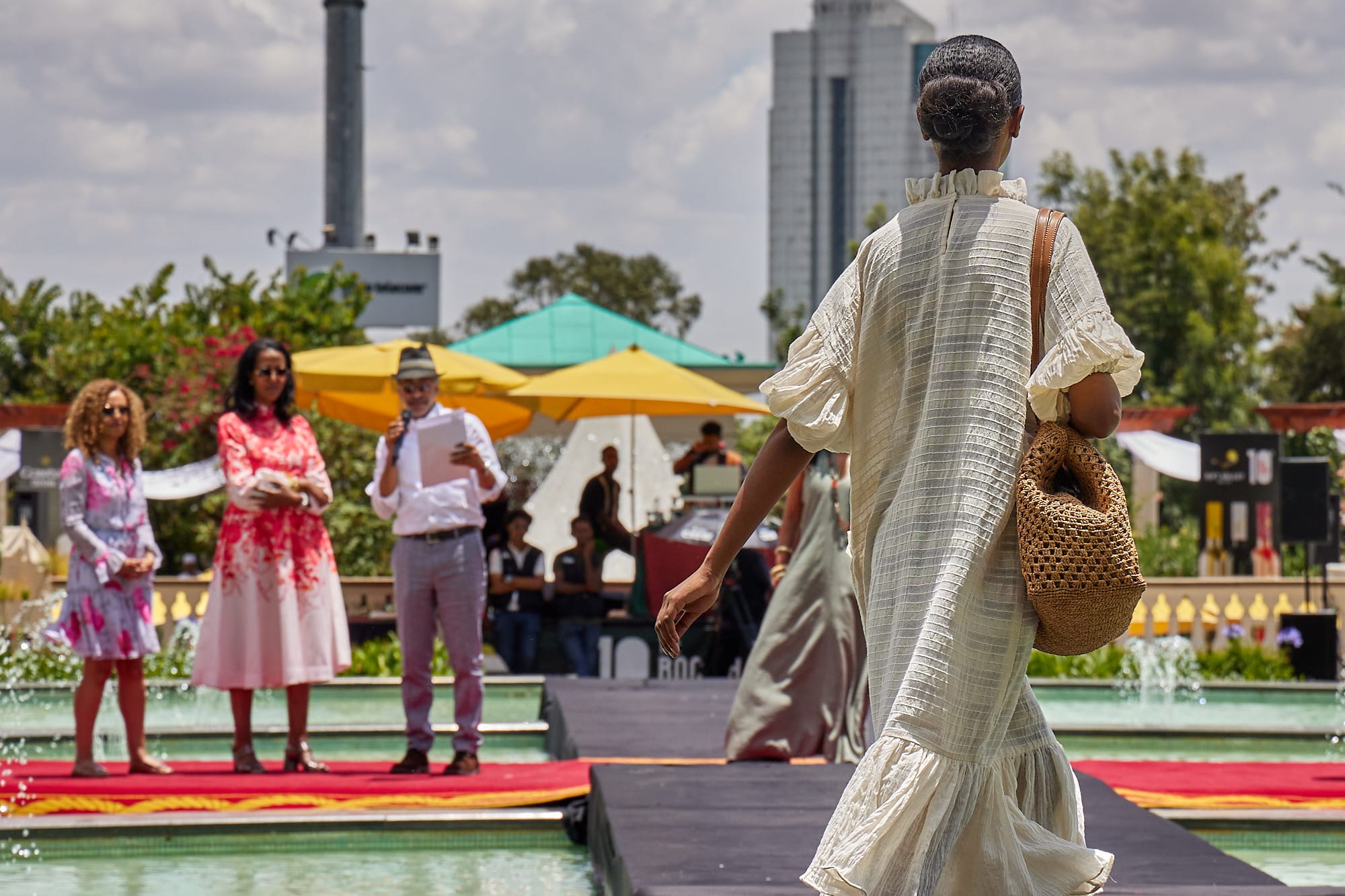
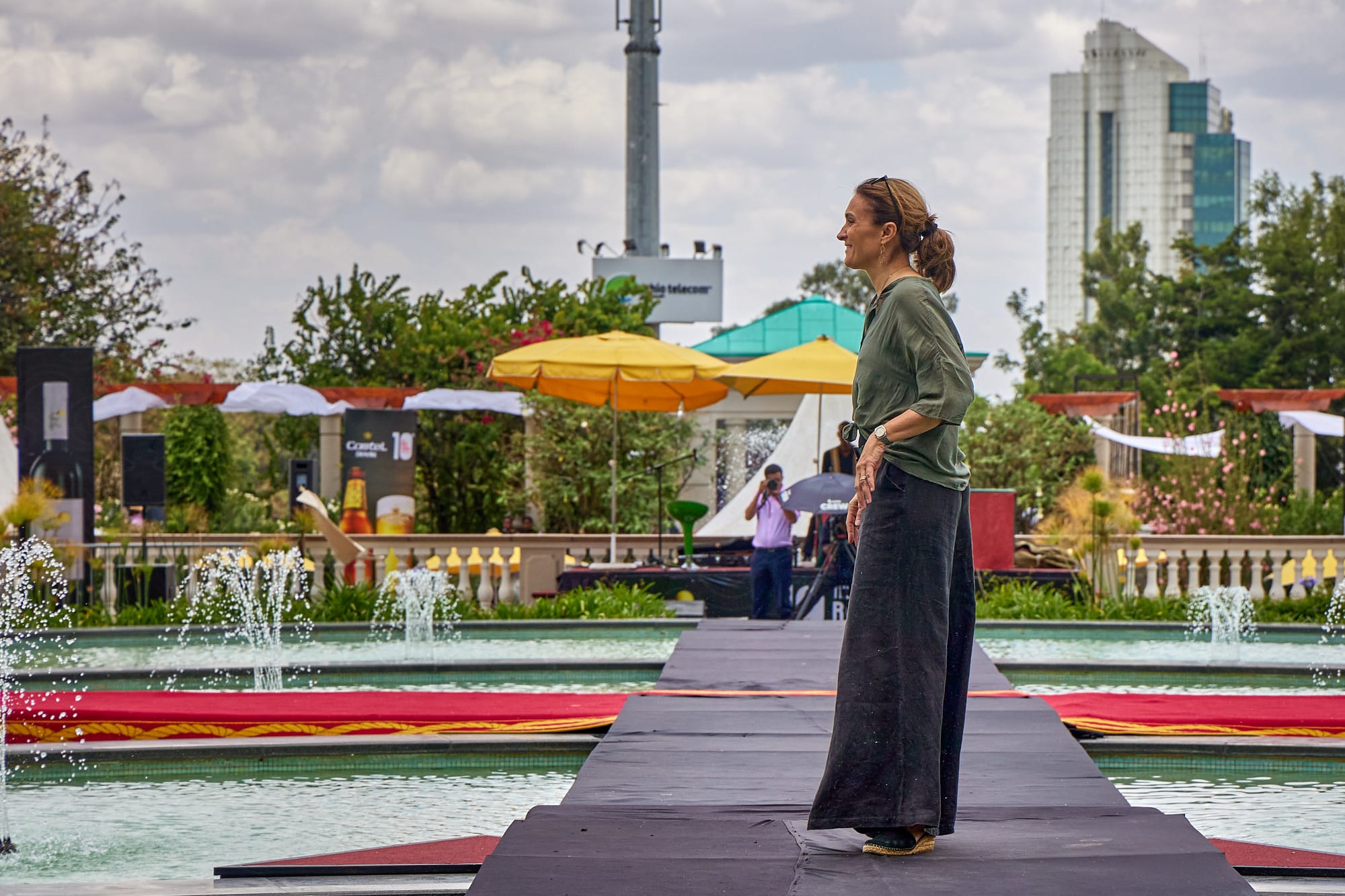
The runway crossed the courtyard pool at Sheraton Addis. Water and fountains framed the walk, while guests gathered close enough to observe the weave, the leather details, and the shapes of each bag.
In 2025, The Bag Show celebrated its tenth edition with a familiar and direct format: a runway presentation followed by a pop-up where visitors could meet designers, handle the pieces, and place orders.
For AFAR, the evening marked a first. Raffia entered a presentation traditionally shaped by Ethiopian leather, textiles, and established forms of local craftsmanship.
From Madagascar to Addis Ababa
The raffia used for the collection was sourced in Madagascar before reaching AFAR’s workshop in Addis Ababa. There, women artisans assembled and finished each piece, adding linings, leather handles, reinforcement points, and removable interior pouches.
Raffia demands patience. Tension must remain even throughout the weave. Handles need to be positioned precisely. Each edge and fastening point must be checked without compromising the natural movement of the fiber.
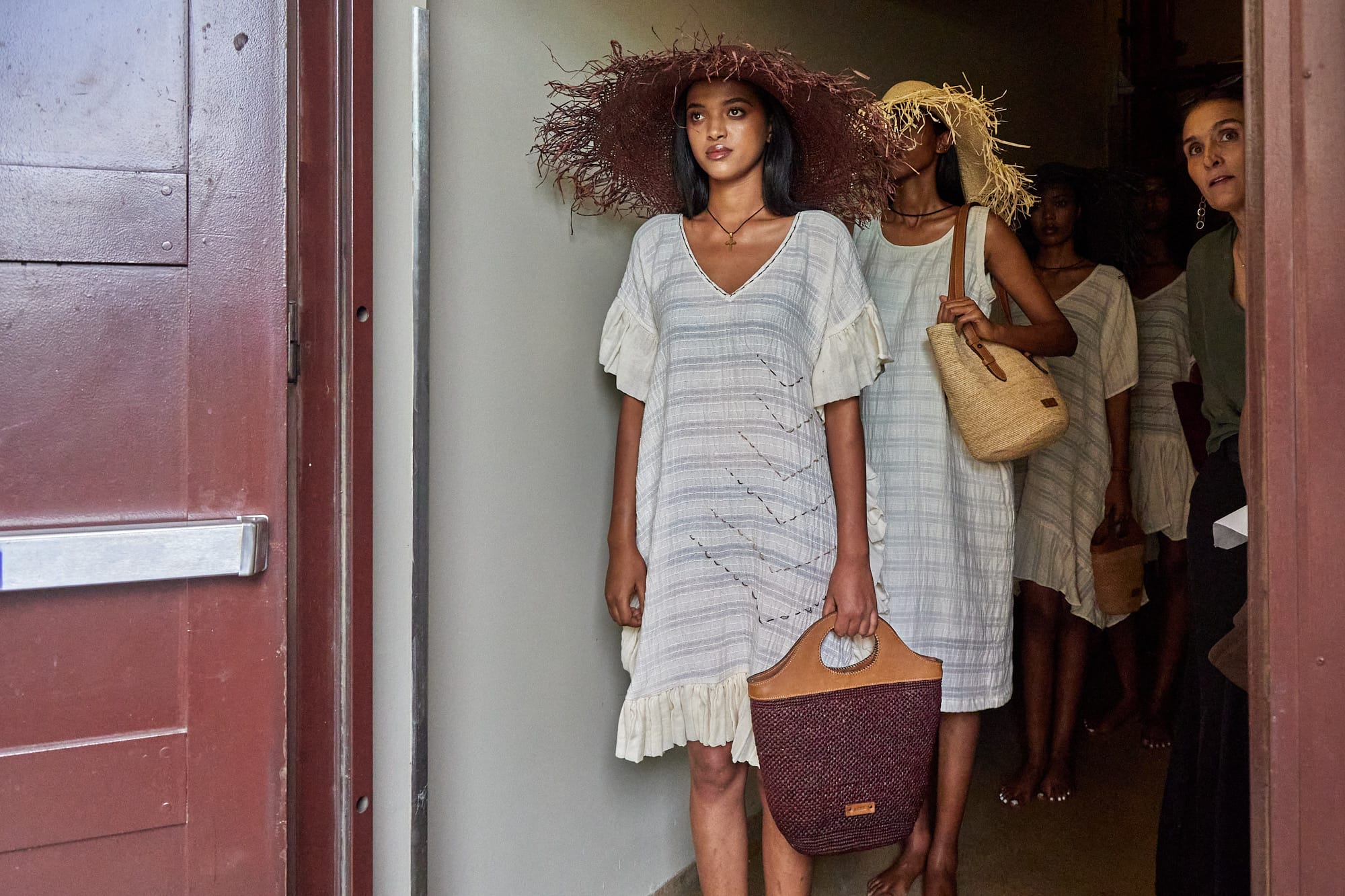
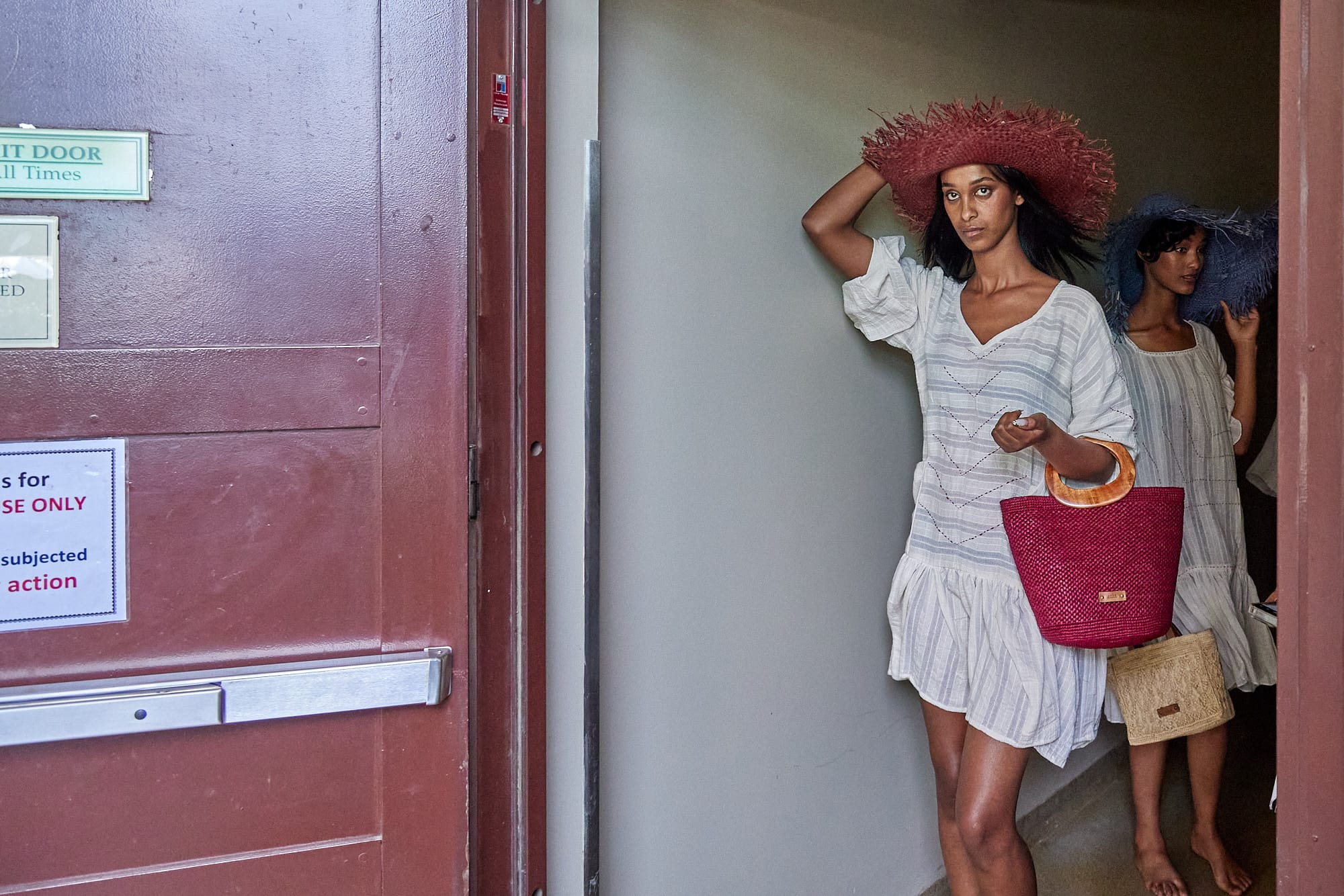
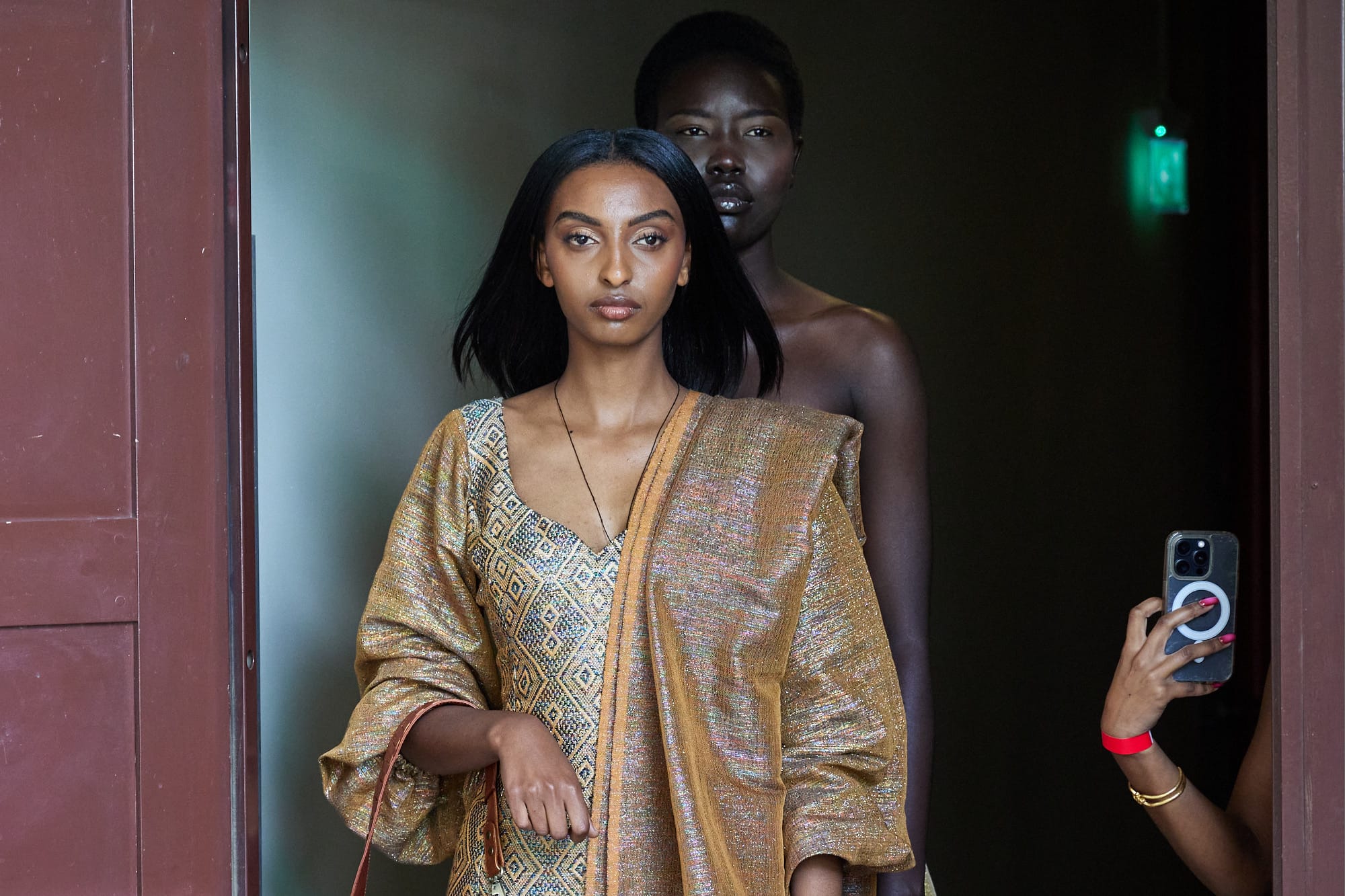
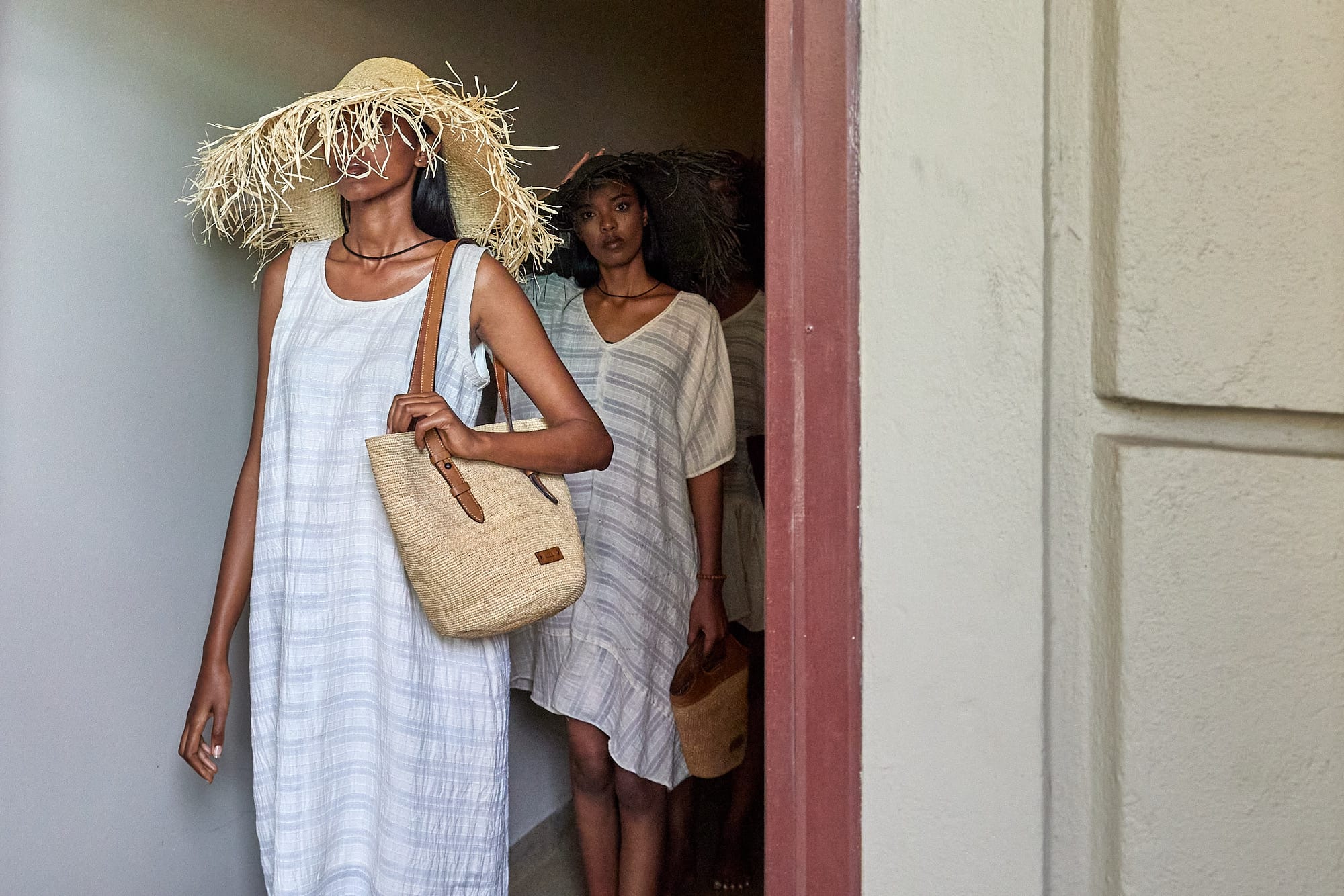
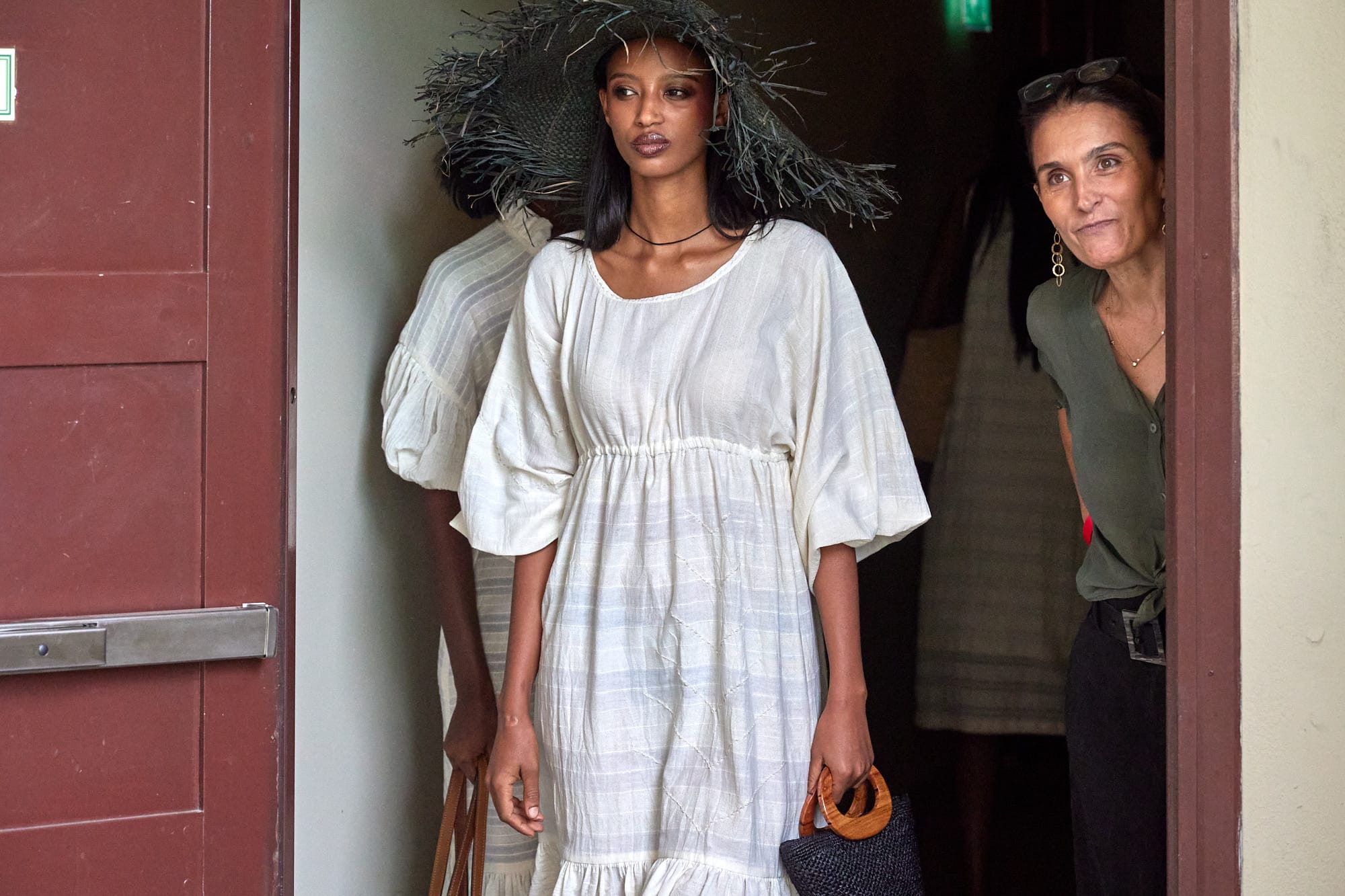
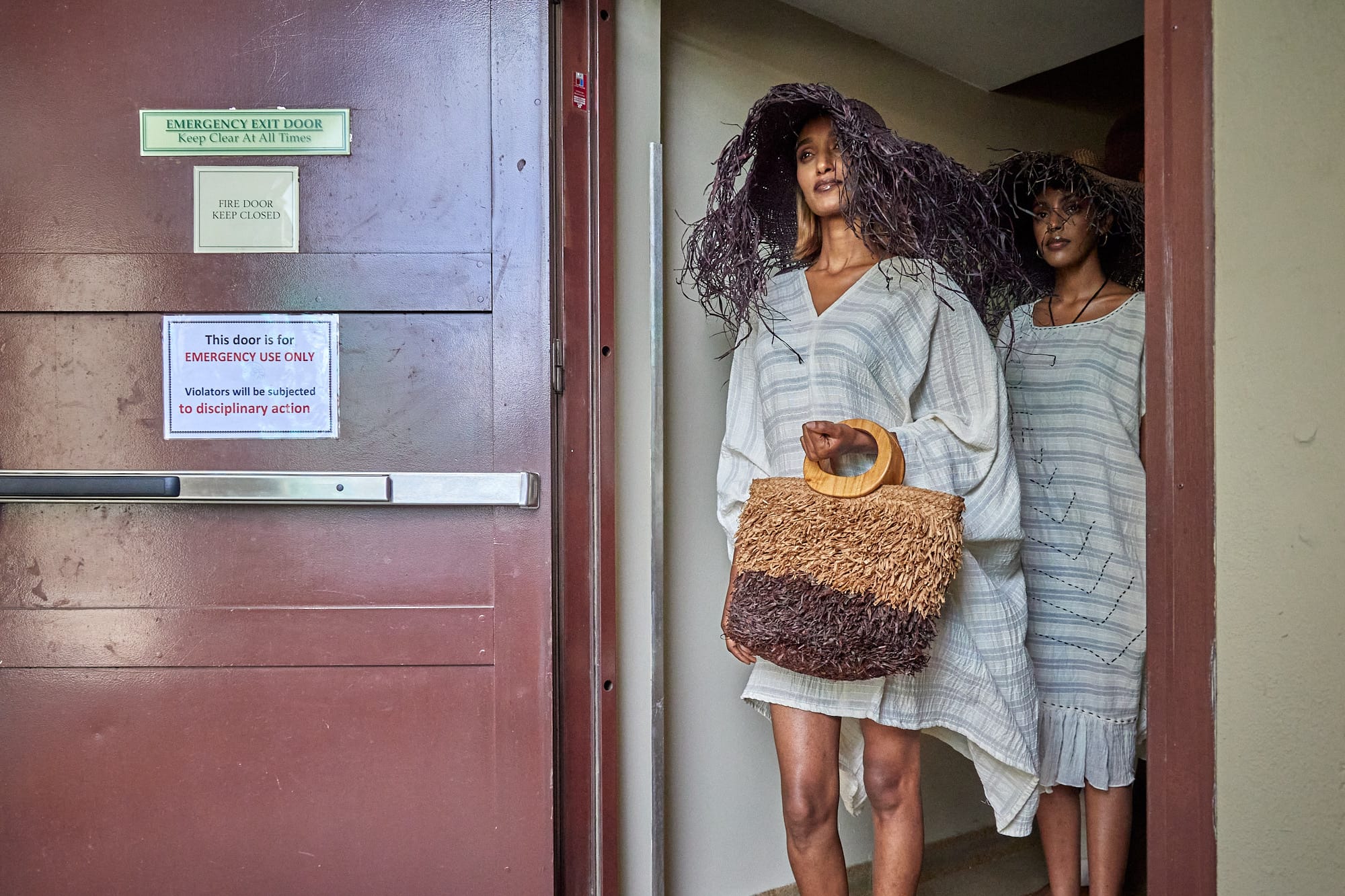
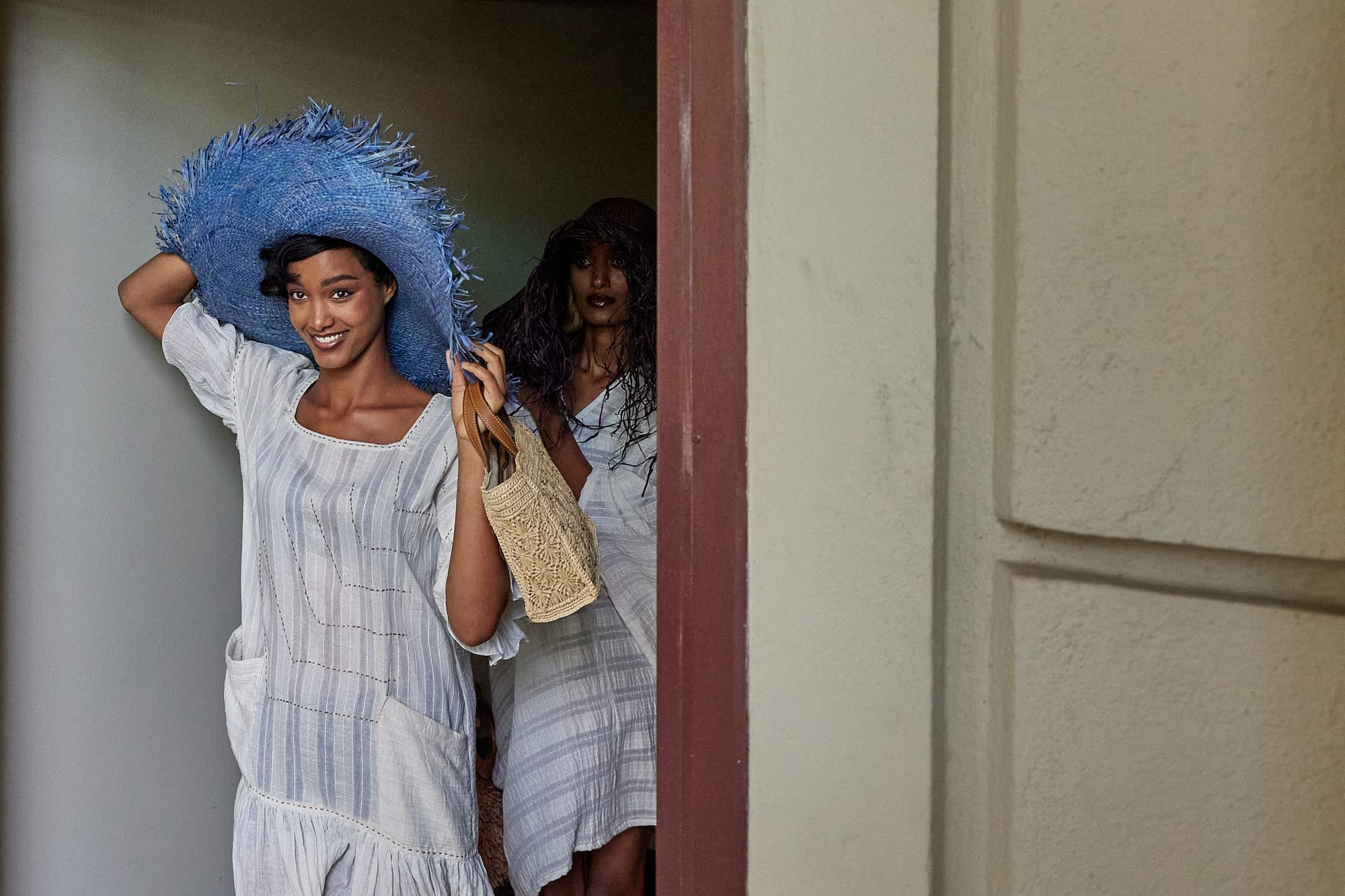
Backstage, models waited in a narrow passage beside the courtyard. Bags and hats received a final inspection. A door opened, the light changed, and the next look stepped onto the runway.
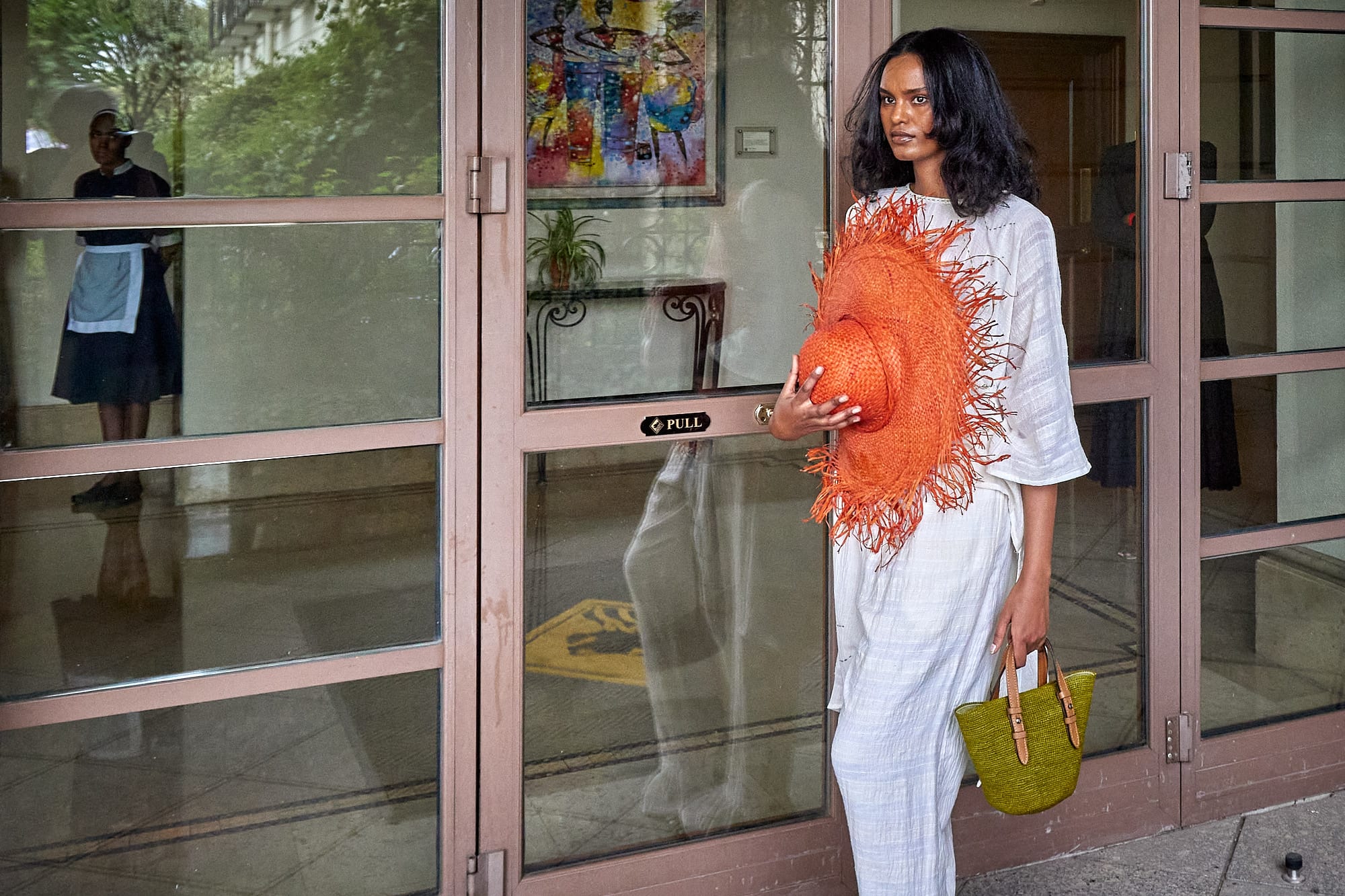
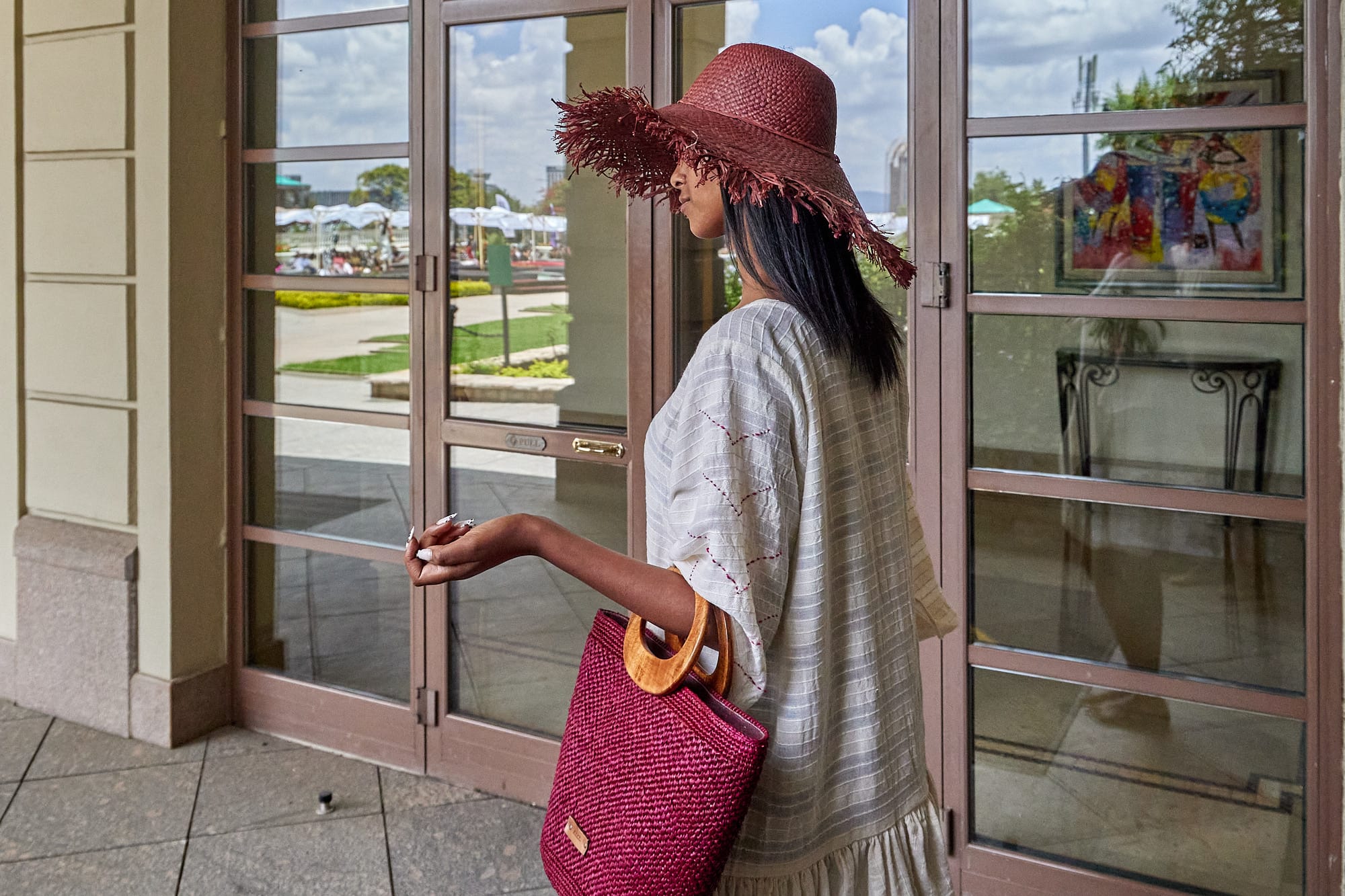
Wide-brimmed hats introduced the material through movement. Bags followed in natural tones, deep reds, dark browns, and near-black weaves. Some carried open, geometric textures; others were covered with hand-worked flowers.
Designed by Flaminia Paternò, the collection moved between softness and structure. Generous volumes were balanced by clear silhouettes and carefully positioned leather details.
On the runway, each piece revealed itself gradually: first the shape, then the weave, then the finishing work.
Beyond the Runway
After the presentation, the pop-up allowed guests to examine the bags more closely. They compared sizes, tested how the handles rested on the arm, and asked about the material’s origin, durability, and care.
This slower encounter mattered. Raffia can appear simple from a distance, but its character lies in the irregularities of the fiber, the density of the weave, and the decisions made by the hands working it.
The Bag Show also supported Our Father’s Kitchen. Proceeds from ticket sales were donated to the organization, together with the results of an auction featuring selected pieces from participating designers.
AFAR contributed one raffia bag. It received the evening’s second-highest bid, adding to the funds raised for the organization’s work.
The fundraising remained integrated into the event rather than separated from it. Designers presented their work, visitors encountered the objects directly, and part of the evening’s economic activity returned to a local initiative.
A First Public Step
For AFAR, the event offered an early measure of how the collection might be received. Guests responded to the scale of the bags, the textures of the material, and the relationship between Madagascar’s raffia and Ethiopian workmanship.
The presentation also opened practical questions for the future: how to maintain consistent sourcing, protect the quality of the finishing, and develop new shapes without losing the character of the fiber.
The evening ended beside the courtyard pool. The fountains continued running as guests remained around the pop-up, holding bags, comparing details, and speaking with the AFAR team.
For the new raffia collection, it was a first public step, and the beginning of a longer journey between material, place, and craft.


Member discussion