

There was nothing particularly dramatic about the beginning. A Facebook group; a name and a few messages. The group was called VadoinAfrica.
Martino Ghielmi had started it in 2017, alongside a blog of the same name, as a place where Italians working in African countries could find one another, exchange information, ask questions, make introductions. Over time, it grew to around 13,000 members.
Somewhere among those thousands of people, Ayzoh! came across AFAR. A few contacts followed; then conversations. AFAR eventually commissioned Ayzoh! to produce a documentary and a book.
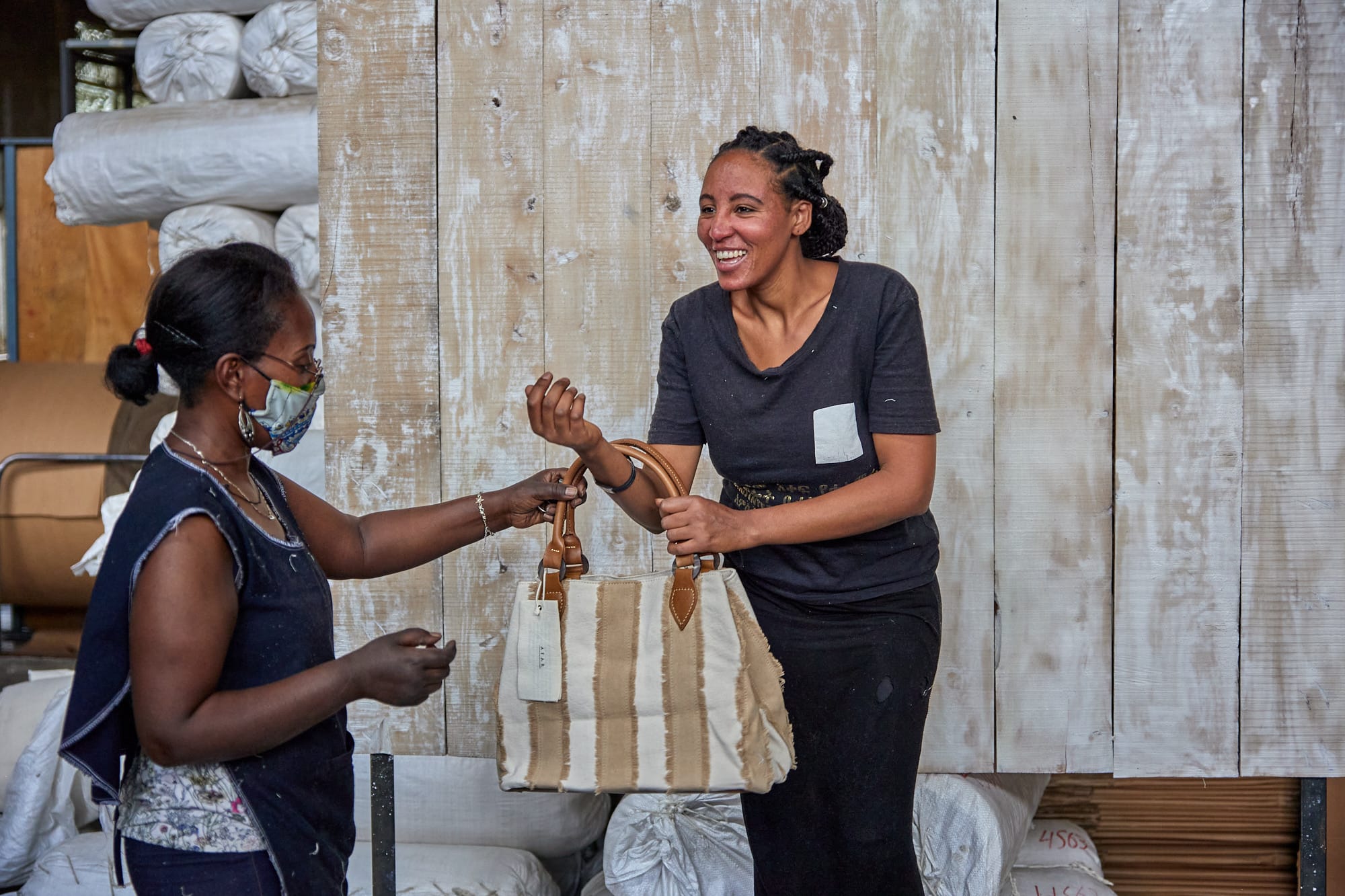
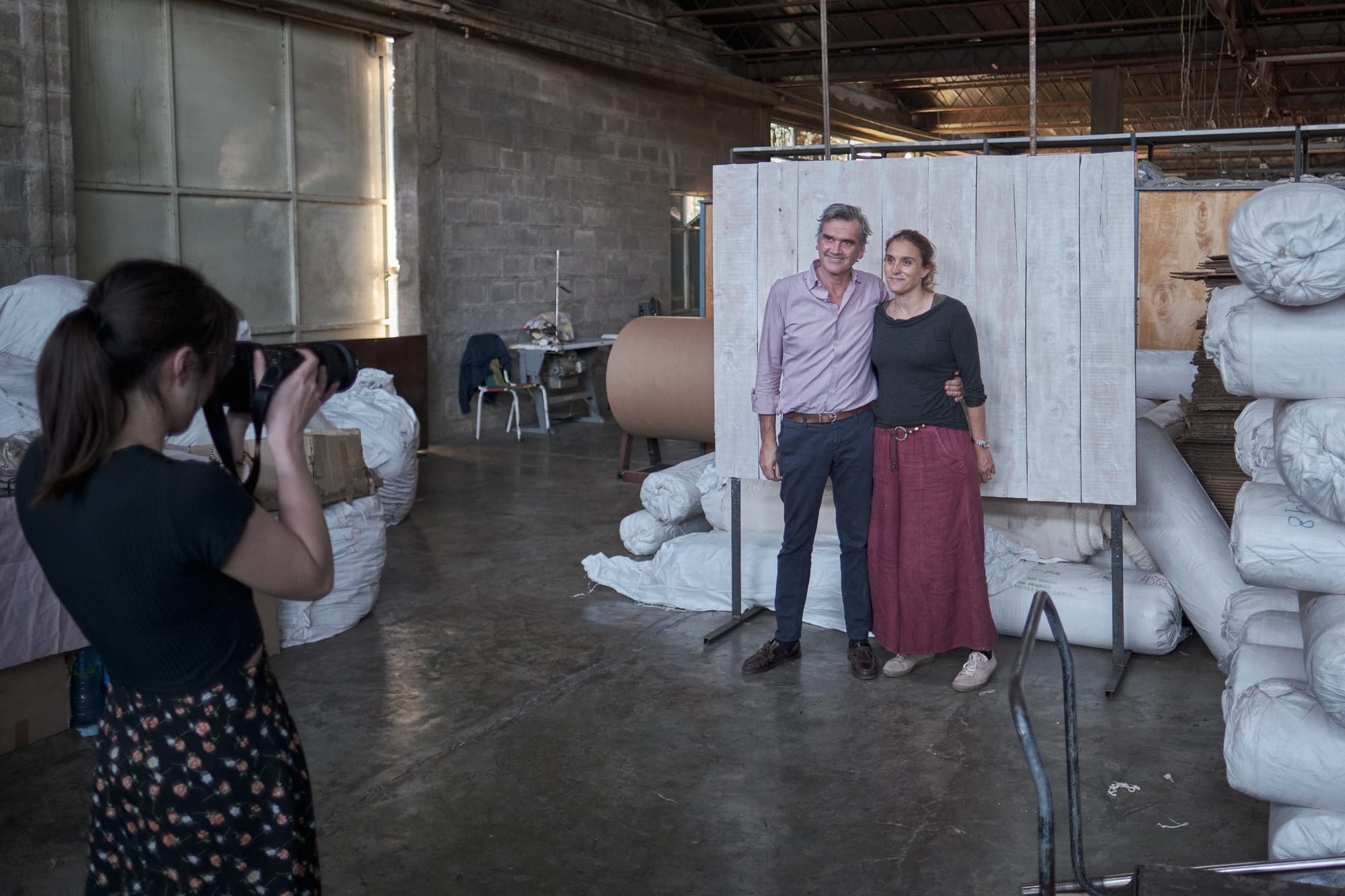
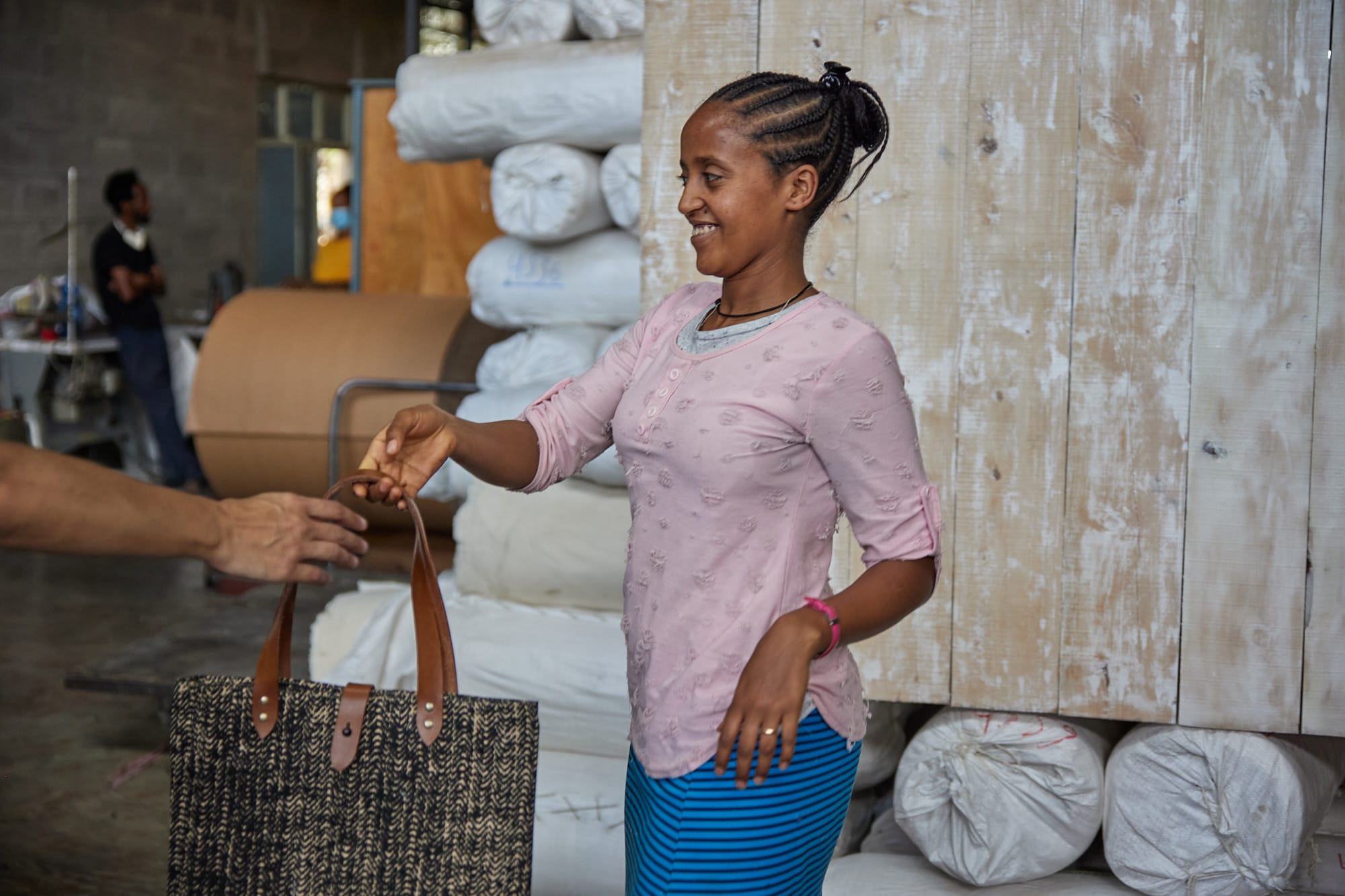
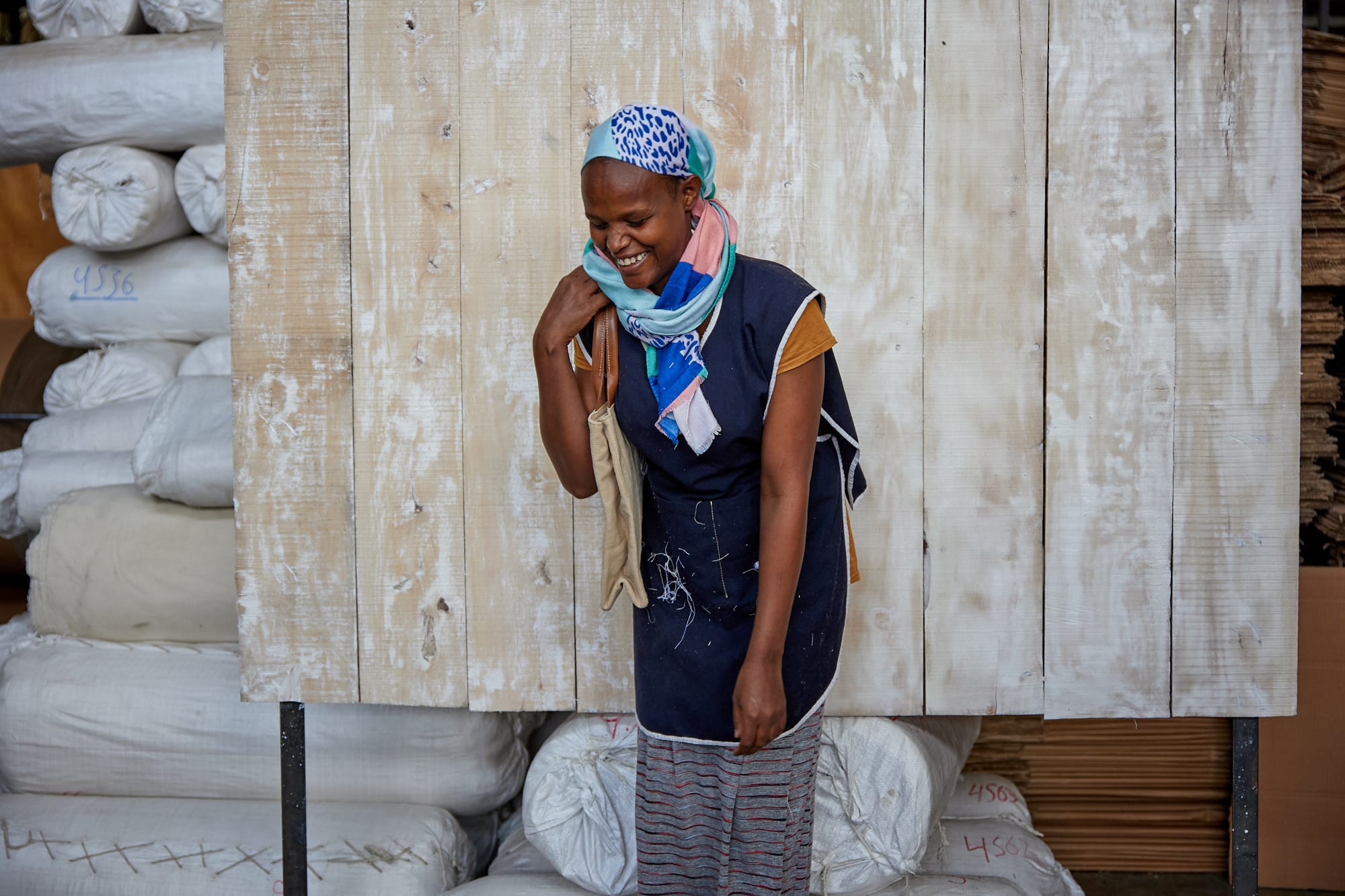
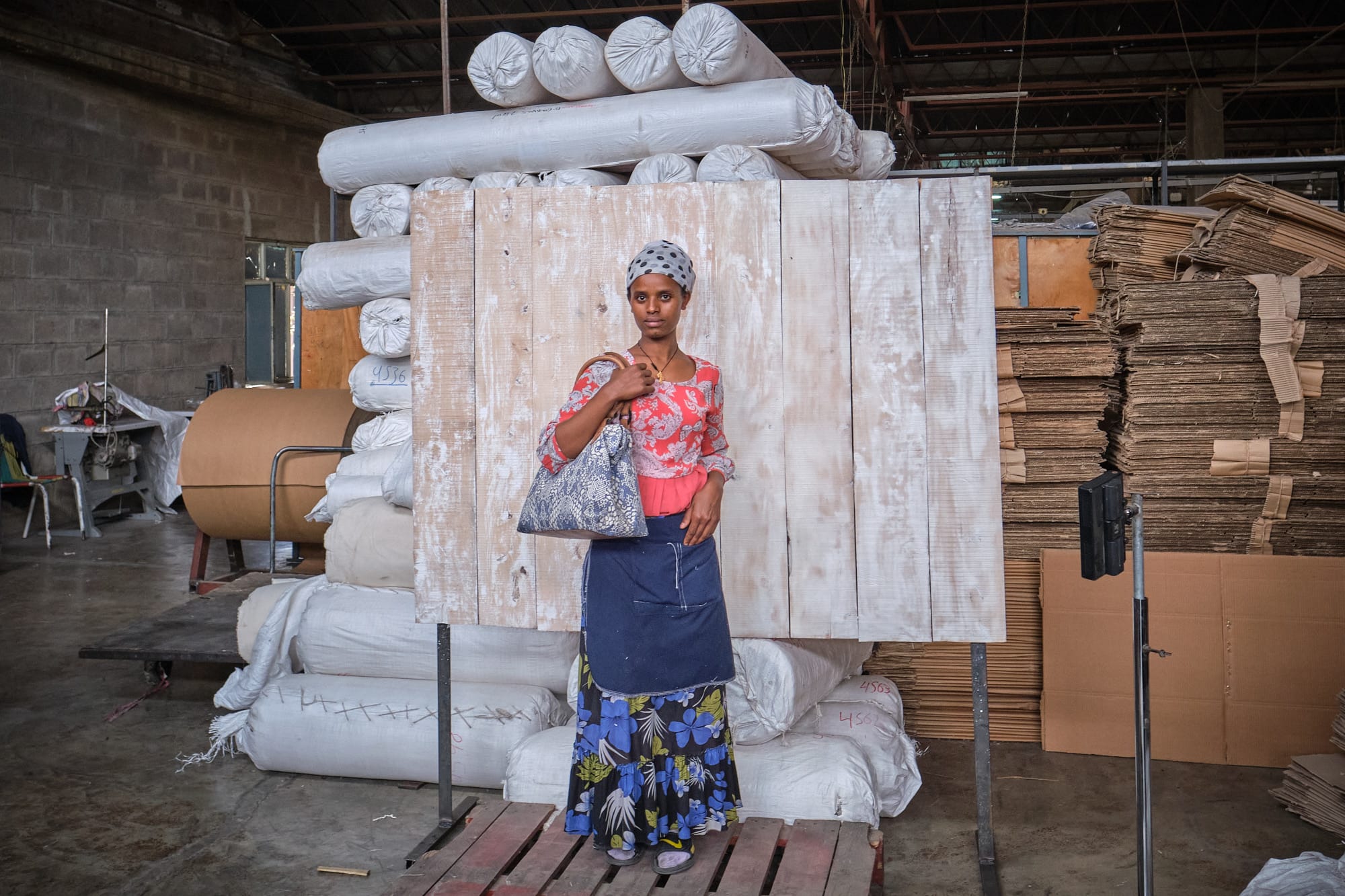
In 2021, during the Covid pandemic, Claudio Maria Lerario and Giulia Zhang traveled to Addis Ababa. It was supposed to be a professional assignment. It became something else.
Work led to familiarity; familiarity became trust. Over the years, the relationship between Ayzoh! and AFAR grew into friendship, further projects and a shared way of thinking about craftsmanship, stories, travel and the people behind the objects we use.
Eventually, even this magazine grew partly out of that history. None of this means a Facebook group created A Bag of Stories. Networks do not make friendships. They do not produce trust, photographs, books or ideas. But they can make an encounter possible. Sometimes that is enough.
Taking Africa seriously
VadoinAfrica has since changed shape and name. Today it is inAfrica Network, a company working with businesses and institutions interested in building activities and partnerships in African countries.
Its language is inevitably the language of business: consulting, internationalization, networks, partnerships, projects, opportunities. Behind that vocabulary, however, there is an older argument in Ghielmi’s work that is more interesting than the vocabulary itself.
Africa, he has repeatedly argued, should be taken seriously. The expression may sound obvious. It is not: for a long time, much of the European imagination has approached African societies through an extraordinarily narrow set of roles.
Africa appears as emergency, recipient, beneficiary, risk, resource, market or opportunity. Europeans arrive to help, develop, extract, teach, invest or save. Different verbs; often the same geometry. One side acts. The other is acted upon.
Martino Ghielmi has spent years attacking one particular version of this relationship: the idea that good intentions are enough to make an unequal relationship good.
The criticism is worth listening to, especially because it extends beyond development agencies and NGOs. Paternalism does not disappear simply because the person arriving carries a business plan instead of a development project. It can travel perfectly well in a suit.
The Senegalese economist and writer Felwine Sarr, whom Ghielmi interviewed years ago, framed the question more radically. African societies, he argued, do not need outsiders to determine what their future should look like.
What is needed is the possibility of relationships based on exchange, mutual respect and the recognition that knowledge does not travel in only one direction.
This's the point: solidarity is not the same as charity. Partnership is not another word for assistance. And respect is not something offered by the supposedly stronger party to the supposedly weaker one. It begins when both sides accept that the other has something they do not know.
Business is not innocent
There is, however, an uncomfortable step that must come next. Rejecting the language of aid does not automatically produce equality. Business can reproduce exactly the same hierarchies.
A company can arrive in an African country convinced that it possesses the capital, expertise and technology while local partners possess little more than labor, land, consumers or access. It can extract resources, compress wages, cultivate relationships with political elites and remove much of the value it creates from the place where that value was produced.
Calling this internationalization does not change what it is. So the alternative cannot simply be summarized as “trade, not aid."
The more useful questions are harder: who makes the decisions? Who assumes the risks? Who owns the knowledge? Who becomes more capable because the relationship exists? Where does the value remain? And what survives locally when the foreign partner eventually leaves?
These questions do not have the same answer in Addis Ababa, Nairobi, Lagos, Dakar or any of the other places routinely compressed into the single word Africa. That compression is itself part of the problem.
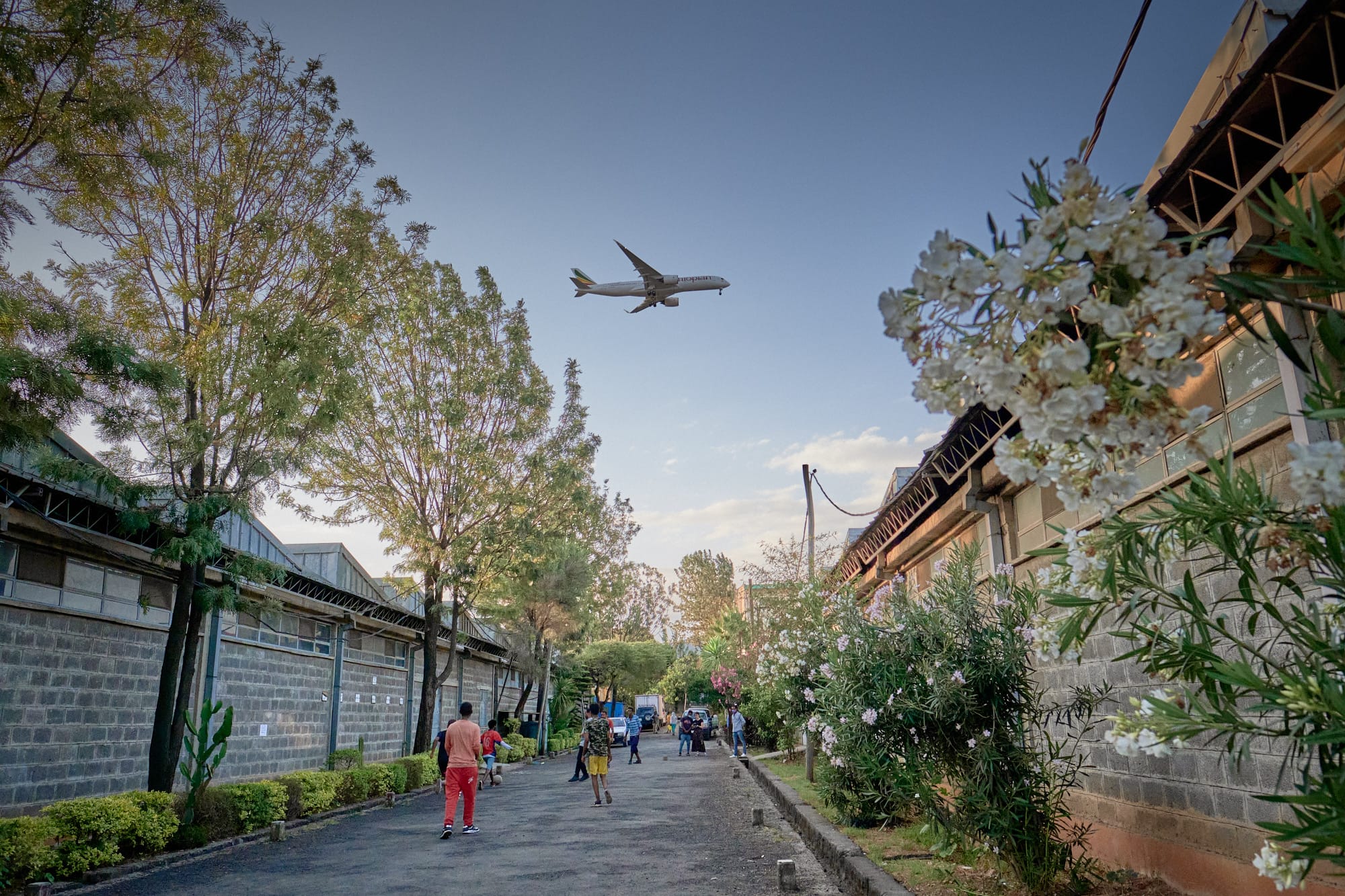
There is no meaningful way to “do business in Africa” without eventually replacing the continent with actual places: countries, cities, industries, legal systems, histories, languages, companies and people. A network is useful precisely when it helps that replacement happen.
What a network knows
Today inAfrica describes itself as a bridge between Italian companies and business communities across the continent. Its activities include consulting, professional networks, events, missions and a private club for entrepreneurs and executives already working in African markets.
Those services can be measured in projects completed, specialists involved and contacts accumulated. But numbers describe scale better than value: the more interesting question is what a network actually provides.
Often, the answer is context. Knowing whom to meet is part of it. Knowing whom not to meet may be equally important.
Understanding that a promising introduction is not yet a relationship. Knowing when enthusiasm is masking a misunderstanding. Recognizing that a local partner is not simply an intermediary between a European company and a market but an actor with their own objectives, knowledge, constraints and reputation.
Context also means understanding that efficiency is cultural as well as logistical. That contracts operate inside social worlds. That a meeting carries histories into the room long before anyone sits down.
None of this can be downloaded in a country report. It requires time on the ground and people willing to say, occasionally, that the assumptions you arrived with are wrong.
Ghielmi came to this work after years moving through different worlds: university research, cooperation, corporate experience, training and consultancy. His public language can be deliberately provocative, particularly when he writes about aid, philanthropy or European attitudes toward the continent.
Strip away the provocation, however, and a fairly simple proposition remains. Do your work properly. Treat customers as people rather than purchasing power. Treat employees as participants in the value you create rather than costs to be managed. Build something capable of lasting. Accept that the people you meet locally may understand the problem better than you do.
In most places, none of this would sound revolutionary. Perhaps that is precisely the point: African customers do not require a special category of dignity. African workers do not require a special version of professional respect. African entrepreneurs do not become interesting because an Italian company has suddenly discovered an “emerging market.”
Taking someone seriously means applying the same standards of seriousness everywhere. And then accepting that those standards themselves may have to change once you begin listening.
The documentary commissioned by AFAR in 2021, filmed in Addis Ababa by Ayzoh!.
What happens after the introduction
Our own experience with VadoinAfrica is small compared with the scale of the relationships inAfrica now tries to facilitate. But perhaps its smallness makes it useful.
Ayzoh! did not join that Facebook group looking for a future partner, let alone a friendship. We found a name, then we found people.
After the introduction came conversations; after the conversations, a commission. Then came Addis Ababa in 2021: work, days spent together, photographs, discussions, disagreements, meals, observations, decisions. The important part happened after the network had done its job.
No platform could determine whether AFAR and Ayzoh! would trust one another. No consultant could manufacture the friendship that followed. No professional database could guarantee that years later we would still be exchanging ideas, producing work together and questioning one another. The network created proximity. The relationship required something else.
This distinction matters increasingly in a world that has become extraordinarily efficient at producing contacts. We collect followers, leads, addresses, memberships and connections. LinkedIn tells us how many people are one introduction away. Conferences promise rooms filled with decision-makers. Business cards move quickly from one pocket to another.
But a contact is only an opening. A relationship begins when people acquire obligations toward one another. You answer the next message. You return. You disagree without disappearing. You learn enough about the other person’s world to understand when your own assumptions are becoming an obstacle.
You allow time to change the initial transaction. That is what happened to us. And it may be the most useful measure of a network’s value: not how many connections it can display, but how many of those connections eventually become capable of continuing without it.
After the network disappears
There is an understandable temptation, when talking about Africa and Europe, to look for the correct formula: aid or trade; charity or business, cooperation or investment; local or international, development or entrepreneurship.
Reality is less tidy: a badly conceived development project can create dependency. A responsible cooperative project can transform lives. A foreign investor can extract. Another can build a company with local partners that remains useful decades later.
The labels tell us less than the relationships beneath them and, perhaps, this is where inAfrica’s most useful intuition lies.
The real work does not consist in convincing Europeans that Africa is “the future,” nor in replacing one stereotype — a continent of poverty — with another: a continent of unlimited opportunity. Both reduce places to projections of our own desires.
The work is more modest and more demanding: helping people arrive with enough context to encounter one another as professionals, entrepreneurs and human beings rather than as categories.
Then the network has to get out of the way. Two people remain at a table. Perhaps two companies. They can decide to build something together or walk away. They can become partners, clients, colleagues, competitors or friends.
Years ago, somewhere inside a Facebook group of thousands of people, that possibility appeared for Ayzoh! and AFAR. Someone made the introduction. Everything important came afterward.


Member discussion