


There is a familiar choreography to travel photography. You meet someone. You talk. Perhaps you ask permission to make a portrait. The person looks into the camera, or continues whatever they were doing while you photograph. You check the screen. You thank them. Then you leave. The photograph leaves with you.
We have become so accustomed to this sequence that its imbalance is easy to miss. Someone has given us time, attention, access to a face, a home, a family, sometimes a fragment of personal history. We carry the resulting image away on a memory card or a phone. The person in the photograph may never see it again.
There are good intentions, of course. We promise to send the picture later. Sometimes we do. Sometimes an email address is written incorrectly, a phone number changes, a message disappears into an app, a hard drive fails, or months pass and a photograph becomes one file among thousands. There is a much simpler possibility. Put a small printer in your bag.
A photograph can travel in two directions
Ayzoh! has carried portable printers during fieldwork for years. The reason is not complicated. When possible, photographs should return to the people whose lives made them possible.
Not as payment. Not as a reward for being photographed. And certainly not as a technique for persuading someone to trust the photographer. The distinction matters.
If a print becomes a tool for obtaining access, the exchange has simply acquired a new currency. The photographer still controls the transaction.
Giving a photograph back means something different. It acknowledges that while the photographer may have made the image, its meaning does not belong exclusively to the photographer.
A portrait contains another person's face. A family photograph contains another family's memory. A photograph made inside a home enters a history that began long before the visitor arrived.
Printing an image does not solve the complicated questions surrounding photography, consent, representation, and power. But it can alter the direction in which the photograph travels. Something leaves with us. Something stays.
In Maramureș, the camera changed hands
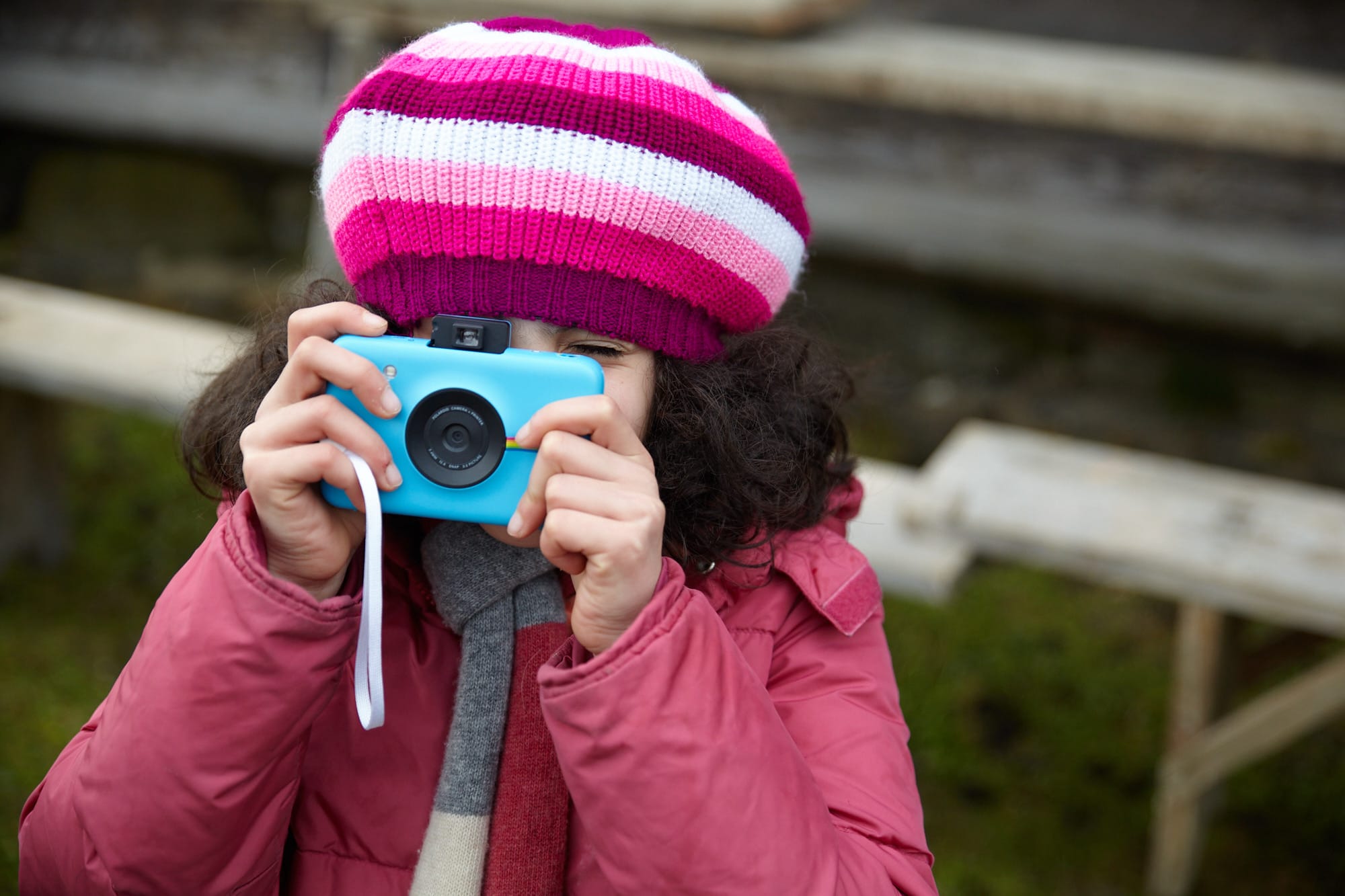
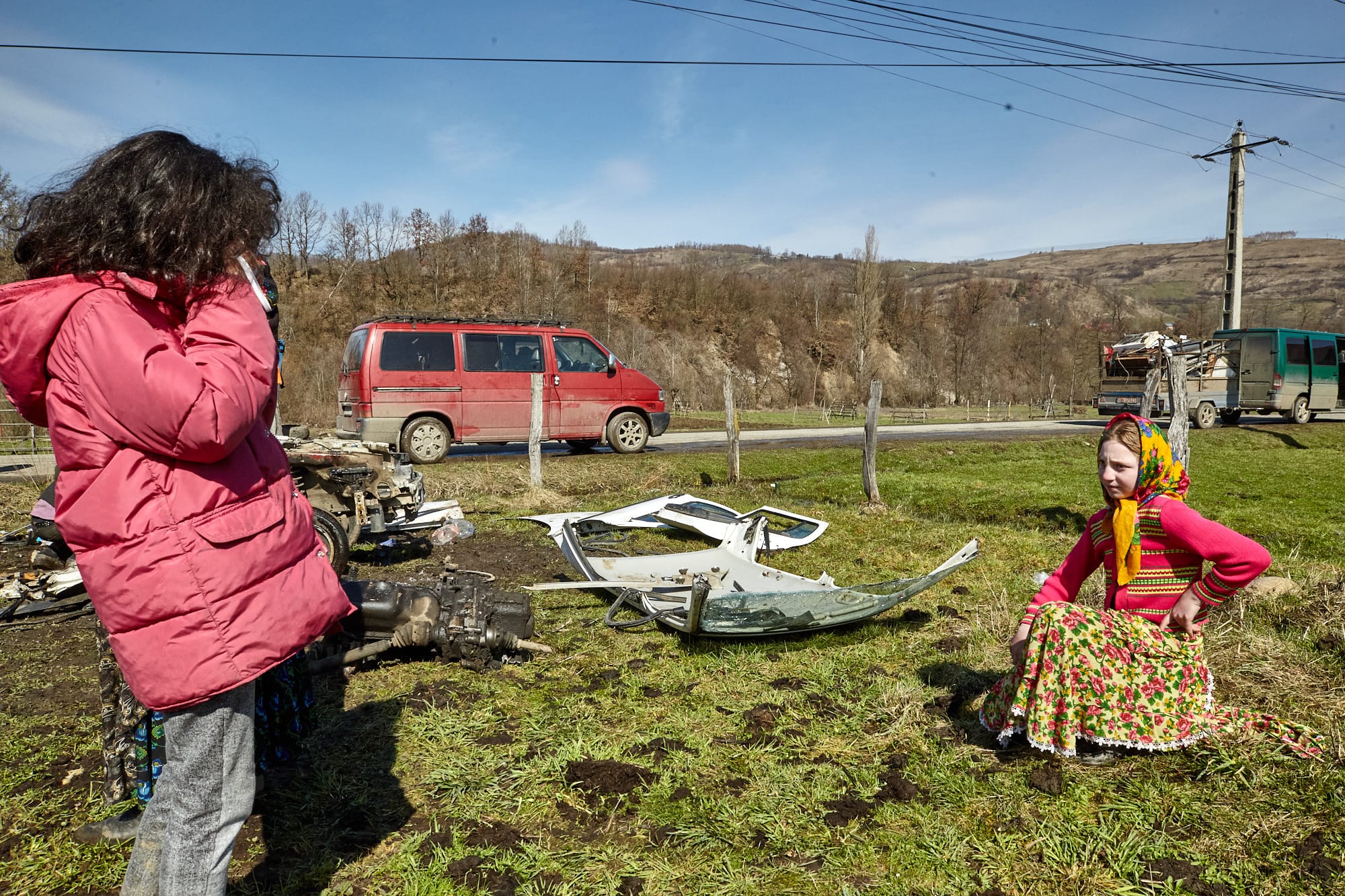
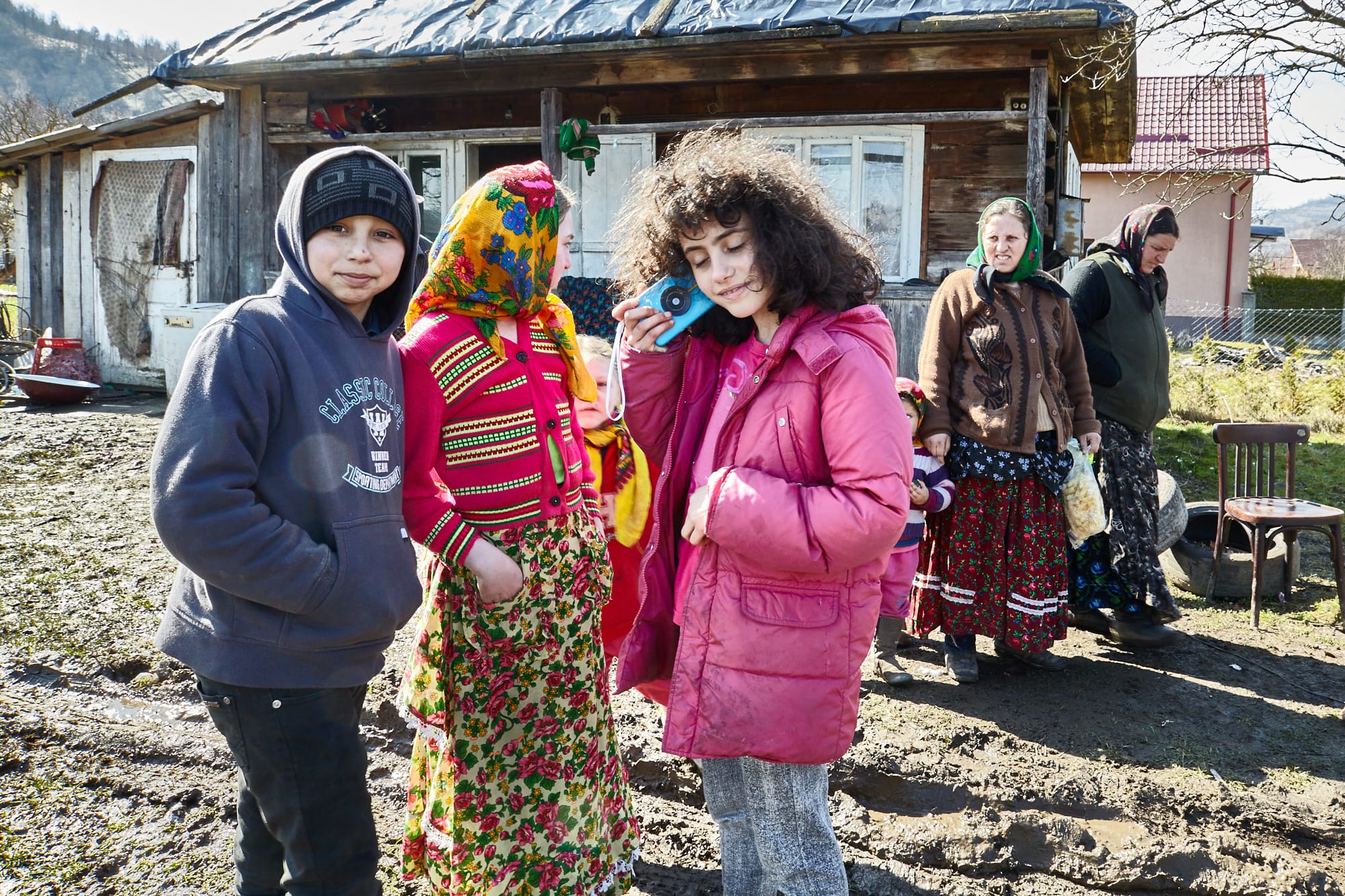
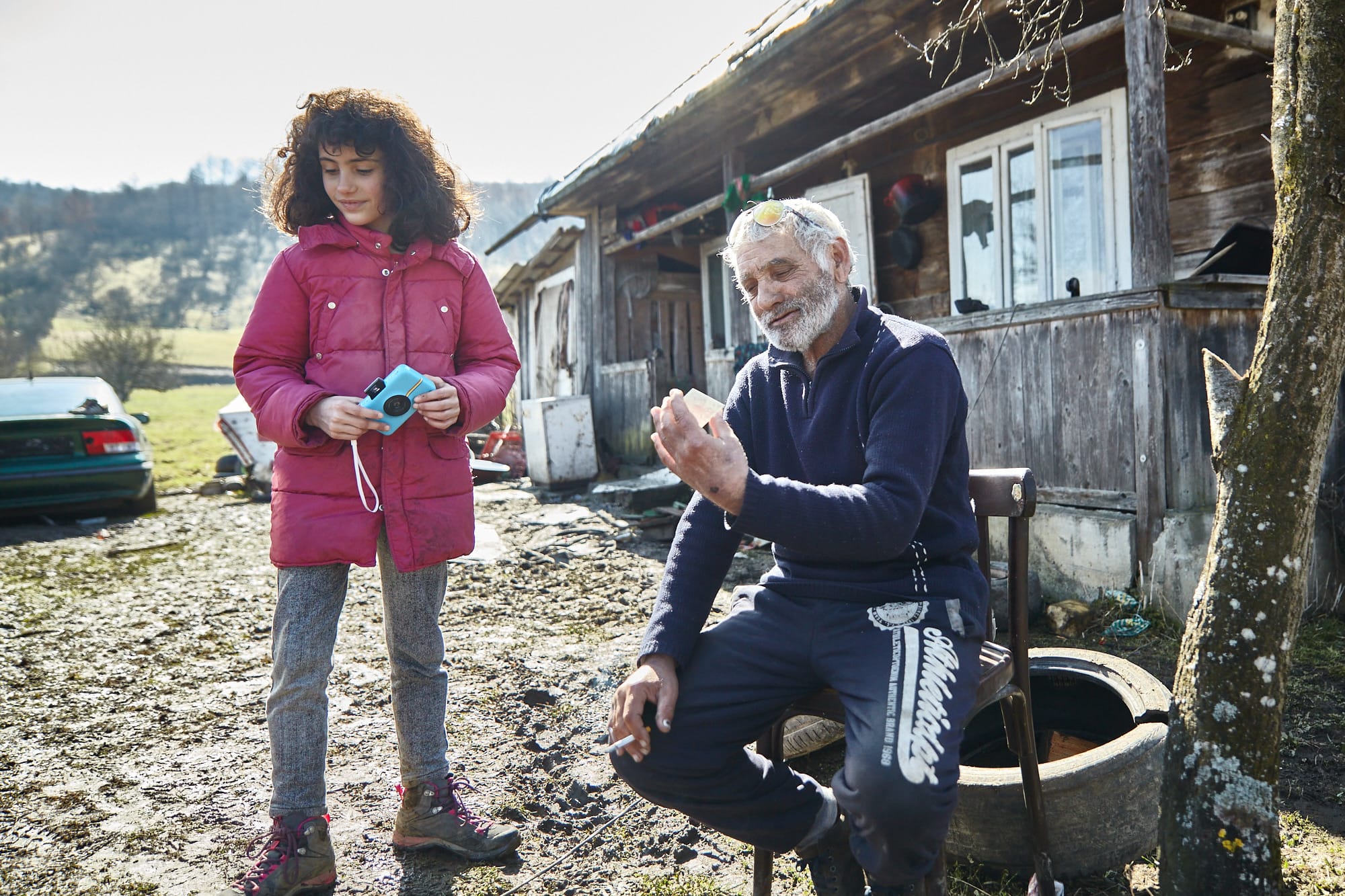
During work in Maramureș, Romania, Ayzoh! tried something else. The camera was given to a child. She carried a small blue camera through the community, raising it toward the people around her. She photographed children. Adults sat for her. People looked at the pictures. Prints passed from one pair of hands to another.
The gesture was deliberately simple. Children who arrive somewhere unfamiliar are usually positioned in much the same way as adult travelers: they observe. They are shown things. Adults explain what is different, what is interesting, what should be noticed.
A camera can rearrange that relationship. The child behind the lens has to approach another person. She has to look. The person in front of her looks back. There is a small negotiation of distance, attention, curiosity and trust.
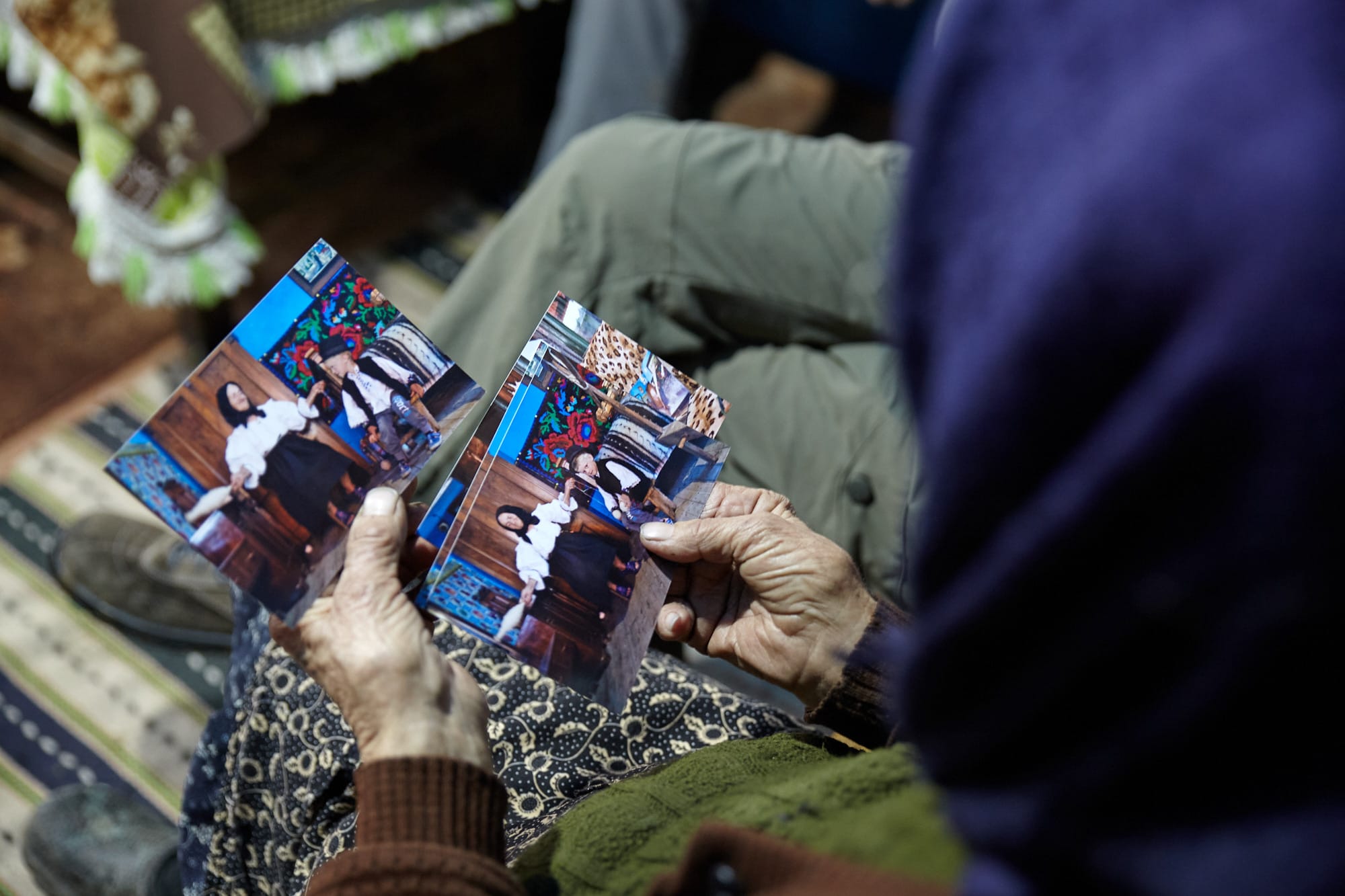
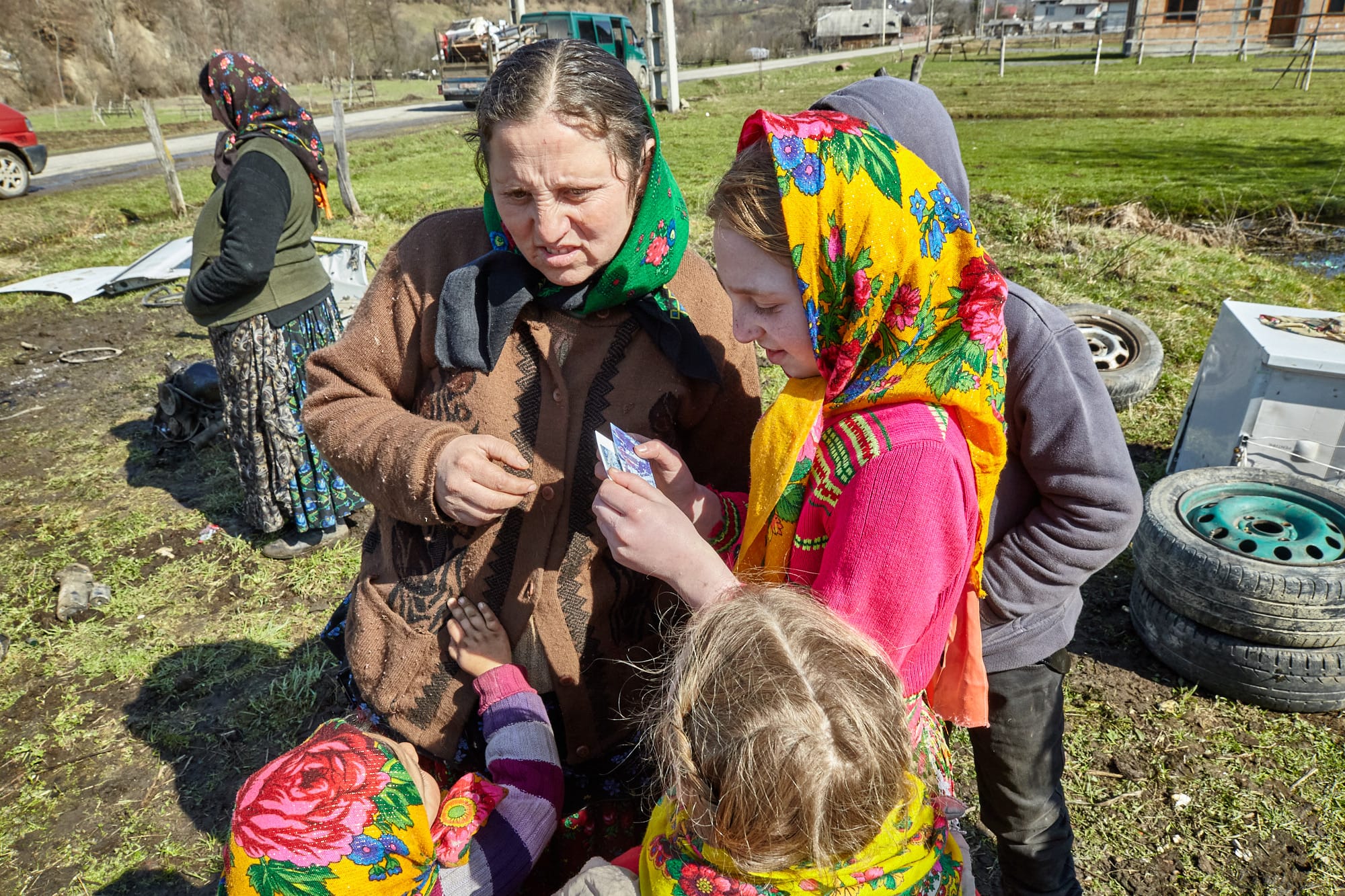
Then comes the print. A boy receives an image from the young photographer. An older man studies another photograph while she stands beside him holding the camera. A group of children gathers around the pictures. Adults compare them. Someone points to a face. Someone recognizes a relative.
The camera has ceased to be the property of the visitor in any meaningful sense. For a while, it becomes part of the conversation. This is especially important when children from different places meet one another.
We often teach cultural difference through information: names, countries, customs, maps, perhaps a few rules about respect. All of that has value. But children also learn by doing something together.
One child photographs another. Another waits for the print. Someone laughs at the result. Someone asks for another.
Difference has not disappeared, nor should it. But it has stopped being an abstract lesson about “other cultures.” It has become an encounter between people standing a few feet apart.
The strange privilege of keeping the image
Photography carries an unusual asymmetry. The photographed person may be central to the picture while having almost no control over what happens to it afterwards. The photographer can archive it, publish it, exhibit it, crop it, caption it, send it across the world or keep it unseen for decades. The person inside the frame may possess nothing.
Digital photography has made that imbalance easier to overlook because images now seem almost weightless. We make thousands. We send them instantly. We store them somewhere invisible.
But images are never entirely weightless to the people inside them. A family portrait can become more valuable with time. A photograph of a parent may become precious after a death. A picture made casually during a visit can eventually become part of the visual record of a childhood, a house, a friendship or a community.
This is one reason prints remain powerful. They become objects. They can be placed inside a drawer, slipped between the pages of a book, tucked into a box with older family pictures or left on a table where people pick them up again. They acquire fingerprints, folds, scratches and histories of their own.
None of this requires romanticizing paper or distrusting digital technology. Phones are extraordinary archives, and digital photography has made sharing images incomparably easier.
The point is simpler. A physical photograph can remain in a place after the photographer has gone.
What happens after the shutter matters too
Photography is often discussed as though ethics end at the moment the shutter is released. Was permission given? Was the situation private? Was the photographer respectful? Should the image have been taken at all? Those questions are essential.
But there is another question worth asking: What happens next? What happens when the photograph enters the photographer's archive? What caption accompanies it? Where will it be published? Will the people represented ever see it? Will they recognize themselves in the story being told about them?
Returning a print cannot answer all of those questions. It can, however, remind the photographer that making a picture is not the end of the relationship.
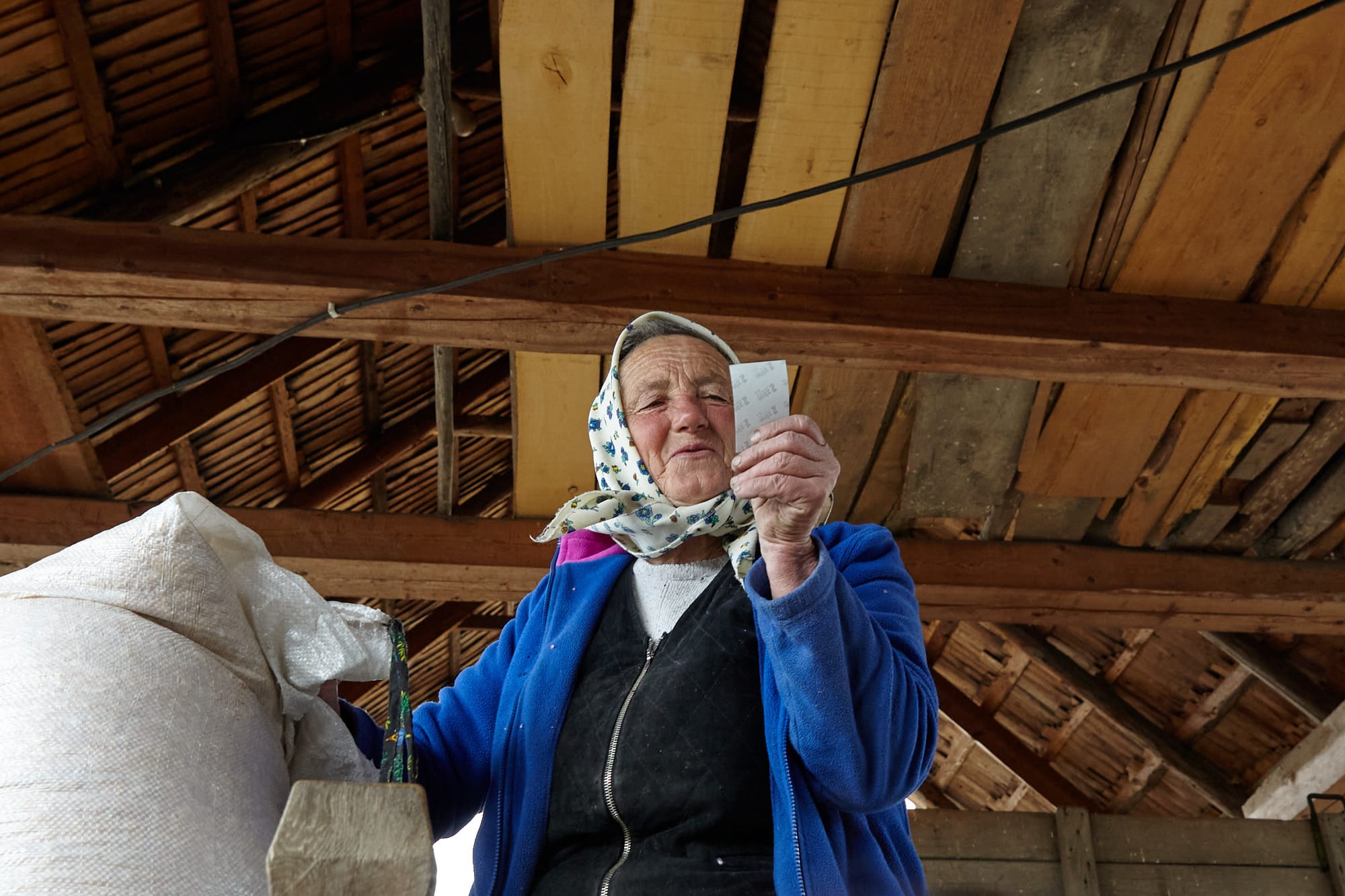
Sometimes the most important moment happens several minutes later, when the person who has been photographed looks at the image.
They may like it. They may laugh. They may prefer another frame. They may point out someone standing in the background. They may tell you something about the photograph that you had completely misunderstood.
This is where photography becomes less declarative and more conversational. The photographer has looked. Now the photographed person looks back.
Let people decide what matters
Printing in the field also exposes something photographers do not always enjoy admitting: our preferred picture is not necessarily the photograph that matters most to the person in it.
We may select an image because of its composition, light or emotional ambiguity. A family may choose another because everyone is looking at the camera. An older woman may prefer the frame in which her clothes are properly arranged. A parent may care less about photographic elegance than about having both children visible. A person may simply dislike the expression that the photographer considered “authentic.”
These disagreements are useful. They remind us that photographic value is not a single thing. The photographer makes an image within one visual culture.
The people photographed may read it through family memory, dignity, social expectations, personal history and meanings the visitor cannot immediately see. Handing someone a print does not surrender authorship. It makes room for another kind of authorship beside it.
Sometimes, hand over the camera
For travelers, the larger lesson may not actually be about printers. It is about control.
Travel photography tends to place the traveler behind the camera and everyone else in front of it. The arrangement feels natural because it is repeated endlessly.
But it is only one possibility. Give someone else the camera. Let a child photograph you. Let a family member decide where everyone should stand. Ask which photograph they would like printed. Accept that the picture they choose may not be yours.
These small reversals reveal how much power is hidden inside ordinary photographic habits. They also make travel more interesting. You begin to discover how other people see their own surroundings instead of merely collecting evidence of how those surroundings looked to you.
What to put in the bag
You do not need professional equipment. A compact portable printer is enough. Bring more paper than you think you will need and a power bank if the printer requires one. A pen can be useful for writing a place, a name or a date on the back when people want that information preserved.
Small envelopes or paper sleeves are helpful too, particularly if the prints will travel home in pockets or bags. Then forget about the equipment. The important part begins after the photograph appears.
Show it. Let people hold it. Ask whether they want it. If several family members would like copies and you have enough paper, make more than one.
And if someone does not want to be photographed in the first place, a printer changes nothing. Consent still comes before the image. The photograph is never the price of access.
The photographs that remain
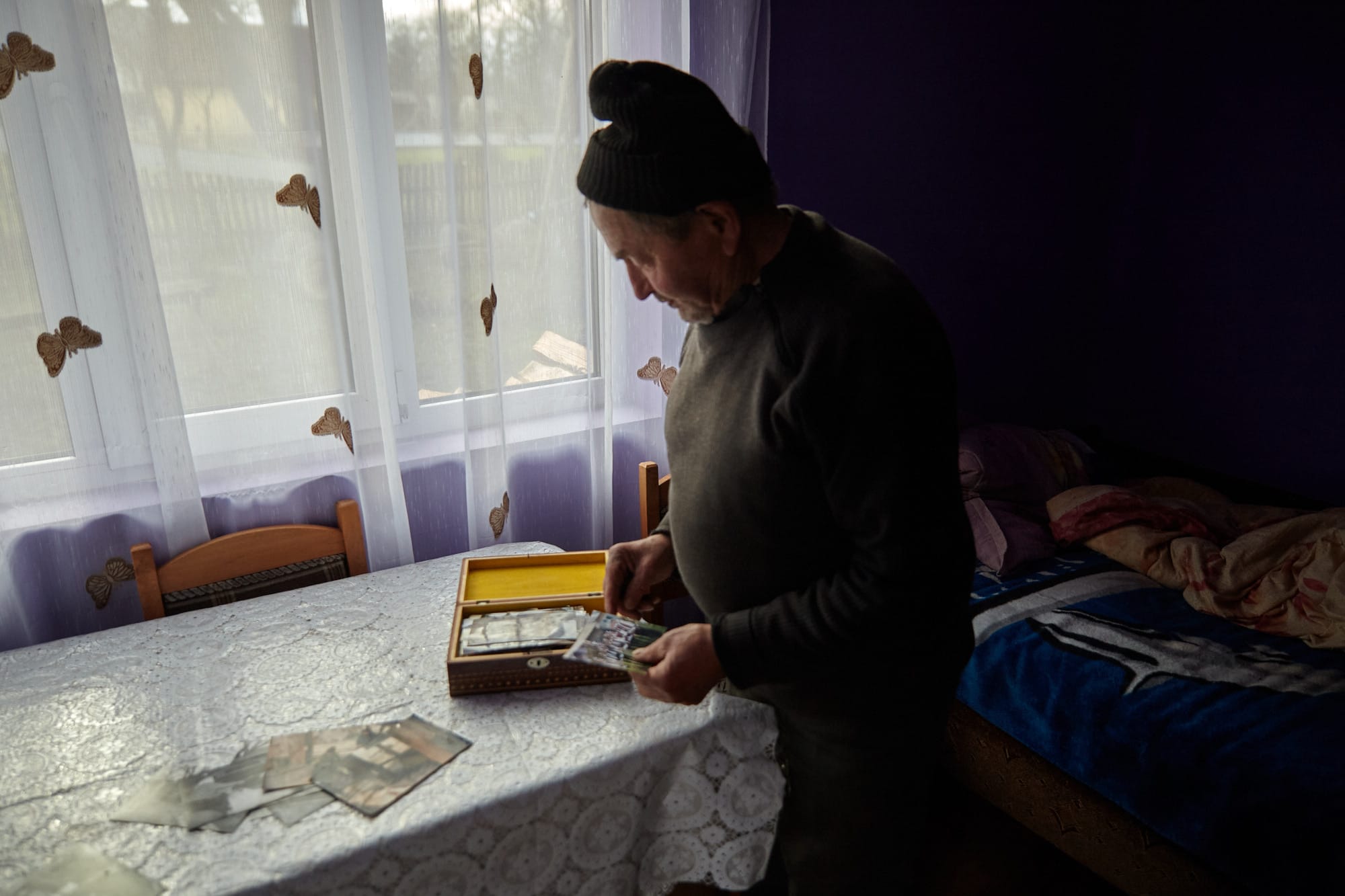
In one of the images from Maramureș, a man stands beside a table in a quiet room. Daylight enters through a window. In front of him is a box containing photographs.
He looks through them. The pictures made during the visit will eventually enter lives already filled with pictures: weddings, children, relatives, departures, people who have grown older, people who may no longer be there.
That is perhaps the most useful thing to remember when photographing while traveling. We are rarely creating someone's visual history from nothing. We are entering it. For a short time.
A small printer cannot make photography equal, innocent or uncomplicated. Nor can any device turn a brief encounter into intimacy. But it can produce one modest correction to a habit we rarely question. The photograph does not always have to leave with us.
So next time you travel, consider leaving a little space in your bag for a printer. Not because every encounter should become a photograph. Many should not. But when someone does choose to give you an image of themselves, you can make sure that you are not the only person who gets to keep it.


Member discussion