


Where we stand
I began taking photographs when I was thirteen. After so many years, I am still interested in the same question: where do we stand when we look at another person? The camera comes later.
People often begin with the machine. Which camera, which lens, which light, which technique. These things have their place; I have spent much of my life learning them, using them, teaching them.
But a photograph begins before all of that. It begins with the distance between one person and another; with whether we approach with respect or certainty, whether we are prepared to listen, whether we already believe we know the story before the person in front of us has had the possibility to speak.
This is especially important when photography enters places where life is difficult. A poor neighborhood, a street, a camp, a prison, a quarry: a photographer can arrive there and collect images very quickly.
The world has seen many photographs made in this way. They may be strong images, sometimes beautiful images; still, beauty alone tells us very little about the relationship that produced them.
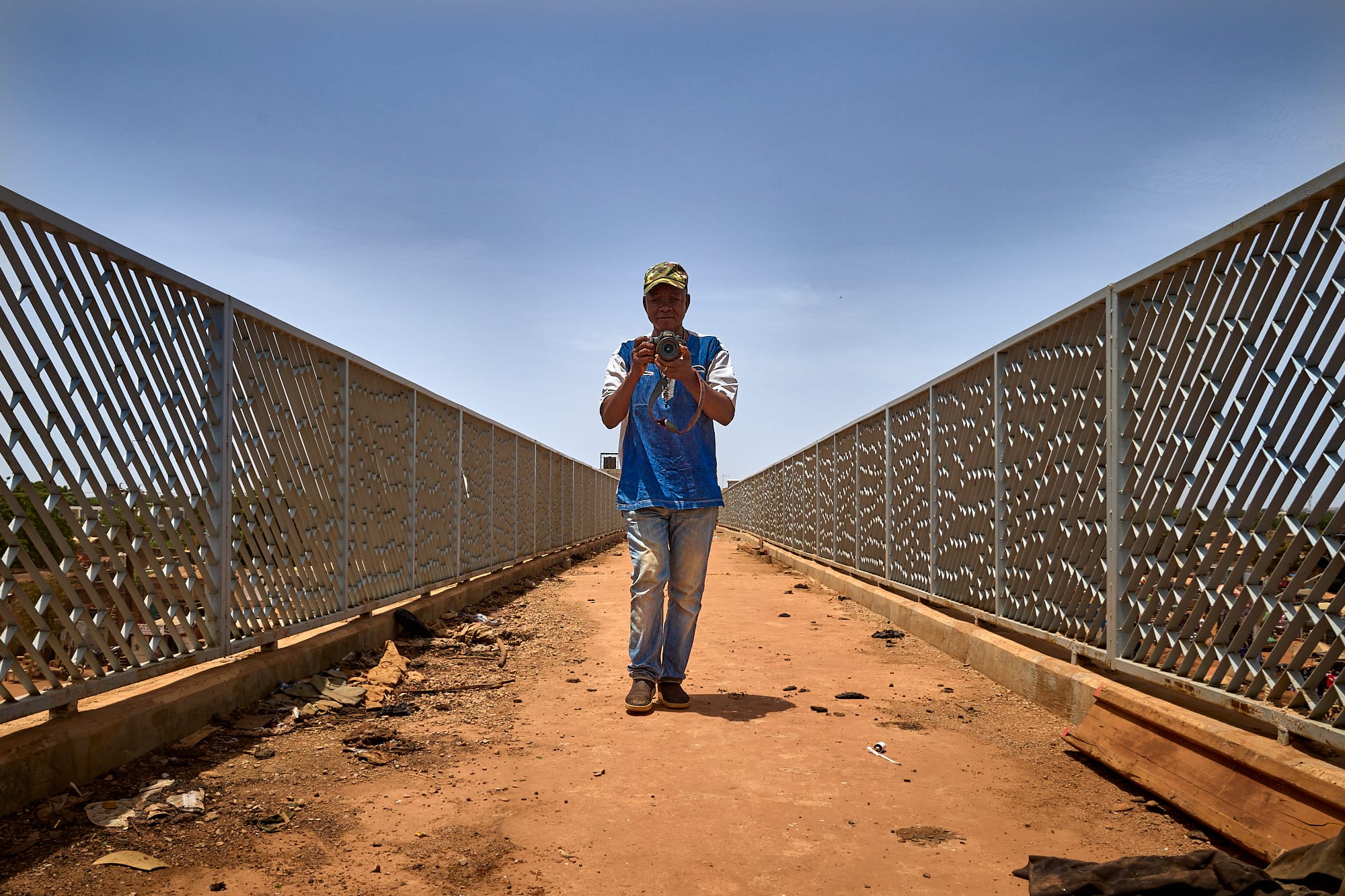
For me, photography has another responsibility. It can create a meeting. This idea is at the center of the Centre Photographique de Ouagadougou, the CPO, which I founded in Ouagadougou and continue to lead.
I wanted a place where photography would belong to ordinary life; a place open to young people, photographers, neighbors, people living on the street, anyone who wanted to enter, learn, speak, look.
A photographic center should not exist only for photographers who already know they are photographers. It should also be there for the person who has never held a camera. Perhaps especially for that person.
Because the moment someone takes a camera into their own hands, something changes. Until then, they may have spent a lifetime being looked at, classified, described, photographed, sometimes judged.
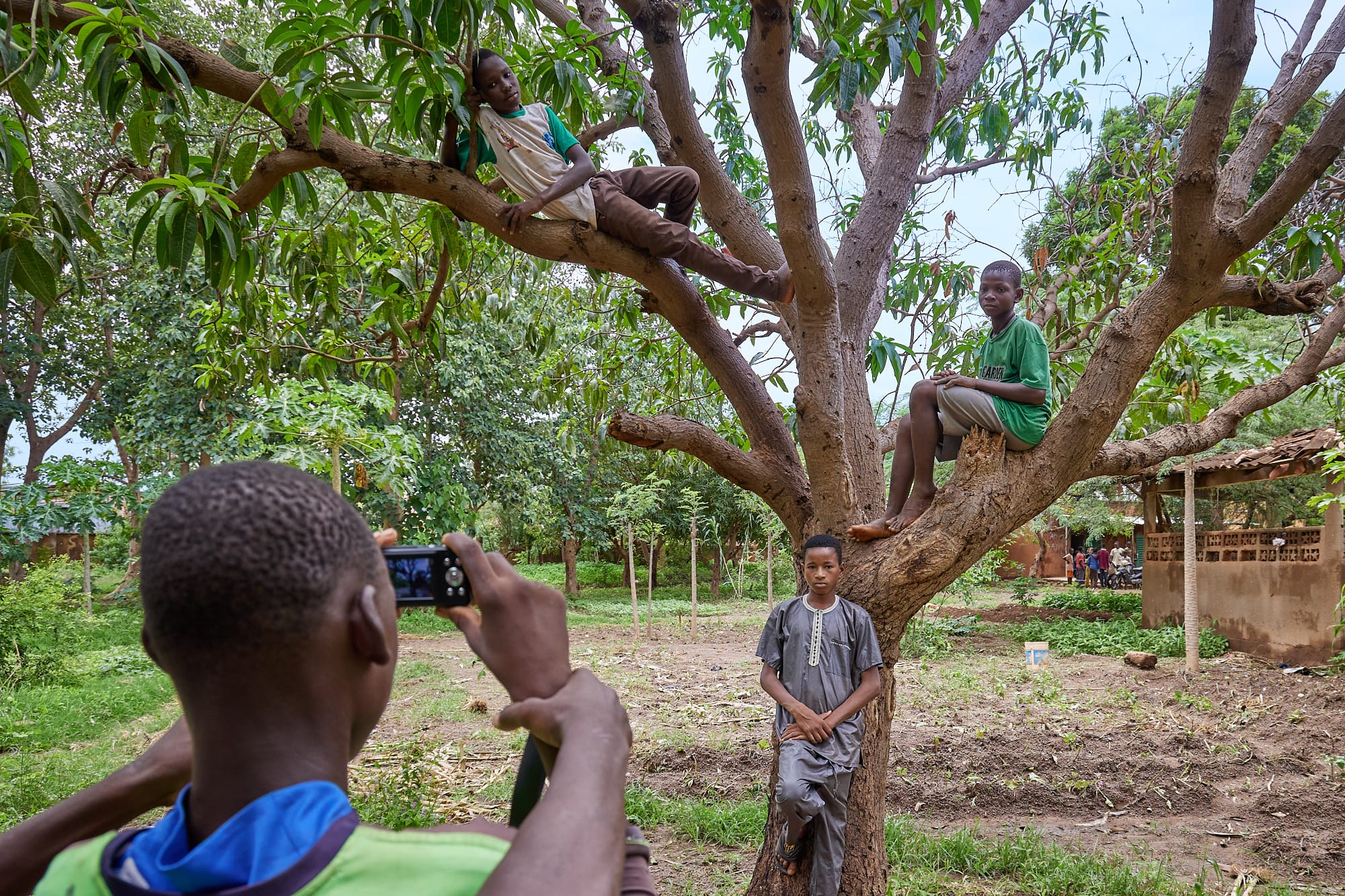
Now they choose where to stand. They decide what enters the frame and what remains outside it. That decision may appear small. It is not small: it is a form of freedom.
Memory has a face
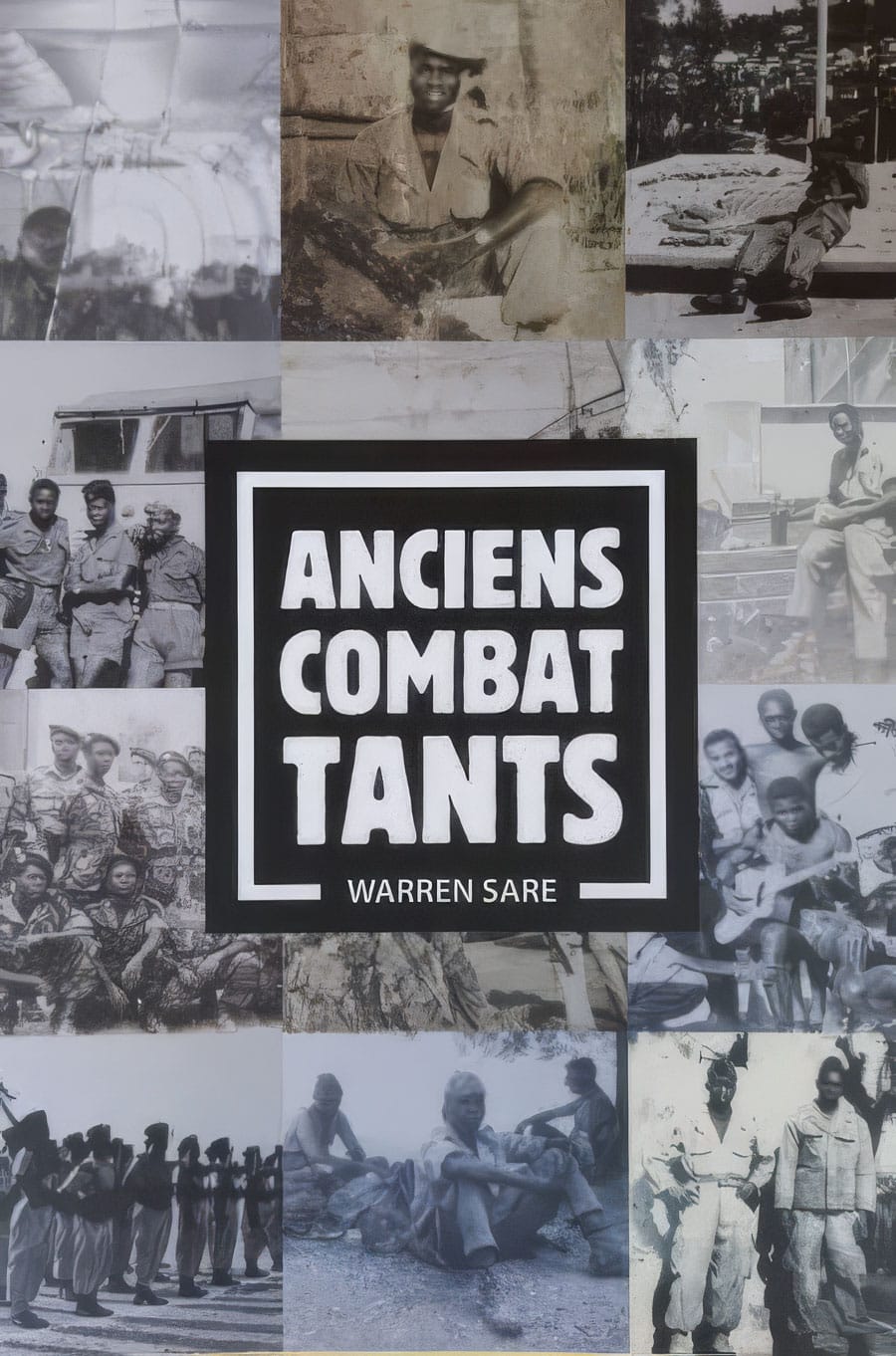
For many years I have worked on the history of the former tirailleurs sénégalais, the West African soldiers who fought in the colonial armies of France. My series Anciens Combattants grew from encounters with men whose memories belonged to a history much larger than themselves, yet whose individual lives could easily disappear behind that history.
When we speak about colonial wars, nations, armies and independence, the words become enormous. History likes large words. Photography can bring us back to a face.
A man sits in his home. There is an expression, a uniform, perhaps an object kept for decades, the marks that time leaves on a body. The photograph cannot explain an entire century; it can refuse to let that century erase the person who lived through a part of it.
This is one reason I photograph. Memory needs witnesses; it also needs forms in which it can remain after the witness is gone. There is no nostalgia in this for me. Memory is not a way of returning to the past. It is part of our responsibility toward the present.
When a society loses the individual faces inside its history, history becomes easier to simplify, easier to manipulate, easier to turn into a story with heroes on one side and shadows on the other.
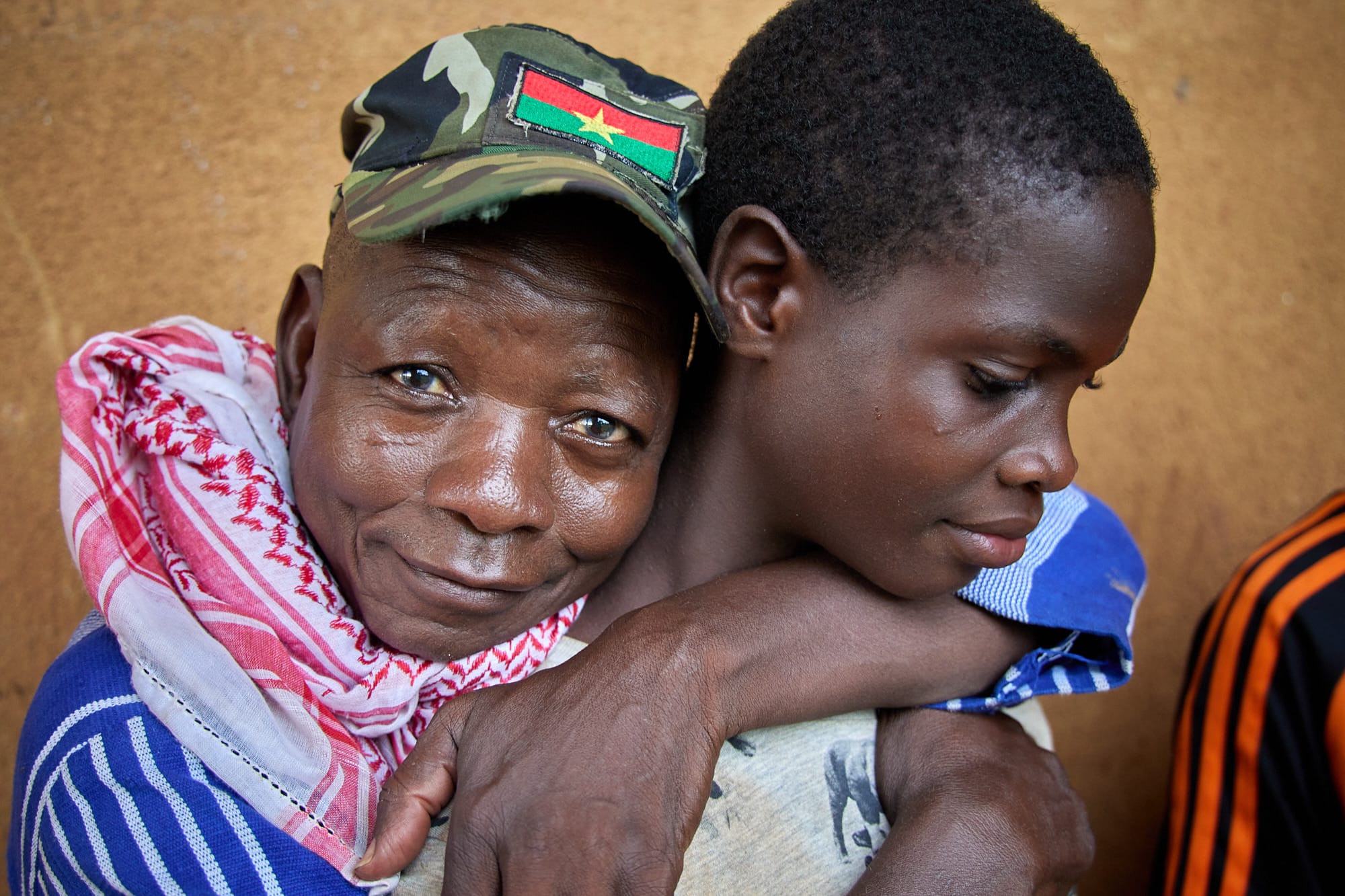
People are more complicated than that. Countries are more complicated than that. Burkina Faso is more complicated than the stories usually told about it outside Burkina Faso.
I know the photographs that travel internationally: conflict, instability, displacement, poverty, terrorism. These realities exist and must be documented. I have no interest in hiding them.
But a country cannot be understood through its emergencies alone; between one headline and the next, people fall in love, argue, pray, repair a motorcycle, play football, sell vegetables, make music, raise children, remember the dead, make jokes, build things, wait for rain. A photographer must learn to see this ordinary life because history also lives there.
The veterans taught me something about memory; years later, the young photographers of Je Suis la Rue would teach me something about its future. The two works belong together.
With the Tirailleurs, photography tries to hold onto traces before they disappear. With the young people of Ouagadougou, photography creates the possibility that tomorrow’s memory will be made by people who were present, with their own eyes and from their own position. One looks toward what risks being lost; the other toward what has not yet been written.
The street knows things
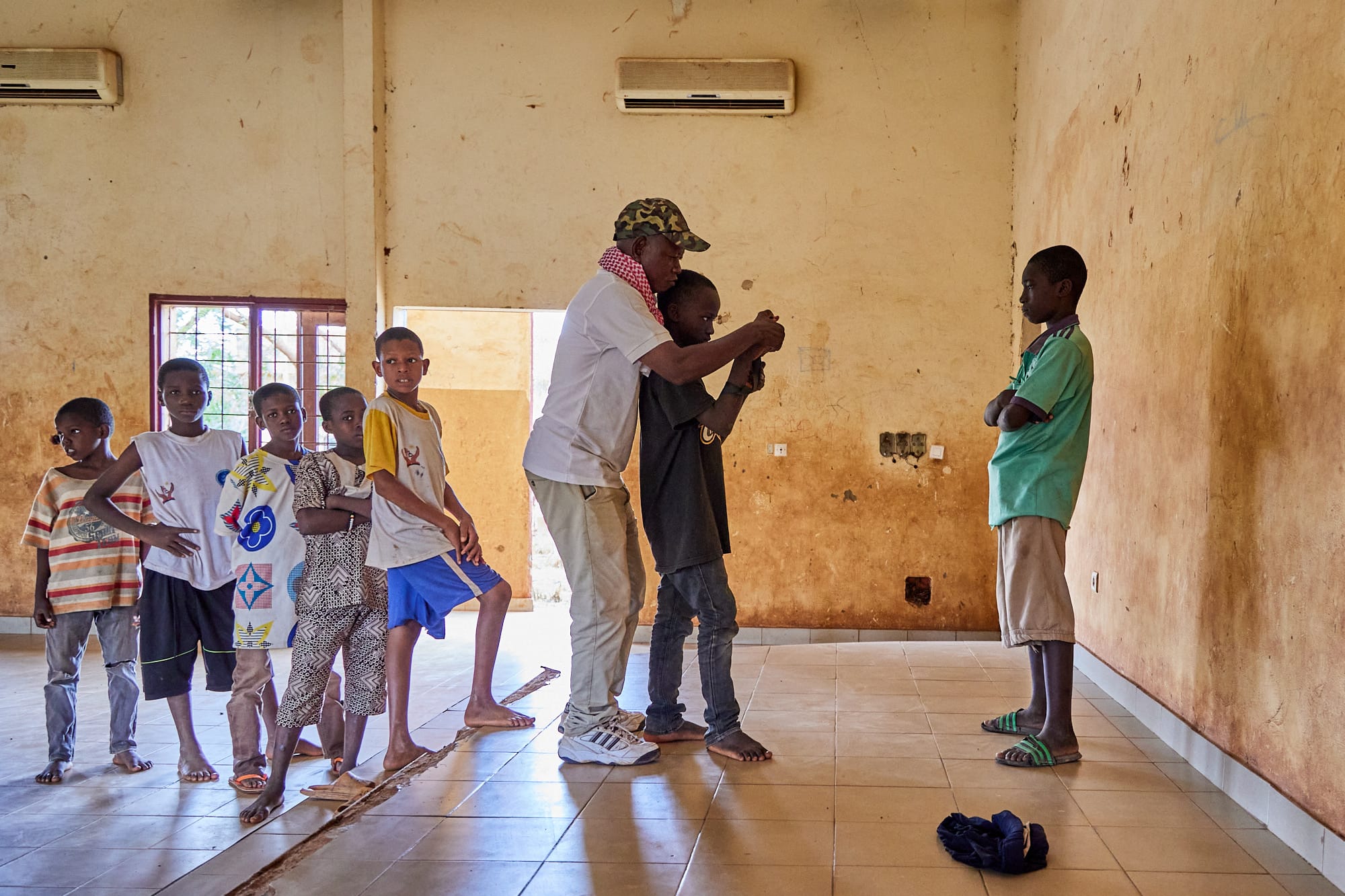
Je Suis la Rue began with a very simple gesture: put cameras into the hands of young people who knew the streets of Ouagadougou better than we did. This simplicity was important.
At first we worked with inexpensive cameras. There was technique to learn: exposure, shutter speed, movement, composition. Later came professional cameras and more demanding work. But technical knowledge can be acquired; learning how to look at another person requires something else.
The young photographers practiced with one another, with movement and dance, with football and rain; then they began going outside, approaching people, asking permission, learning that the photograph depends on trust.
At the end of the sessions, images were projected and discussed together. Slowly, photography became less about making a successful single picture and more about understanding what a picture was doing inside a story.
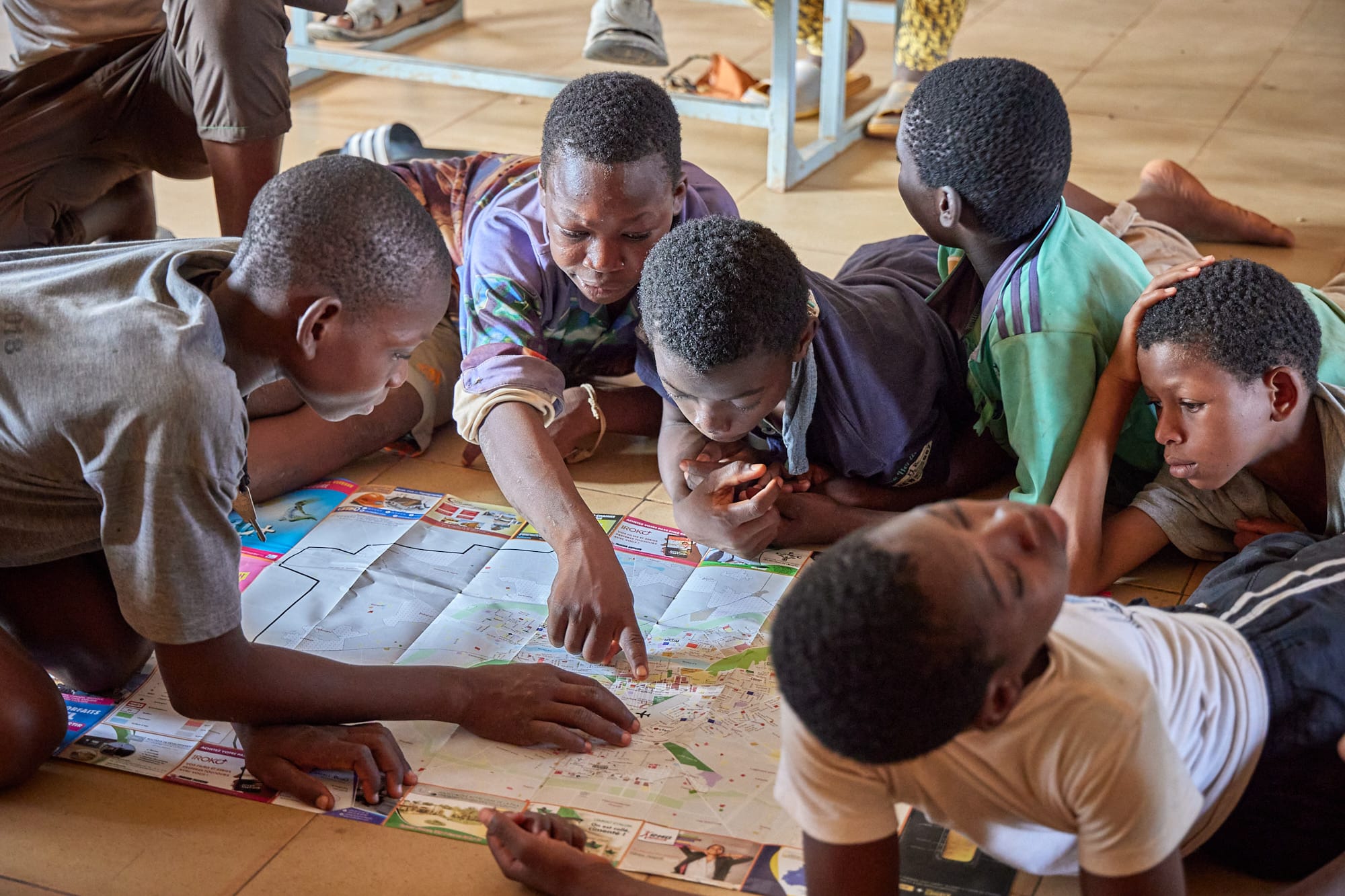
Then we opened a map of Ouagadougou. The young people chose where we would go. This changed everything.
We could have chosen the monuments. We could have decided which places best represented Ouagadougou according to the logic of a visitor. Instead, they marked the places that mattered to them: streets, markets, neighborhoods, bus stations; places connected to work, friendship, danger, memory, survival, pleasure.
They became our guides. This is one of the things the street teaches you: knowledge does not always come from the person with the diploma, the expensive camera or the plane ticket.
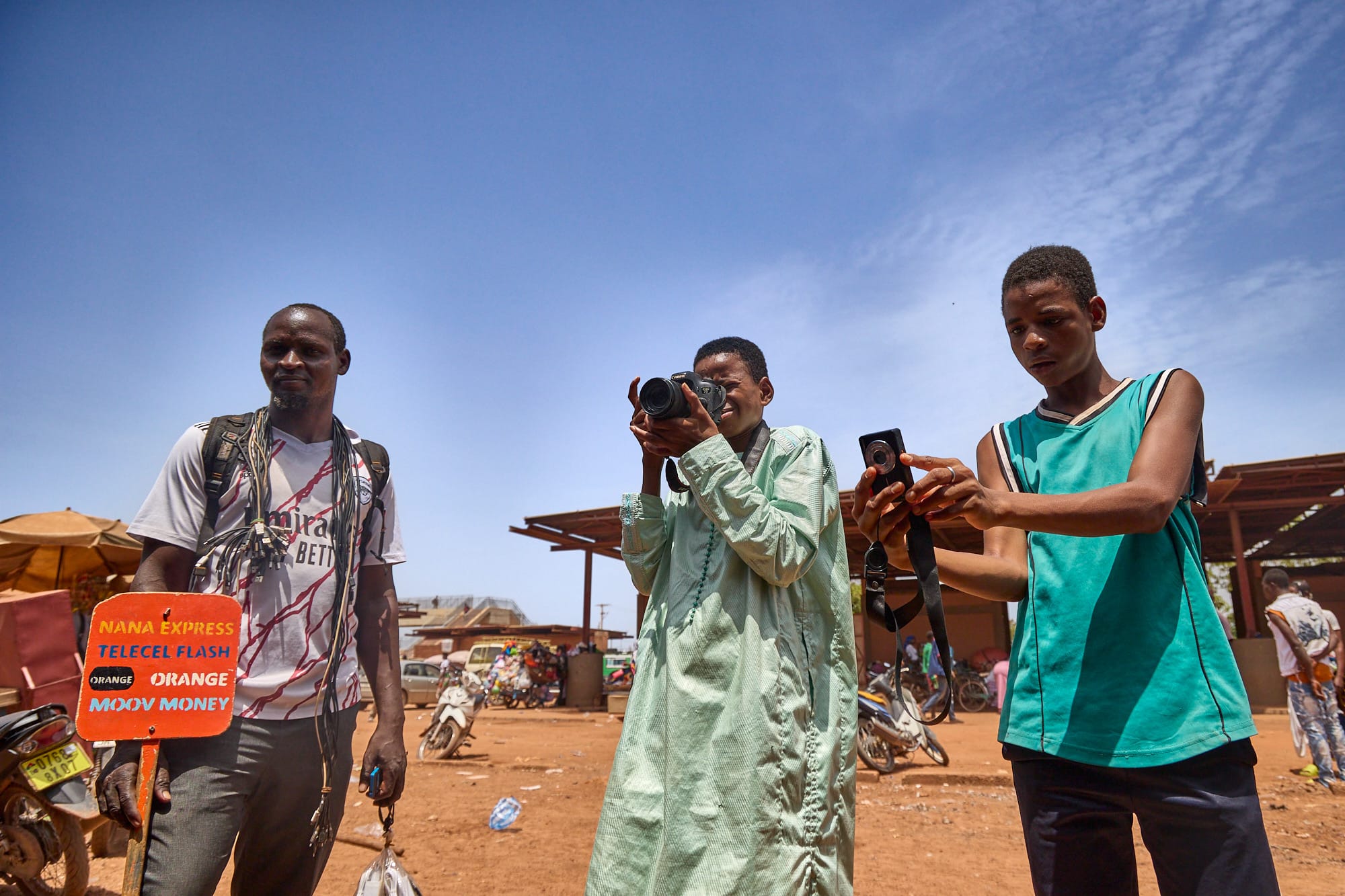
Sometimes the person you believe you have come to teach knows the territory you most need to understand: at Goughin market, at La Gare de l’Est and elsewhere in the city, the young photographers entered spaces that were already part of their lives; the difference was that now they carried cameras.
Later they photographed artists, musicians and places connected to Burkina Faso’s history; they entered harder realities too, including displacement and the Pissy quarry. The work demanded attention; sometimes courage; always responsibility.
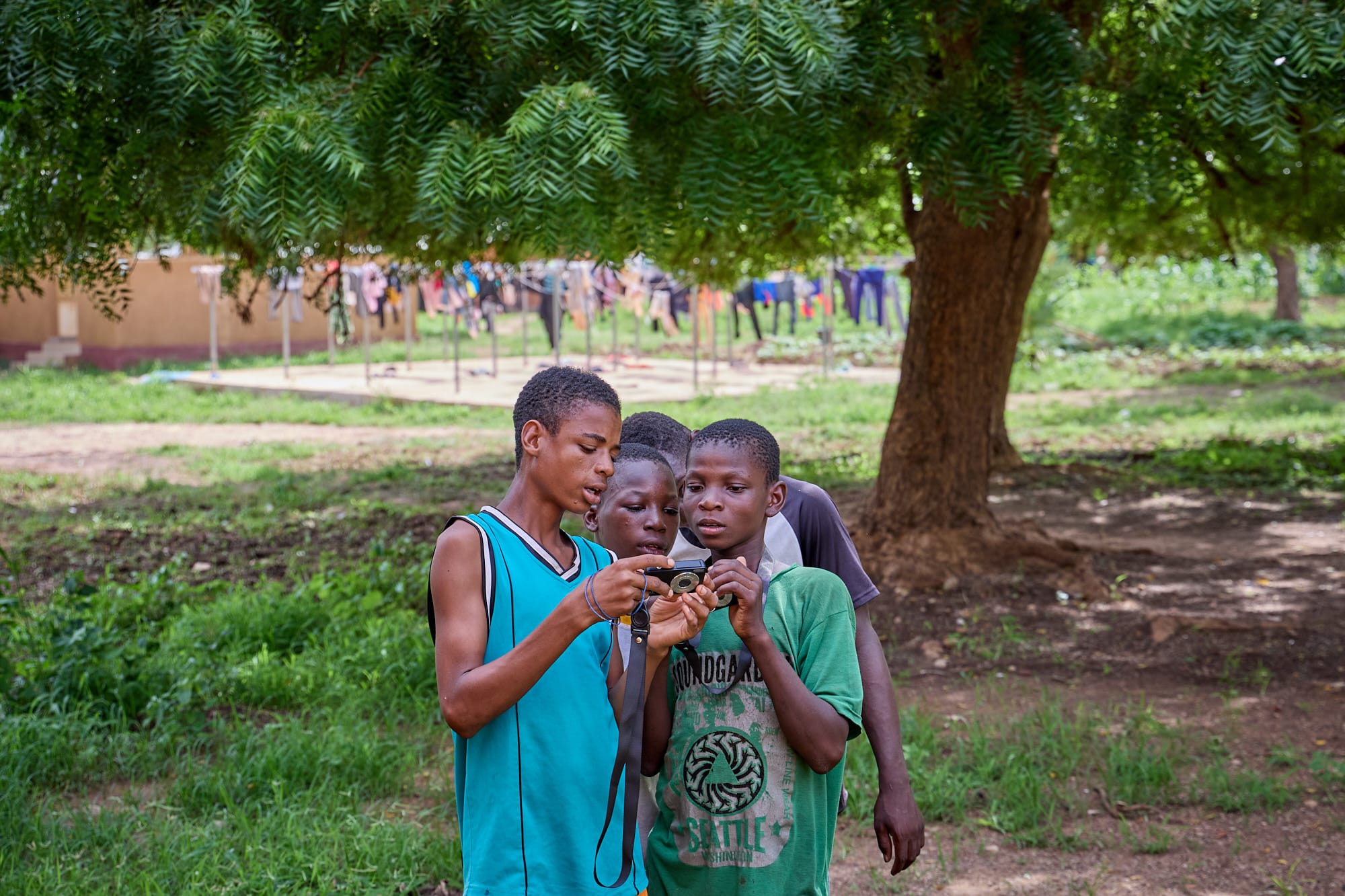
We decided to mix photographs made by the young participants with those made by professional photographers. We did not want the book to become an examination in which adults demonstrated what children could or could not do.
The pictures had to live together. For me, that decision remains important. Photography does not need another hierarchy: it needs eyes.
Je Suis la Rue grew through the collaboration of the CPO, Ayzoh! and many people and organizations in Burkina Faso and elsewhere; AFAR also helped provide financial support to the project. I mention this because work of this kind is never made by one person, and pretending otherwise would contradict everything the project taught us.
Cooperation is not a decorative idea: it is practical. Someone knows the neighborhood; someone brings a camera; someone knows how to teach; someone finds a vehicle; someone provides money; someone opens a door; someone says that today it is better not to photograph. You listen to each other and the work becomes possible.
Peace is also a practice
I am a Muslim and a Sufi. Faith belongs to my life, therefore it also belongs, quietly, to the way I understand photography.
I do not believe a camera makes us better people. A camera is an object. It can be used with generosity or arrogance; it can create understanding or reinforce prejudice. The responsibility remains ours.
What interests me is the possibility of encounter. Burkina Faso contains many languages, ethnic groups, religions, histories and ways of living. The CPO itself has brought together people very different from one another. This has never seemed strange to me. Difference does not frighten me; the refusal to meet does.
Peace is often spoken about after violence begins. Then it becomes the language of governments, conferences, declarations. But peace has another life, much smaller and more demanding.
It happens before the crisis; it happens every day, in the way we look at one another, in whether we allow another person to remain different without turning that difference into suspicion. Photography can participate in this work.
When I speak of dialogue, I do not mean that everybody must agree. Dialogue requires two people who remain two people. Each carries a history. Each speaks from somewhere. If photography has value, perhaps part of that value lies here: it can keep two realities in the same frame without forcing one of them to disappear.
This is also why I think photography can be an act of resistance. Resistance does not always mean a raised fist. Sometimes it means refusing an easy story.
Refusing to photograph poverty as spectacle. Refusing to treat a person as evidence for an idea we already had. Refusing to believe that a young man living on the street has nothing to teach us. Refusing to allow an old soldier to vanish into a paragraph in a history book. Refusing the idea that culture belongs only inside museums, or that photography belongs only inside galleries.
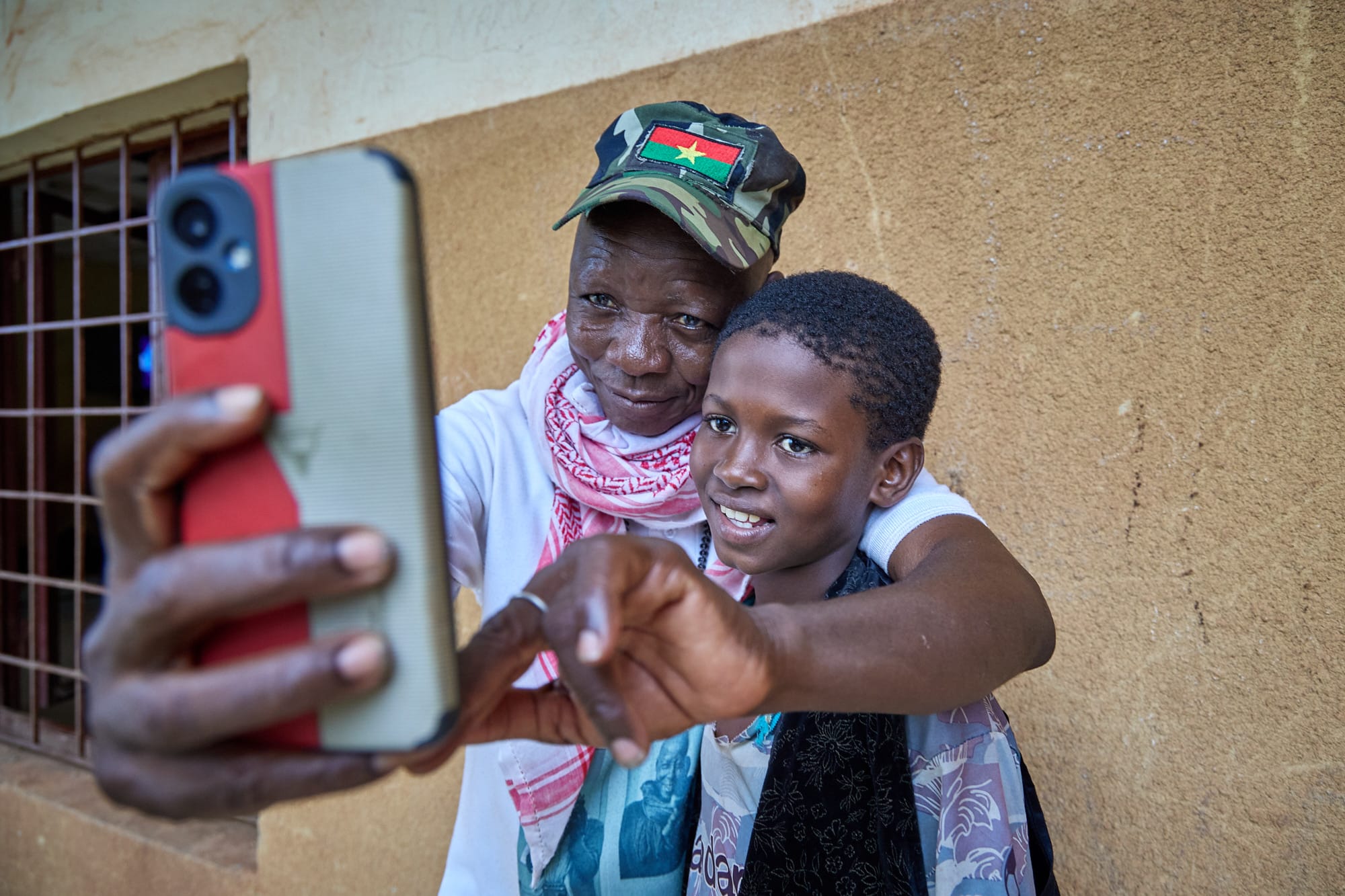
I believe in justice, but justice is another word that becomes empty when separated from daily practice. If we say people should have a voice, then at some point we have to give up the microphone. If we say people should tell their own stories, then at some point we have to hand them the camera.
And after handing it over, we must allow them to point it somewhere we did not expect. That is the difficult part. That is also the beautiful part.
Another place to speak
I am joining A Bag of Stories because I want another place from which to speak about these things; photography, memory, peace, social justice, the streets of Ouagadougou, the people who make Burkina Faso every day.
I have spent most of my life speaking through photographs and through conversation. Now some of these ideas will also travel through written words, with the editorial help of my friends at Ayzoh!. That does not seem so different to me.
Every photograph is already a form of translation. A person stands before you; there is a life you cannot contain, an experience you cannot fully know. You choose one fraction of a second and a small rectangle of the world, then you offer it to somebody who was not there.
Writing also chooses. The important thing is to remember what has been left outside. This article is therefore a beginning.
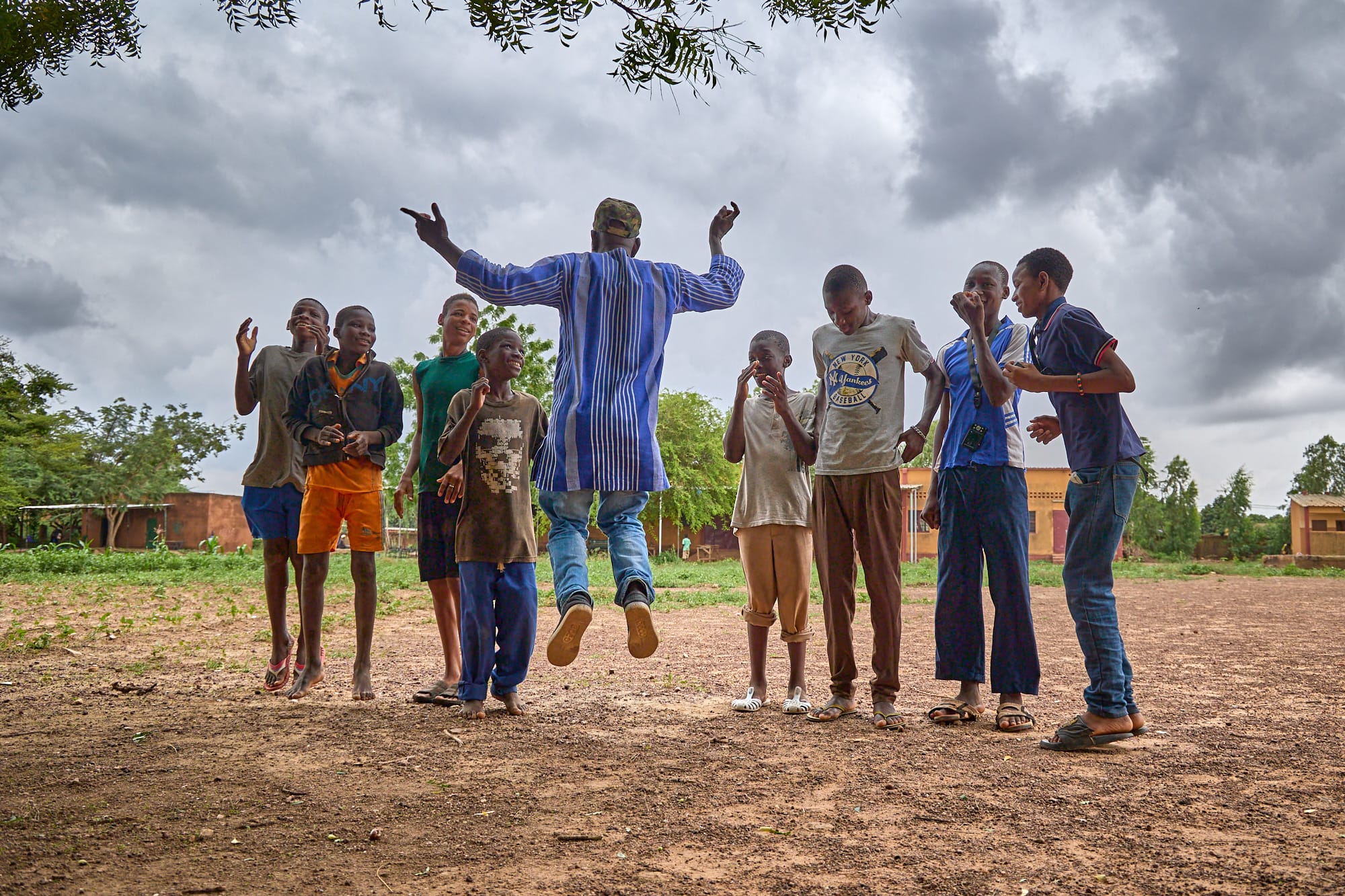
In the coming stories, we will return to Je Suis la Rue and to Ouagadougou; to the young photographers who learned to use cameras and then showed us their city; to markets and bus stations, artists and musicians, places of memory and places where people struggle to live; to Thomas Sankara and the meanings his presence still carries; to people displaced by violence; to Pissy quarry; to the CPO and to the belief that photography can become a common tool rather than a privilege.
Some stories will be difficult. Others will be joyful. Usually they will contain both, because this is how life works.
I do not want to present Burkina Faso as a lesson. I want to share what I have seen, what others have shown me, and what photography has allowed us to discover together.
There is a great temptation, when we travel with a camera, to believe that the person holding it is the one who sees. After many years, I think the opposite can also happen. Sometimes we raise the camera and another person teaches us how to look.
Note. This essay was developed from Warren Sare’s ideas, experiences, and photographic practice, and edited for publication by Ayzoh!.
Explore Je Suis la Rue
Je Suis la Rue grew from the collaboration between the Centre Photographique de Ouagadougou, Ayzoh!, Warren Sare, and a group of young people from the streets of Ouagadougou.
Through photography, they explored the city from within: its markets, neighborhoods, places of memory, music, work, displacement, and everyday life.
The book gathers that experience into a collective visual narrative. In the coming weeks, A Bag of Stories will return to several of these chapters in a new series from Burkina Faso, with articles drawn from the project and the people who shaped it.
You can browse the full book above. Subscribe to our free newsletter to follow the series as it unfolds.


Member discussion