

The Box Was the Easy Part
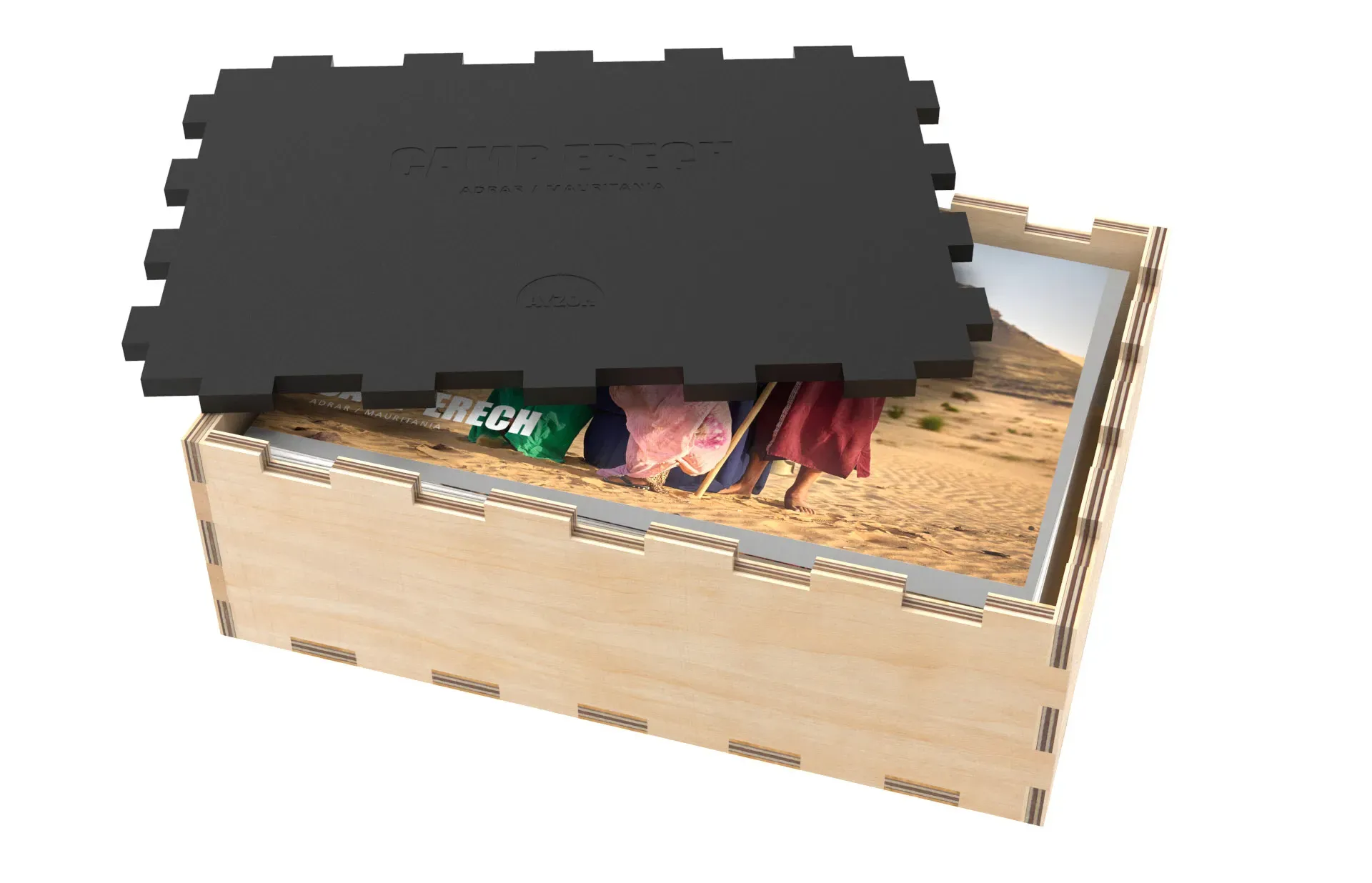
We called it Camp Erech: la mostra in scatola (the exhibition in a box). The name was quite literal. All the photographs and texts were also available in a recycled-wood box designed and built by Ubaldo Samuelli, a designer and fellow member of Ayzoh!.
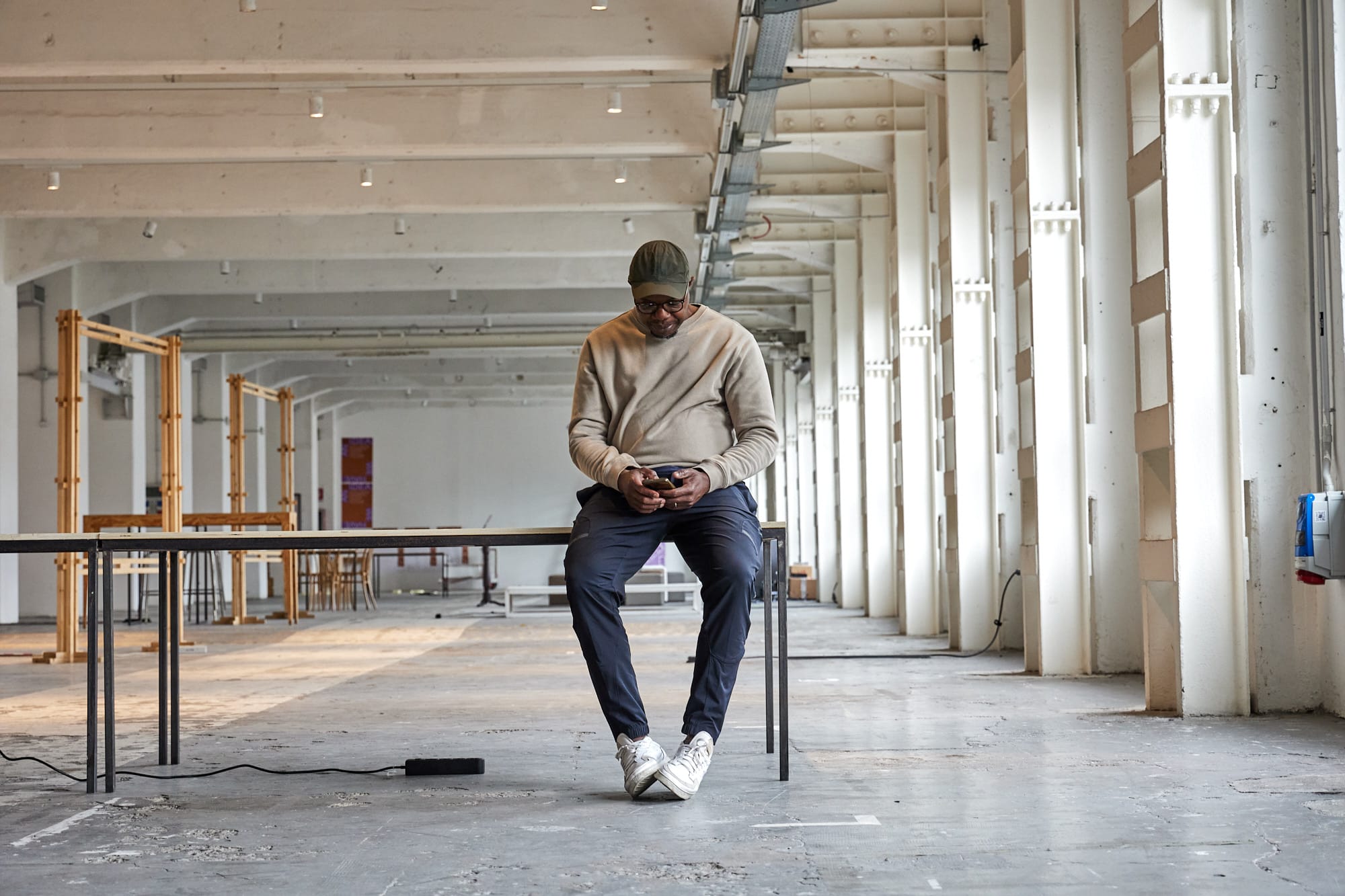
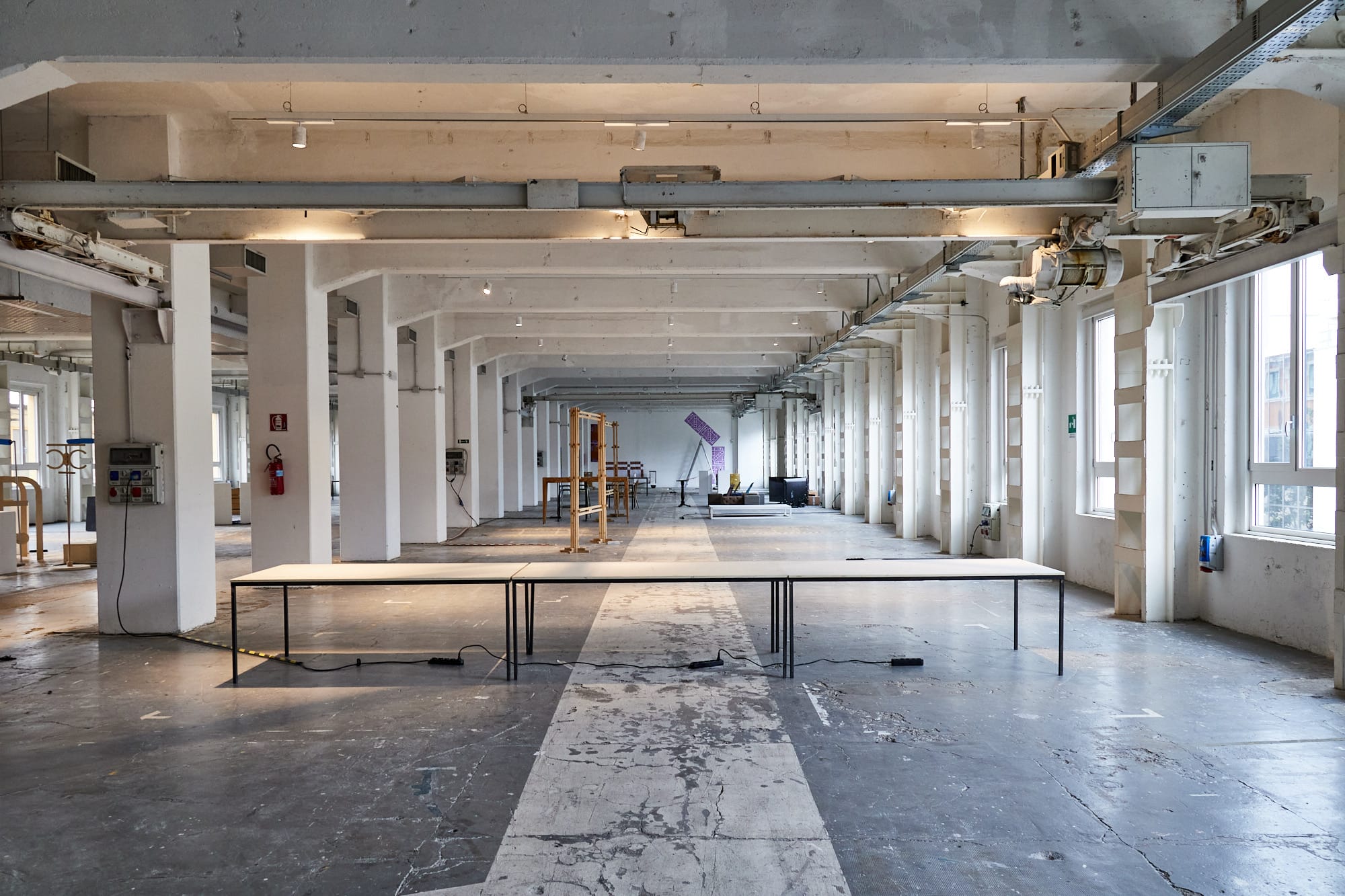
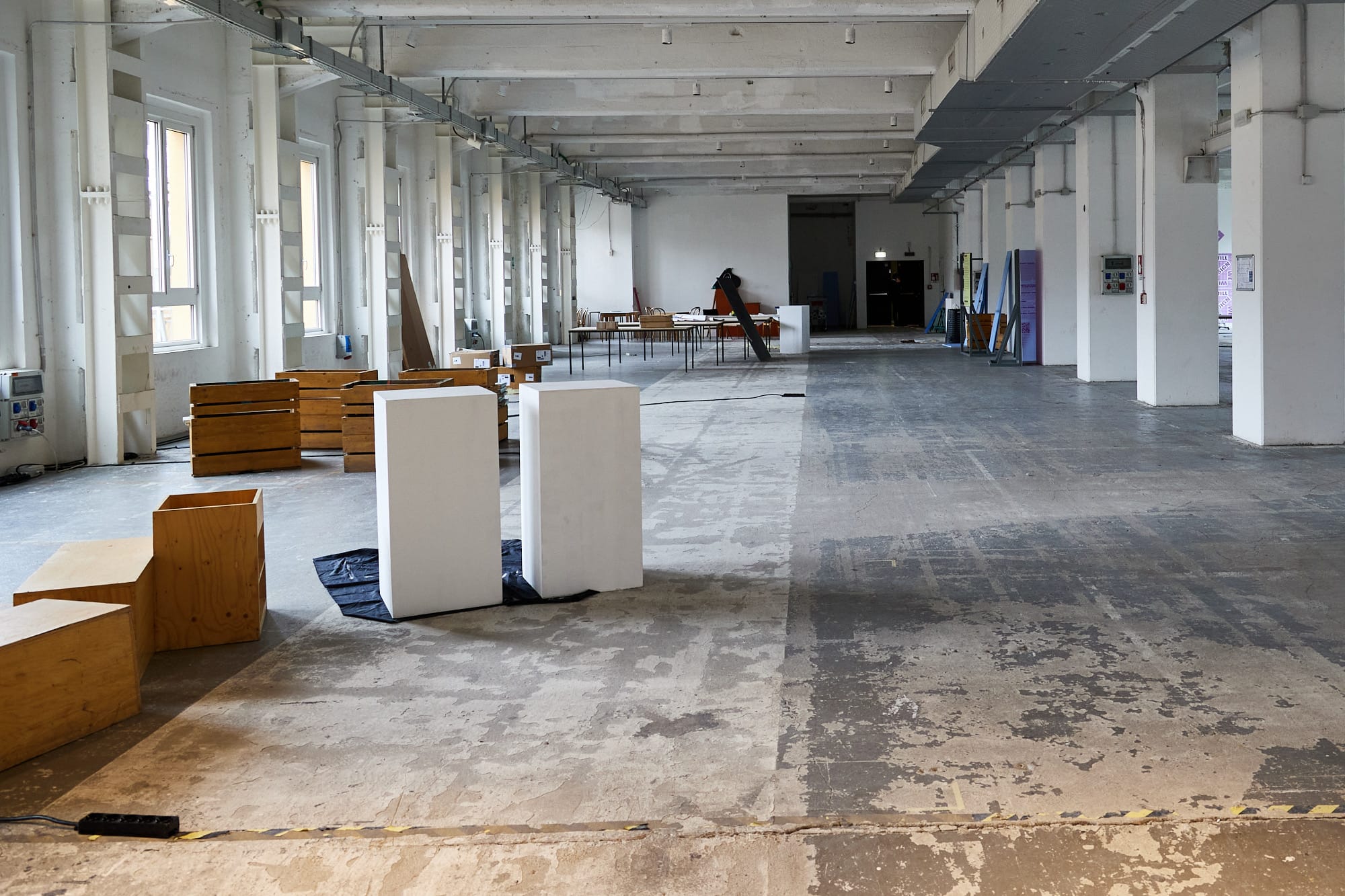
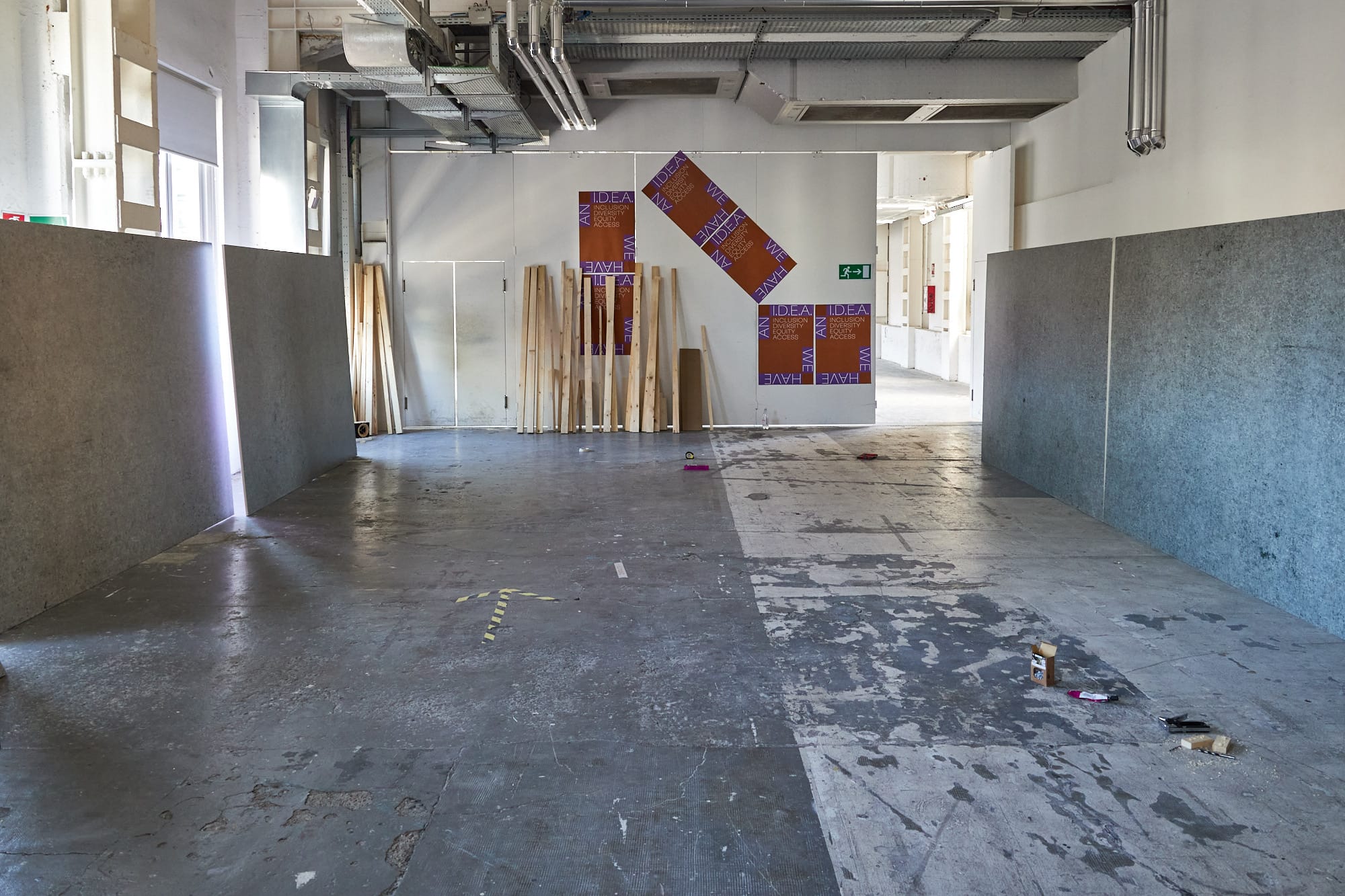
The exhibition could occupy a room, but its contents could also be gathered together beneath a lid. Getting it into the room proved rather more complicated. Forty-eight hours before the opening at BASE Milano, during Milan Design Week, we learned that the panels we intended to use did not meet fire-safety requirements.
The photographs were ready. Months of preparation were behind us. We had a space, an exhibition, and a box. We needed walls.
As curator, I had good reasons to think about sequences, the relationship between photographs and texts, and how people would move through the work. At that moment, the most pressing curatorial question was where we could find suitable panels.
What the Box Held
Camp Erech is an Ayzoh! initiative developed with a small nomadic community in Mauritania. Giulia Zhang and Claudio Maria Lerario, photographers and co-founders of Ayzoh!, spent two months there during the harshest season of the year.
They chose that period deliberately, wanting to experience the conditions the community faced and let that time inform their work. Those two months were theirs. My part in this story was the exhibition in Milan. The distinction is worth keeping clear.
I could work with the photographs, consider their arrangement, and help prepare the conditions in which others would encounter them. The experience from which they came belonged to the photographers and the people with whom they had spent that time.
The box gave the photographs and accompanying texts a form that could travel together. Its pale wooden sides, visible joints, and dark lid made a carefully constructed object out of a large body of work.
Inside were the materials of an exhibition: images to look at, texts to read, individual pieces that could be lifted out and considered at close range.
On the walls in Milan, those pieces would occupy a different scale. Visitors could follow a sequence, step back, approach a photograph, or move between looking and reading.
Ubaldo had designed and built the box. He was also responsible for the exhibition design. We were about to ask quite a lot of his ability to make things fit.
A Brief Encounter with Fashion
The replacement panels came from an Armani fashion event that had just finished. This was an unexpected connection for a project born in the Mauritanian desert. Our photographs were about to acquire a connection to Italian fashion through their supporting structures.
The practical detail was less glamorous: the panels had been made for another event. They needed to be cut and adapted to ours.
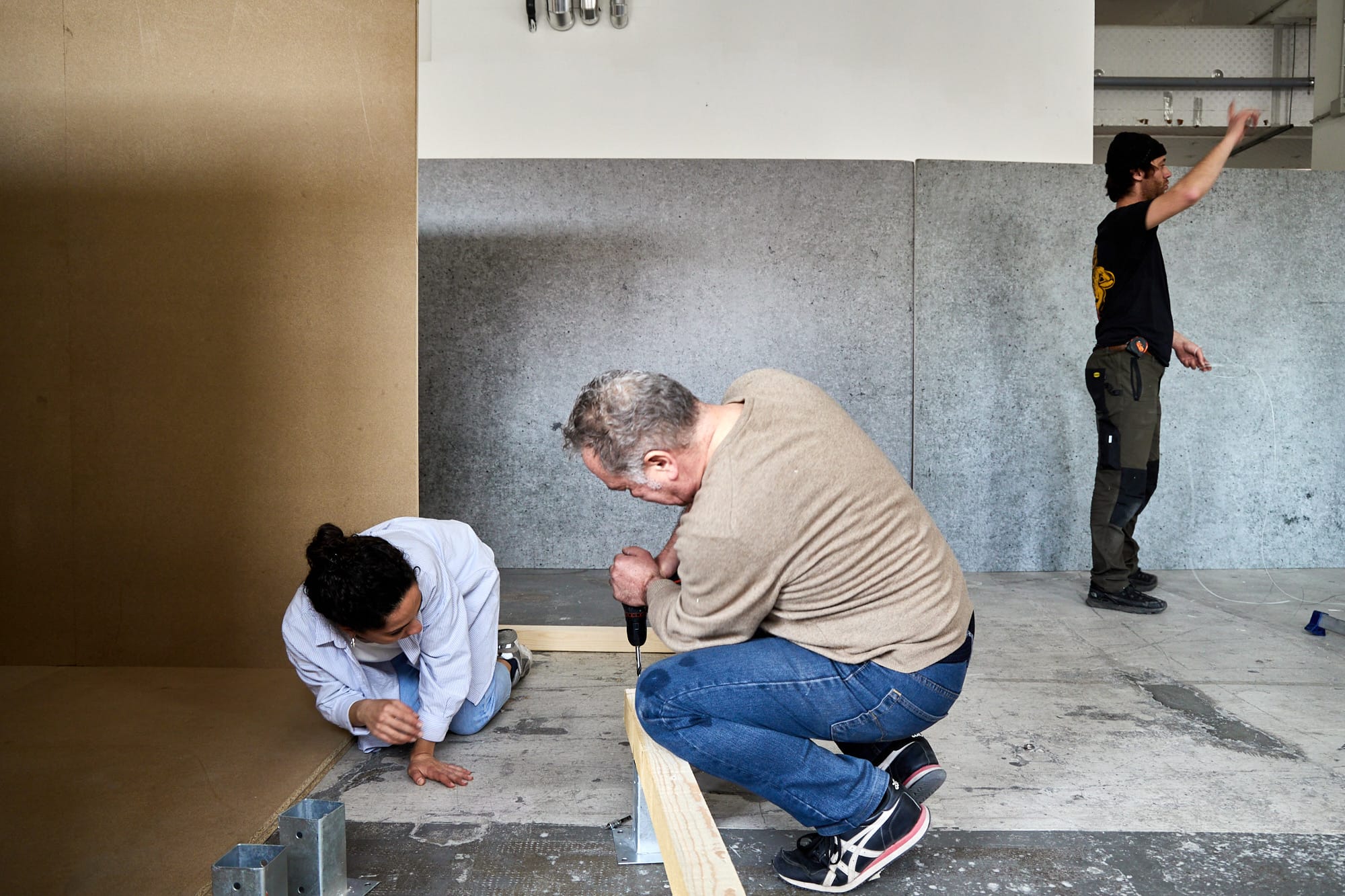
By then, we had around twenty hours left... Ubaldo began reshaping them. The person who had worked out how to contain the exhibition in a wooden box now had to work out how to put it on its feet in Milan.
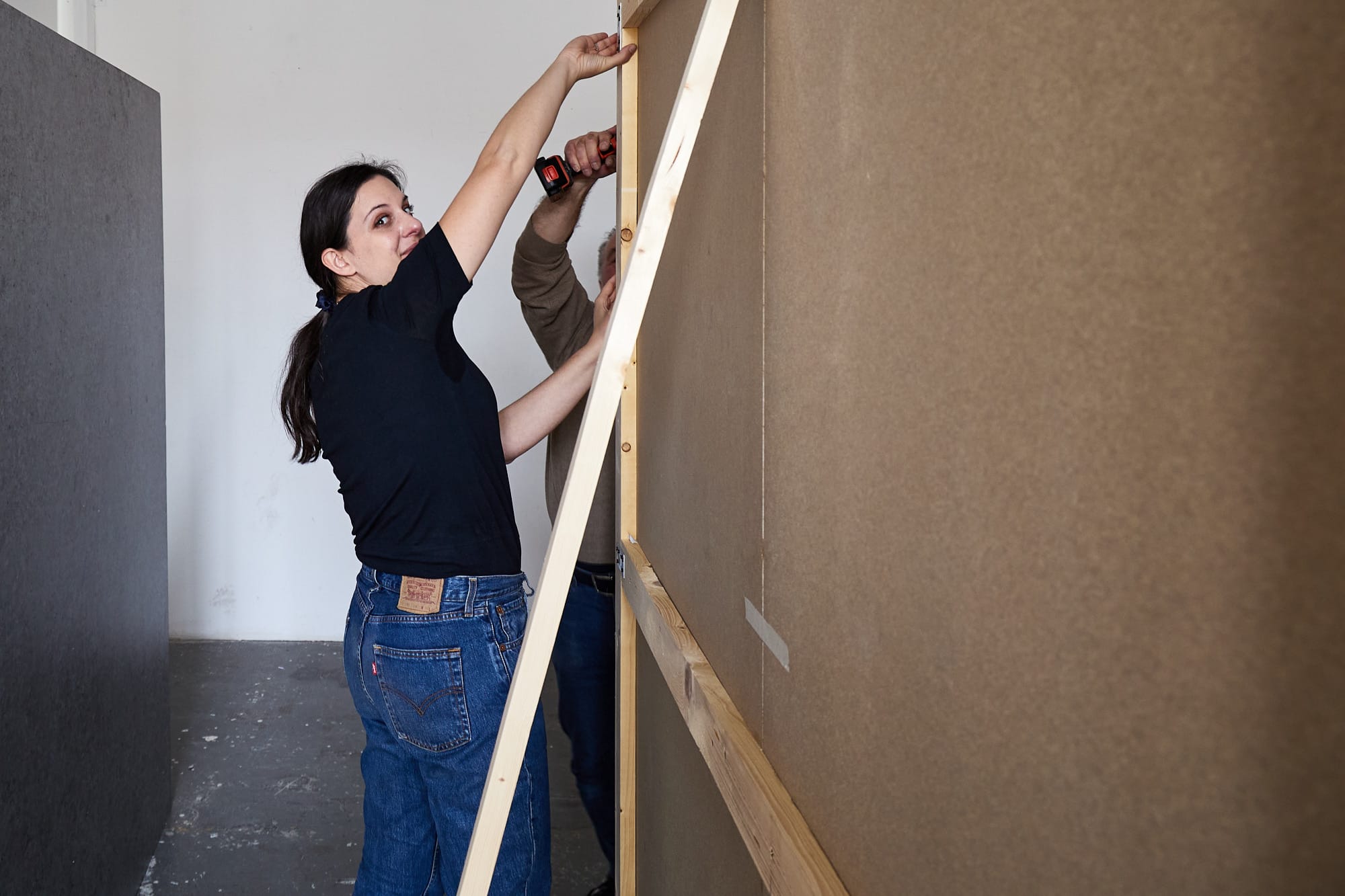
There is a point in an installation when a drawing, however good, has done all it can. Someone has to hold a panel while someone else fixes it. Someone has to check the alignment. The structure must stand before the photographs can hang.
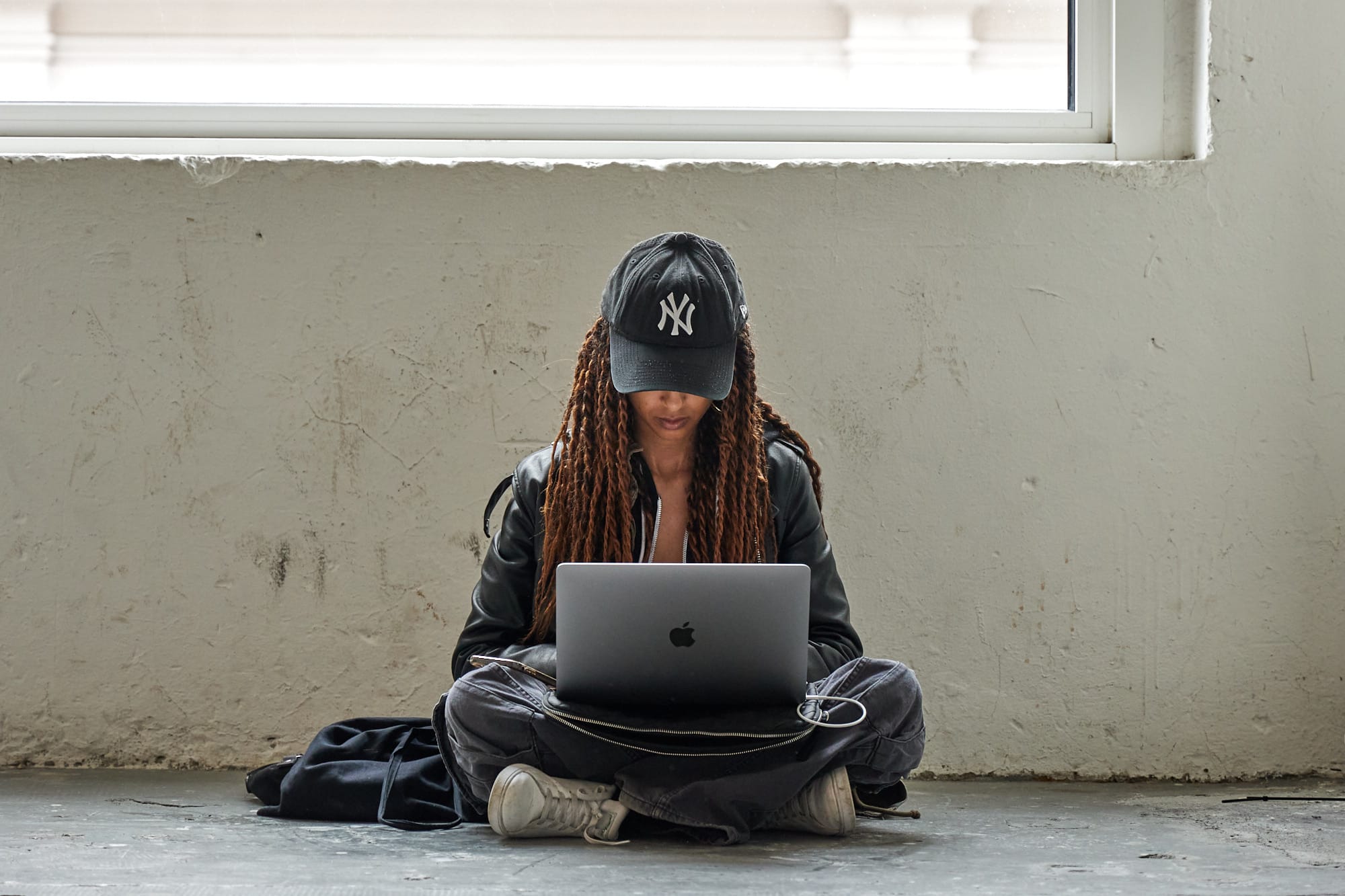
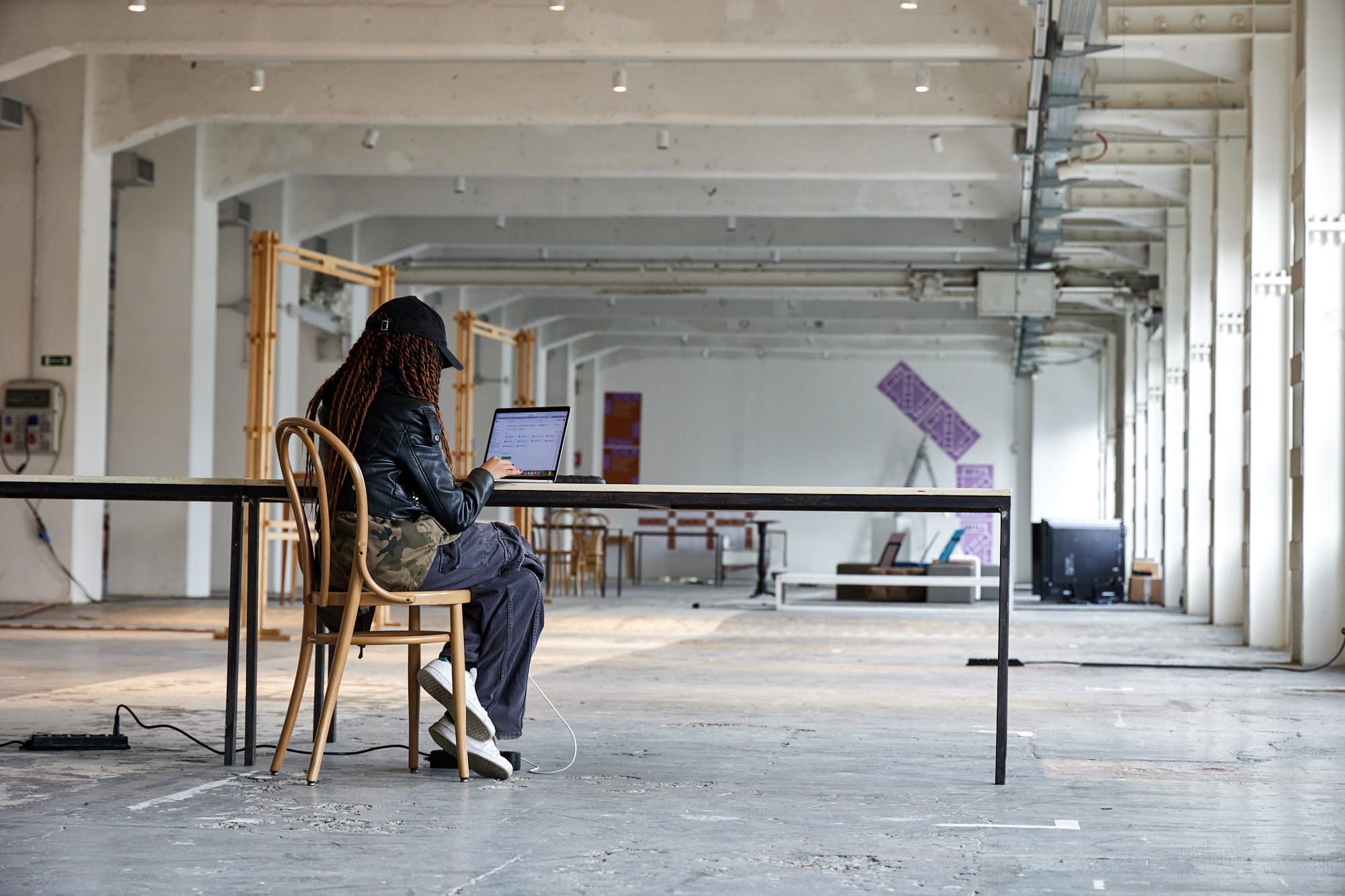
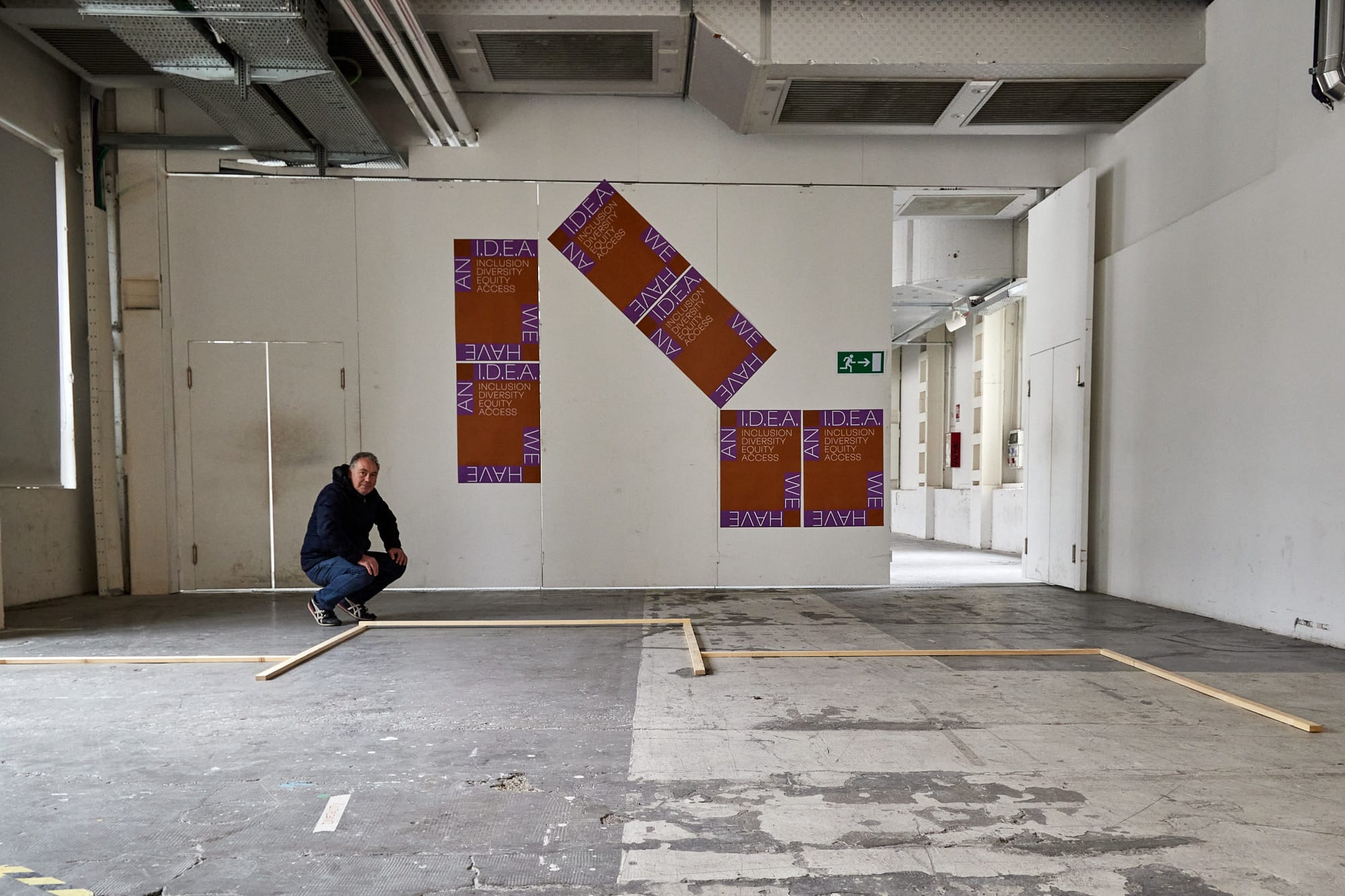
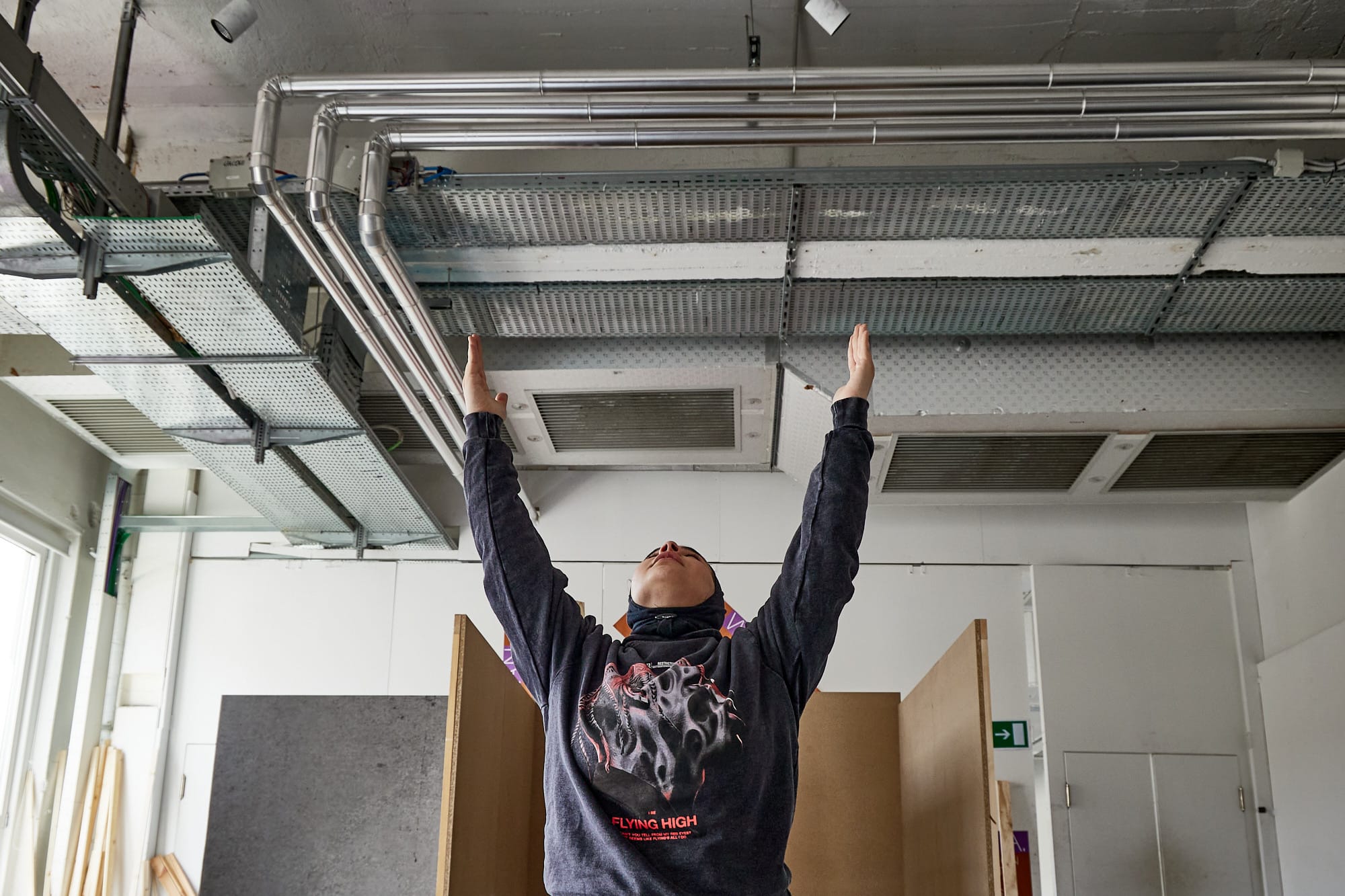
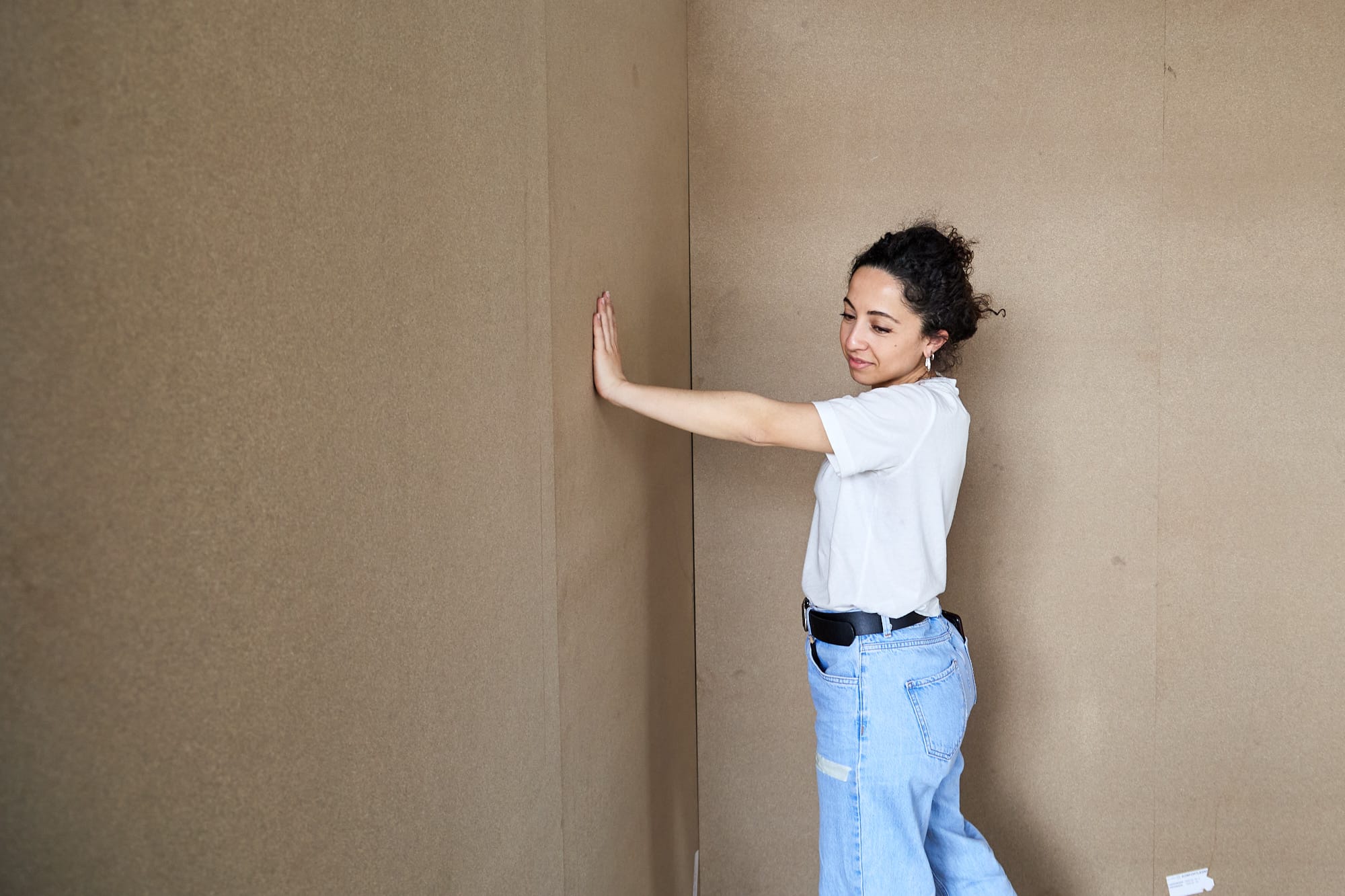
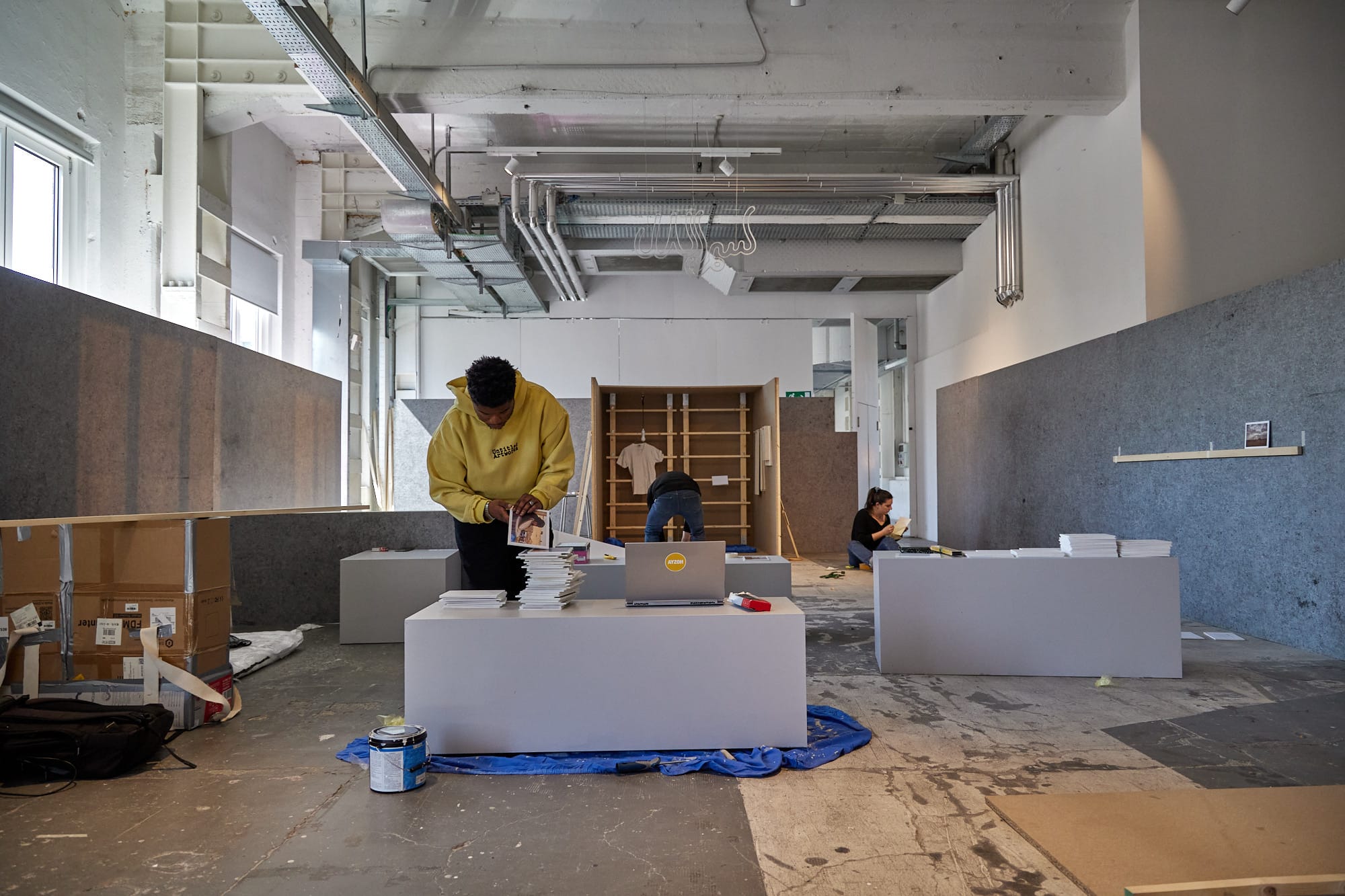
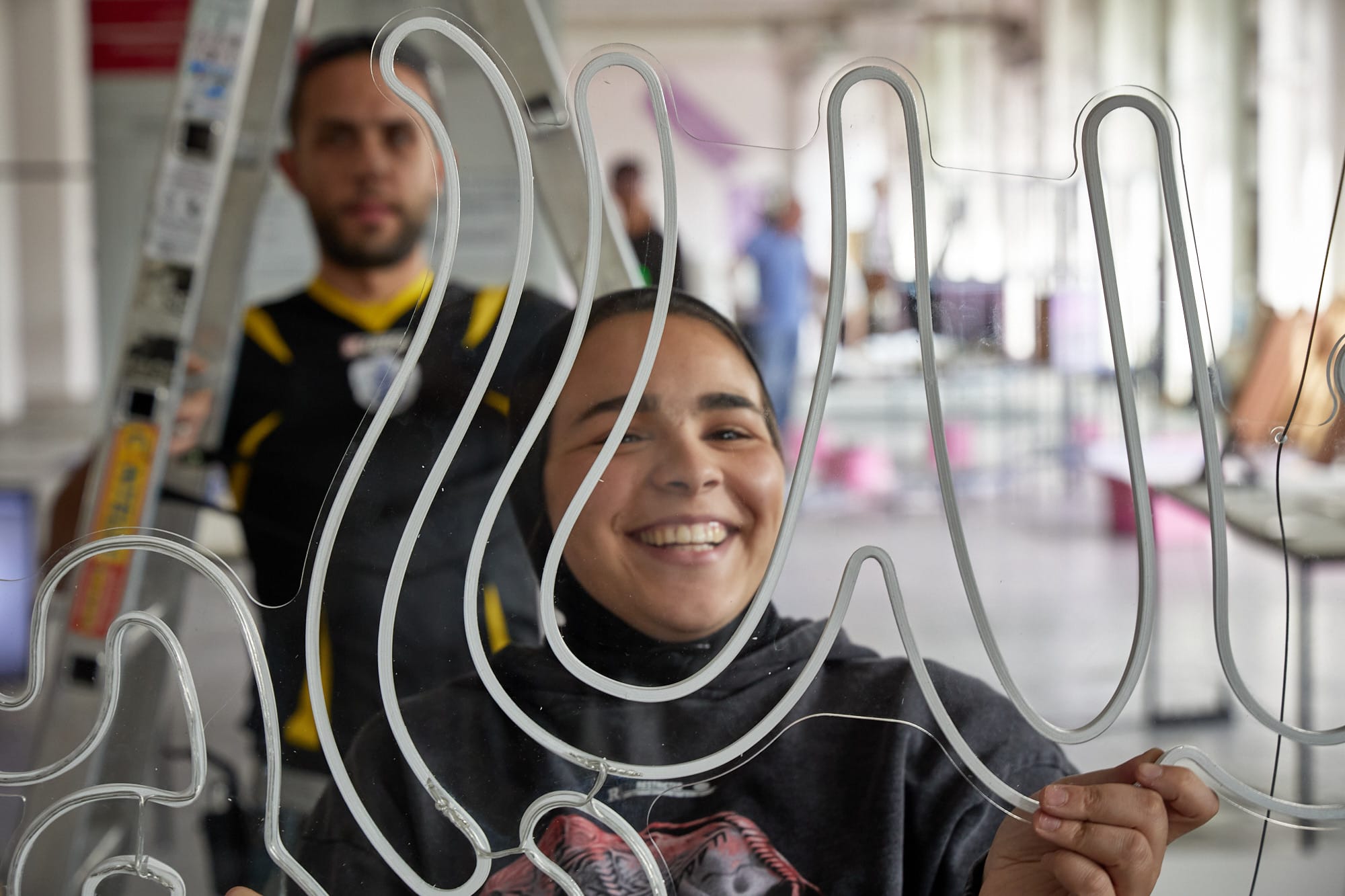
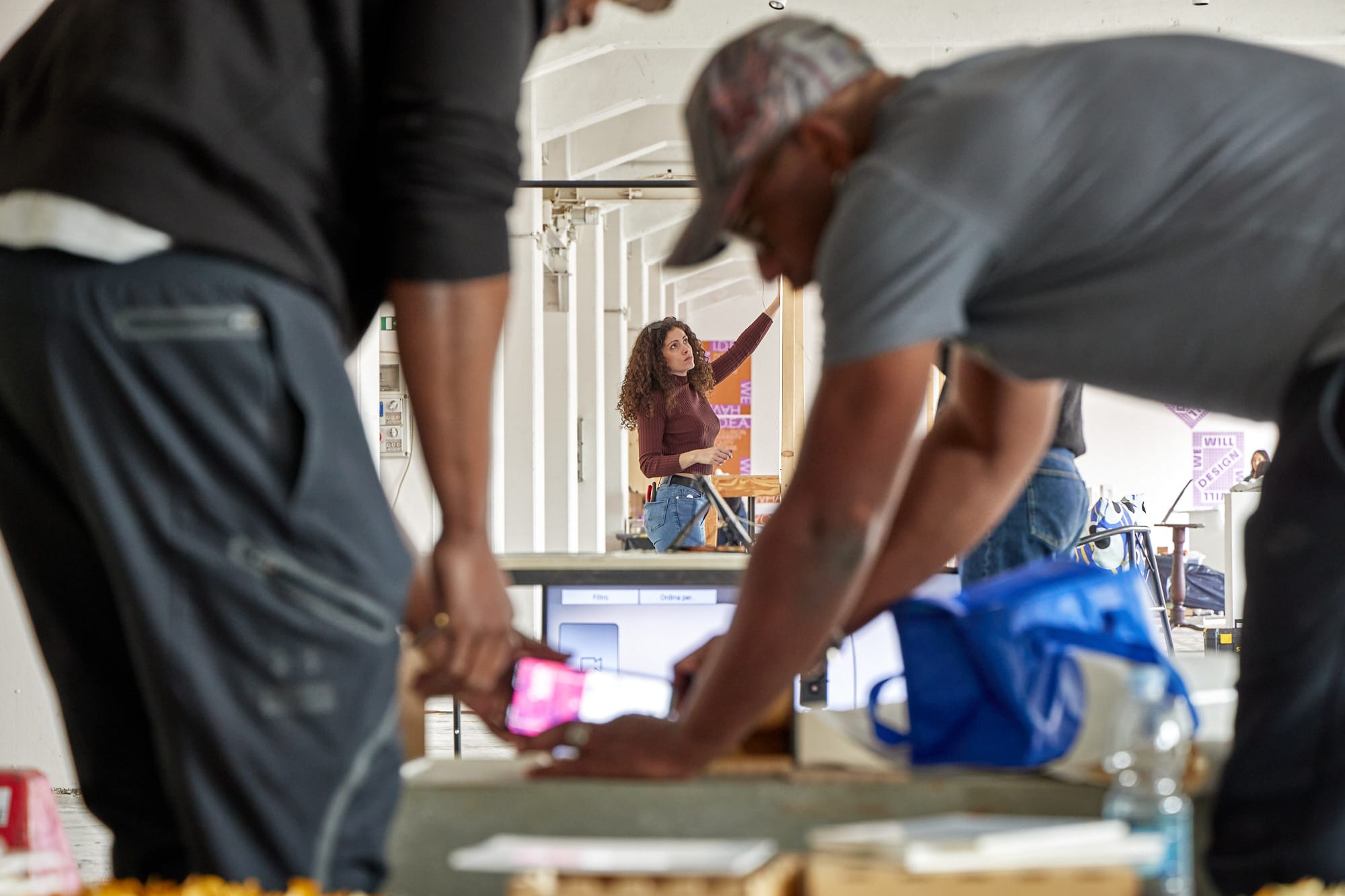
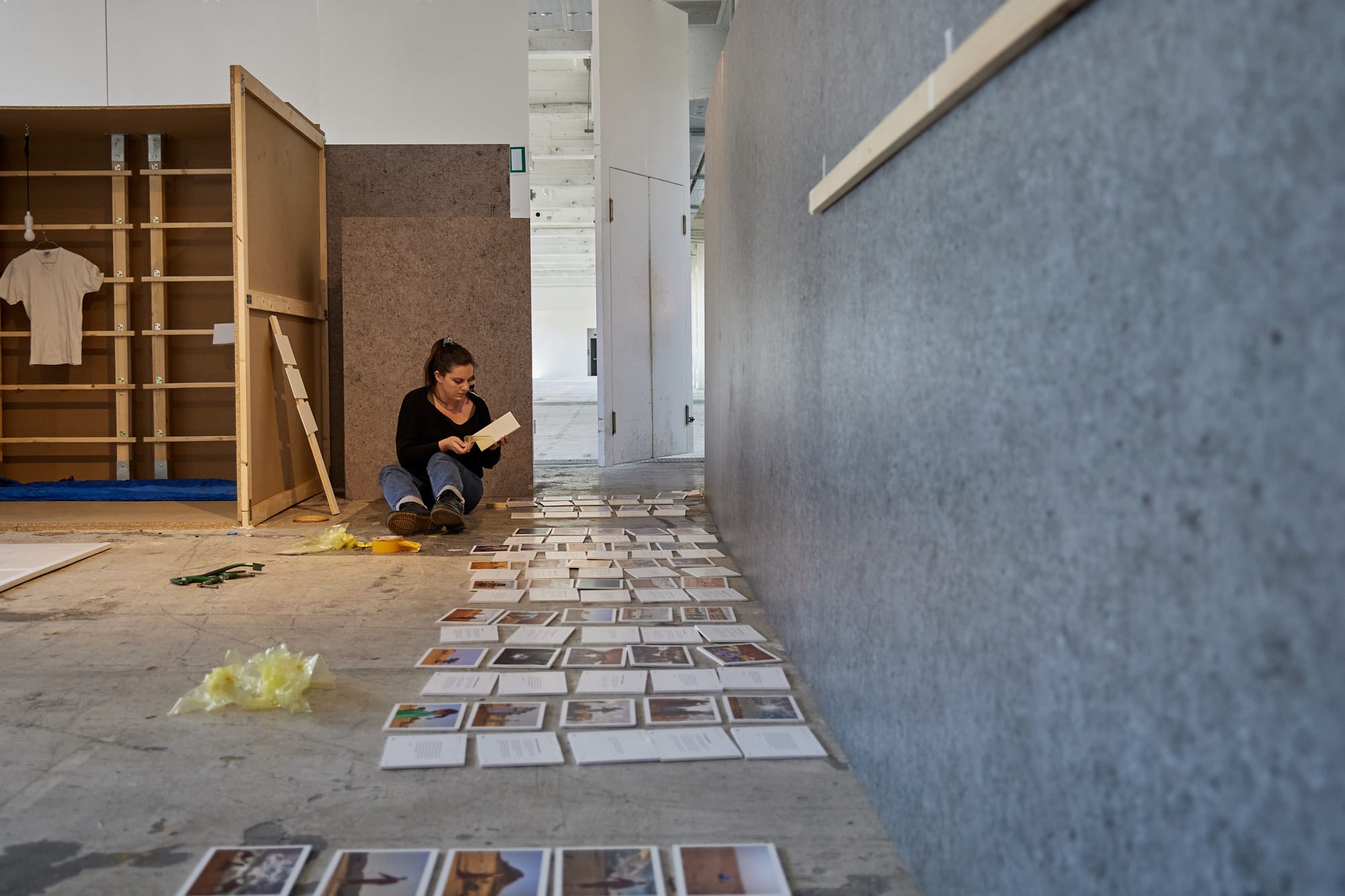
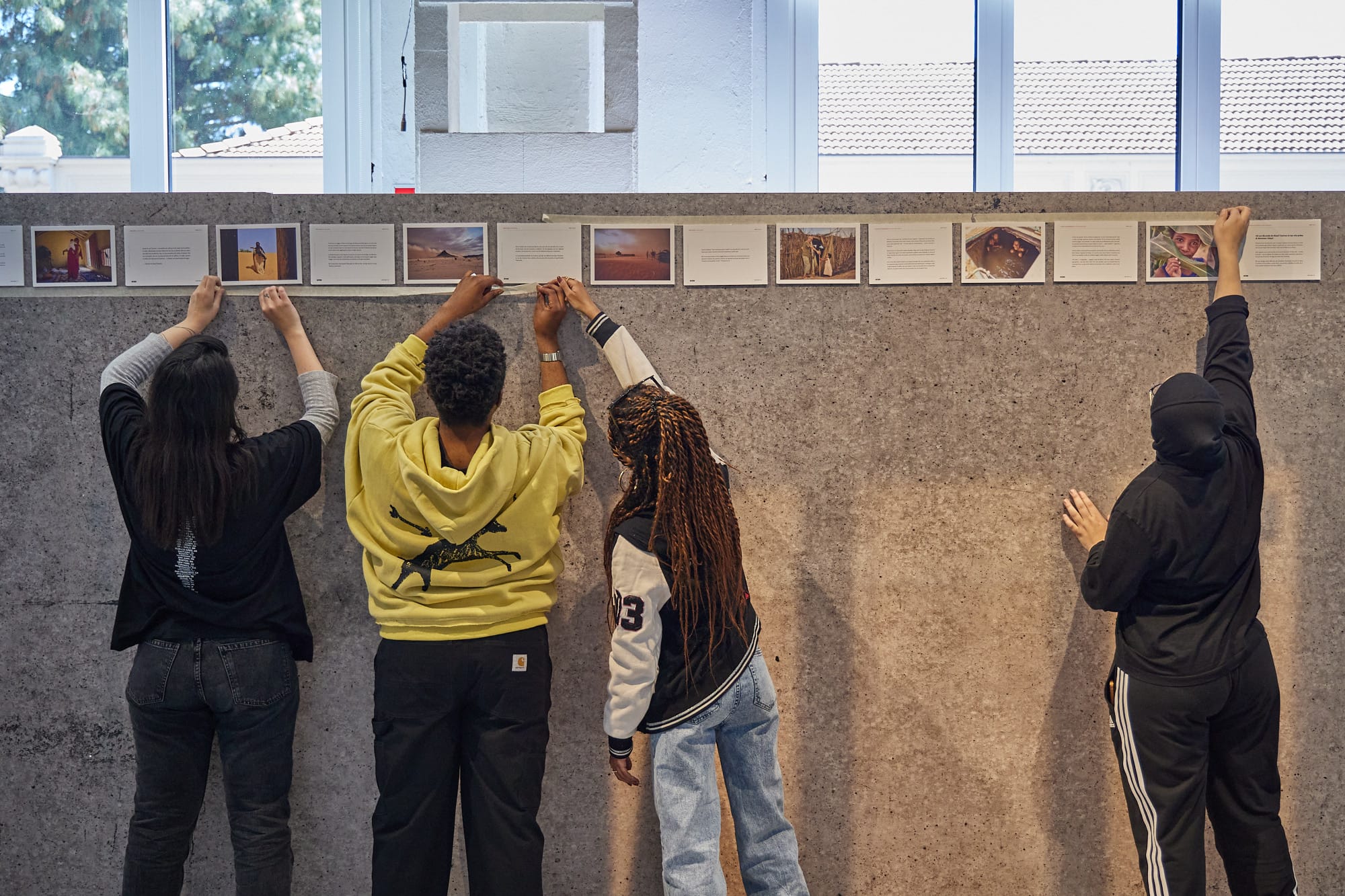
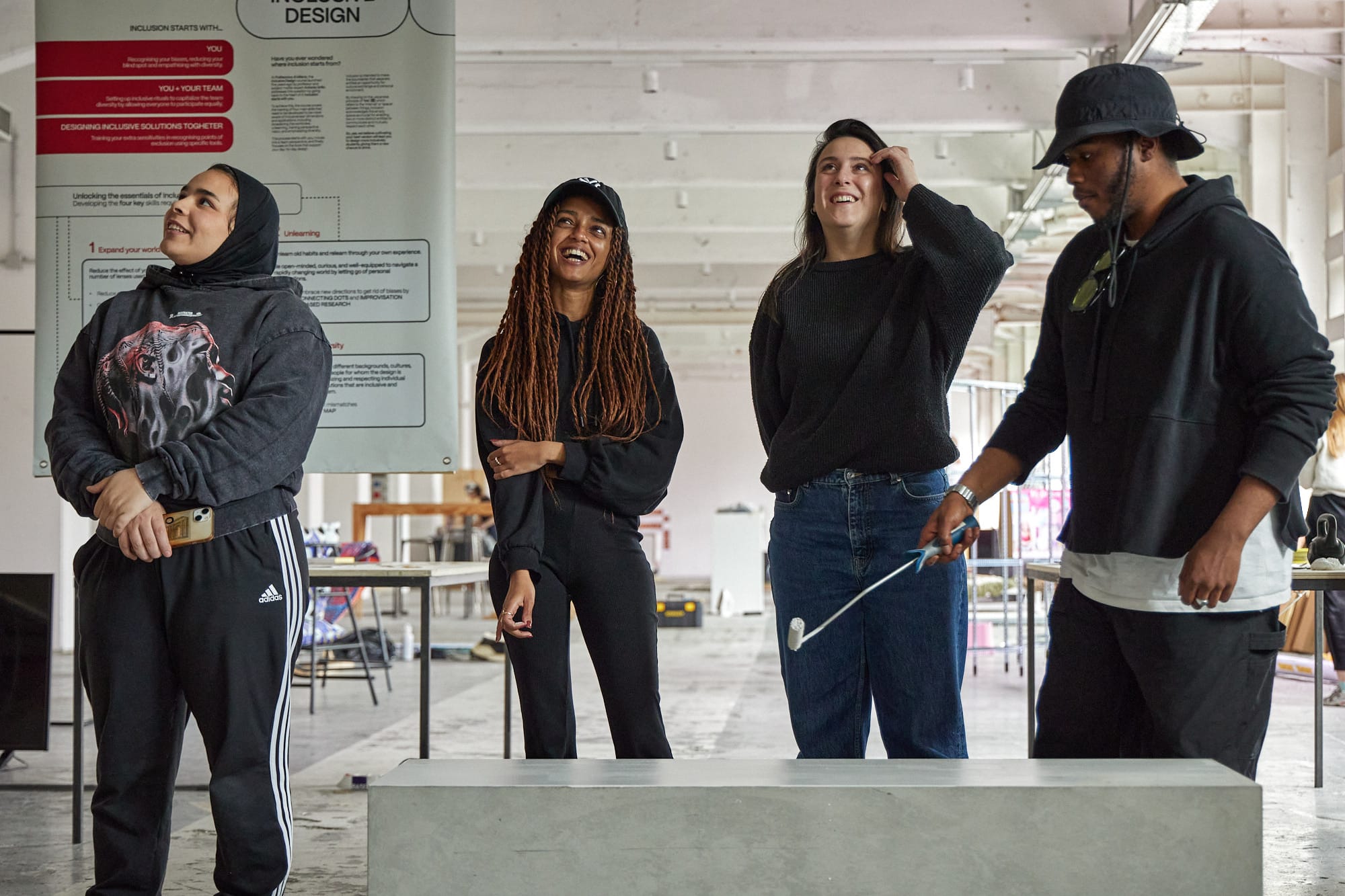
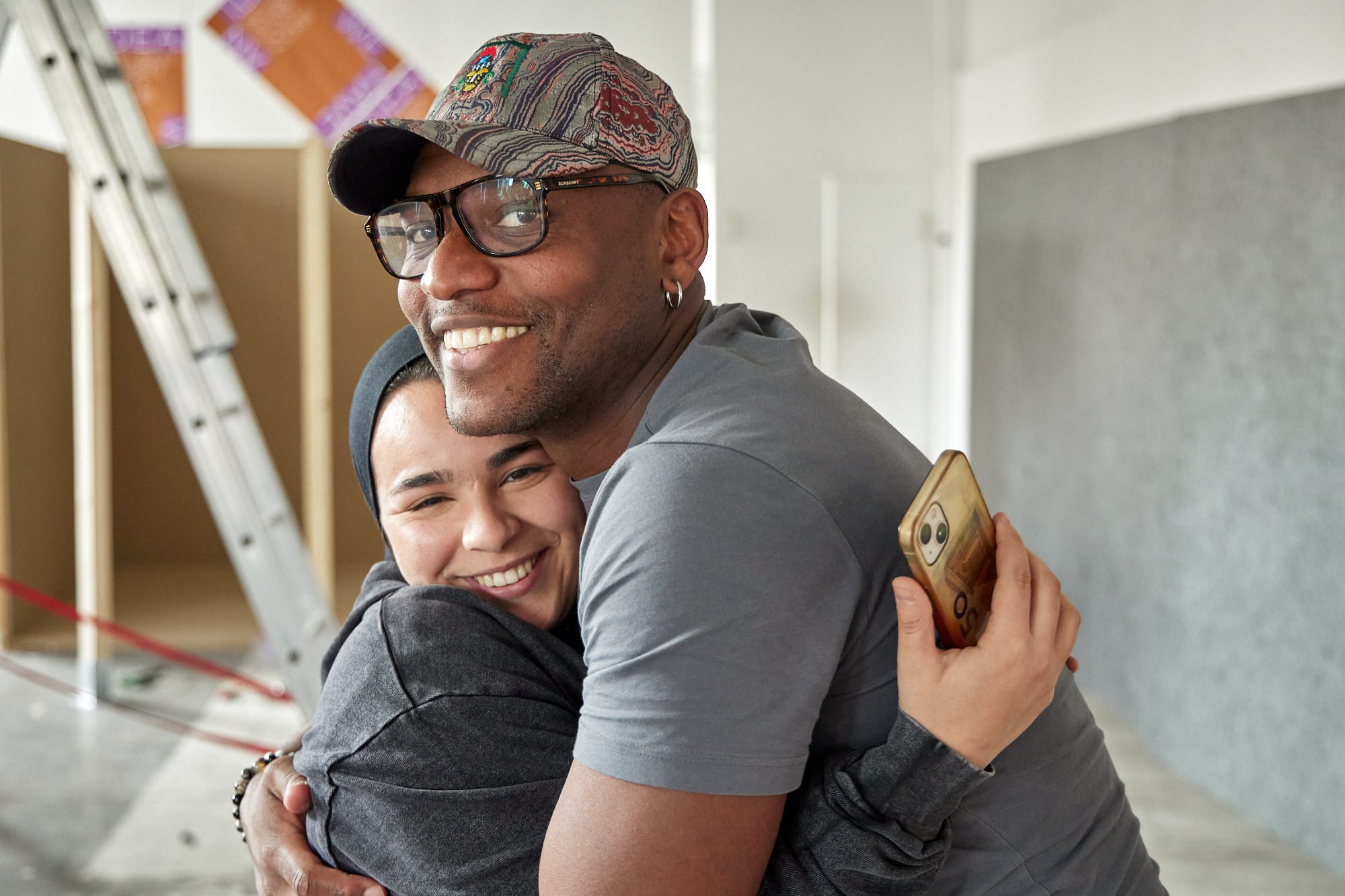
The images from our preparations show that work plainly: timber, the backs of panels, an electric screwdriver, people crouched close to the floor. They also show smiles and an embrace. The deadline was real. So was the pleasure of working together.
Two Hundred Prints and a Trip for Nails
We called in people to help with the mounting. Two hundred prints required a considerable number of small, repeated actions. The texts needed their places too. On the floor, photographs and sheets of writing formed rows beside the panels, waiting to become the arrangement visitors would see.
Then came the nails. We needed them. We did not have the ones required. Finding them in central Milan proved more difficult than expected. For a city hosting Design Week, this seemed an oddly specific gap in the service. Someone took a car to Leroy Merlin on the outskirts and returned with what was missing.
The errand was modest enough to disappear from a polished account of the exhibition. I would rather keep it. At that stage, our plans depended on someone making that journey.
The box could hold the complete set of photographs and texts. It could not settle every question involved in attaching them to a wall.
The Neighbors
We shared the space with DiverCity, an organization concerned with diversity and inclusion. Sharing a room meant that our decisions affected another exhibition. A photograph prominent in our arrangement was also prominent in someone else’s field of view.
One of Giulia’s photographs became the subject of a disagreement. DiverCity asked us to remove it because of its visual prominence in the shared space. Claudio wanted it to stay.
His position left little room for interpretation. Fortunately, Ubaldo found some room in the arrangement. The photograph remained, the layout changed, and work continued.
It was a small episode, but it belonged to the same task as adapting the panels and placing the prints. An exhibition occupies actual space, alongside other people’s work. A curator has to deal with those relationships as carefully as with the sequence of images. Sometimes that involves discussion. Sometimes it helps to have Ubaldo.
From the Floor to the Wall
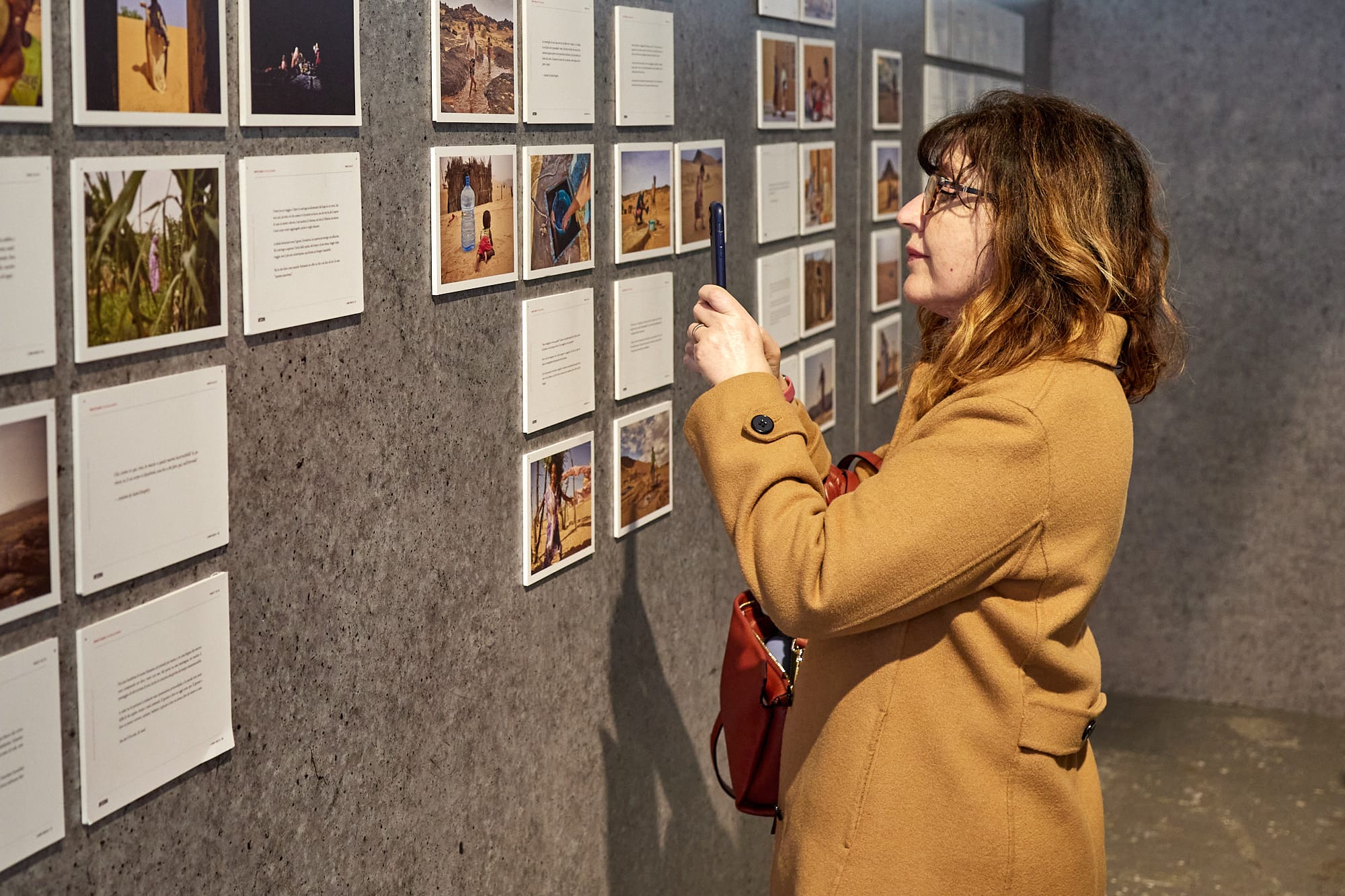
We worked into the early hours. The photographs and texts moved into position. The panels that had caused so much trouble became the surfaces of an exhibition.
Looking at the installation photographs now, I return to the rows laid out on the floor. They show the work at an intermediate stage, when its order was still being made visible and its individual parts were within reach.
Later, visitors would see those parts on the wall. The arrangement would appear settled. The missing nails and the search for panels would be difficult to detect. That is an ordinary fate for exhibition work. Much of it succeeds by disappearing.
Still, I think it helps to remember the hands involved. Giulia and Claudio made the photographs in Mauritania. Ubaldo designed and built the box and adapted the exhibition structures. Others helped assemble the space and mount the work.
My responsibility was to help bring the photographs and texts into a setting where people could give them their attention. That depended on the work of everyone around me. By opening time, the room was ready.
When People Came In
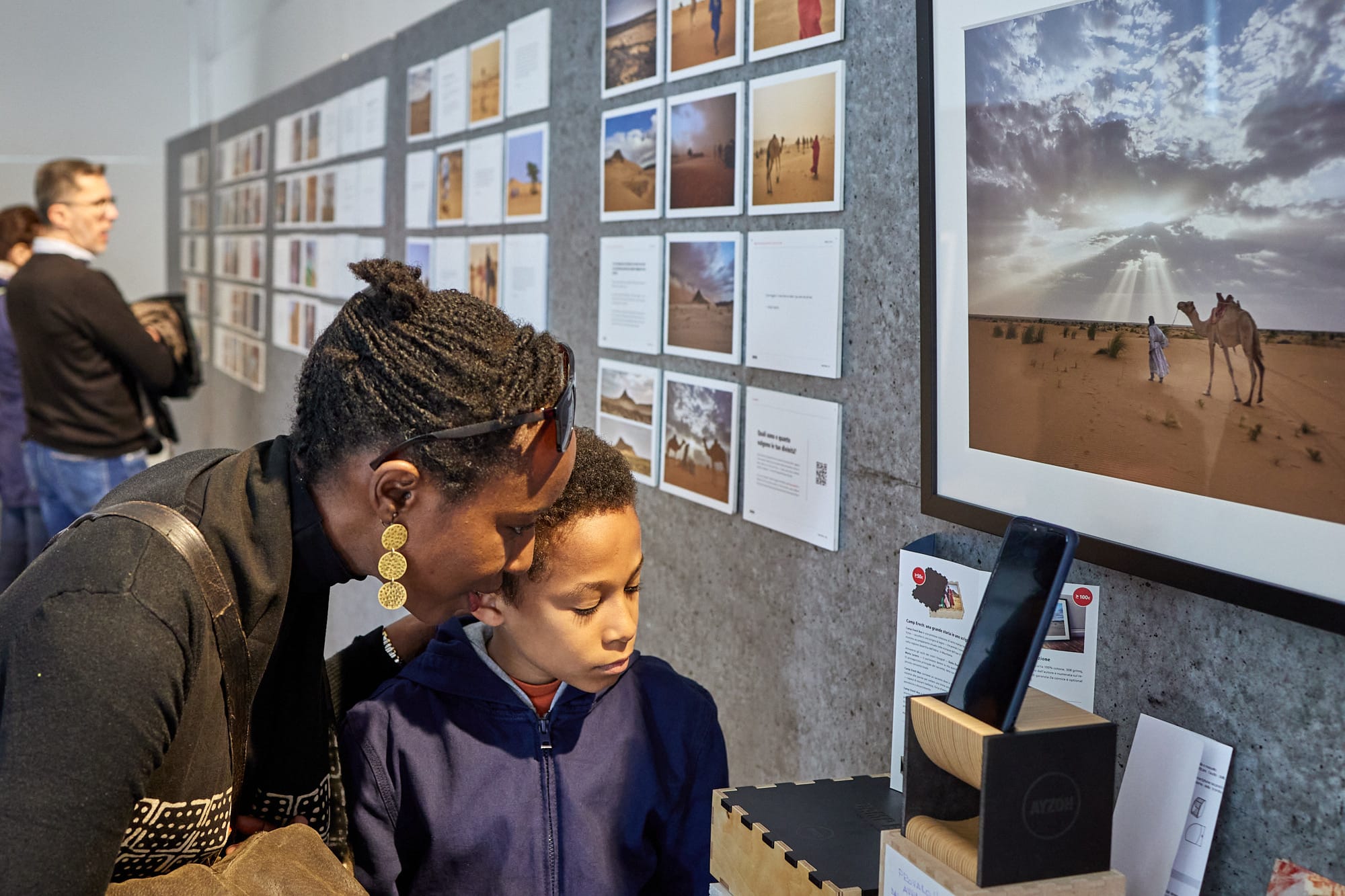
Visitors stood before photographs that had spent part of their preparation on the floor. They read the texts, looked along the rows, raised phones, and spoke with one another.
The installation photographs give way to photographs of these encounters. Hands that had held tools are followed by hands holding phones. The walls remain; the activity around them changes.
The box offered another scale of encounter. The same body of photographs and writing was gathered into something that could be opened and explored beyond the exhibition room.
That possibility was built into the name from the beginning: la mostra in scatola. A room makes demands on the visitor. There is a route, a distance from the wall, other people nearby. A box can be opened on a table. A photograph can be picked up. A text can be returned to.
As curator, I find that change of pace important. The Milan exhibition had opening hours and a closing date. The boxed work could remain available to look at again.
Opening the Box Again
This article begins our Mauritania series with the making of an exhibition in Milan. It is one way into the story: through the work required to bring photographs before a public, and through the object Ubaldo designed to keep the photographs and texts together.
The sequence accompanying this article offers another way to look at Giulia and Claudio’s work. The stories that follow will spend more time with Camp Erech, the people involved, and the circumstances surrounding the images.
There is much that a photograph leaves outside its edges. There is much that an exhibition, however carefully arranged, cannot tell. The box gives us a place to begin again. Lift the lid, take out a photograph, read. No replacement panels required.
Beyond the Exhibition
This article opens the Mauritania series with the making of the Camp Erech exhibition.
It begins in Milan because the work of presenting photographs is part of their story. Before an image reaches a visitor, people have selected it, printed it, carried it, and found a place for it. Each step deserves attention.
The wooden box designed and built by Ubaldo keeps the photographs and texts together beyond the exhibition. The video above offers another way to spend time with the images made by Giulia and Claudio.
The stories that follow will turn to Camp Erech and the people and relationships from which the project grew. They will make room for what an exhibition leaves only partly told: the circumstances surrounding a photograph, the histories that precede it, the life continuing beyond its edges.
Our work in Milan was to bring these photographs before a public. The series continues in Mauritania, where they were made.


Member discussion