


Marco Tardio first travelled to Brazil in 1997. Five years later, he moved there. Between those two moments lies the kind of story the travel industry likes to tell: a foreign visitor falls in love with a country, changes his life, follows an intuition. The story is true, but on its own it explains very little about what came next.
After moving to Brazil in 2002, Marco spent a short period working in conventional incoming tourism in Salvador, Bahia; by June 2005 he had founded Cultour, combining two longstanding passions — Brazil and travel — while trying to build something different from the tourism model he had already encountered.
Today he describes himself, with some precision, as a travel designer by passion and an entrepreneur by responsibility. The distinction matters.

Designing travel can sound like arranging beautiful hotels, unusual destinations and well-timed transfers, and Cultour certainly pays attention to all of those things; Marco travels extensively across Brazil, personally researches destinations and tests the places and experiences his company proposes.
Yet the more interesting part of the work begins where itinerary design usually ends: deciding who participates in the journey, who benefits from it, what a visitor needs to understand before arriving and, sometimes, how much of a place should remain beyond the visitor’s reach.
Cultour calls what it does experiential travel. We are generally cautious with that expression. Almost everyone in tourism now promises experiences. The harder question is what kind.
When Authenticity Becomes a Product
Travel has developed an extraordinary vocabulary for selling intimacy. Hidden places. Secret beaches. Untouched communities. Local life. Authentic experiences.
These phrases respond to a legitimate desire: many people no longer want to move through countries as spectators, following the same itinerary from airport to hotel to monument and back again. They want conversations, food, landscapes, encounters; they want some understanding of the life that continues after they have returned home.
The problem begins when intimacy itself becomes the commodity. A community can quickly become “authentic” because visitors consider it sufficiently different from their own lives; a ceremony becomes an experience, a neighbourhood becomes content, a person becomes evidence that the traveller has finally escaped mass tourism.

Cultour’s approach becomes interesting precisely at this point, because the company’s internal policies attempt to place limits around the very access it sells.
Its sustainability policy states a preference for locally owned and locally managed accommodation, for businesses employing people from surrounding communities and for excursions that directly support local economies through goods, services, traditional crafts, food production or social initiatives.
Its code of ethics goes further: suppliers are expected to respect local art, architecture and cultural heritage, while activities and excursions must preserve cultural integrity and natural resources; local guides are treated not merely as logistical intermediaries but as people whose knowledge of geography, history, environment and culture is essential to the journey. None of these principles is spectacular. That may be their strength.

Responsible tourism is built less often from grand gestures than from hundreds of decisions that most travellers never see.
Who owns the lodge? Who cooks the food? Who guides the walk? Where was the souvenir produced? Who is being paid? Is the person interpreting a ceremony actually part of the culture being explained?
Will the money spent in a place remain there, or leave almost immediately through an international chain? An itinerary is also an economic map. Every booking draws one.
Who Benefits When We Travel?
Cultour’s mission explicitly recognises tourism as an activity capable of producing environmental, social, cultural and economic harm; its stated objective is not to pretend that travel can be made impact-free, but to reduce negative consequences while working with partners and suppliers toward a more equitable model.
This is an important distinction, because sustainable tourism is often marketed as though the correct hotel, reusable bottle and carbon calculation could make the contradictions of contemporary travel disappear. They cannot.
Flying across an ocean has consequences; entering a community changes its economy and, sometimes, its behaviour. Popularity can protect a cultural practice by creating income and recognition, then gradually deform that same practice by encouraging it to satisfy visitors’ expectations.
A remote destination may benefit from tourism, then discover that its housing, water, land or public space has begun to serve visitors before residents.
Cultour’s own policies acknowledge some of these tensions. The company says it seeks less visited and secondary destinations partly to reduce pressure on heavily exposed areas, while also stating that it should avoid destinations where tourism is producing structural negative effects unless its involvement can create a clear compensating benefit.
Its code likewise commits the company to protecting local economic networks, encouraging responsible local purchasing and working with governments, businesses, academic institutions and community groups where possible.
This does not solve the problem. It does something more credible: it admits that the problem exists.
Taking travellers away from famous destinations can distribute income and create opportunities elsewhere; it can also simply export overtourism into places that were previously spared from it. The responsibility of a travel company therefore cannot end with discovering somewhere new.
Sometimes the responsible decision may be to bring people there differently. Sometimes it may be to bring fewer. And sometimes it may be not to bring them at all.
Preparing Someone to Be a Guest
One of the most revealing sections of Cultour’s code is not concerned with hotels, transport or carbon emissions.
It concerns behaviour. Guides are expected to tell travellers about appropriate clothing, especially when entering places of worship; visitors should be informed about photographic restrictions, local political or social issues and forms of conduct that may be inappropriate in a particular destination.
During a journey, guides are expected to help people understand the cultural and environmental context rather than simply move them through it.
It is an uncomplicated idea, yet much of tourism still avoids it. The customer is not always right. A traveller has purchased transport, accommodation, organisation and expertise; this does not mean that they have purchased unrestricted access to another person’s life.
This becomes especially important in a country as culturally and spiritually complex as Brazil, where Catholicism, Afro-Brazilian religions, Indigenous cosmologies, migration and regional histories coexist in ways that cannot be reduced to picturesque encounters.
In our first story in this Brazil series, Marco Tardio wrote about the Irmandade da Boa Morte in Cachoeira, the centuries-old sisterhood of Black women whose August celebration brings together memory, faith, emancipation and Afro-Brazilian history.
It is an extraordinary event to witness. But the women of the Irmandade are not performing Brazilian culture for visitors. That difference contains almost the entire philosophy of responsible travel. A good operator can open a door; it must also explain that a door is not an entitlement.
Cultour’s guidelines even extend this principle beyond the encounter itself. After a tour, guides are expected to honour commitments made during the journey; the company’s code uses a beautifully mundane example: if photographs were promised to the people portrayed, those photographs should actually be delivered.
It is a small sentence buried in a long corporate document. We think it says a great deal. Travel produces obligations after departure too.
The Research Nobody Sees
Marco’s method is unusually physical for a business that could easily construct itineraries from databases, hotel contracts and online reviews.
He travels: he checks accommodations personally, searches for routes outside the obvious circuits, meets people and builds relationships; according to Cultour, itineraries emerge from continuous field research rather than from a fixed catalogue.
This is where the expression travel designer begins to make sense. A tailor does not begin with the suit but with the person who will wear it. Cultour works from a similar assumption: there is no standard journey because there is no standard traveller.

Some people need comfort and slowness; others want physical movement, silence, food, architecture, music, nature or conversation. A family encounters Brazil differently from a photographer, a couple or someone travelling alone; personalization, when done seriously, is not simply a luxury service but a way of avoiding the absurd idea that an entire country can be compressed into one definitive itinerary.
Brazil makes that impossibility particularly obvious. It is a continental country containing ecosystems, languages, cuisines, histories, religious practices and ways of living that change radically across distance; treating it as a collection of compulsory attractions is one of the fastest ways not to understand it.
Cultour’s sustainability policy therefore gives preference to guides and local representatives precisely because interpretation belongs, whenever possible, to people who know a place from within; the company also says it expects those workers to receive fair conditions and appropriate remuneration.
That choice affects the quality of travel, but it also affects its politics. Who gets to explain a country matters.
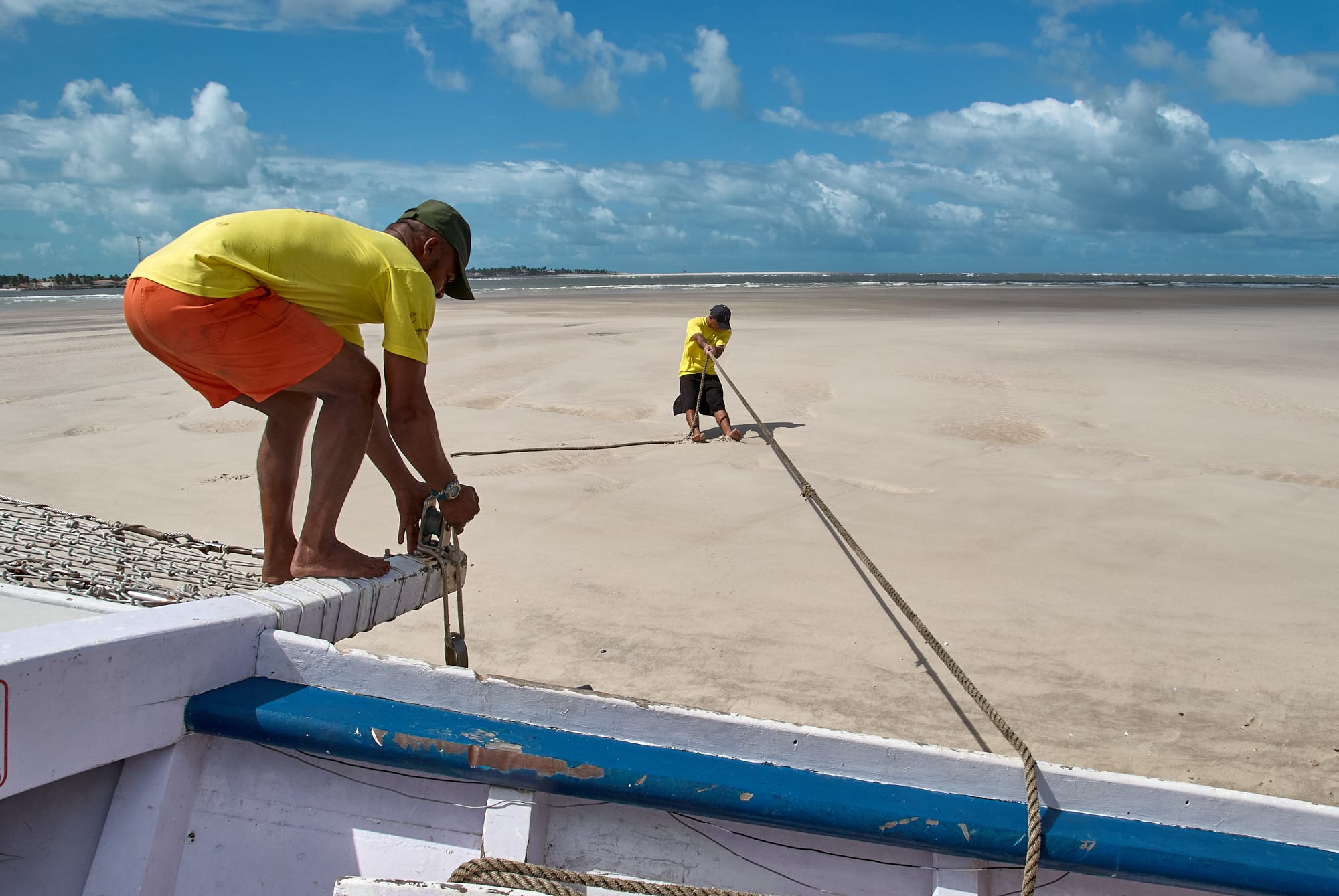
Knowing When to Step Aside
Perhaps the most difficult thing for any travel company is accepting that the best journey may eventually make the company itself almost invisible.
Tourism usually works in the opposite direction. Brands want to be remembered; guides want to demonstrate expertise, itineraries want to prove their uniqueness, travelers want to feel that an extraordinary sequence of experiences has been assembled specifically for them.
There is nothing inherently wrong with competence, comfort or good design. But a journey becomes more interesting when organisation stops announcing itself.
Someone has researched the road, checked the hotel, spoken with the community, found the guide, understood the season, considered the risks, tested the restaurant and decided when the traveller should arrive; then, if the work has been done well, all of that infrastructure recedes.

What remains is a table. A conversation. A river. A person explaining something because they have chosen to explain it. Perhaps a silence in which nobody feels compelled to explain anything at all.
This is also why we would be careful with Cultour’s own language about the “production” of travel emotions. Emotions cannot really be produced, and perhaps they should not be.
A travel company can prepare conditions; it can create time and possibility, remove unnecessary friction and help people arrive with enough knowledge not to damage what they have come to encounter. What happens after that belongs partly to the traveller and partly to the place.
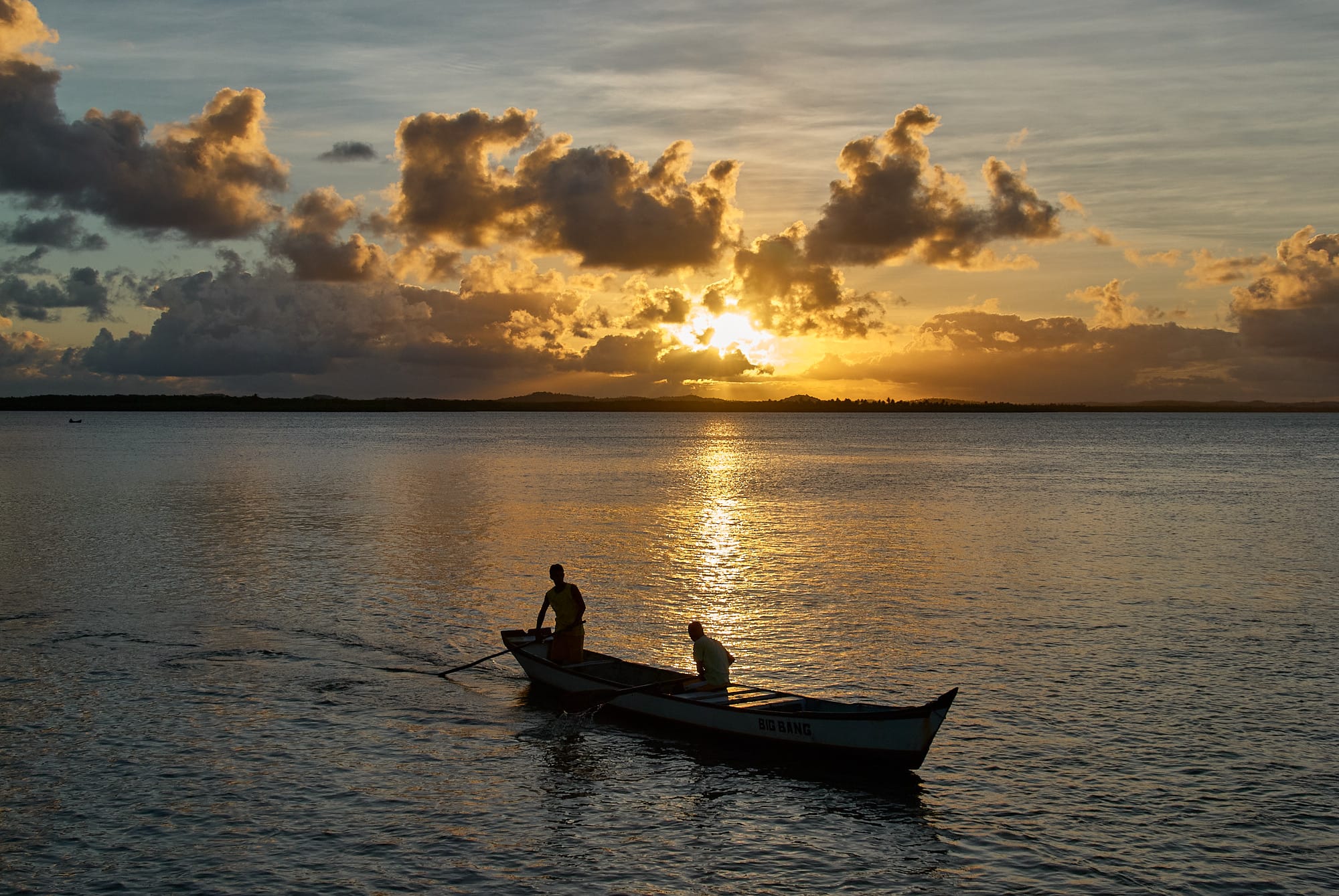
Cultour has spent more than two decades trying to work inside that space, between access and restraint, discovery and responsibility, the commercial reality of tourism and the simple fact that somebody else’s home is never merely our destination.
Good companies are not companies without contradictions. They are companies willing to examine the contradictions created by their own existence and make choices because of them.
For a tour operator, perhaps one of those choices is particularly difficult: knowing when all the planning, expertise and design have done their work, and it is finally time to move aside. Then the journey can begin.


Member discussion