

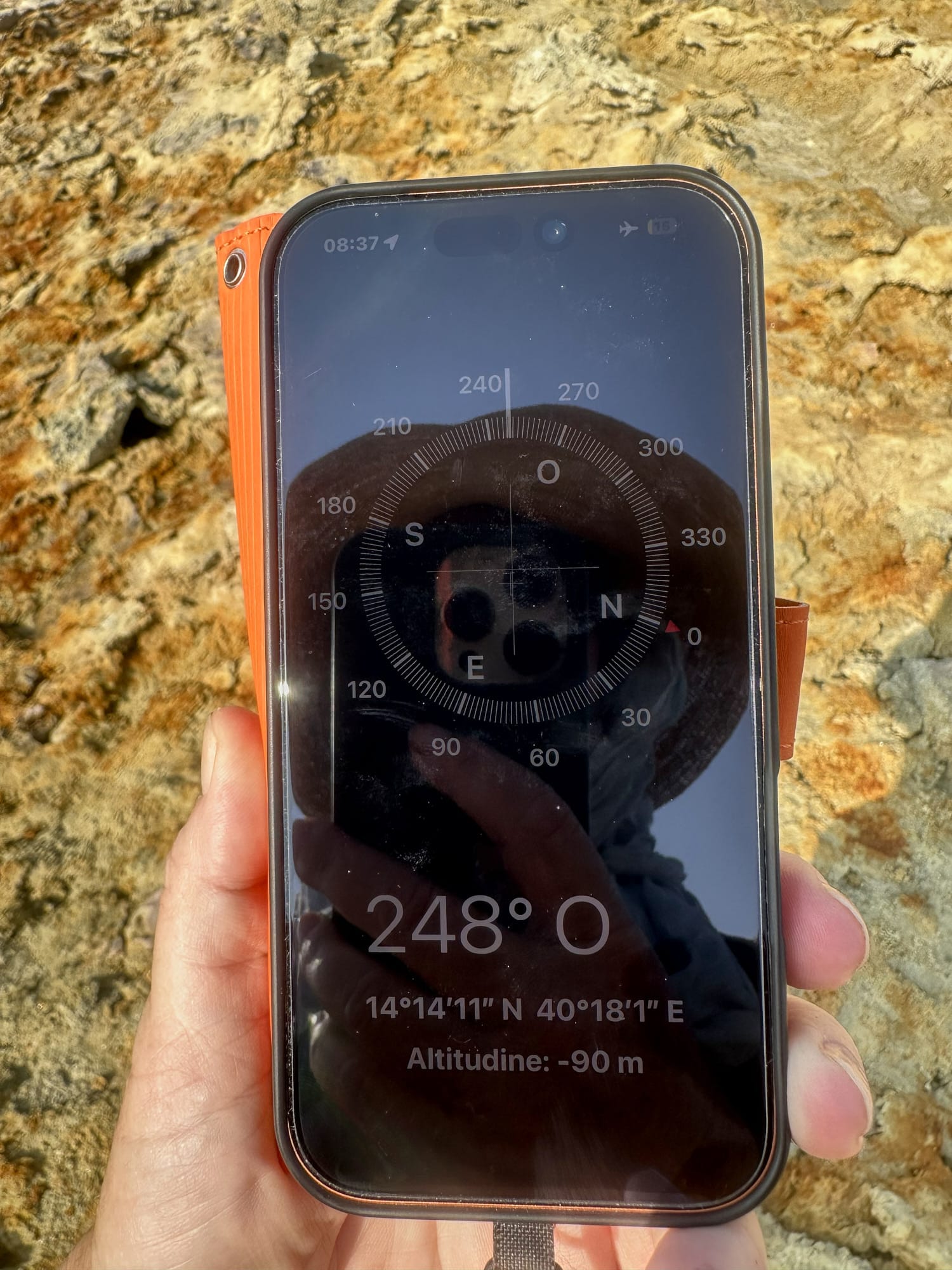
At 8:37 in the morning, the phone reads 14°14′11″ N, 40°18′1″ E. Altitude: ninety meters below sea level. The compass points west. Behind the numbers, reflected in the glass, there is a face under a wide hat, a hand holding the device, and the hard yellow surface of the earth.
Coordinates offer the reassurance of precision. They tell us where we are, though very little about what being there requires. The map does not record the heat pressing against the skin, the water already consumed, the distance to the next settlement, or the silence that begins when the engine is switched off.
Every journey starts with a location. Understanding the place takes longer.
The Open Hood
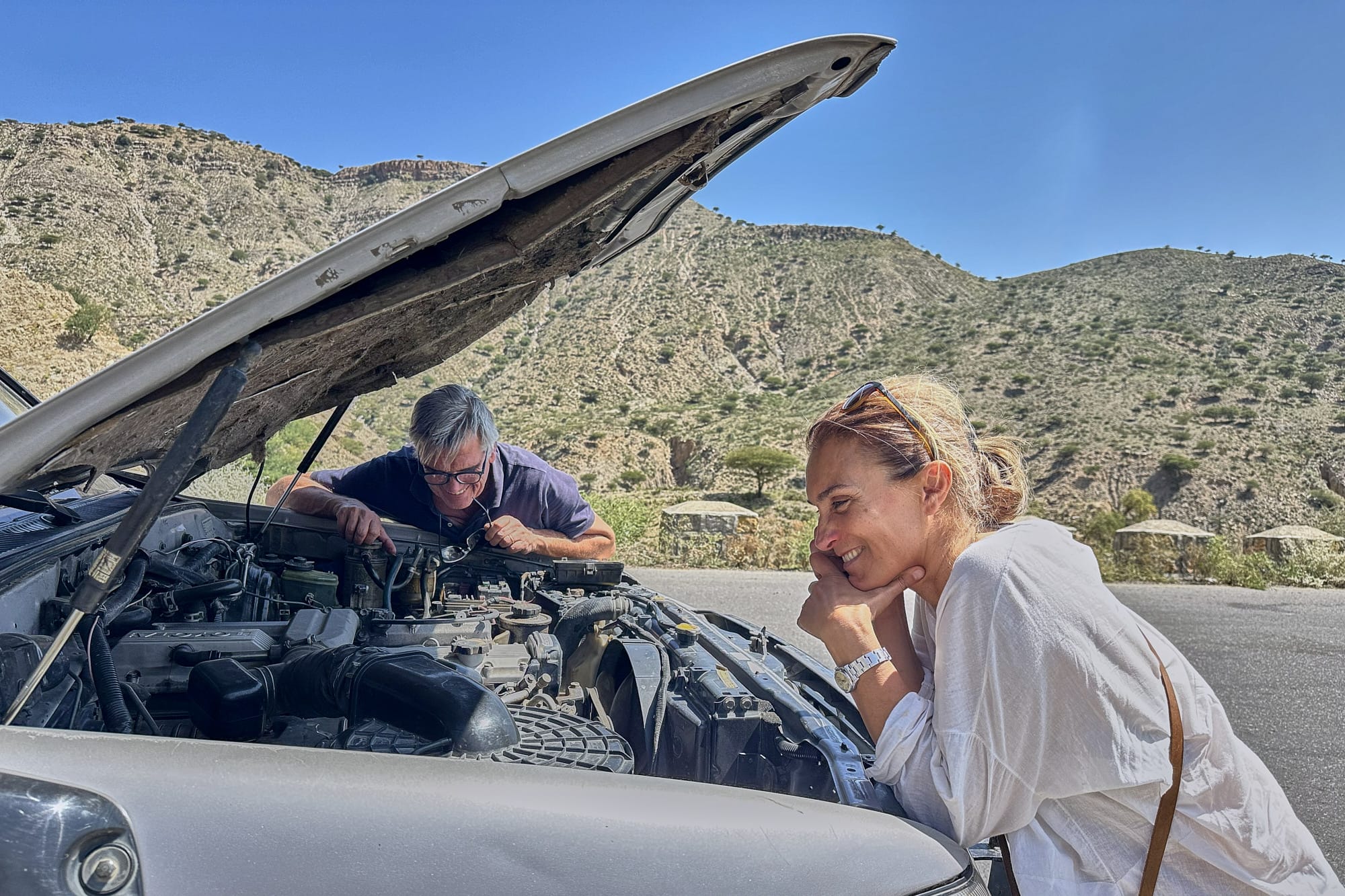
The hood rises beside the road like a second, improvised shelter. Someone leans over the engine. Someone else watches. There is no workshop nearby, no tow truck waiting beyond the next turn. The vehicle has stopped, and the journey now depends on knowledge: the sound heard before the failure, the smell of overheated metal, the part that can still be tightened, cleaned, adjusted, or replaced.
In cities, objects often conceal their workings. We use them until they fail, then exchange them for others. Here, a machine must remain legible. A driver needs to know what is happening beneath the metal.
Repair is not nostalgia. It is a practical form of independence, and sometimes the condition for continuing at all.
Before the Label
The name chosen for the company came from here: from the Afar Region and from the people whose name the region carries. It existed long before it appeared on a bag, a website, or a label stitched inside a pocket.
This matters. A place name is never an empty word waiting to be used. It contains lives, languages, routes, conflicts, memories, and forms of knowledge that remain largely invisible to a visitor passing through. Choosing such a name creates a responsibility that cannot be settled through a short origin story.
At first, AFAR may have sounded like a direction, a point on the map, a memory of travel. Over time, it became a question: how can a company carry the name of a place without reducing that place to an image?
The Measure of Things
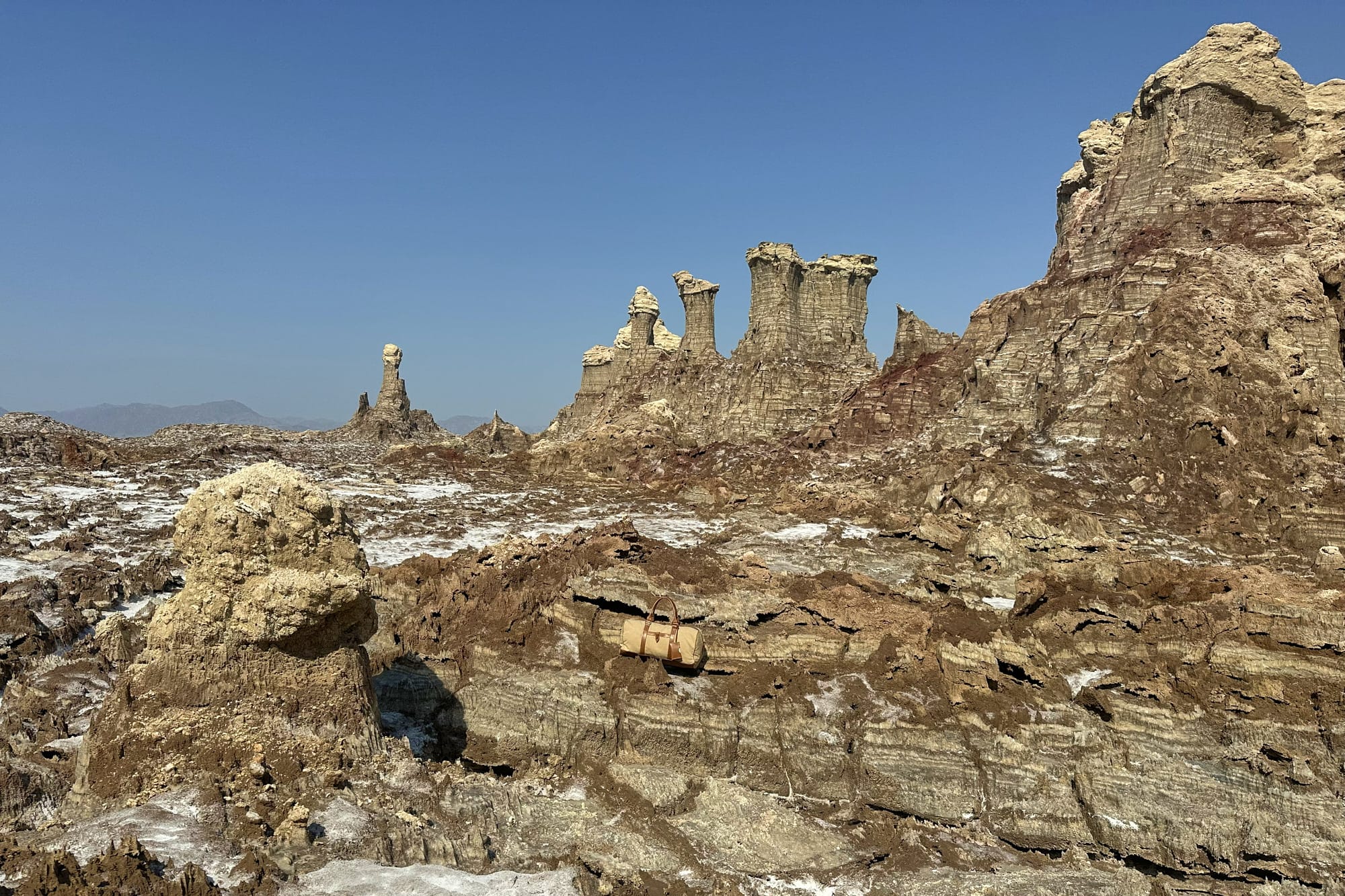
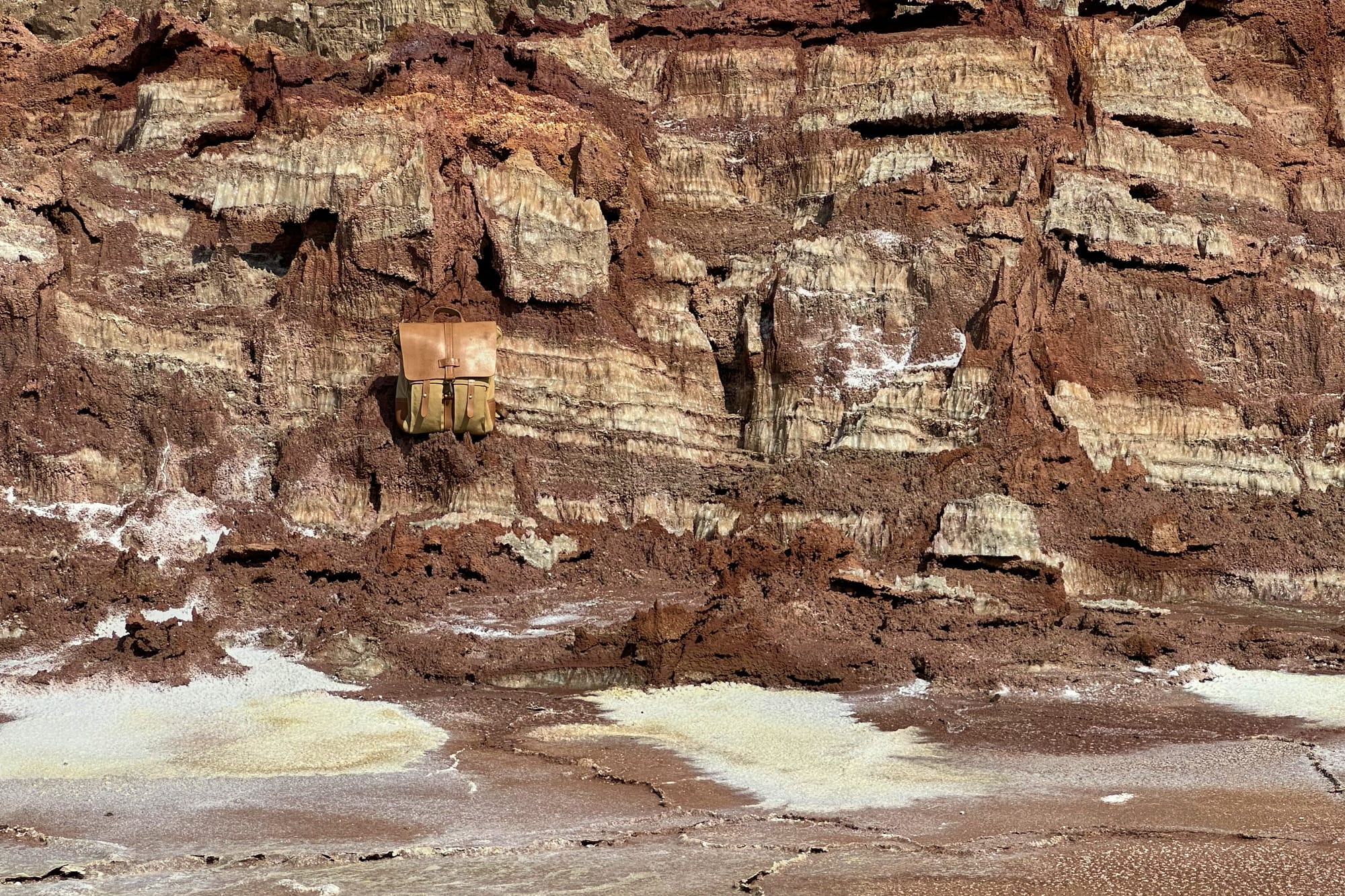
Against the mineral towers of the Danakil Depression, a bag becomes almost invisible. It sits on a ledge, small and orderly, surrounded by rock shaped across a scale of time no object can approach.
This change in proportion is useful. In the studio, a bag occupies the center of the frame. Its seams, handles, closures, and materials become important. In the desert, it returns to its actual size. It is one human object among larger forces: stone, salt, wind, distance.
The landscape does not serve as a backdrop. It refuses that role. It makes the object answer a simpler question: is it useful here? Can it be carried, opened, closed, repaired? Will it endure contact with the world beyond the showroom?
Choosing What to Carry
Travel begins before departure, with a series of decisions made beside an open bag. Water or another shirt. A tool or an unnecessary book. A second lens or space for food. Every object added asks to be carried across every kilometer that follows.
In the Danakil, these choices lose their abstract quality. Weight is felt immediately. Space matters. A badly chosen object becomes a burden, while a modest one—a cord, a cloth, a knife, a needle—may acquire unexpected value.
Learning what to carry also means learning what to leave behind. The lesson concerns design as much as travel. A good bag does not encourage accumulation. It gives form to a limit. Its usefulness lies partly in the discipline it quietly imposes.
An Inhabited Land
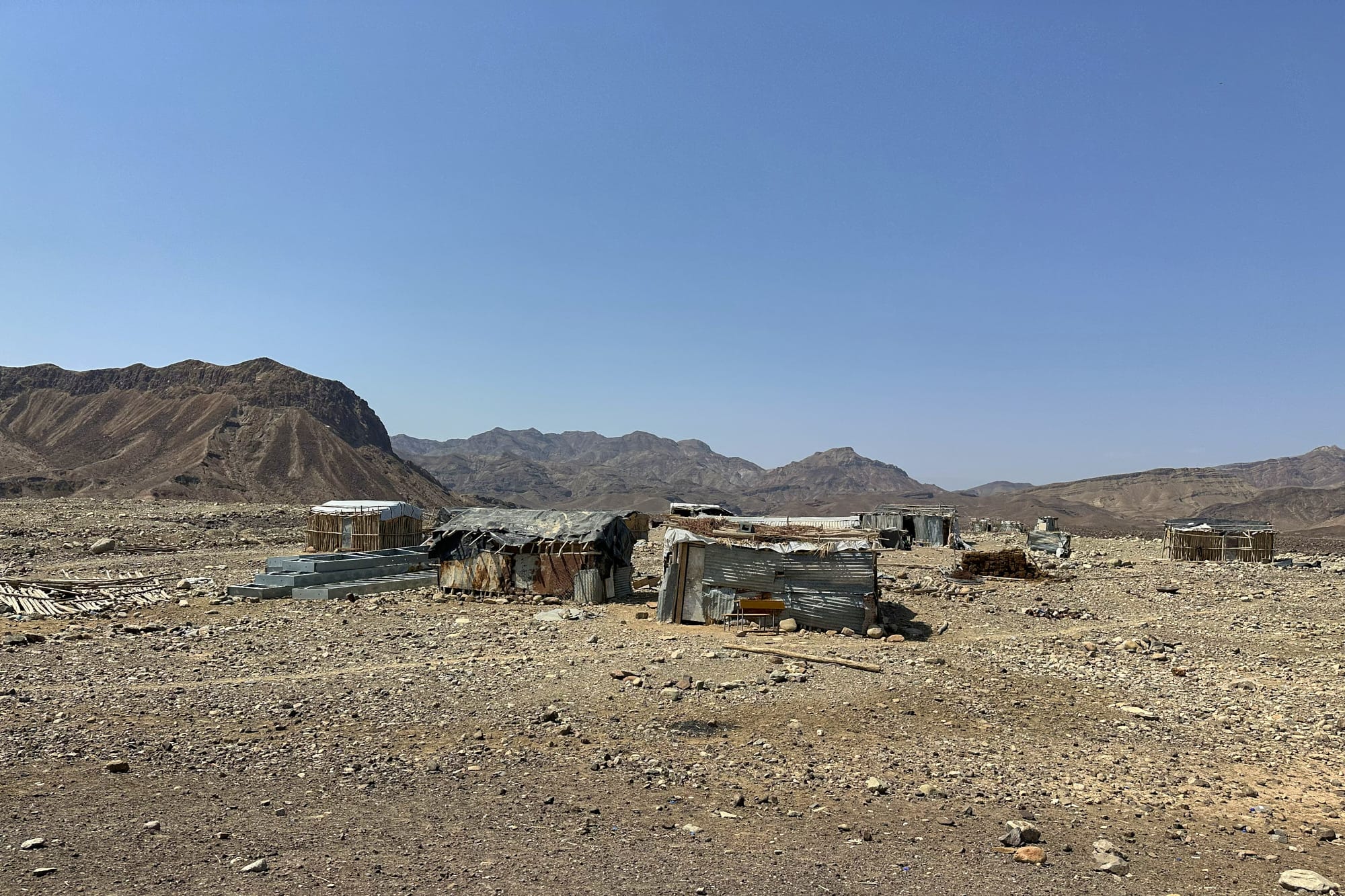
The vastness can mislead the eye. From a distance, the land appears empty. Then a settlement emerges: walls assembled from corrugated metal, branches, woven reeds, cloth, and whatever else can resist another season. A chair stands outside one structure. A table rests in the shade. Evidence of daily life occupies the stony ground.
The Afar Region cannot be understood only through its geological drama. People live here. They organize homes, movement, work, family, water, shelter, and exchange under conditions a passing traveler experiences only briefly.
There is a danger in admiring hardship from a safe distance. Hardship is not a local color. It is shaped by geography, political decisions, infrastructure, access to resources, and histories that cannot be contained in a photograph. The landscape is severe. Human life within it is not a metaphor.
What Salt Does
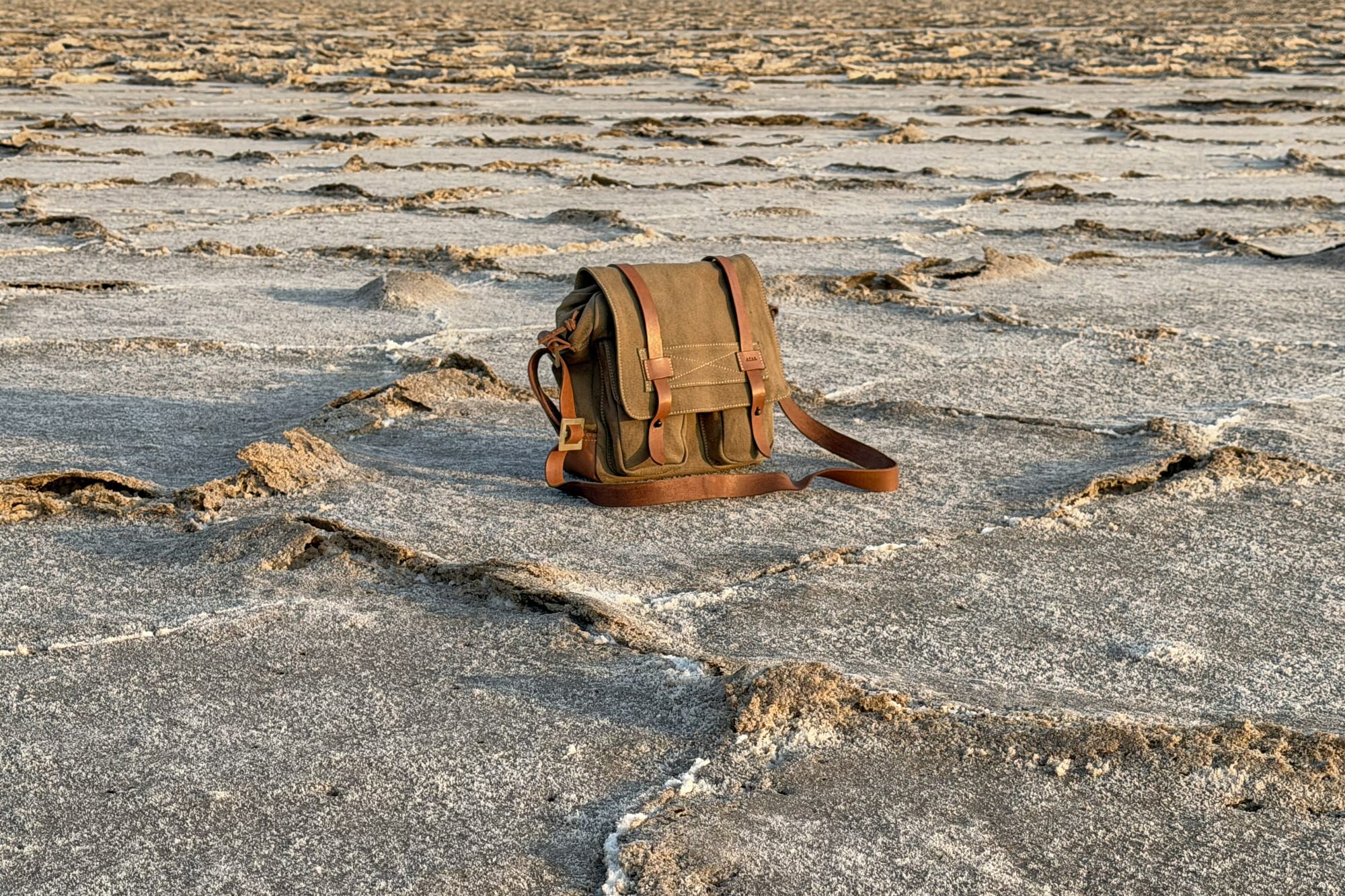
Salt covers the ground in broken plates. It enters shoes, gathers in folds, settles on skin and equipment. It preserves some things and corrodes others. Metal weakens. Leather dries. Fine crystals find the smallest openings.
Durability is often described as if it were a fixed property: strong material, reinforced seam, heavy buckle. In practice, durability is a relationship between an object, its environment, and the person who cares for it. Even the best-made thing needs cleaning, oiling, tightening, restitching. Strength without maintenance is temporary.
The bag on the salt flat already carries the marks of use. These marks do not diminish it. They record the conditions it has passed through. An object designed for travel should be allowed to age without becoming disposable.
The Moving Ground
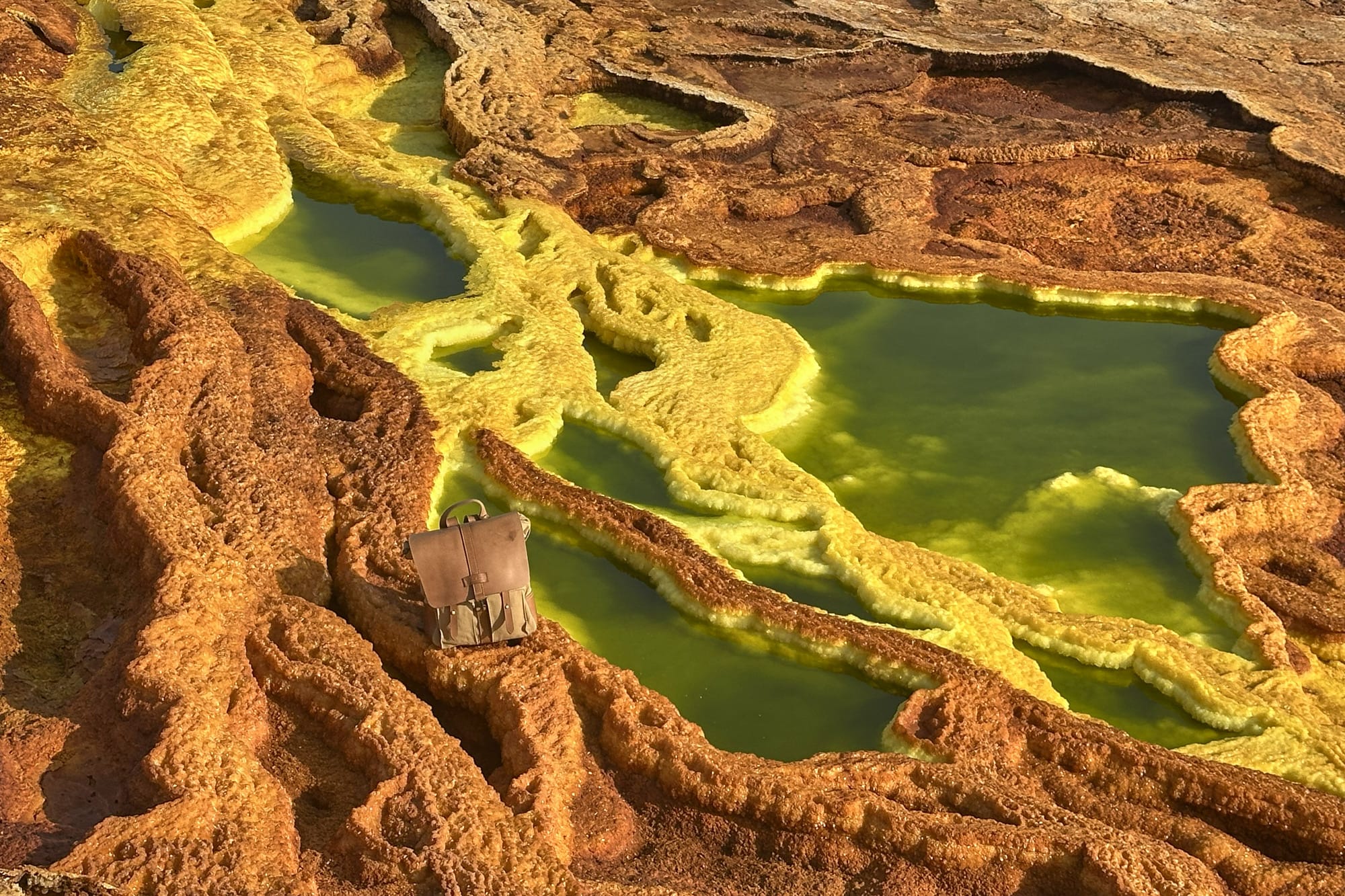
The colors appear almost artificial: pools of green held within yellow and rust-colored mineral borders, surfaces forming, cracking, dissolving, and forming again. The ground seems solid from a distance. Close up, it reveals continuous activity.
Nothing here supports the fantasy of permanence. The earth changes. Roads disappear. Machines break. Materials fade. Bodies tire. Plans have to be revised.
Design often tries to deny this reality, presenting objects as flawless and untouched by time. But an object that travels enters the same world as everything else. It becomes scratched, softened, darkened by hands, marked by rain and dust. Good construction does not prevent change. It allows the object to survive change, and makes future repair possible.
The strongest things are rarely those that remain untouched.
The Far Horizon
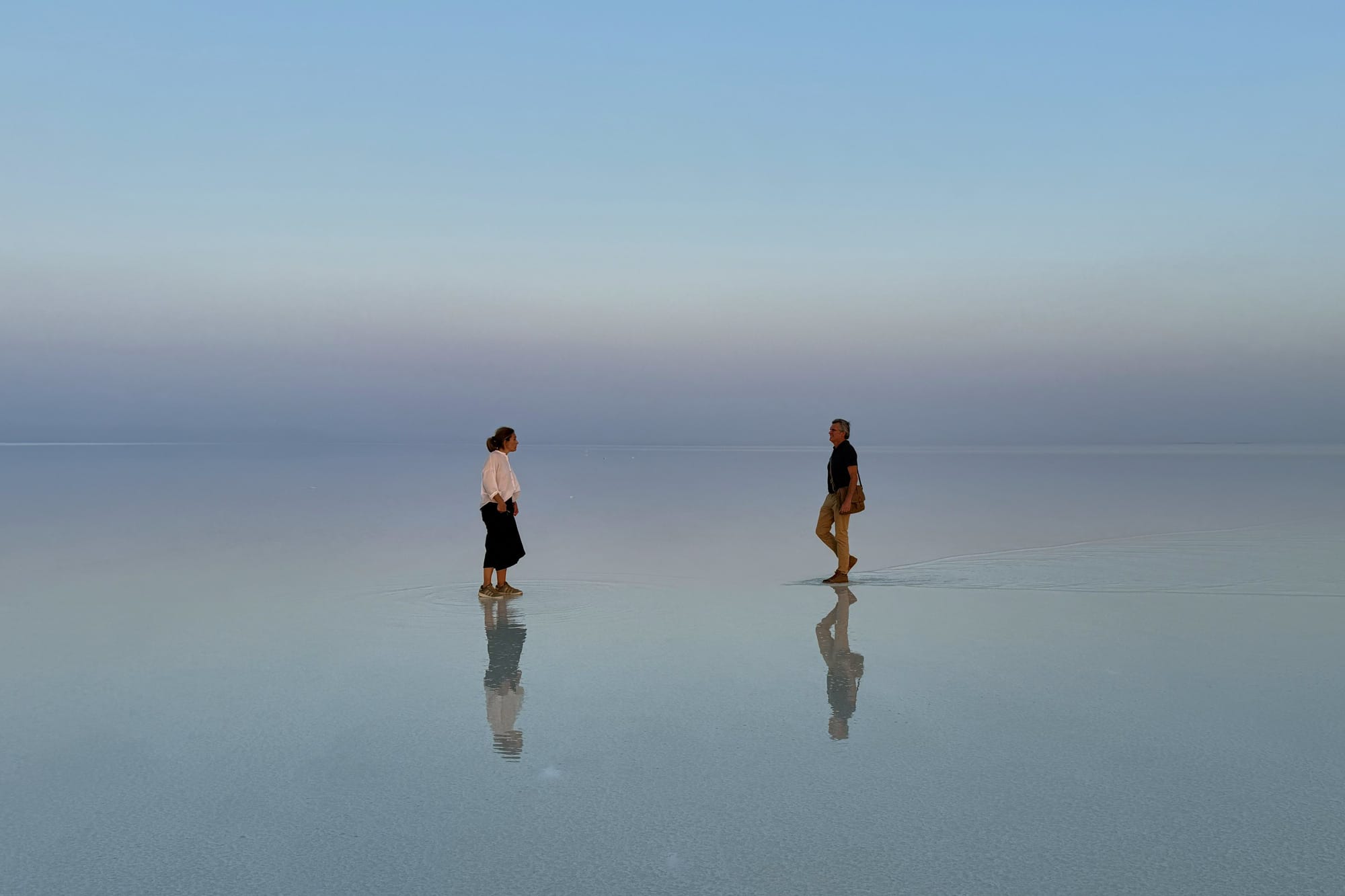
On the salt plain, the horizon withdraws as we walk toward it. Distance becomes difficult to judge. A vehicle can appear close for a long time. A person is reduced to a dark vertical line, then returns slowly to human scale.
Two travelers stand apart in the shallow water. Their reflections extend beneath them. There is no tree, wall, or building to measure the space. The eye searches for boundaries and finds almost none.
Such landscapes alter the meaning of “afar.” The word stops describing an attractive elsewhere. It becomes physical: the time required to cross a surface, the water needed, the trust placed in a driver, the knowledge of the route back. Distance is no longer an idea. It is something the body must negotiate.
No One Travels Alone
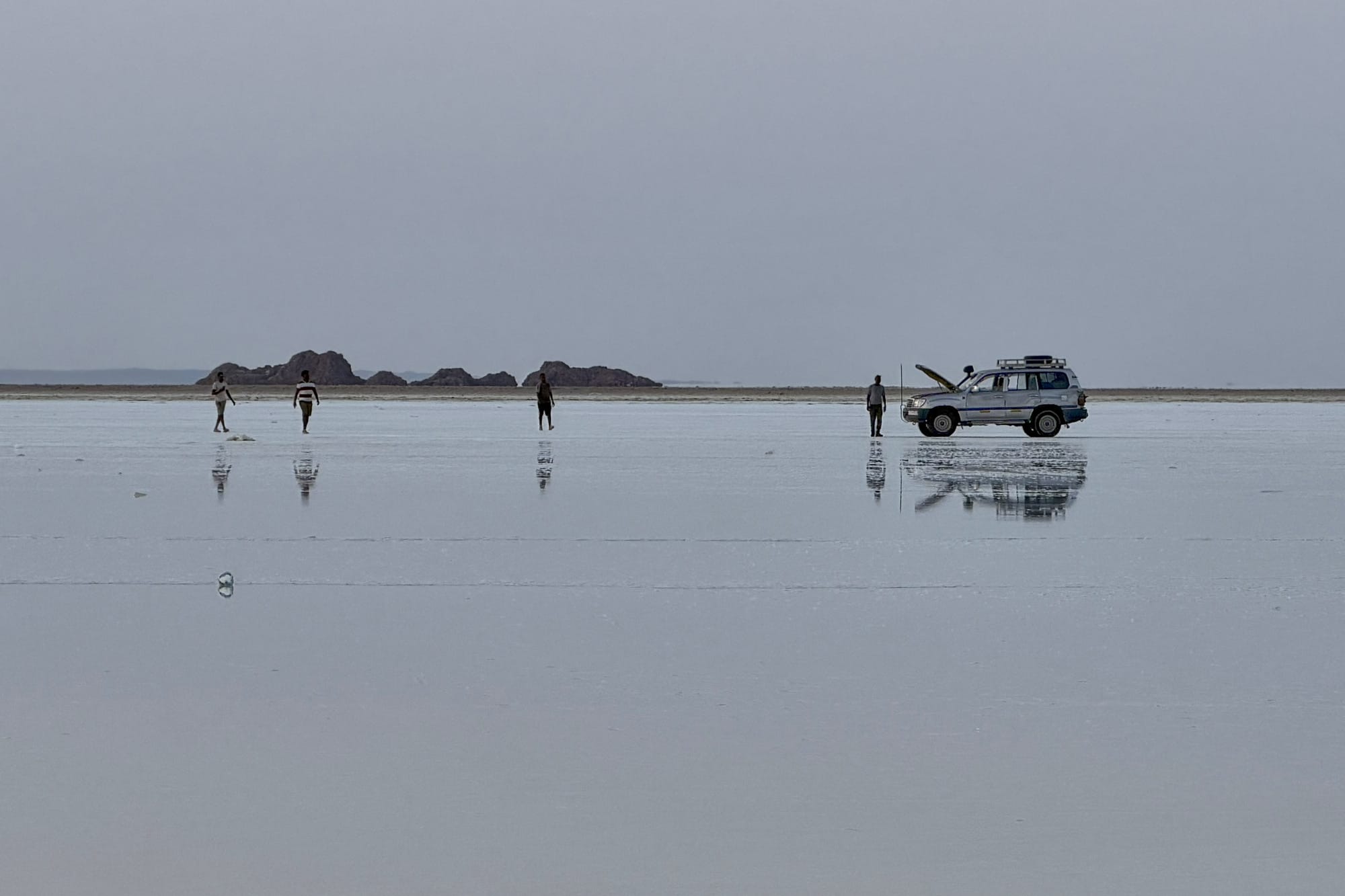
The vehicle stands with its hood open on the reflective plain. Several figures have spread out around it, searching, waiting, inspecting the ground, or simply creating distance from the machine that has failed them.
Images of remote travel often celebrate individual courage. The reality is usually collective. Someone knows the route. Someone carries the water. Someone recognizes the fault in the engine. Someone understands when the weather, the light, or the surface has made it unsafe to continue.
No bag, vehicle, or traveler is self-sufficient. Robust equipment reduces certain risks, but it does not abolish dependence. A journey survives through cooperation, accumulated experience, and the willingness to stop when stopping is necessary.
Reliability includes knowing what an object cannot do.
The Name Returns
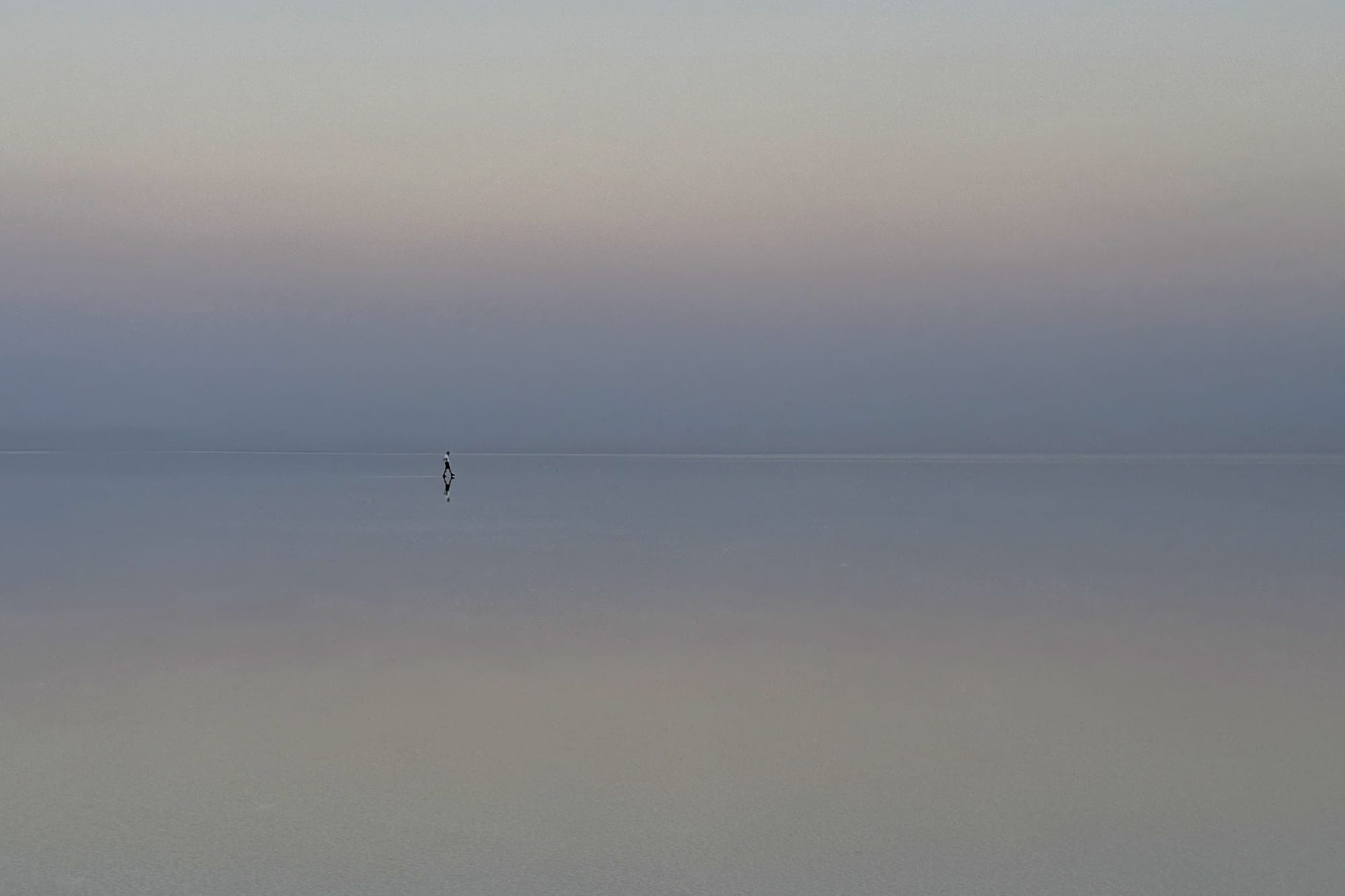
Toward evening, the light softens over the salt. A person walks through the shallow water, carrying a bag at his side. The sun lowers behind the mountains, and the horizon that seemed endless during the day begins to close.
Later, the name AFAR returned to Addis Ababa. It entered the workshop, the cutting table, the rolls of canvas and leather, the hands that measured, stitched, reinforced, and corrected. From there it began traveling again, attached to objects carried into cities, airports, trains, and other landscapes.
The region cannot be possessed by a label. Its name should remain larger than the company that uses it.
To carry that name means accepting what it asks in return: restraint, durability, attention, the ability to repair, and respect for the distance between a place and the stories told about it.


Member discussion