


In one photograph, Giulia Zhang sits beside a man outdoors in southern Ethiopia. In front of them, a camera has been placed on an upturned plastic container. A microphone points toward the scene. Giulia is watching closely.
So is the man beside her. Behind them, almost unnoticed at first, a woman crosses the frame carrying two containers and a bag.
It is an ordinary moment, which is precisely what makes the photograph important. Research is happening, but life has not stopped to accommodate it.
There is no neutral laboratory here, no clean separation between observer and observed. There is earth underfoot, a tree, houses, equipment carried from somewhere else, people moving through their day. Knowledge is being produced inside a place that already contains its own knowledge.
Giulia is both a photographer and a linguist, and perhaps these two practices are less distant than they initially appear. Both begin with attention. Both require a person to remain quiet long enough for something outside themselves to become visible.
Both can become extractive when the person holding the camera, microphone, or notebook believes the instrument gives them authority. And both become something else when listening comes first.
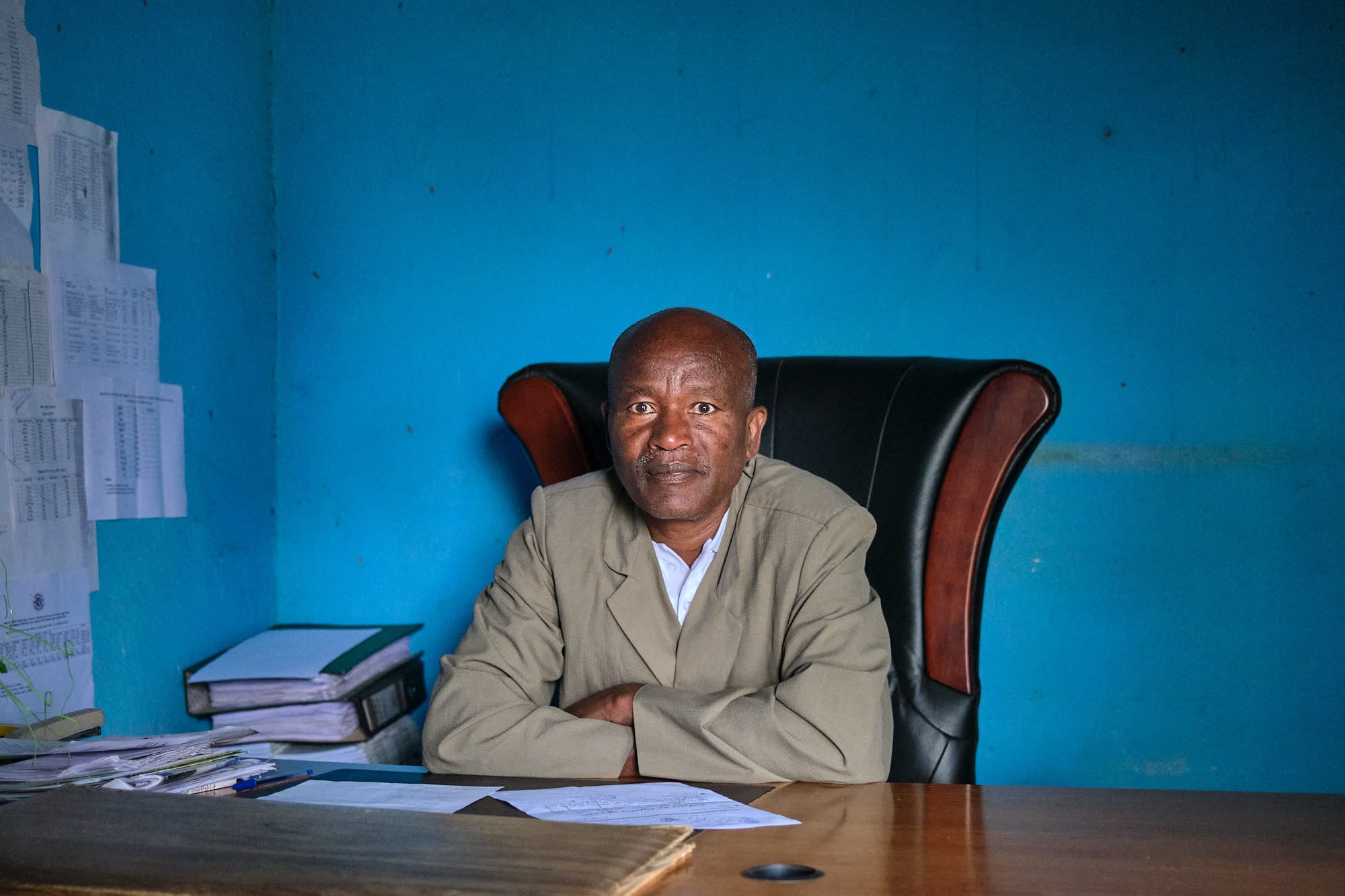
Giulia is a co-founder and photographer of Ayzoh!, the Italian nonprofit organization that has spent more than two decades working collaboratively with communities through documentary photography, research, publishing, and visual storytelling.
Her work has taken her from Ethiopia to Mauritania, Norway, and Italy, producing photographic projects and publications along the way.
She is also pursuing doctoral research at the University of Pavia focused on the language of the Burji people of southern Ethiopia. It would be easy to describe these as two careers. It would probably be more accurate to describe them as one way of looking at the world.
What a language carries
We often speak about languages as if they were containers for information. One language calls an object this; another calls it that. Translation appears to solve the problem. We replace one word with another and move on.
But languages do considerably more than attach labels to things. A language develops inside relationships: between people, generations, landscapes, animals, plants, work, belief, migration, memory.
Over time, those relationships leave traces in grammar, vocabulary, expressions, stories, jokes, songs, names, and ways of addressing one another.
A language can contain distinctions another language does not make. It can preserve names for places that never appeared on an official map. It can hold knowledge about cultivation, weather, animals, medicines, kinship, ritual, or the appropriate way to speak to an elder.
It carries humor that survives translation badly and memories whose meaning depends upon the words chosen to tell them.
This is why the weakening of a language cannot be understood simply as the disappearance of vocabulary. Something more complicated happens.
People may continue living in the same places and practicing many of the same customs. Knowledge does not suddenly vanish because speakers begin using another language. Cultures are not sealed containers, and languages have always borrowed, changed, traveled, mixed, and adapted.
But when a language ceases to move naturally between generations, one of the structures through which a community has organized experience becomes harder to transmit.
That matters to the community first. But it also matters to the rest of us. Humanity's diversity does not exist only in what we build, wear, eat, or believe.
It exists in the different intellectual systems we have developed for understanding reality. To lose those differences is to make the human world narrower.
There is a temptation, especially when discussing smaller languages, to use the vocabulary of rescue. Someone arrives to “save” a language before it disappears. That idea is misleading.
Languages belong to the people who speak them. Researchers do not own them, and outsiders do not confer value upon them by deciding that they deserve documentation.
Linguistic research can record, describe, study, compare, and help create resources. It can support transmission and make knowledge available in forms that communities themselves may find useful.
But a language remains alive because people speak it. The distinction matters. It changes the researcher from protagonist to collaborator.
Two forms of attention
Look again at Giulia's photographs from Burji communities and there is remarkably little spectacle.
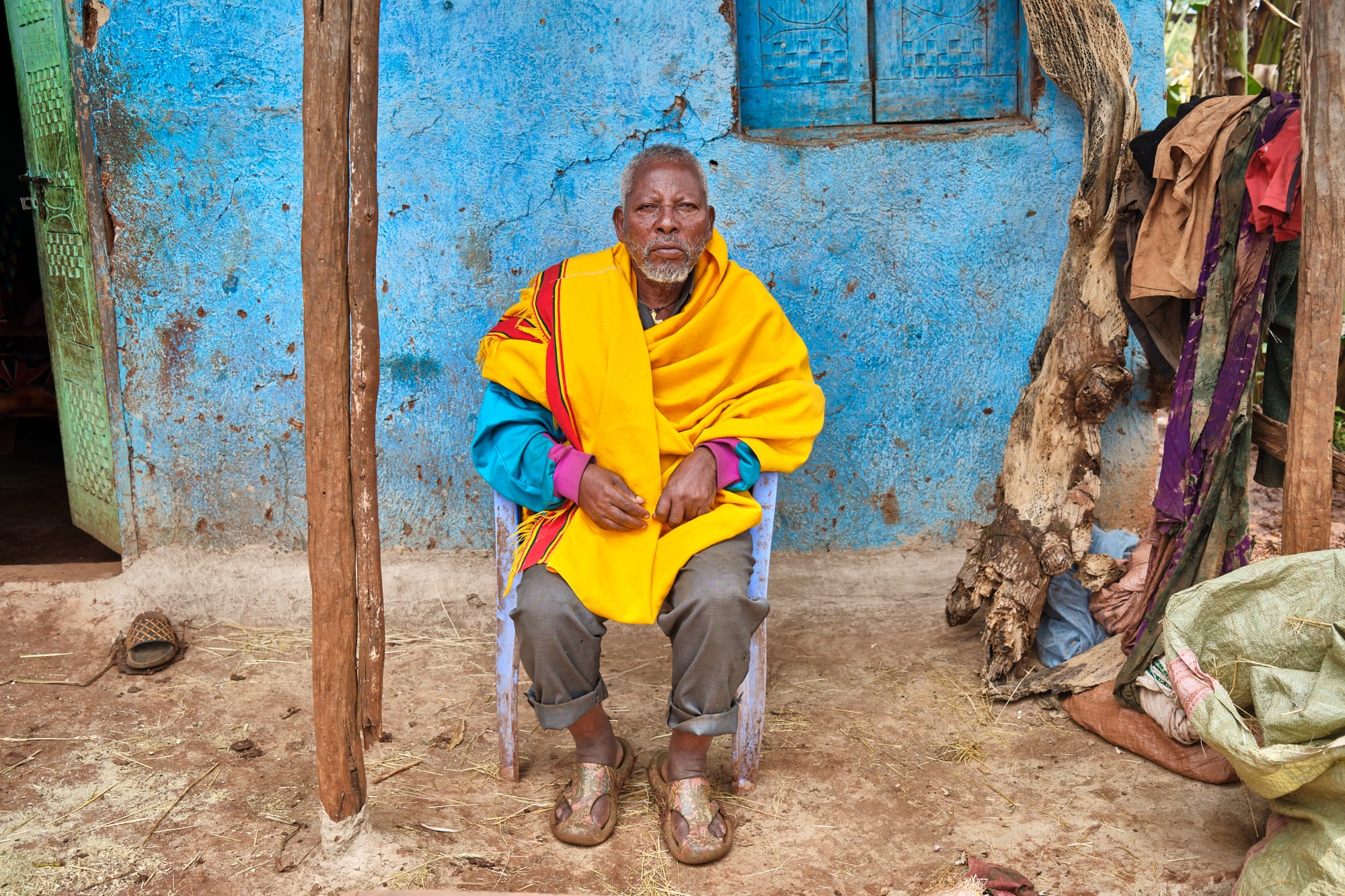
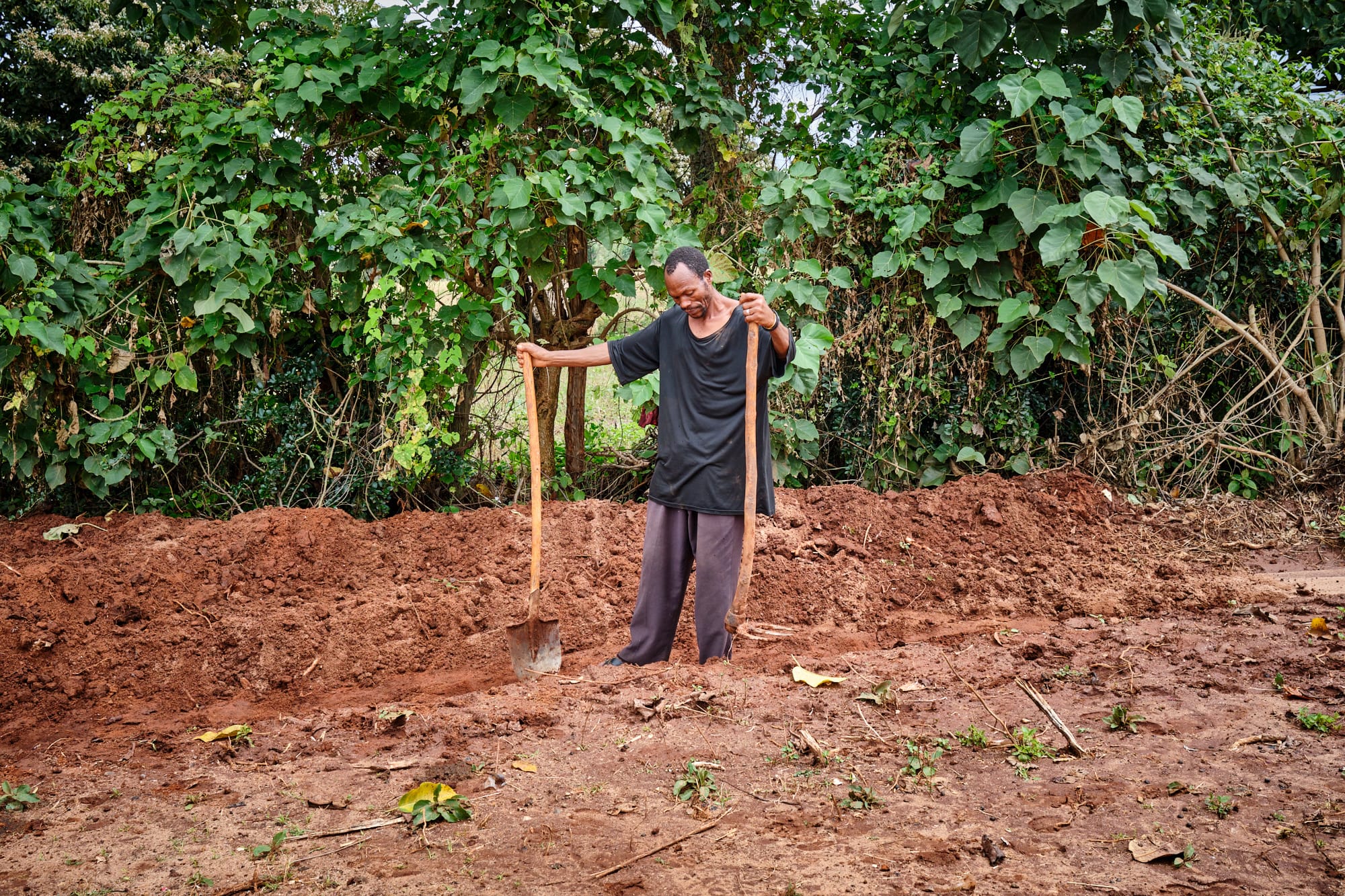
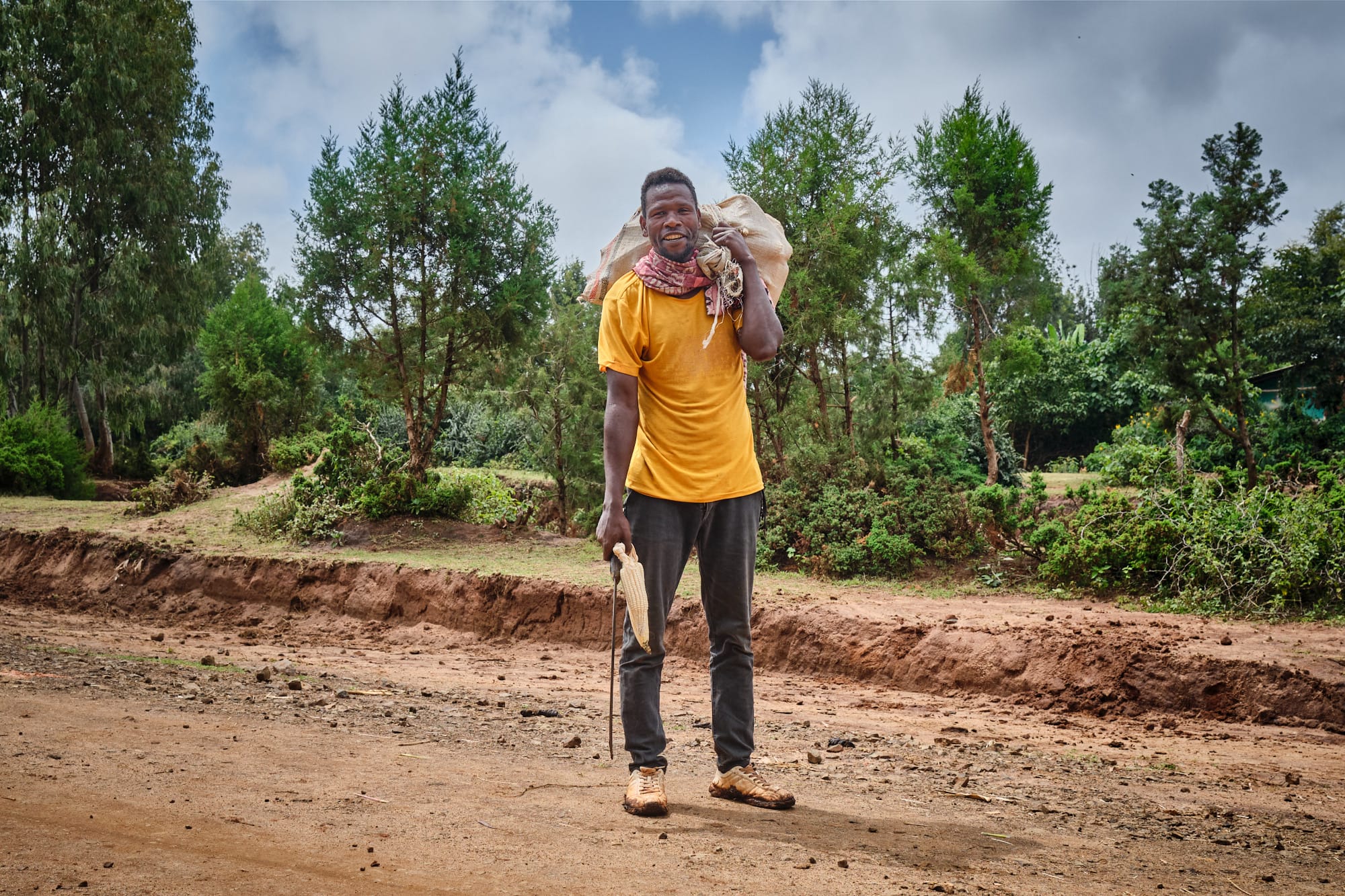
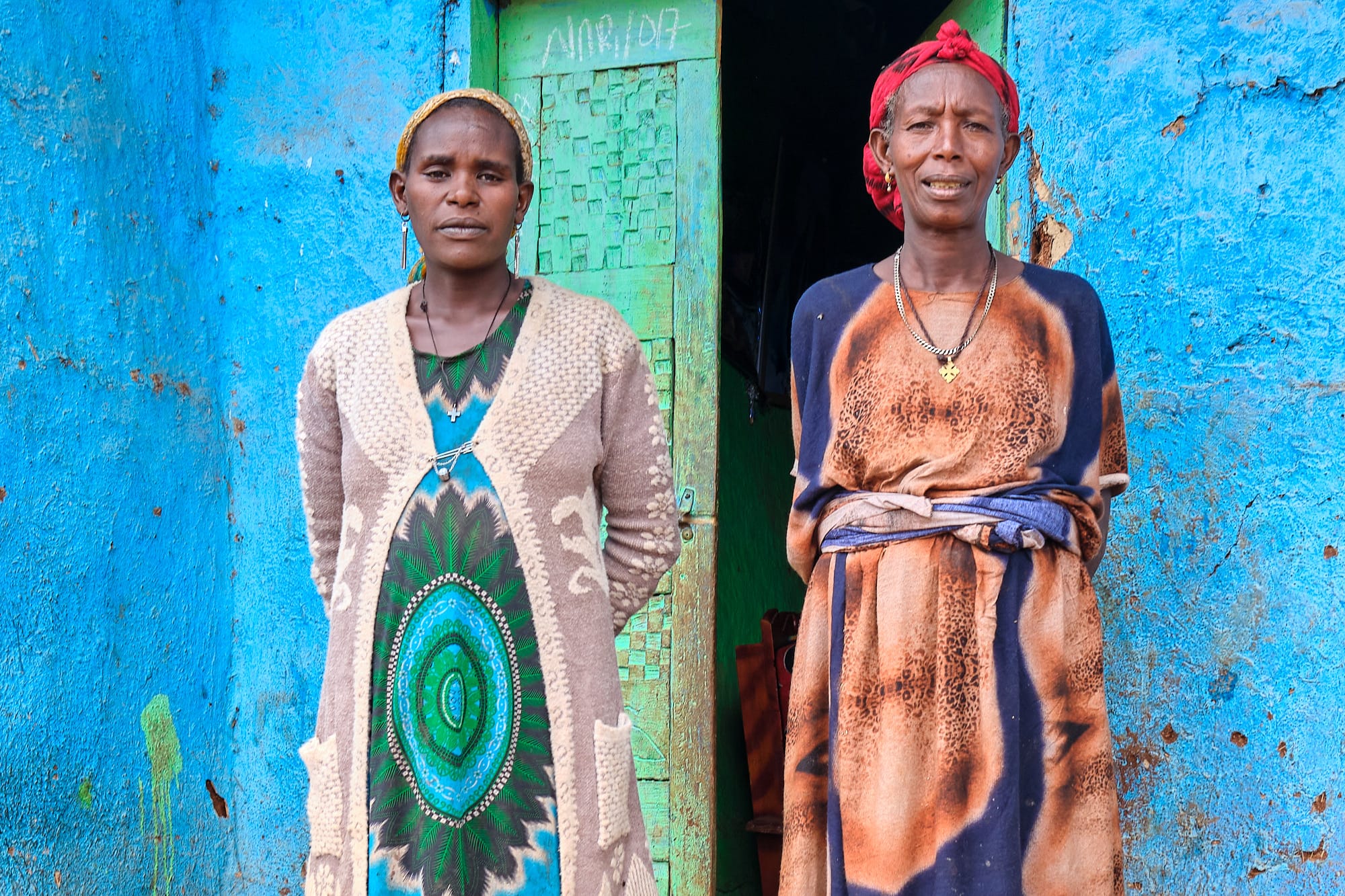
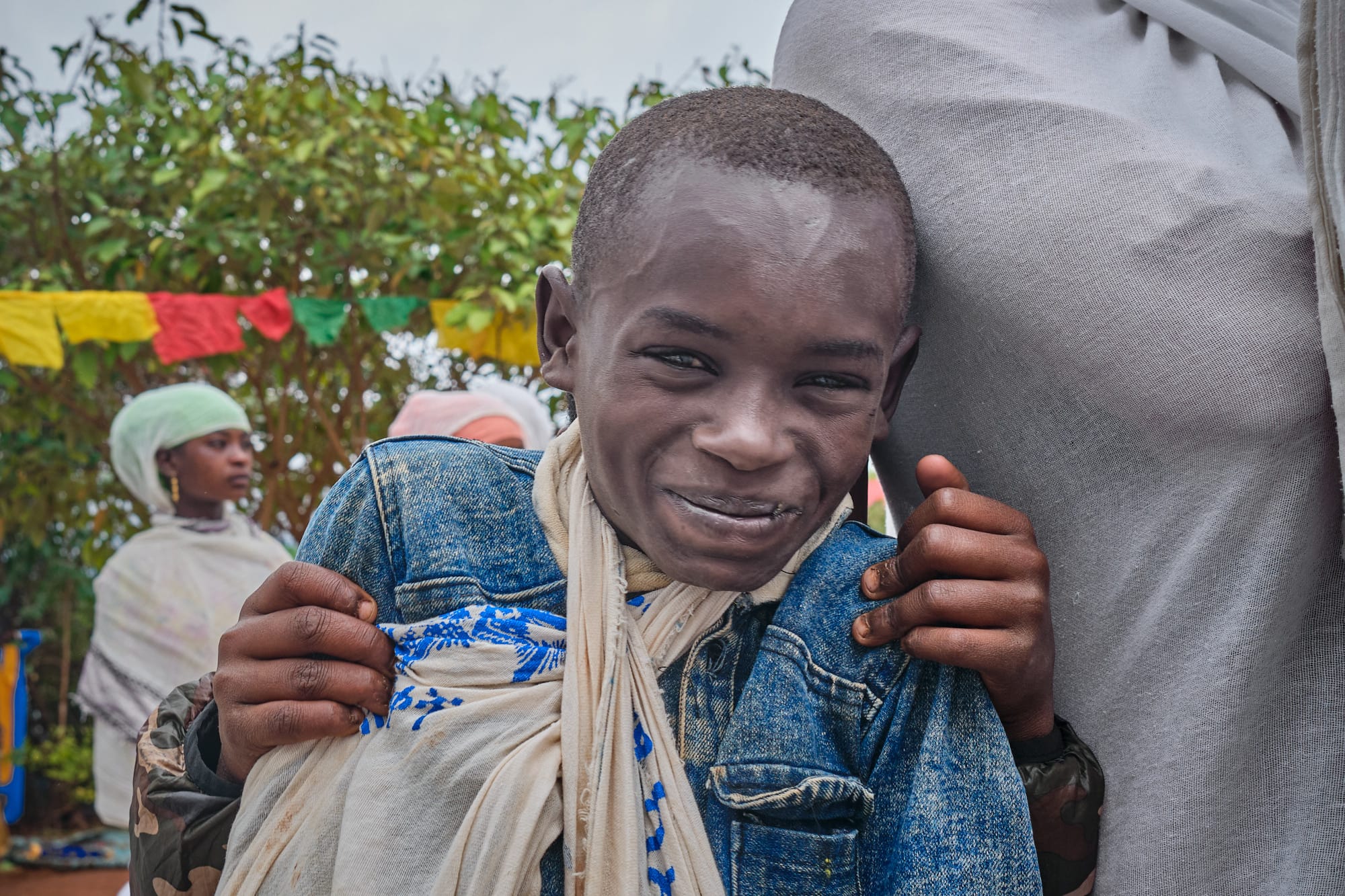
An older man sits outside a blue house wrapped in a vivid yellow cloth. Two women stand beside a green door. A man works the earth with a shovel. Another walks along a road carrying a sack over his shoulder.
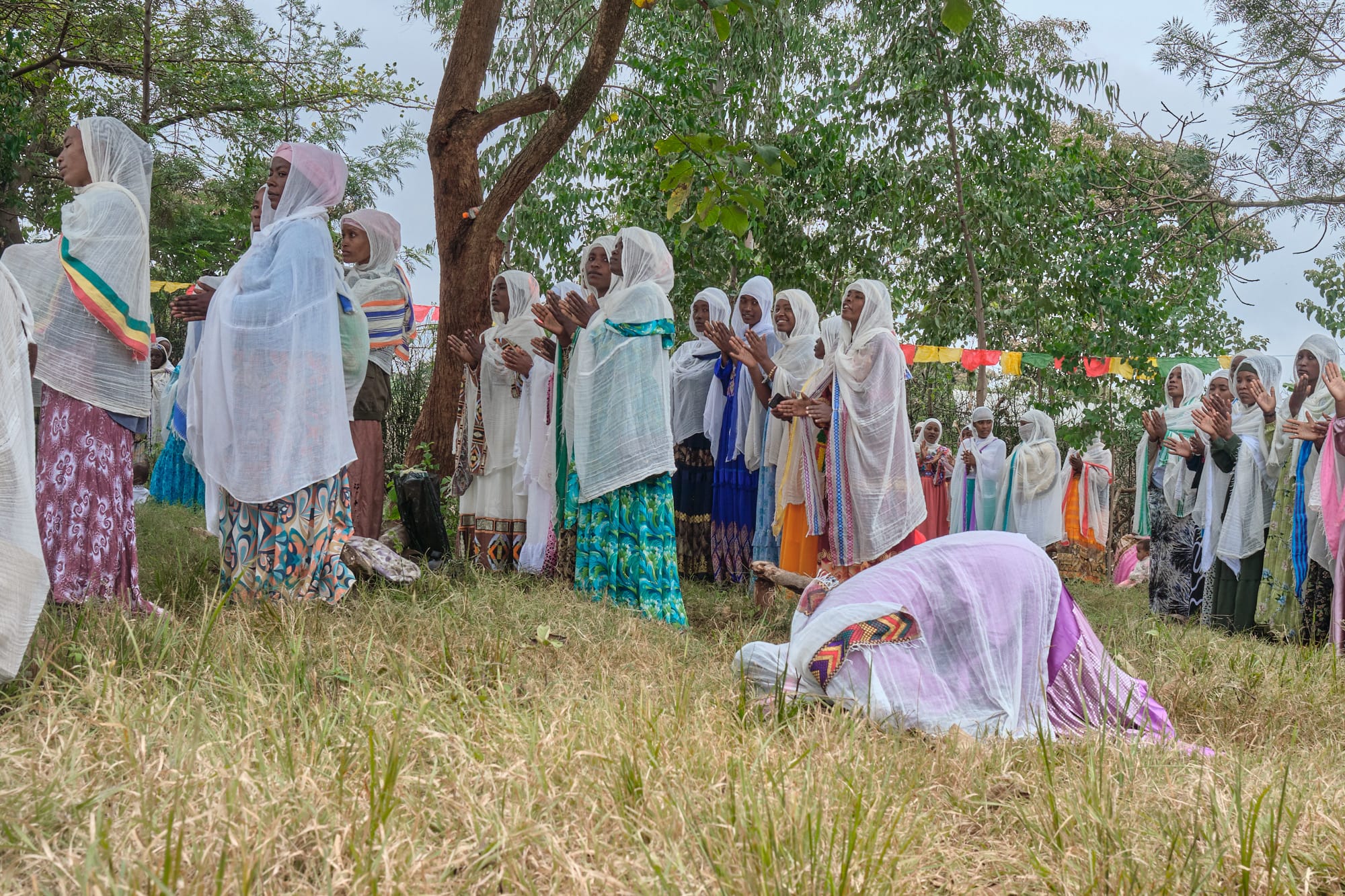
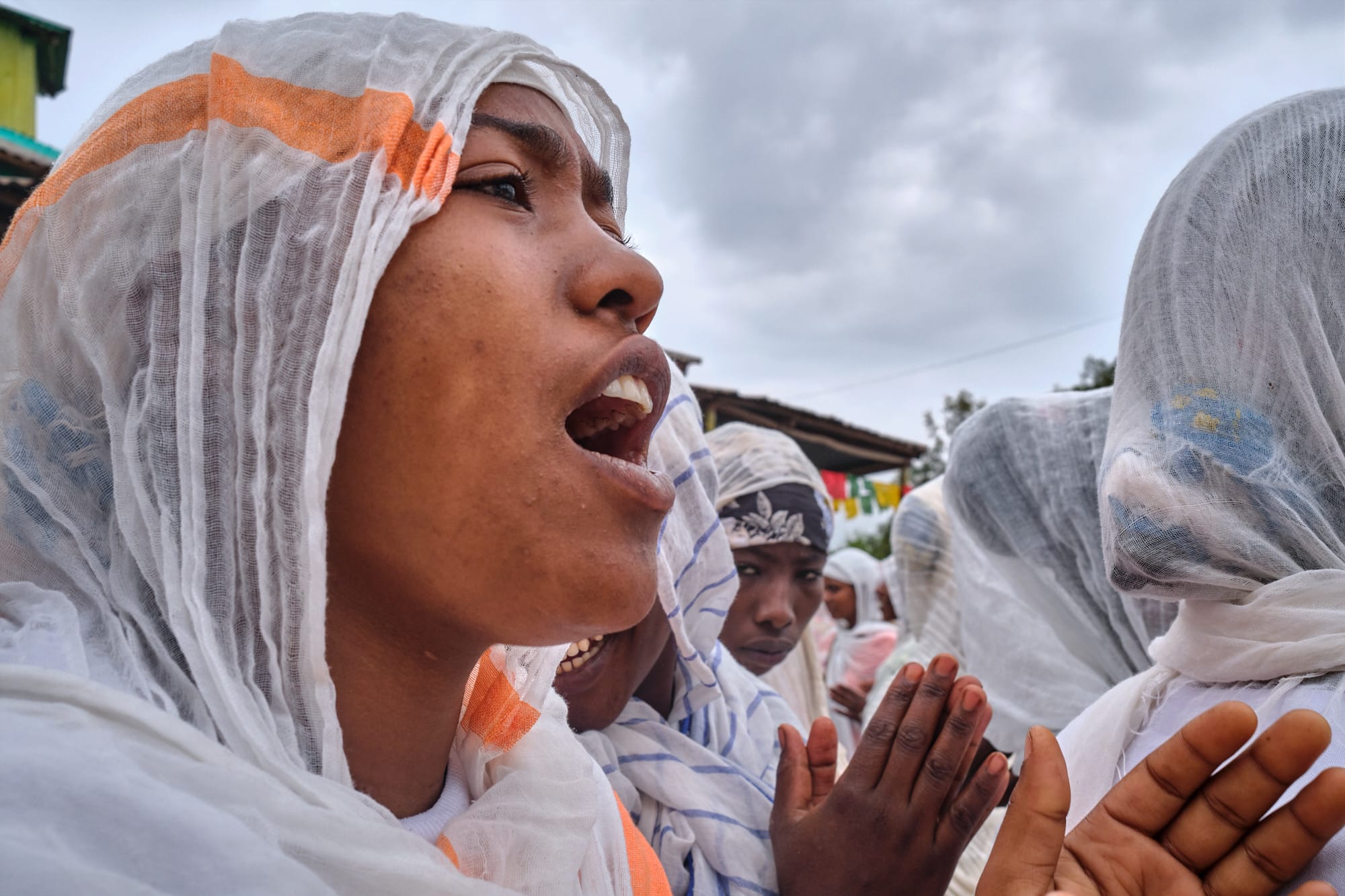
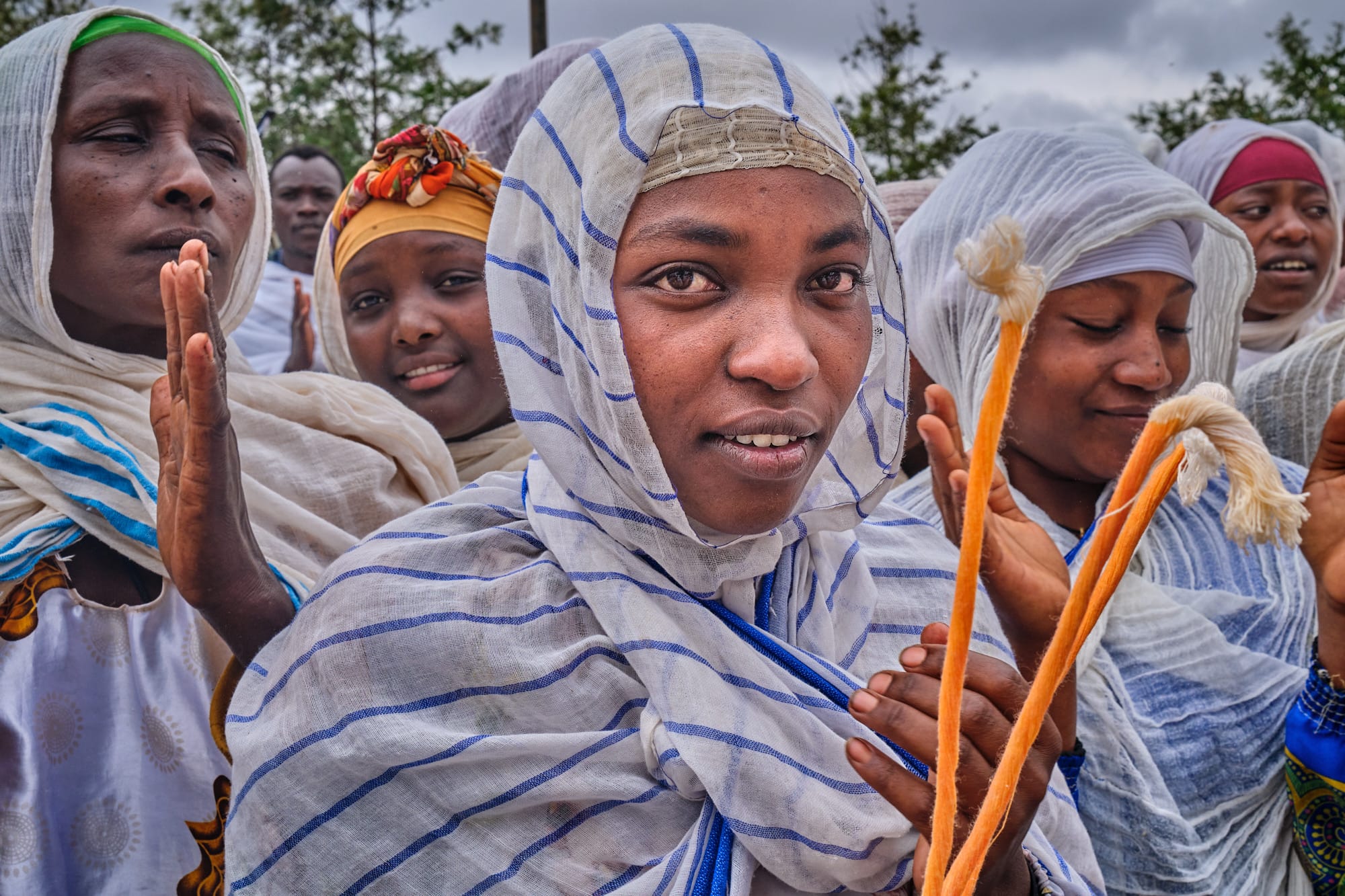
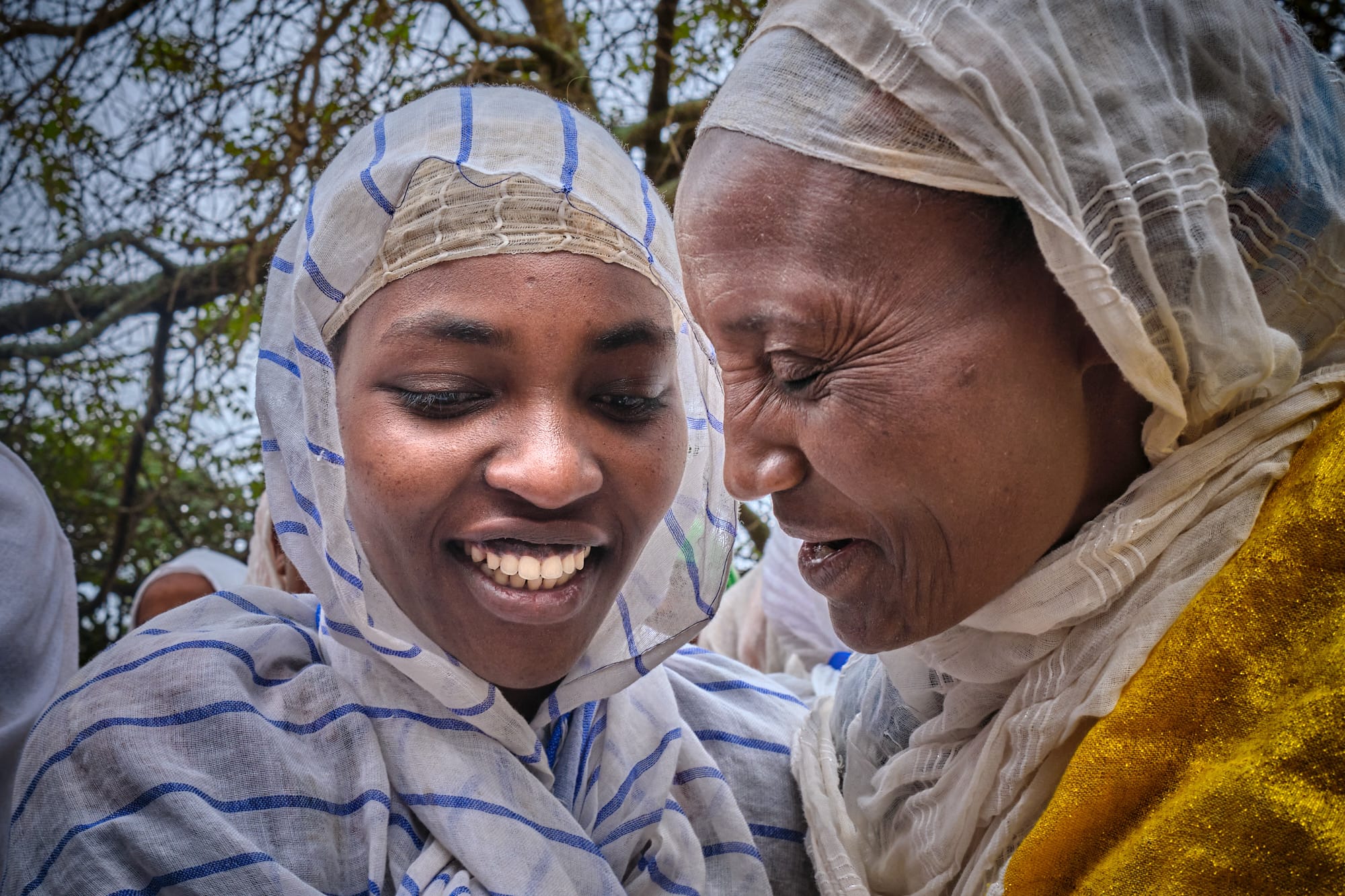
Elsewhere, women gather outdoors in white shawls. Hands clap. Bodies form circles. A woman sings, her face occupying almost the entire frame.
None of these images attempts to summarize “the Burji.” They could not. A community cannot be compressed into a photographic style, just as a language cannot be reduced to a glossary.
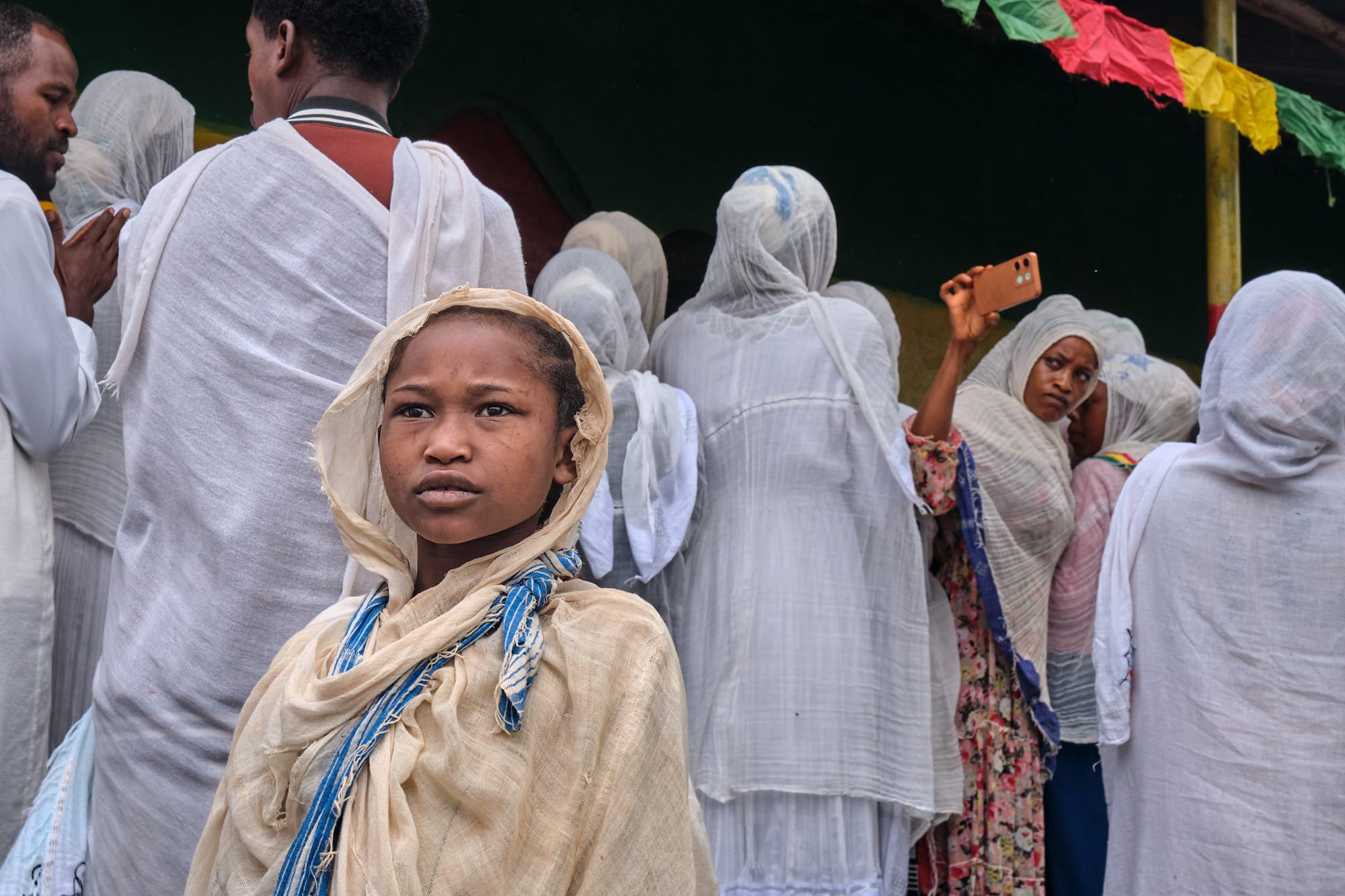
What the photographs offer instead are encounters. The blue wall behind one person. The worn earth beneath another. A piece of cloth hanging from a tree. Shoes covered with mud.
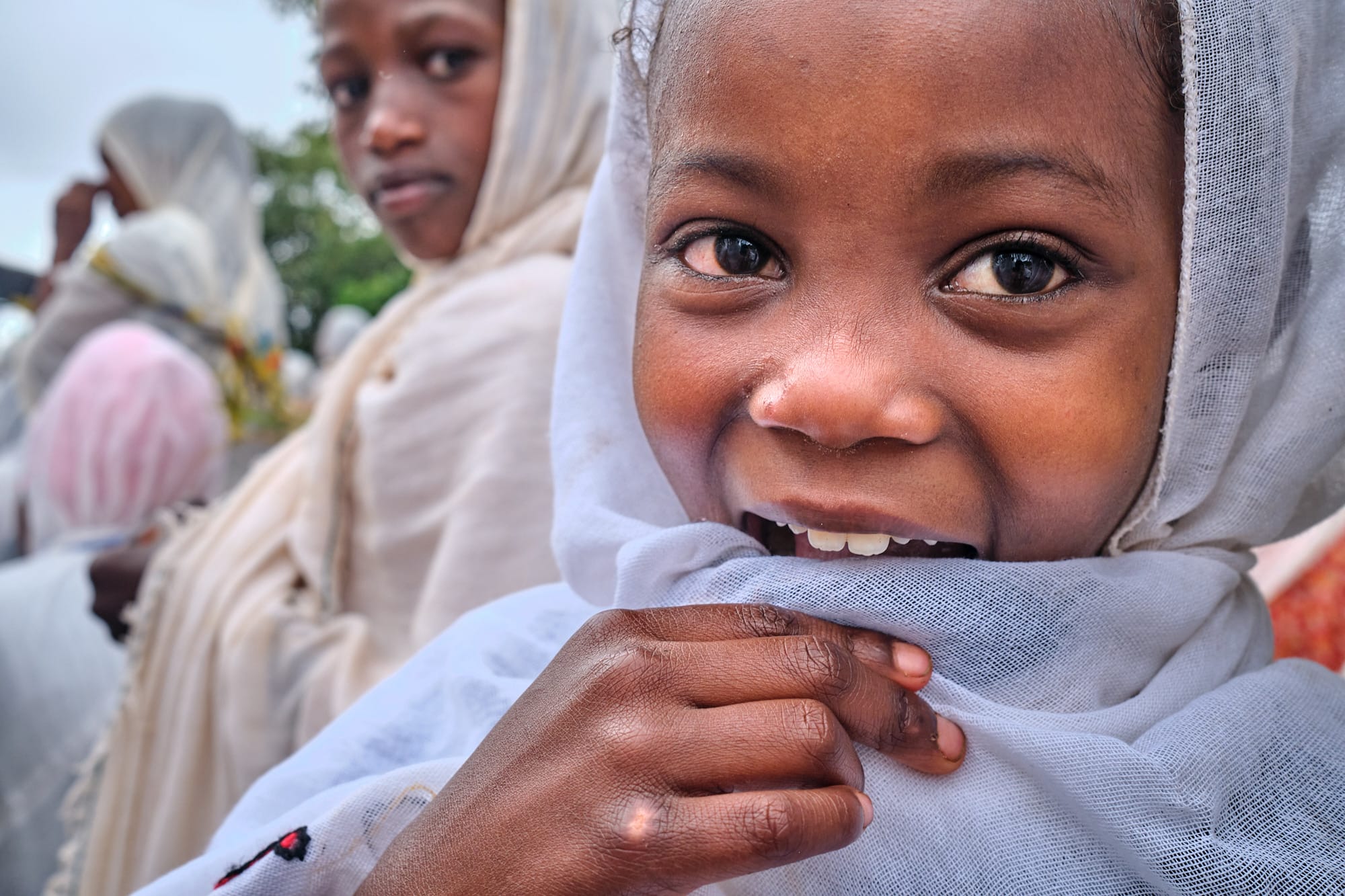
The distance between bodies during a celebration. The expression of someone who has agreed to stand before a camera but has not surrendered control of how they will meet it.
This is where Giulia's work as a photographer begins to illuminate her work as a linguist. Photography is often described as the art of seeing. That is only partly true. Documentary photography is also the practice of recognizing what you do not yet understand.
You arrive somewhere and initially notice the obvious things: architecture, clothing, gestures, faces, landscape. Gradually, if you stay long enough and if people allow you to stay, hierarchies emerge.
Relationships become clearer. A gesture you thought insignificant acquires meaning. Something you photographed on the first day turns out not to mean what you thought it meant at all.
Language demands the same humility. Before recording a word, one has to understand who can say it, to whom, in what circumstances, and with what consequences. Meaning rarely sits obediently inside a dictionary definition. It moves between people.
A camera can record a face without understanding the person. A microphone can record a sentence without understanding the world that produced it. The instruments are the easy part. Attention is the work.
The knowledge between people
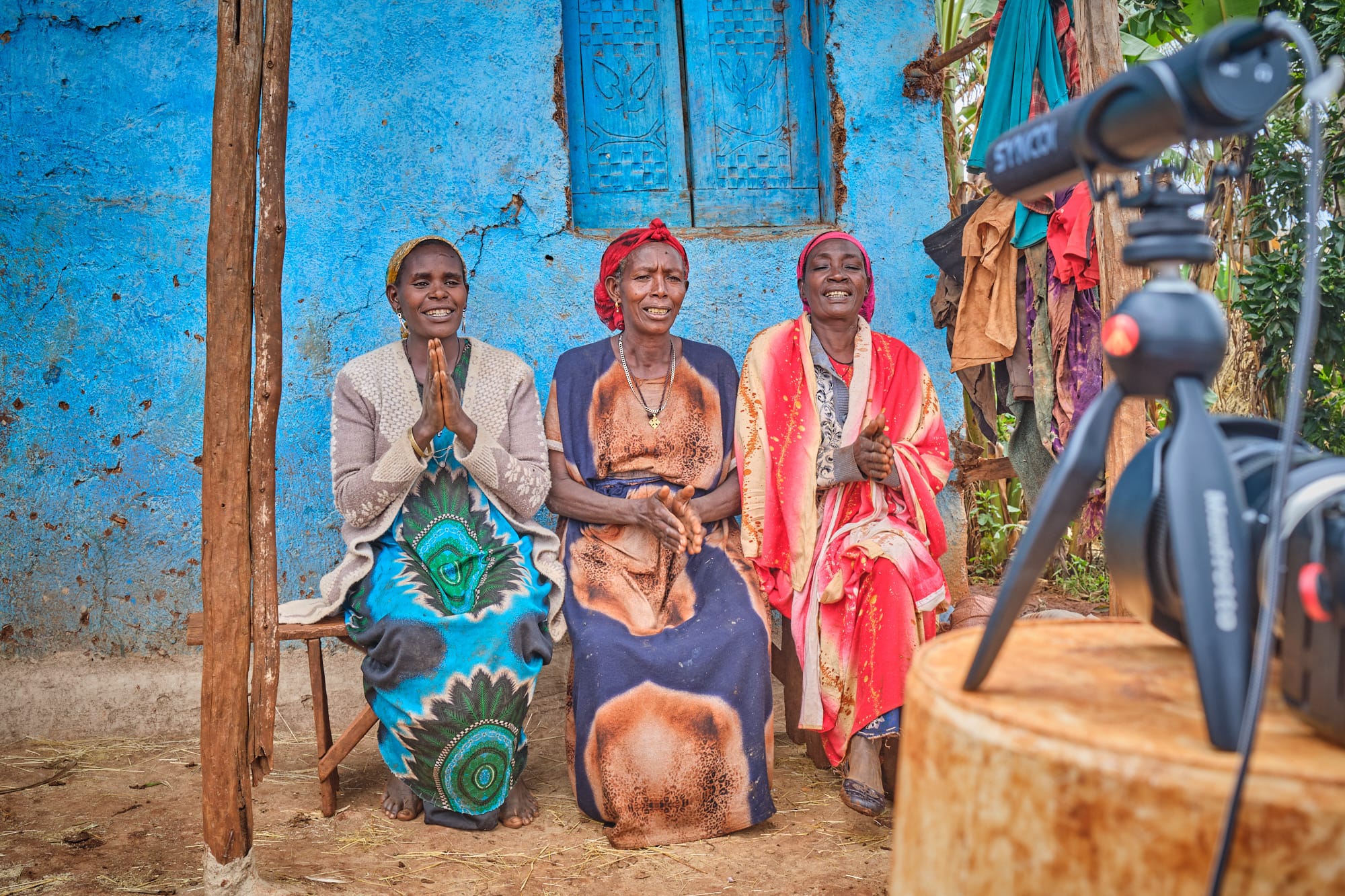
Perhaps this is why one of the strongest photographs from Giulia's work shows the recording equipment so prominently.
Three women sit against a blue wall. They appear animated, caught in a shared moment. In the foreground, the camera occupies a large portion of the frame.
In conventional documentary photography, the equipment is often hidden. We are encouraged to forget that somebody stood there making decisions: where to place the camera, when to press the shutter, what to include and what to exclude.
Here, the machinery remains visible. It is useful that it does. Because documentation is always a relationship. Someone asks. Someone answers. Someone records. Someone decides to be recorded. Someone translates. Someone corrects the translation. Someone remembers what another person has forgotten. Knowledge emerges between them.
This is also one reason the work of documenting linguistic diversity matters far beyond universities. The world is currently very good at producing information and remarkably poor at respecting the conditions under which knowledge is created.
We collect data, images, voices, locations, behaviors. We build increasingly powerful systems for storing and processing them. Yet accumulation is not the same as understanding.
Linguistic fieldwork, at its best, demands something slower. You cannot understand a language without people. And people cannot be reduced to data without losing precisely what made their knowledge worth recording.
For a magazine concerned with travel, this matters. Travel is often marketed through distance: how far we go, how unusual the destination is, how dramatically it differs from home.
But the more interesting measure may be attention. Did we learn enough to recognize that the place had meanings before we arrived? Did we understand that people were not waiting to become characters in our journey? Did we notice that the names they give things may reveal relationships invisible to us?
A traveler can cross a continent without encountering much beyond themselves. Someone else can sit beneath a tree for an afternoon and discover how little they know.
From behind the camera to in front of it
There is another Giulia in the story. In Addis Ababa, she has also stood on the other side of Claudio Maria Lerario's camera, appearing as a model for AFAR. Those photographs will accompany this article in a short video slideshow.
The reversal is small but revealing. The photographer becomes the photographed. The person accustomed to constructing the frame enters it.
Giulia and Claudio are also co-authors of the book and documentary Travel with Afar, a project in which travel itself becomes part of the inquiry: not simply movement through geographical space, but a way of approaching people, materials, places, and the things we decide to carry between them.
There is a risk whenever a fashion company enters stories like these. Culture can quickly become scenery. People become atmosphere. A distant place becomes useful because it makes an object appear more interesting.
The more demanding possibility is the opposite. The object becomes an invitation to ask where we are, whose world we have entered, and what responsibilities come with being there. That is the territory where Giulia's many roles begin to make sense together.
Photographer. Linguist. Researcher. Traveler. Occasionally, model. None requires the others to disappear. What joins them is not a profession but a disposition: the willingness to look closely before claiming to know.
What remains
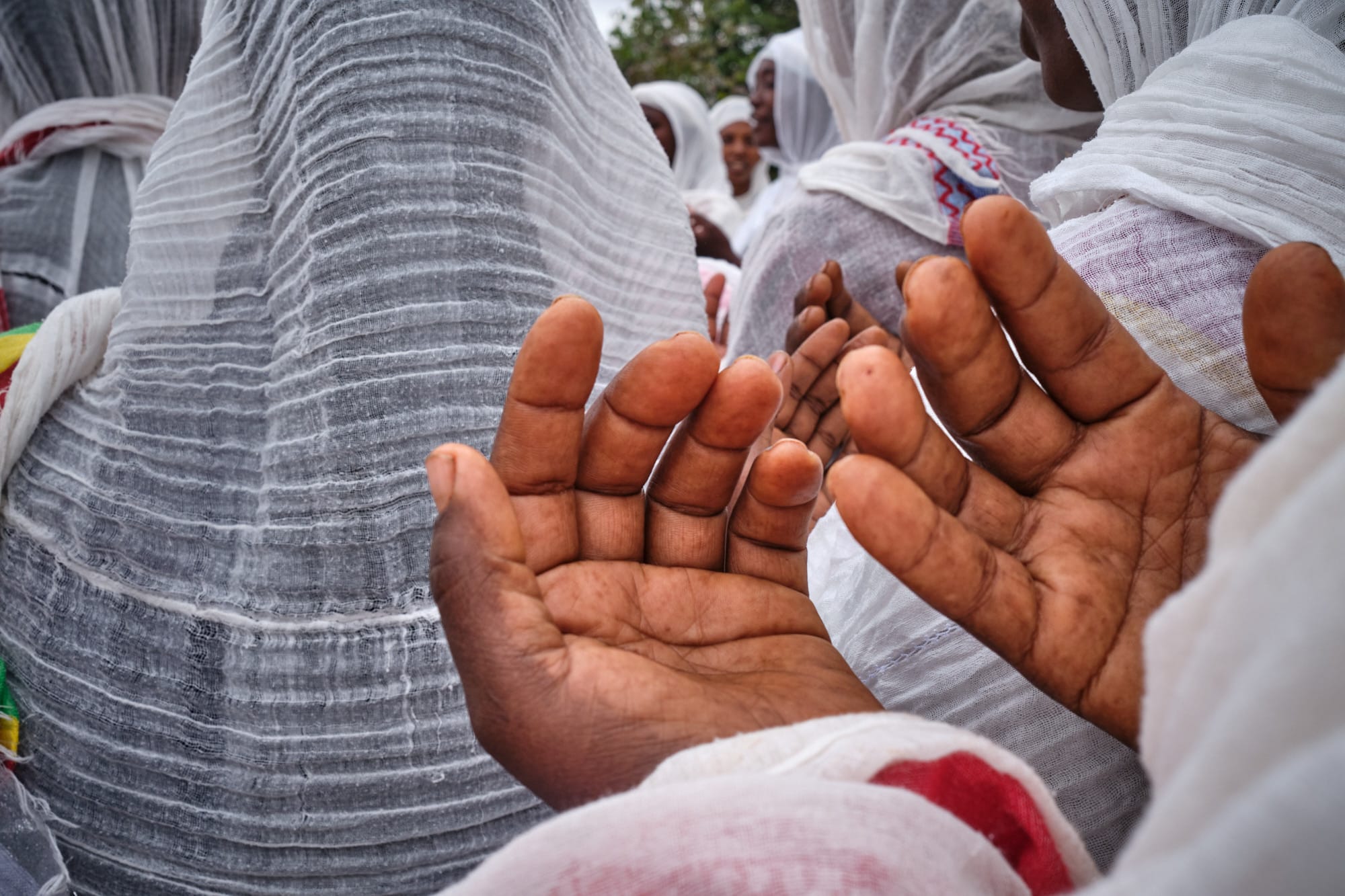
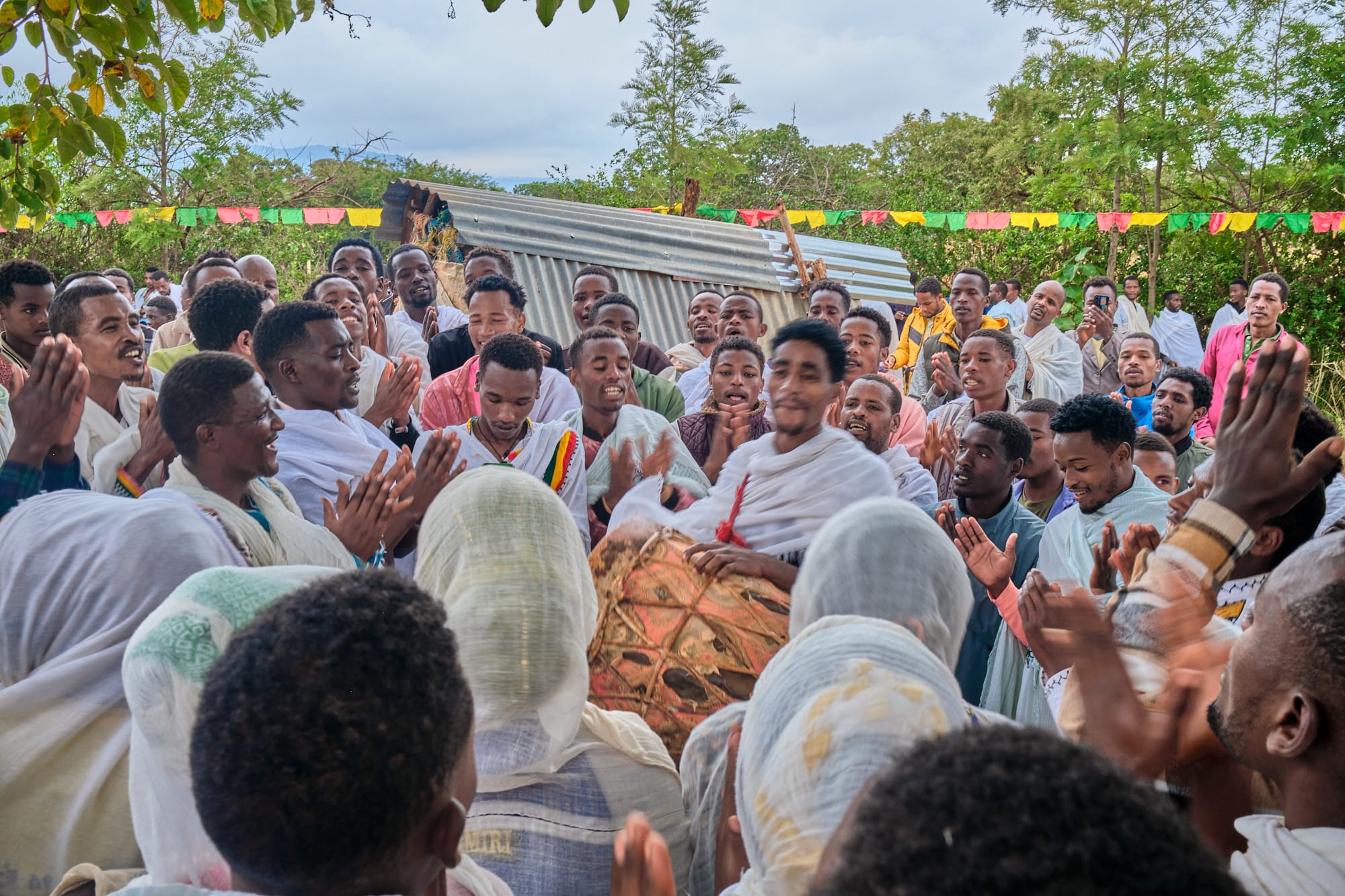
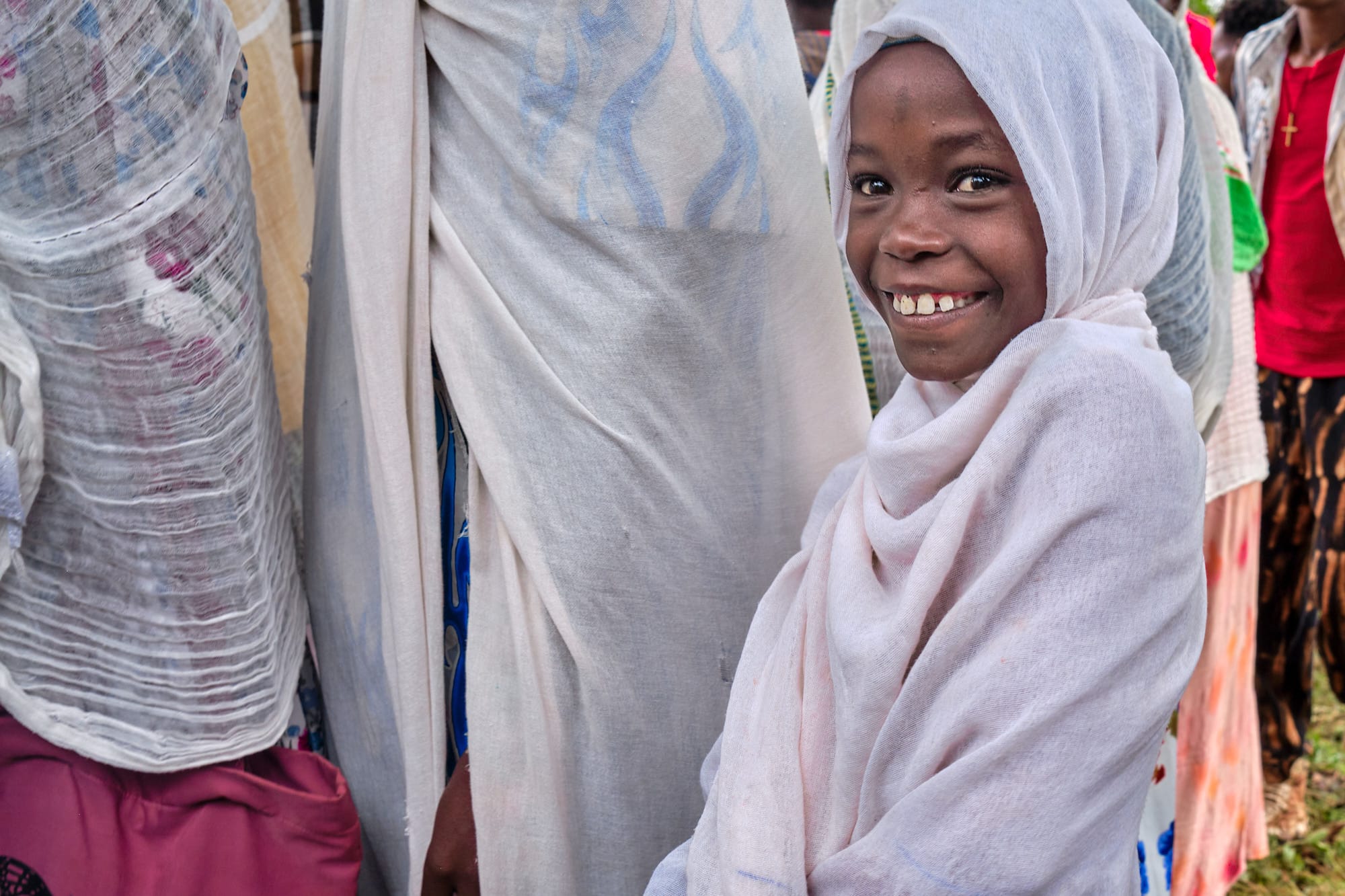
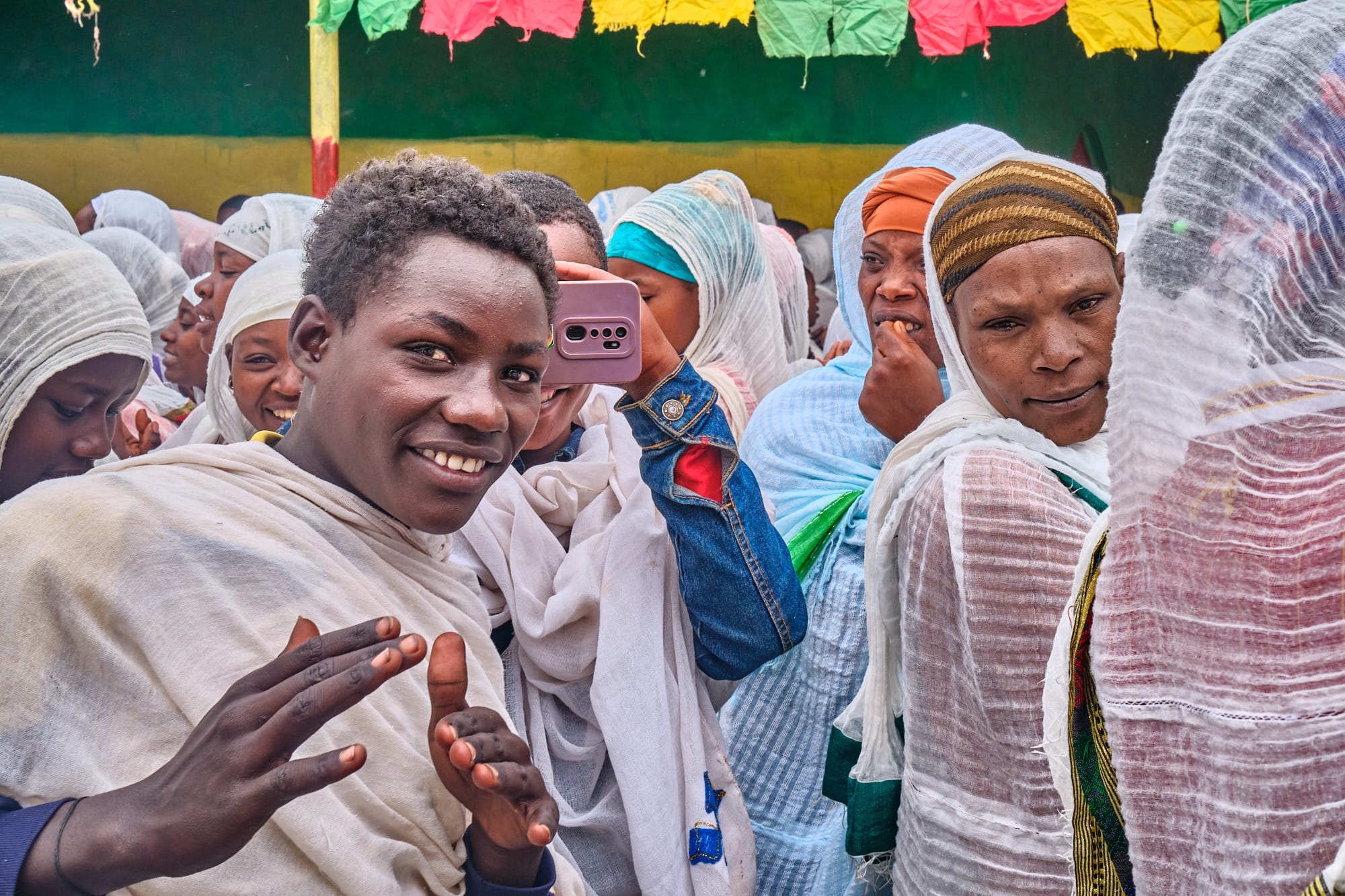
In the photographs of the religious gathering in southern Ethiopia, dozens of women stand together beneath trees. White cloth catches the light. Some sing. Some clap. One woman bends toward the ground while the people around her continue.
A still photograph cannot give us their voices. That absence is important. We can see mouths open in song, hands meeting, bodies responding to a rhythm. But whatever words are being spoken remain outside the image.
Photography reaches its border. Language begins there. Perhaps this is the most useful thing Giulia Zhang's work reminds us of. No single way of recording the world is enough.
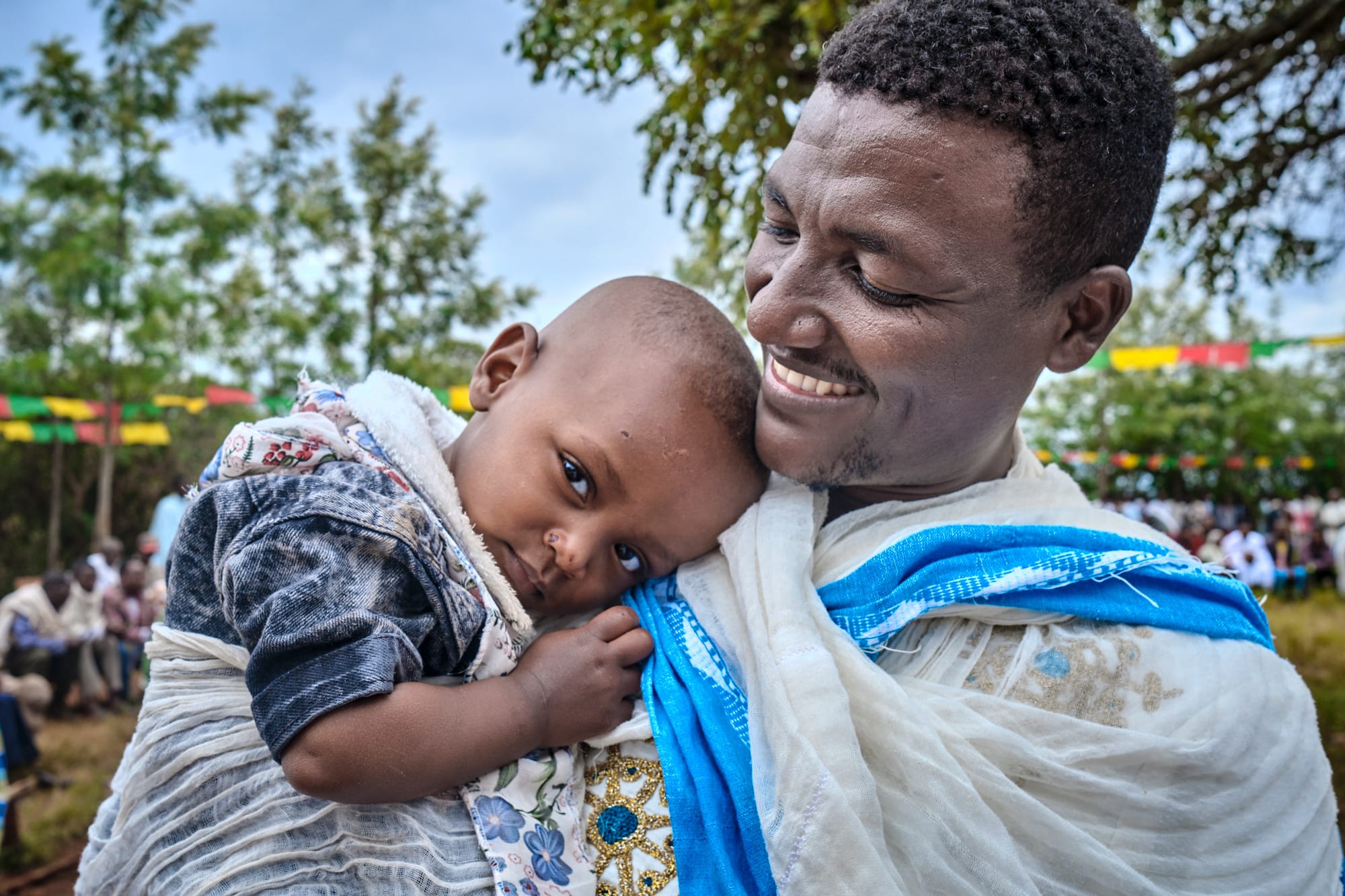
Images preserve something words cannot. Words carry meanings an image cannot reach. Memory keeps what neither manages to record. Communities decide what should be transmitted, changed, protected, shared, or kept for themselves.
The task is not to capture everything. It is to understand that everything we encounter belongs to a world larger than our encounter with it. A language matters because someone speaks it to a child. Because someone uses it to remember a dead relative. Because two people argue in it. Because a joke becomes funnier in it. Because a place has a name. Because a song requires those particular sounds.
And because every language tells us, simply by existing, that there has never been only one way to describe what it means to be here.
Giulia's camera records the people in front of her. Her linguistic work asks her to listen to them. The lesson for the rest of us may be simpler. Before deciding what a place means, learn to hear what it calls itself.


Member discussion