


The Moment an Image Appears
There is a particular moment in screen printing when the work becomes visible. A wooden frame rises from the fabric, separating a fine mesh from the surface beneath it, and an image appears: a pattern of leaves, a succession of lines, perhaps a design whose shape was difficult to imagine a few seconds earlier.
The movement is brief. Everything that makes it possible has taken considerably longer.
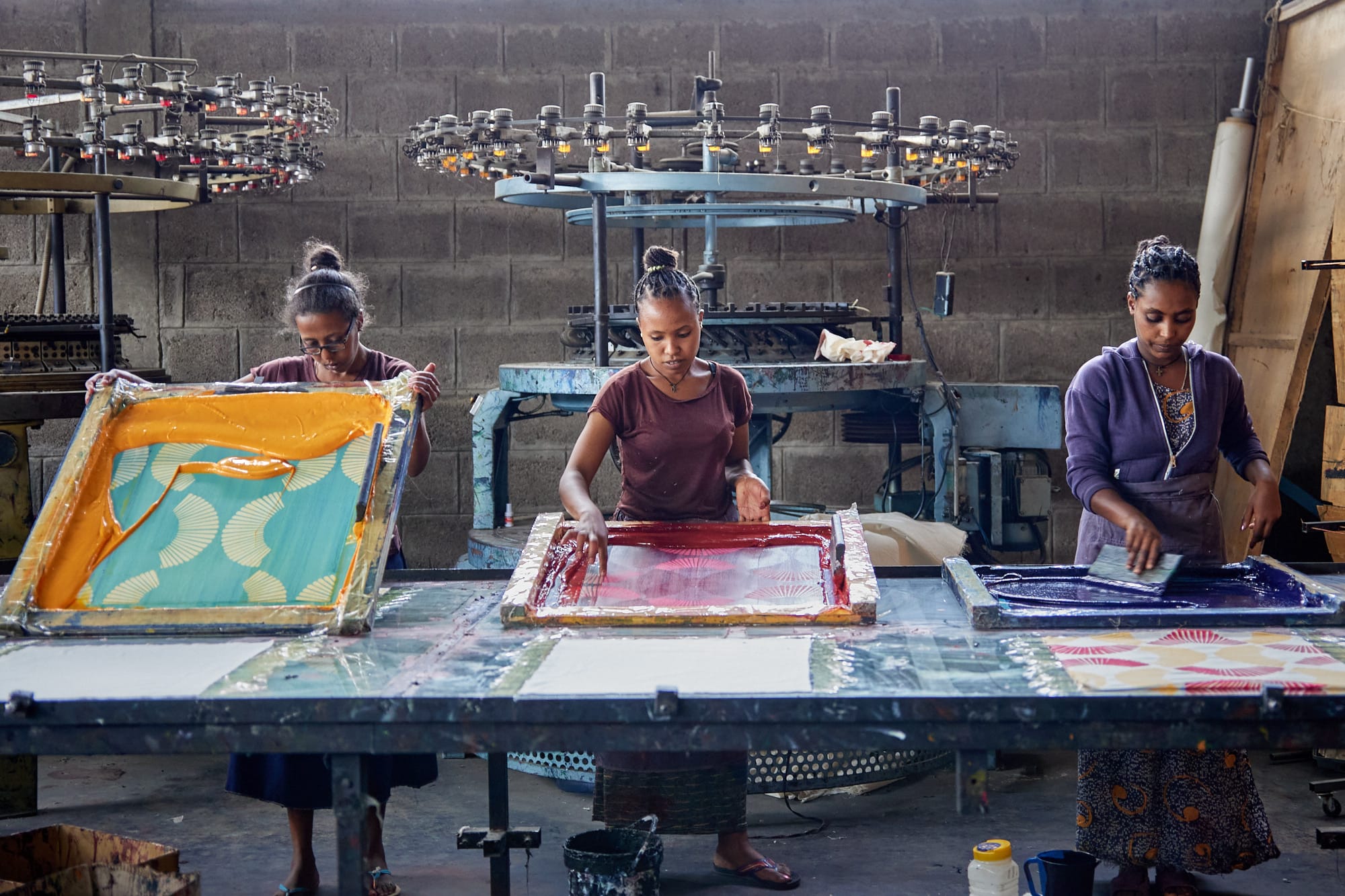
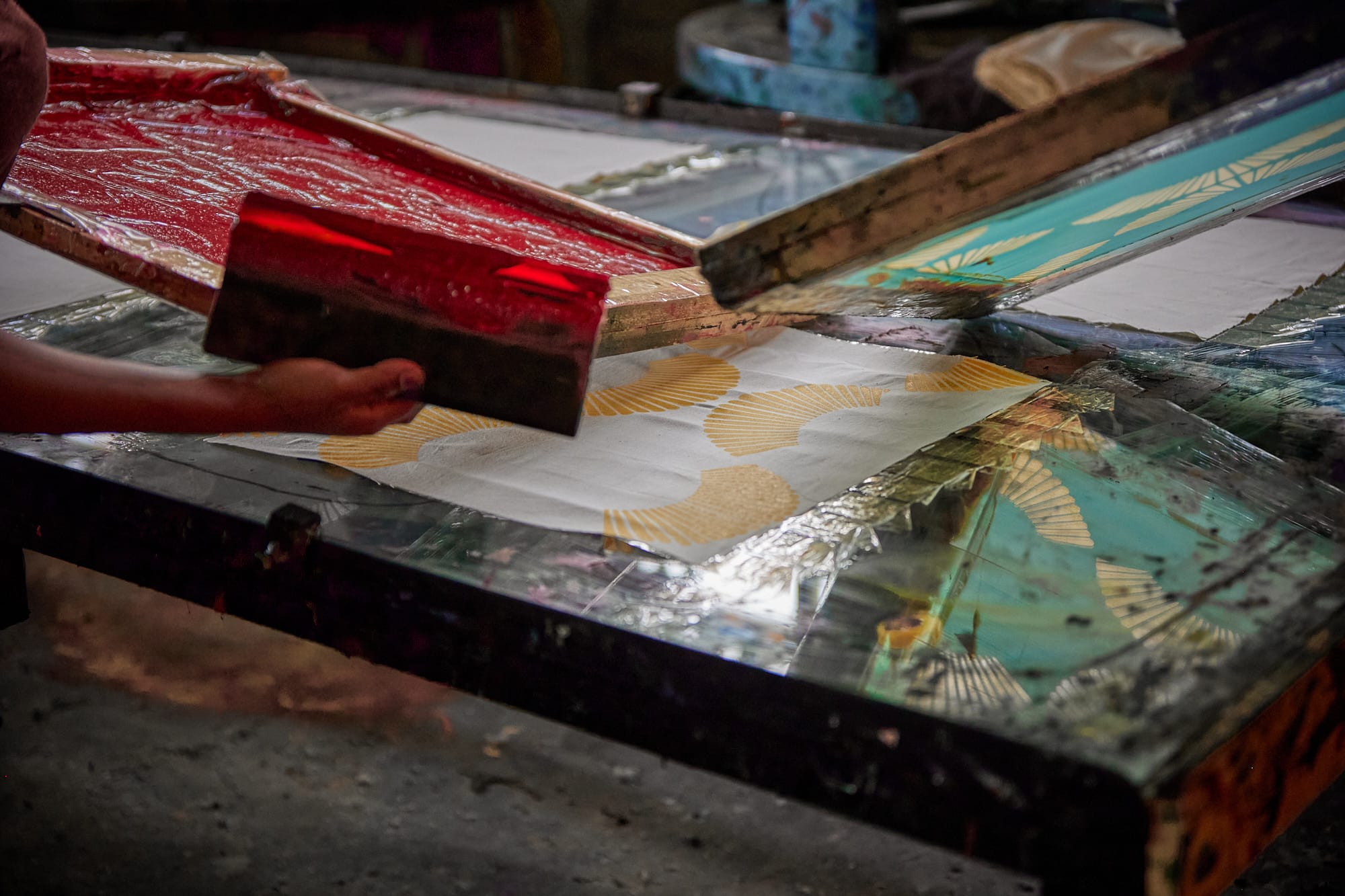
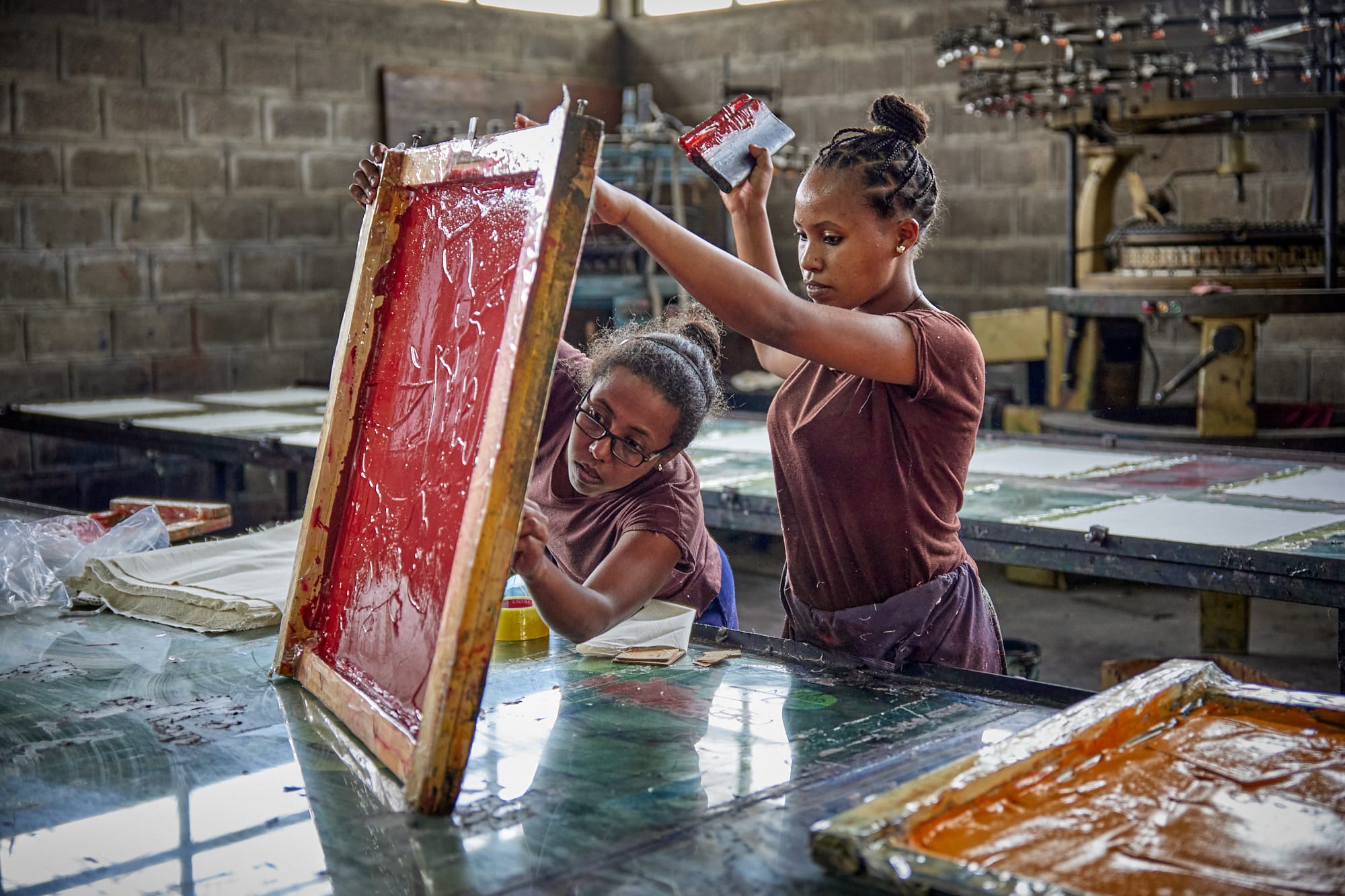
In the AFAR's textile workshop in Addis Ababa, Ethiopia, long printing tables stand beneath high windows. Wooden frames carry layers of ink in red, blue, orange, and green. Pieces of cotton lie ready for the next operation. Around them, people prepare screens, spread color, position fabric, inspect the results, and begin again.
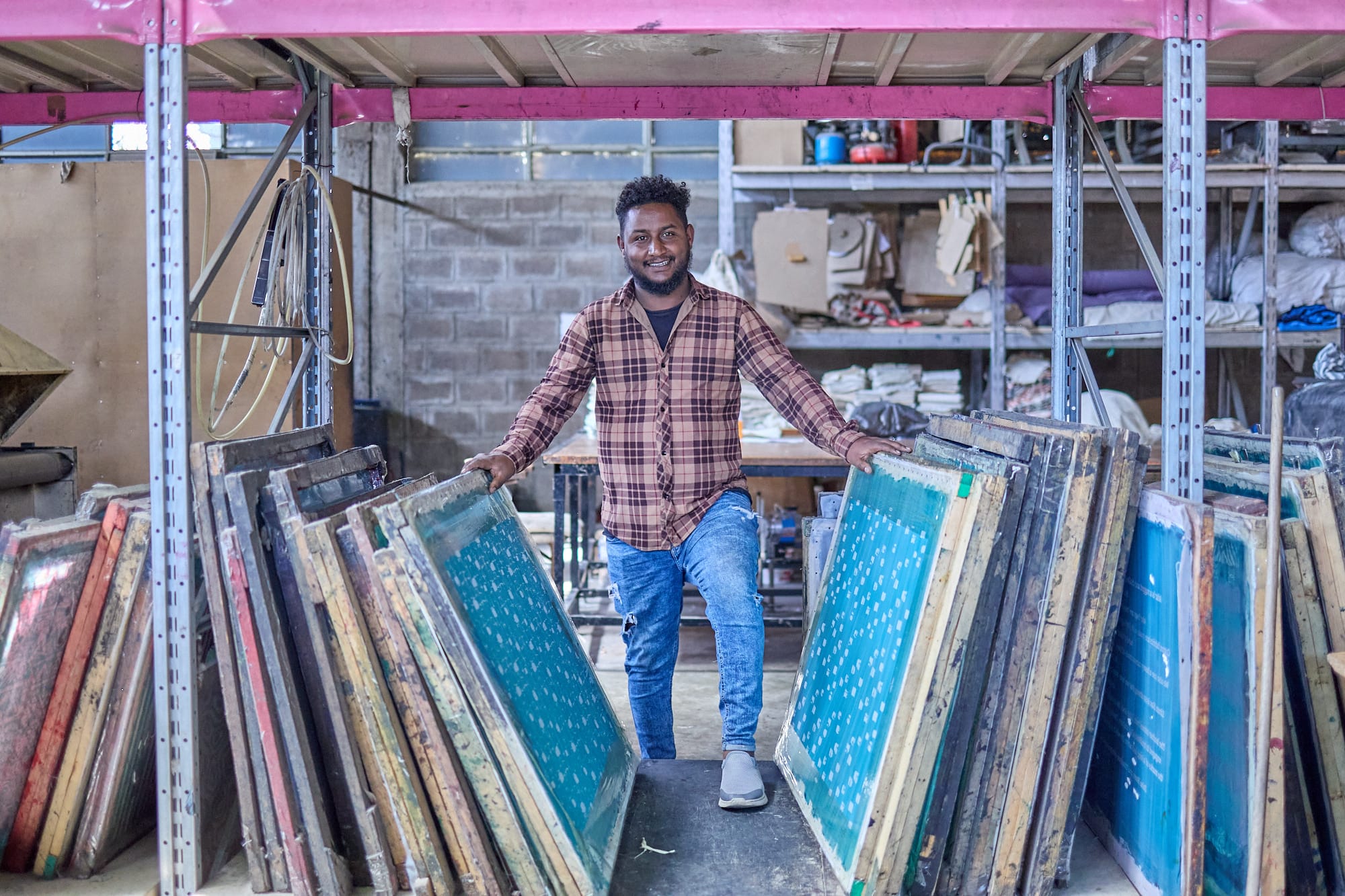
The workshop belongs to Village Industry, where AFAR produces its bags and accessories. Screen printing is one of the techniques used to give the cotton canvas its patterns. The photographs made here follow different stages of that work, from preparing the screens to inspecting the printed cloth.
At first glance, the principle seems almost elementary. A fine mesh is stretched tightly across a frame. Parts of that mesh are blocked, leaving open only the areas through which ink should pass.
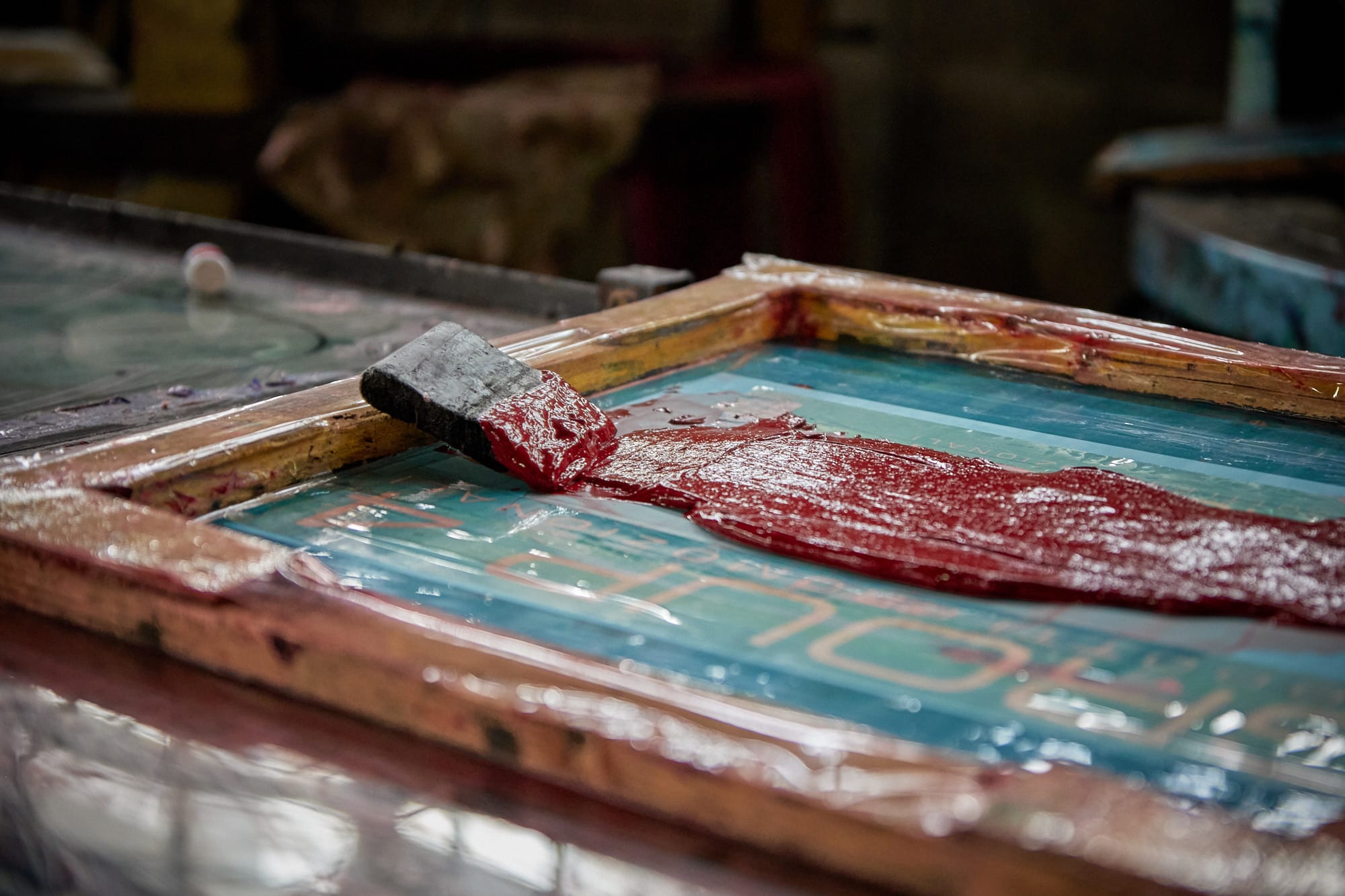
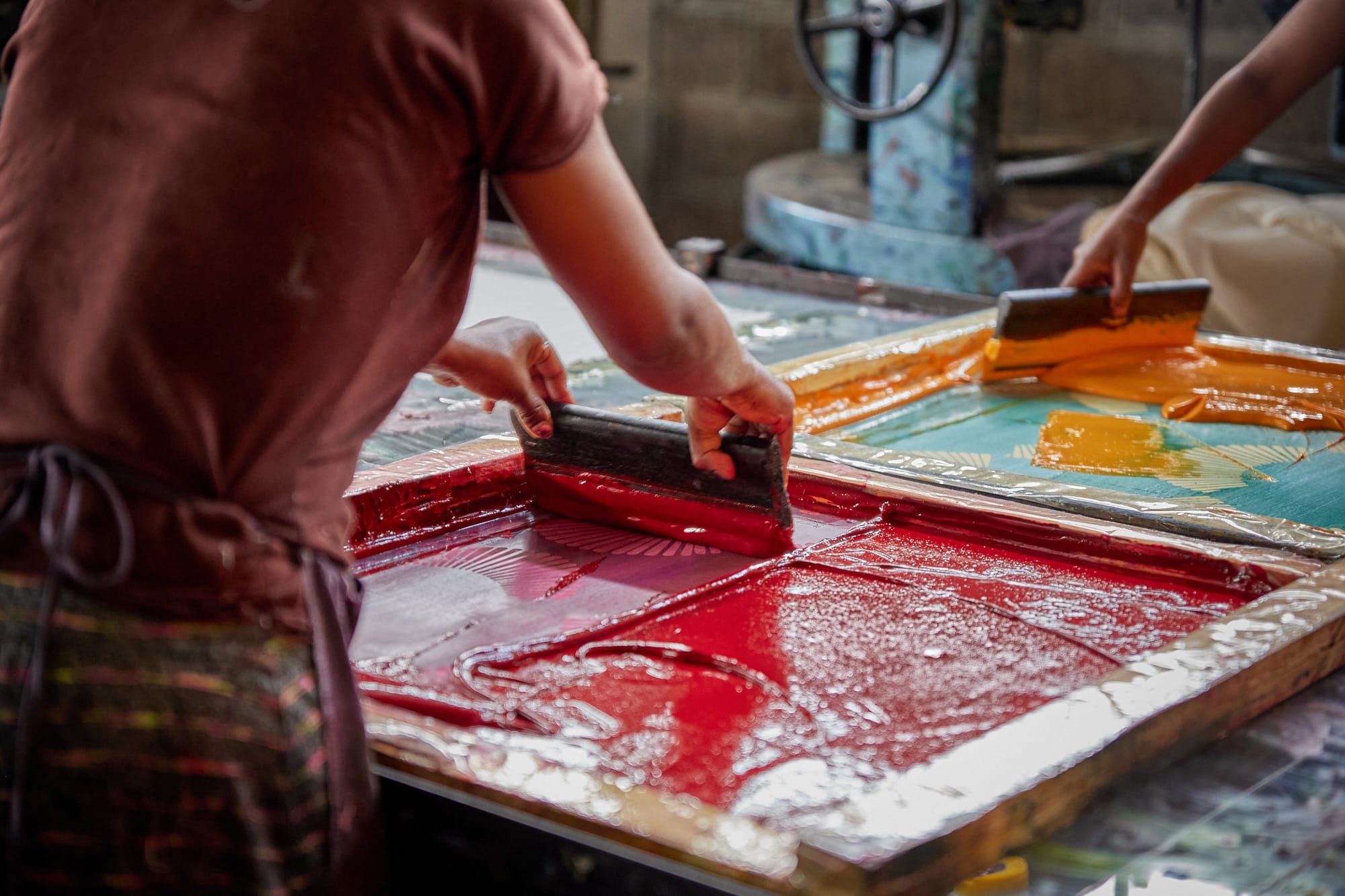
The frame is placed against a surface, ink is applied, and a rubber-edged blade — the squeegee — pushes the color through the exposed mesh. The image is formed by what passes through and what remains blocked.
The process can be repeated many times. Different screens can introduce additional colors, each positioned carefully in relation to the previous impression.
Paper, cotton, wood, glass, ceramics, and certain metals can all receive printed images, provided the appropriate inks and methods are used. Yet the apparent simplicity conceals a considerable amount of knowledge.
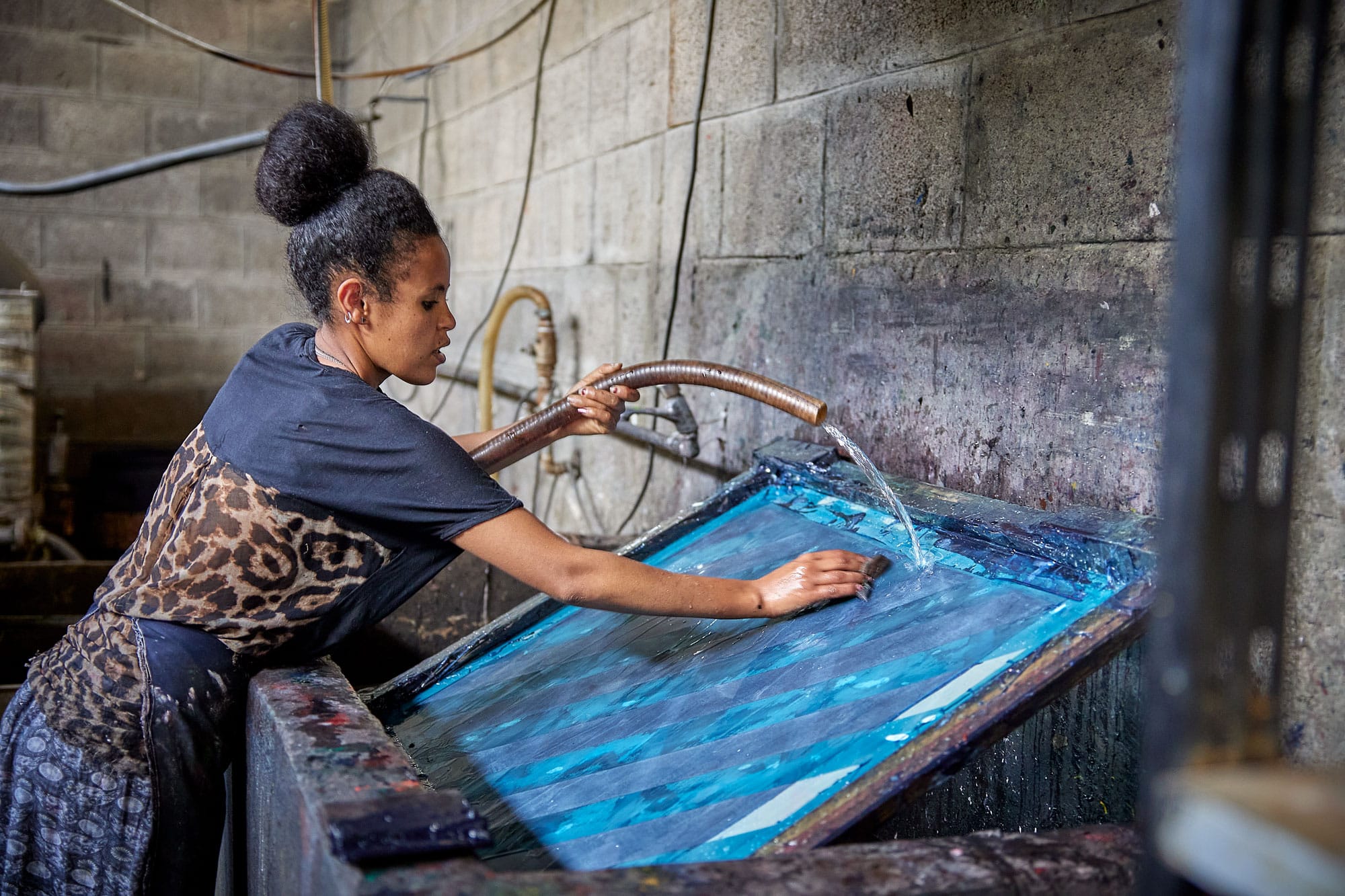
Ink must have the right consistency. The screen must remain clean and properly tensioned. Pressure and movement influence how evenly color reaches the surface. When several colors are involved, even a small error in alignment may change the composition. Drying and curing must suit the ink and the material beneath it.
These are technical questions, but their answers are acquired through practice as much as instruction. A worker learns to recognize when a screen is ready, how the ink behaves, how much pressure is necessary, and when the result requires correction.
The equipment has changed over time. Many workshops now use automated machinery, synthetic meshes, and photographic processes to prepare their screens. The central operation, however, remains recognizable. A controlled passage of ink through a patterned surface.
It is a deceptively modest invention, one that has traveled through centuries of textile production, commercial advertising, political struggle, fine art, and industrial technology. Its history begins long before the modern printing workshop.
Before the Screen
There is no single moment to which the entire history of screen printing can be traced.
The technique belongs to a much older family of practices developed to repeat images and decorative patterns. Stencils, in particular, provided a practical solution to a recurring problem: how to transfer the same design onto different surfaces without drawing it again each time.
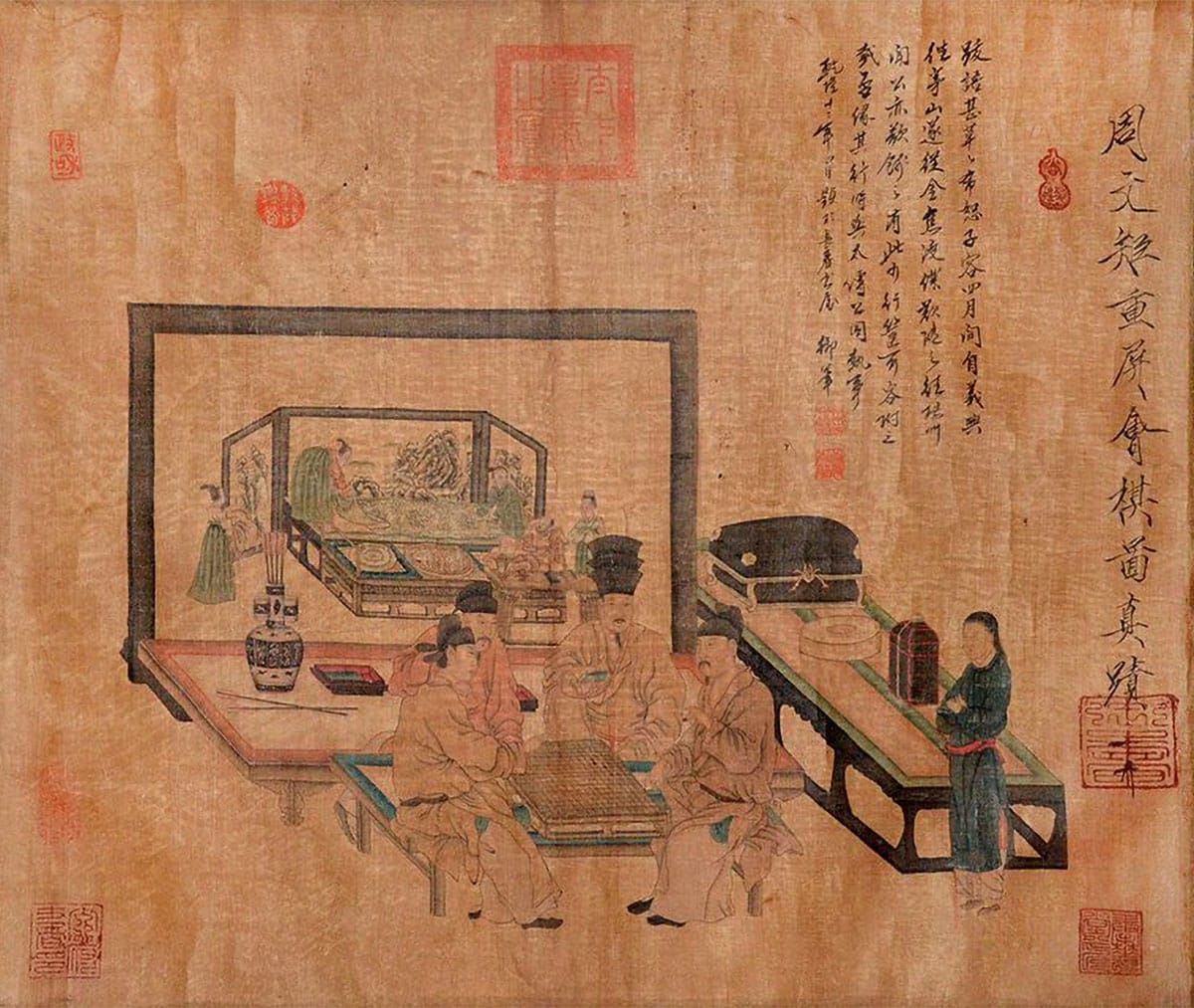
Various forms of stencil printing and textile decoration developed in Asia over many centuries.
China has an important place in accounts of these early practices, while Japan refined several traditions in which the preparation of the stencil became an art in itself. One of the most remarkable is katazome, a Japanese method of stencil dyeing.

In traditional katazome, artisans cut elaborate patterns into specially prepared paper, often strengthened with fine threads. A resist paste, commonly made with rice flour, is applied through the stencil onto cloth. When the material is subsequently dyed and the paste removed, the protected areas retain their original color.
The method requires patient preparation and a precise understanding of both material and design. A pattern must survive the cutting process while remaining sufficiently open to transfer its details.
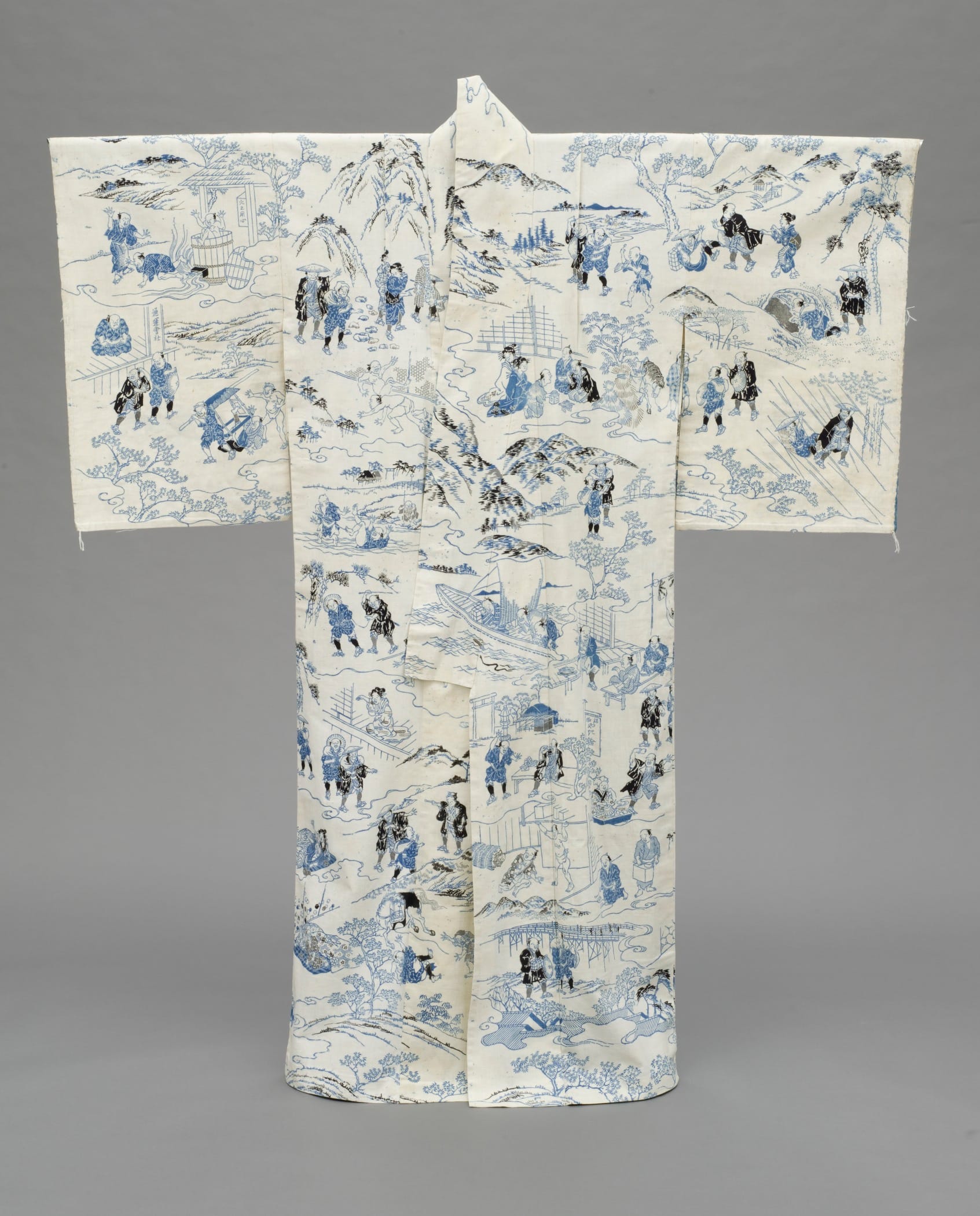
The surviving examples include complex geometric compositions, flowers, plants, and finely balanced arrangements whose visual sophistication can be appreciated independently of their practical purpose.
Katazome and modern screen printing are distinct techniques, and their histories should not be confused. They belong, however, to a wider tradition of transferring images by controlling where color can reach a surface.
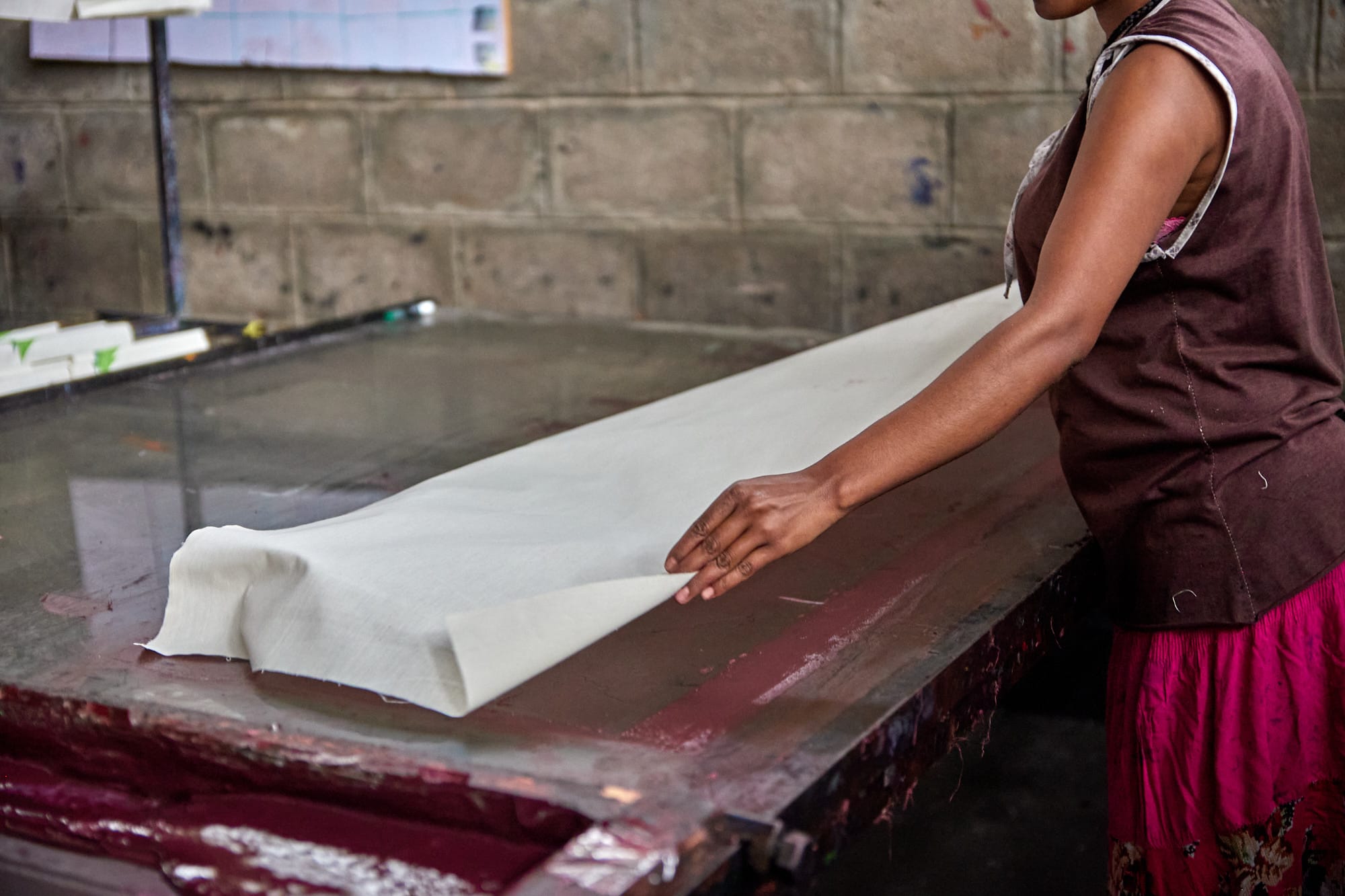
What gradually emerged was a different way of thinking about reproduction. An image could be prepared once and transferred repeatedly. Its shape could remain recognizable while its colors, materials, and uses changed.
For textile makers, this opened possibilities that extended far beyond decoration. Repeated patterns became part of clothing, domestic furnishings, ceremonial objects, and the visual identity of communities.
The development of modern screen printing accelerated as new meshes, inks, and stencil-making methods became available in Europe and North America.
In 1907, the English printer Samuel Simon obtained a patent associated with a form of screen printing using a fabric mesh. His work belongs to the early commercial development of the modern process, although it would be misleading to describe him as the inventor of the entire technique.

During the following decades, improvements in photographic methods made it possible to transfer increasingly detailed designs onto prepared screens. Light-sensitive materials allowed printers to create precise stencils from artwork and photographic images, substantially expanding the technique's possibilities.
Commercial workshops recognized its value. Screen printing could produce large, even areas of color on materials that were difficult to handle with other printing methods. It was useful for signs, posters, wallpaper, textiles, and advertising displays. Equipment could be adapted to different dimensions and production requirements.
As its use expanded, screen printing acquired an industrial identity. It became associated with commercial production, repetitive labor, and the manufacture of objects intended for everyday use.
But in the twentieth century, artists began to reconsider the possibilities of a method already familiar to printers and factory workers. The screen was about to enter the gallery.
When Reproduction Became Art
During the Great Depression in the United States, the federal government established programs to provide employment for artists, designers, and other cultural workers.
Among them was the Federal Art Project, created in 1935 under the Works Progress Administration. It supported the production of murals, paintings, prints, posters, and educational materials, allowing artists to continue working at a time when economic conditions had severely restricted their opportunities. Screen printing found an important place in this environment.
Anthony Velonis, who had experience in commercial printing, recognized the artistic potential of the method. In 1938, he helped establish a Silk Screen Unit within the Federal Art Project in New York.
The process offered artists considerable freedom. Images could be composed through successive layers of color; different screens could introduce changes in texture, tone, and form. Editions could be produced without the expensive equipment required by certain other printing methods.
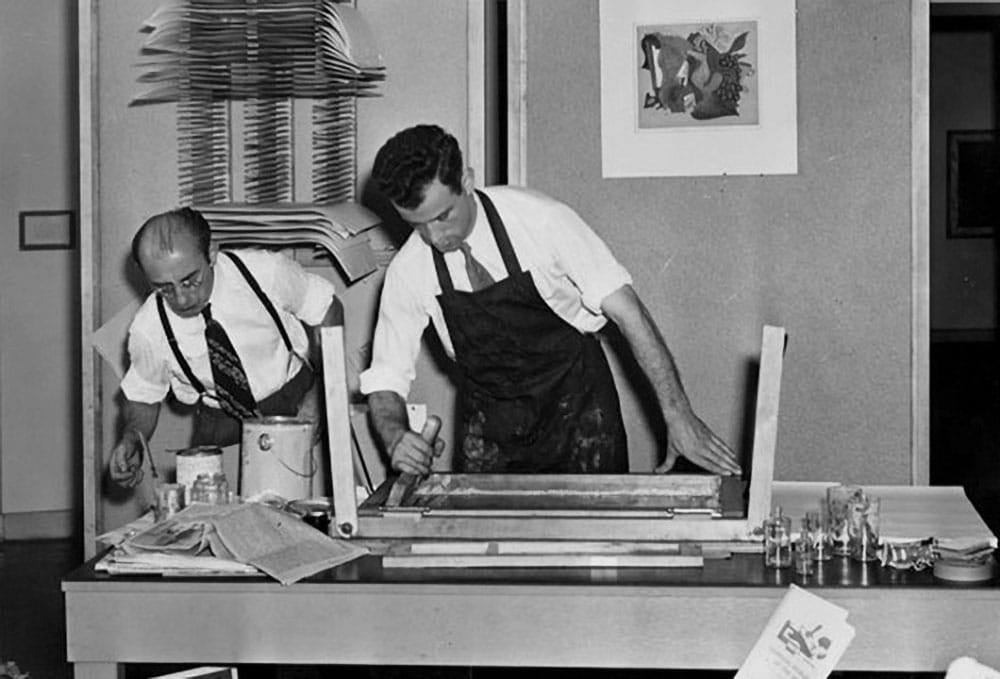
By 1940, artists associated with the technique were using the term serigraphy, derived from words referring to silk and writing or drawing. The name helped distinguish screen prints created as works of art from their commercial counterparts.
The distinction was cultural rather than technical. The underlying process remained closely related to the one used in factories and advertising workshops.
This relationship between artistic creation and commercial reproduction became central to the development of Pop art.
In the early 1960s, Andy Warhol began using screen printing to reproduce images drawn from American consumer culture and mass media. His portraits of Marilyn Monroe, images of Elvis Presley, and other works explored the repetition of familiar faces and visual symbols.
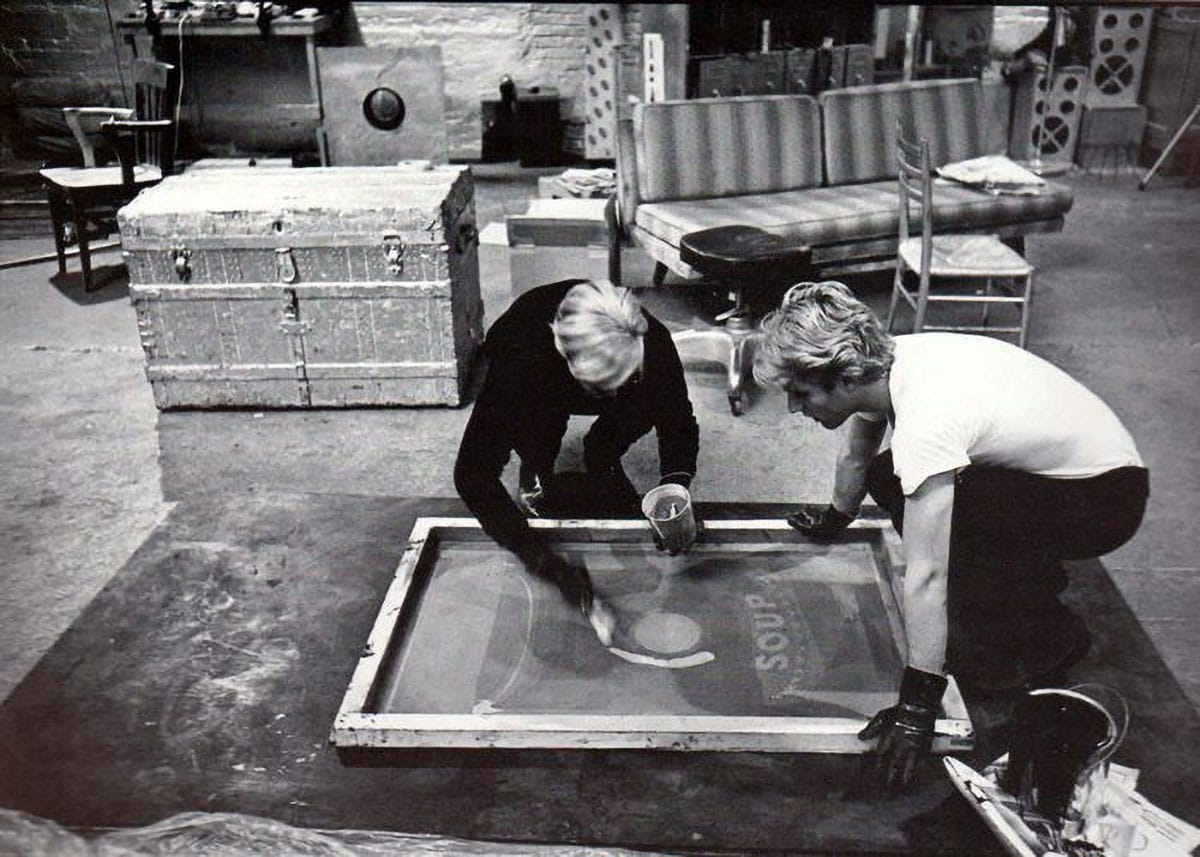
Warhol understood something important about mechanically reproduced images: repetition does not necessarily make every impression identical.
Colors vary. Registration shifts. Ink accumulates unevenly. Certain details become clearer, while others disappear. These variations are visible in many of his works, where the same photographic source returns in different arrangements and combinations.
Screen printing allowed Warhol to examine the nature of celebrity and the production of public images through the very methods associated with commercial reproduction. Yet the history of artistic screen printing extends well beyond Warhol.
Robert Rauschenberg explored the relationship between photographic imagery and painting, while Corita Kent — an American artist, educator, and former Catholic nun — developed a remarkable body of screen prints combining typography, advertising language, poetry, spirituality, and social commentary.
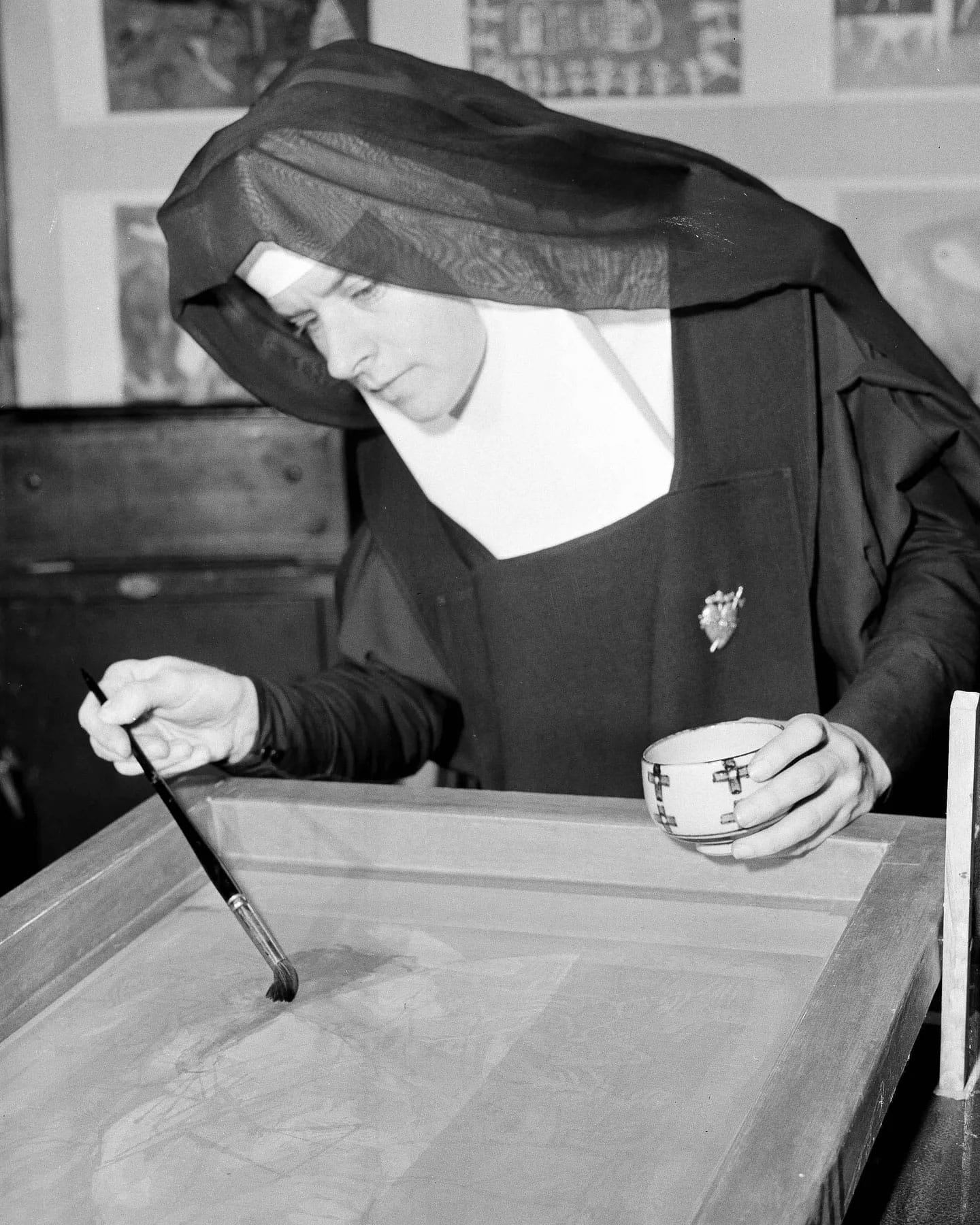
Kent was particularly interested in the accessibility of printed art. An edition could reach many people, including those who would never be able to purchase a unique painting.
In her work, familiar words and commercial graphic forms acquired unexpected meanings. Images and phrases encountered in supermarkets or advertisements could become invitations to reconsider everyday life, social justice, and human relationships.
This possibility remains one of the most significant contributions of printmaking to modern visual culture.
A work can retain the decisions, imagination, and intentions of its maker while existing in multiple copies. The original is no longer necessarily a single physical object.
And once an image can be reproduced economically, another question arises: who will use that possibility, and for what purpose? Some of the most consequential answers appeared outside galleries and museums.
Images in the Streets
Paris, May 1968. During the student protests and workers' strikes that transformed the city, an occupied art school became an important center of political image-making.
At the École des Beaux-Arts, students, artists, and workers participated in the Atelier Populaire, a collective workshop producing posters intended for the streets, factories, and occupied institutions.
The posters were direct, economical, and often visually striking. Many used limited colors, bold silhouettes, and short phrases. Their effectiveness depended on immediate recognition.
Lithography and other techniques were used, but screen printing became particularly valuable because it allowed large quantities of posters to be produced quickly.
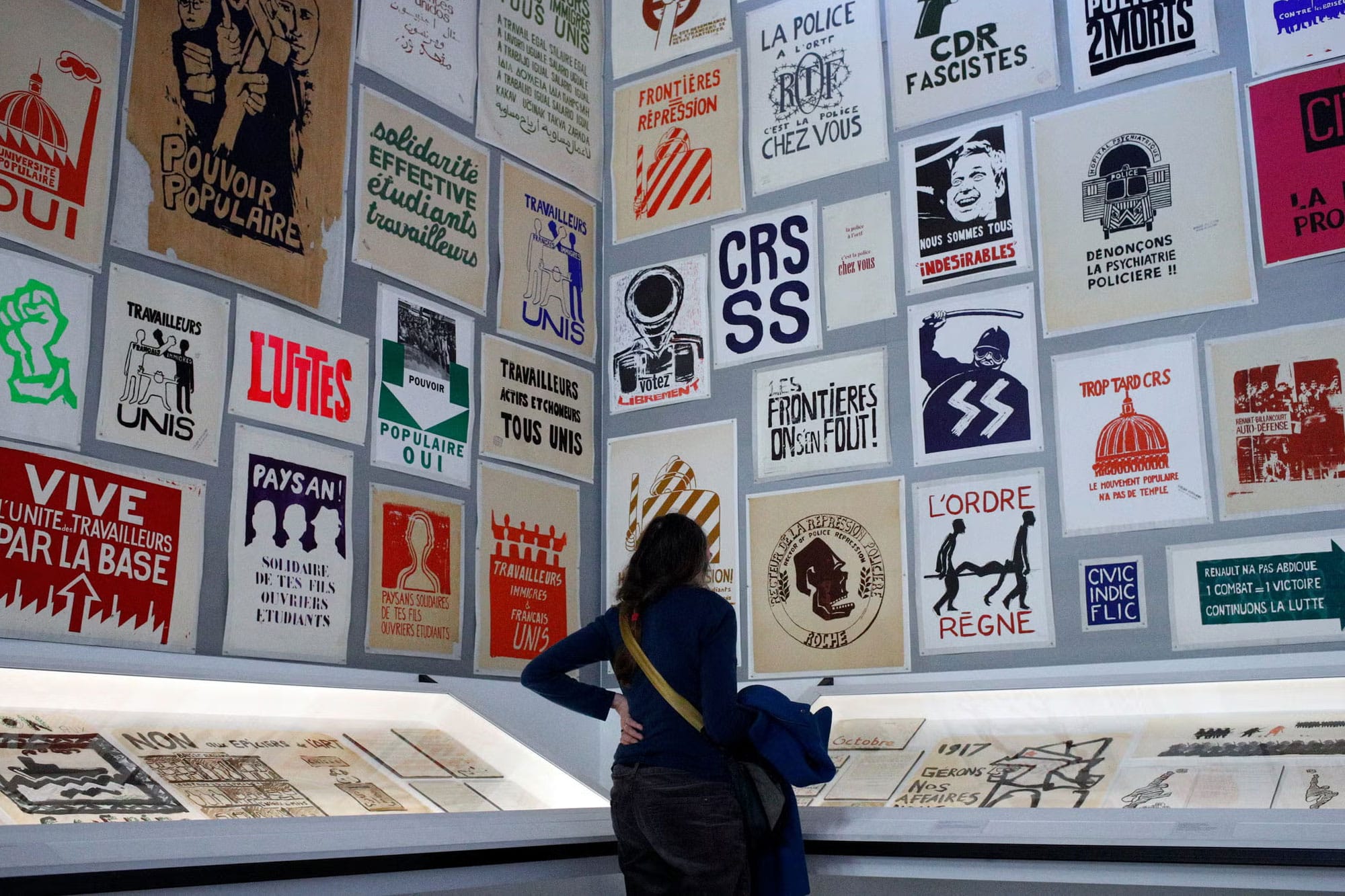
The workshop's organization was collective. Designs were discussed, prepared, printed, and distributed in connection with the political movement taking place outside its walls.
The posters were intended to circulate. Their destinations were public spaces where people exchanged information, expressed disagreement, debated political decisions, and organized collective action. The printing process had become part of political participation.
Across the Atlantic, related developments were taking place in the United States. During the civil rights era and the social movements of the 1960s and 1970s, screen printing provided artists and community organizations with a relatively accessible means of creating and distributing visual messages.
It became especially important within the Chicano art movement, where artists used posters to address labor rights, education, cultural identity, political representation, and the experiences of Mexican American communities.
Screen printing suited the circumstances in which many of these works were produced. A limited budget could support a relatively large edition. Posters could be distributed through neighborhoods, community centers, demonstrations, and cultural events.
Their artistic value was inseparable from their intended audiences. Some communicated urgent political demands. Others celebrated cultural traditions, reclaimed histories, or announced performances and gatherings.
Many combined graphic influences from different artistic traditions, creating a visual language rooted in the experiences and aspirations of the communities producing them.
The same technical process could therefore serve very different purposes. A commercial advertisement could encourage consumption. A political poster could challenge the economic or social structures behind that consumption. An artist's print could question the images used by both.
The tools themselves offered no guarantee of political meaning. What mattered was who had access to them, how they were used, and the relationships through which the resulting images entered public life.
The screen made reproduction possible. People determined what was worth reproducing. That history gives the technique a particular significance today.
In a world where images circulate almost instantaneously through digital networks, the printed poster remains a physical object. It can be held, carried, pasted onto a wall, preserved, damaged, or removed.
Its material existence creates a different relationship with the people who encounter it. A printed image occupies space. And the work required to produce it belongs to a history of human labor as well as artistic expression.
The Knowledge of Hands
Back in Addis Ababa, the scale of the work is considerably smaller than the political movements and artistic experiments through which screen printing became internationally known.
The purpose is different, too. Here, the objective is to produce patterned textiles that will eventually become objects designed for everyday use and travel.
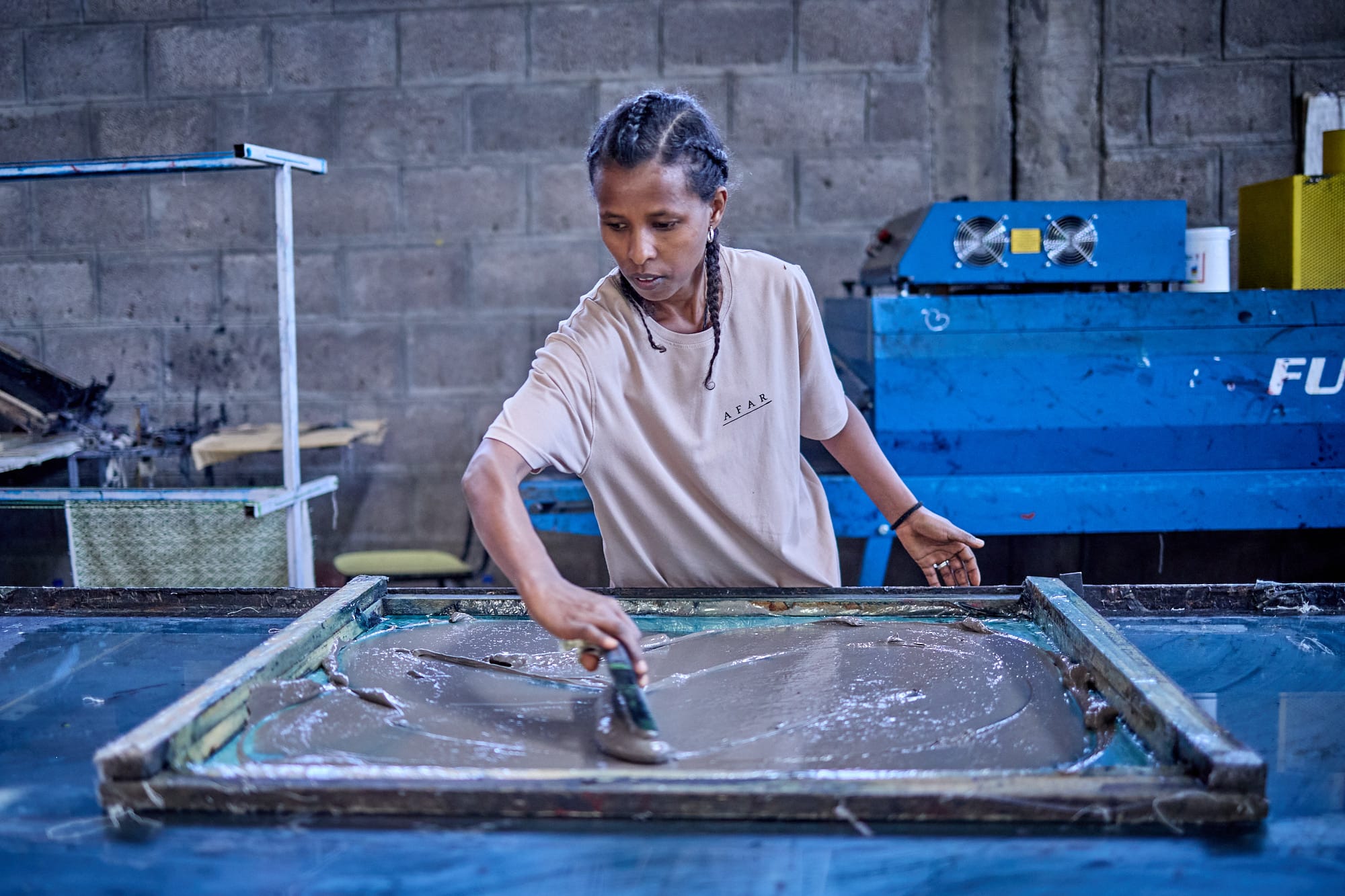
The process begins with cotton canvas and a design prepared for printing. At Village Industry, AFAR uses hand-operated screen-printing techniques and water-based inks to create patterns for some of its fabrics.
The company also works with natural dyeing, a separate process through which color is introduced into the textile itself. Dyeing and printing can contribute to the appearance of a fabric, but they involve different operations and materials.
In the photographs, the various stages of screen printing reveal an organization built around specific tasks.
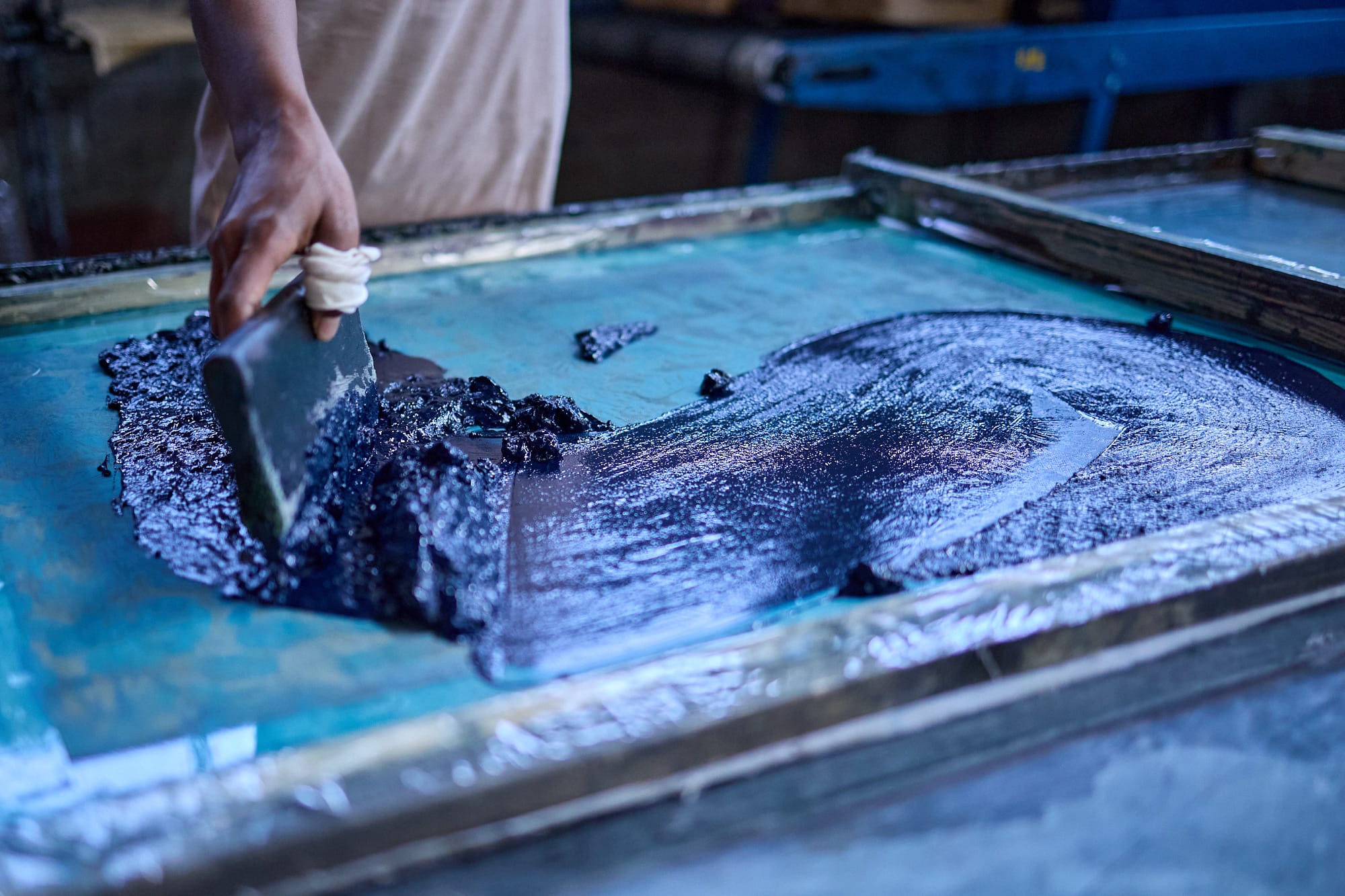
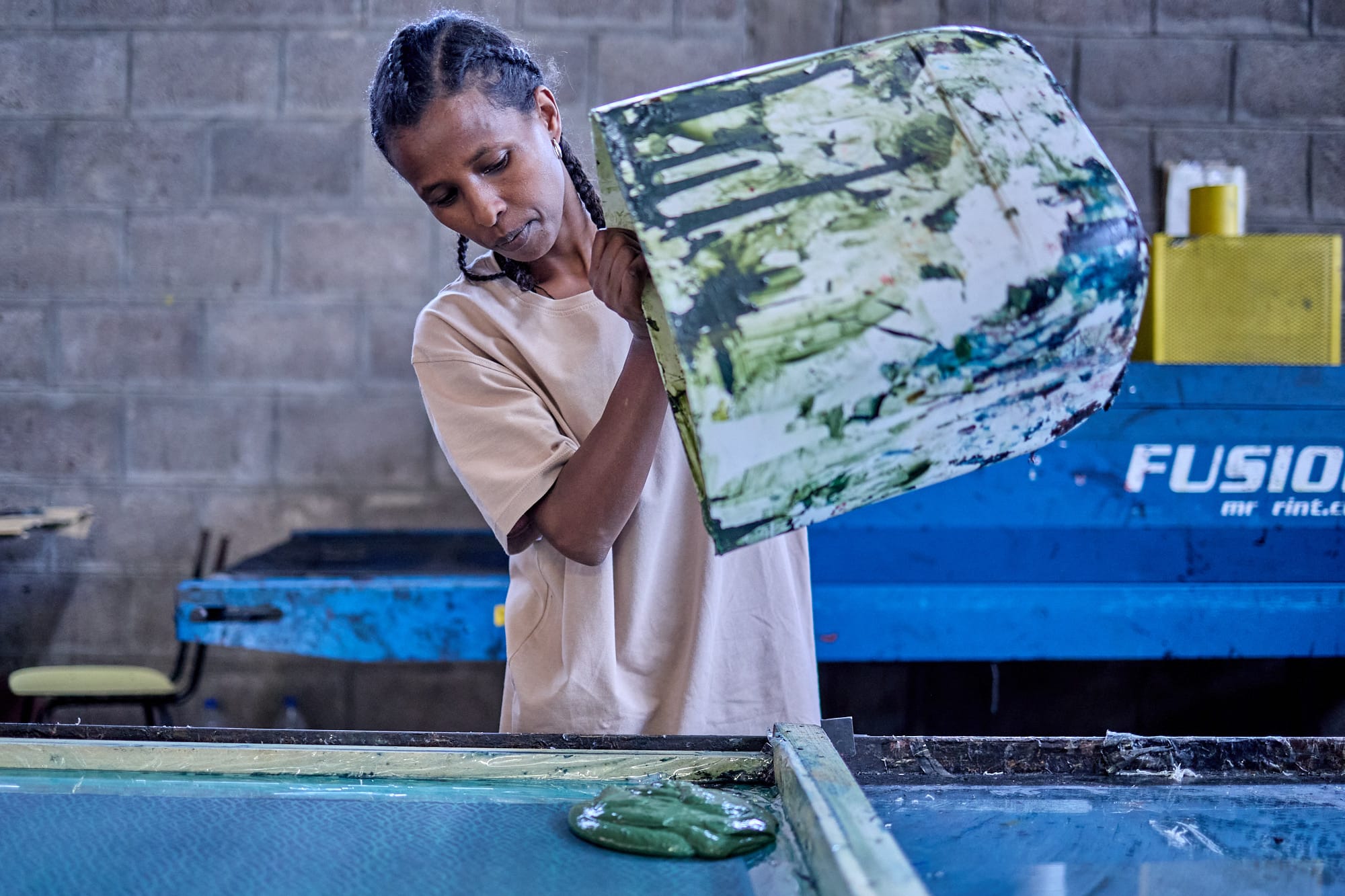
One worker prepares the ink. Another positions a screen. Others move fabric, clean equipment, inspect the printed results, or arrange the material for subsequent operations.
The gestures vary, yet they all depend on a practical understanding of the process. There is a particular physical intelligence involved in this kind of work.
A squeegee must be held firmly enough to distribute the ink while allowing it to move across the mesh. The frame must be positioned accurately. Printed fabric must be handled with attention to the condition of the ink.
Such skills are learned and refined through repetition. But repetition should not be confused with the absence of judgment.
The worker is continually responding to the material: to the resistance of the ink, the position of the cloth, the cleanliness of the screen, and the quality of the impression.
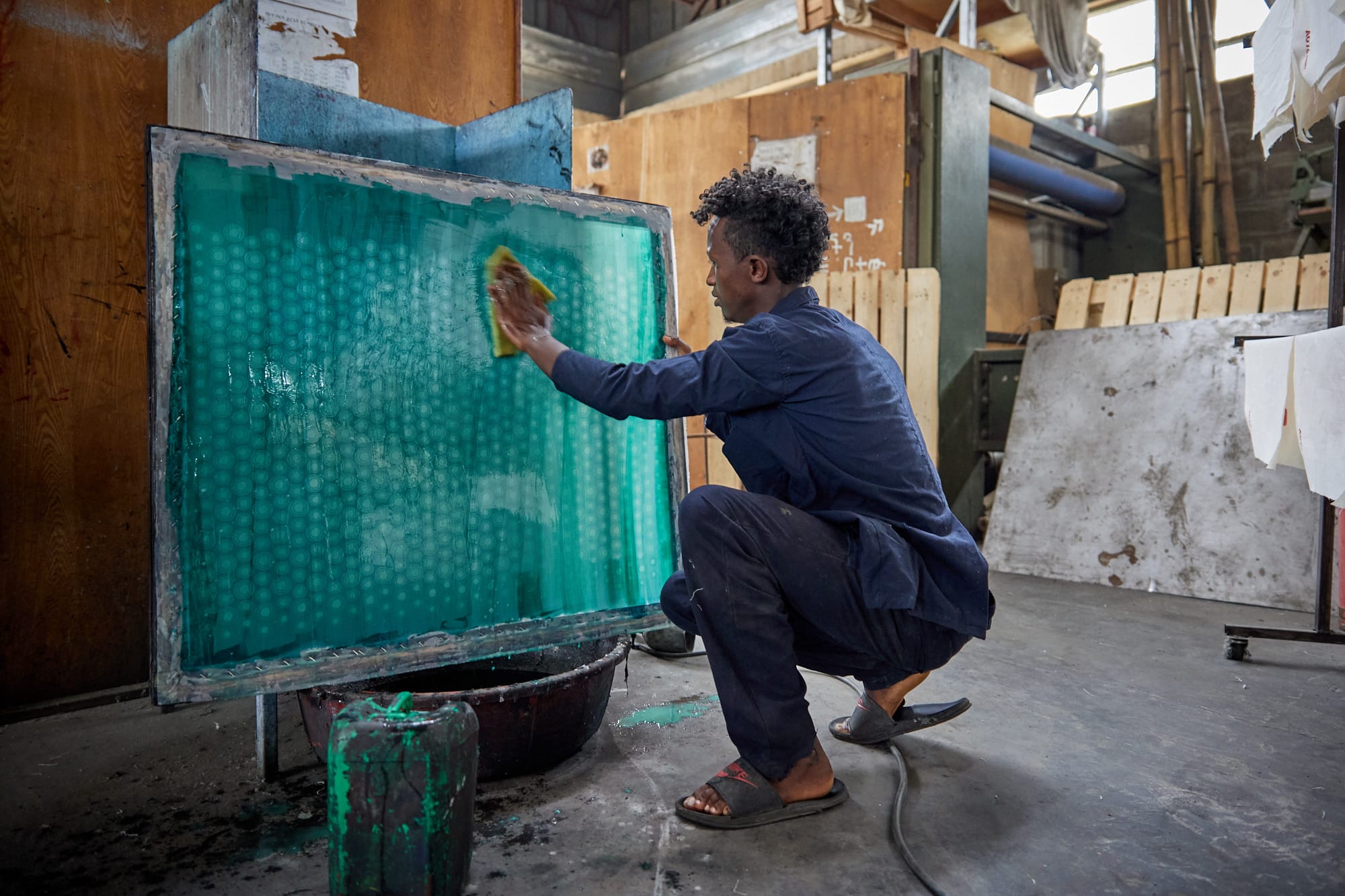
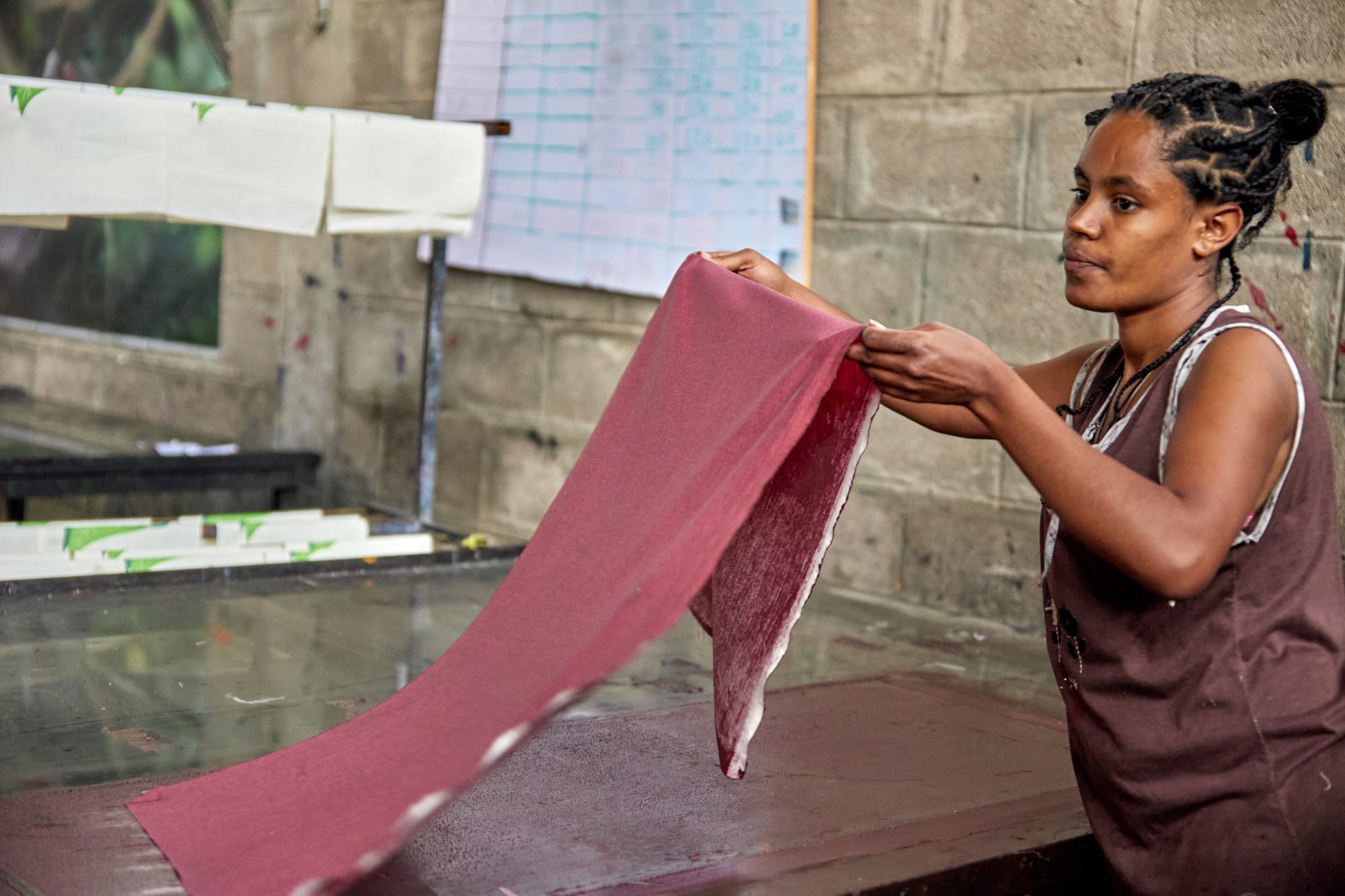
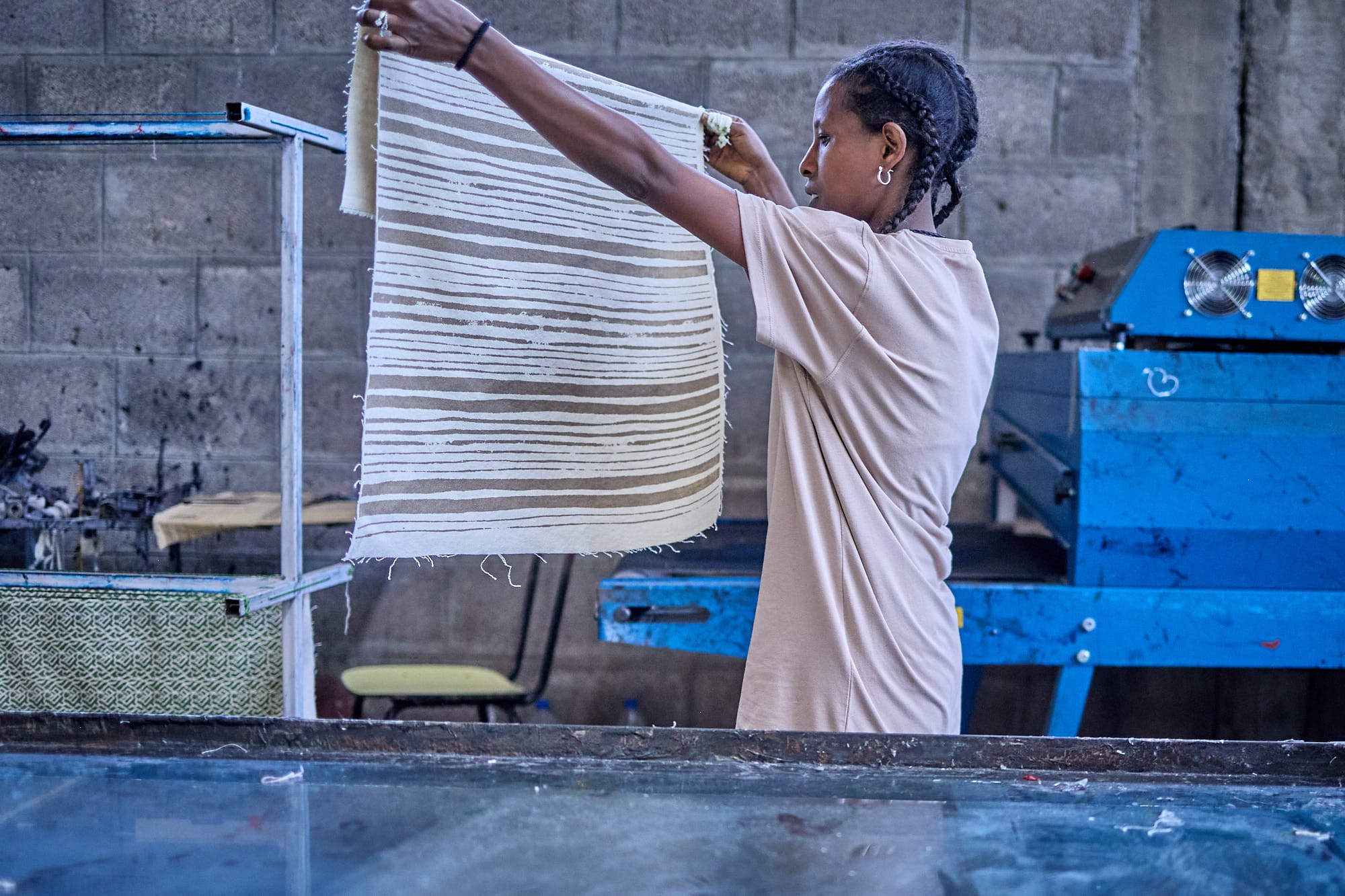
A woman raises a piece of printed fabric. Elsewhere, another worker holds a screen against the light. A man cleans a large frame, preparing it for further use.
These images also remind us that the history of manufacturing is frequently told through machines, companies, and finished products, while the people whose skills make production possible receive less attention.
Yet the details of a manufactured object can tell us little about the knowledge required to produce it unless we are willing to look at the work itself.
A successful print depends on preparation, coordination, technical understanding, and the capacity to recognize and correct mistakes. The same is true of the stages that follow.
At AFAR, printed cotton canvas is used alongside other materials, including leather, to make bags and accessories. Printing is one part of a broader production process involving cutting, stitching, assembly, finishing, and inspection.
The fact that this work takes place in Ethiopia is important for understanding the company, whose products are made in Addis Ababa rather than simply decorated there.
It also raises questions that belong to any serious discussion of contemporary manufacturing. Who possesses the skills? How are they learned and passed on? Under what conditions does the work take place? Who makes decisions about design and production? How is the value created by the workers recognized?
A photograph cannot answer all these questions. It can, however, show who is present, what people are doing, and the relationship between their movements and the objects being produced.
In these images, the technical process remains inseparable from the people carrying it out: the colors are striking, but the most important visual information often lies elsewhere: in the position of a hand, the angle of a tool, the distance between the screen and the cloth, or the way two workers coordinate their actions.
These details explain the process without reducing the people involved to anonymous instruments of production. The fabric has a pattern because somebody knows how to print it.
What the Screen Can Carry
The contemporary applications of screen printing extend far beyond textiles and graphic art.
The technique remains important in packaging, decorative manufacturing, signage, printed electronics, and numerous industrial processes where controlled deposits of ink or other materials are required.
One particularly unexpected application is found in solar energy. In the production of many silicon solar cells, screen-printing processes are used to apply extremely fine conductive patterns to the cell surface. These lines form part of the electrical contacts through which generated current is collected.
The materials, equipment, and tolerances differ enormously from those found in a textile workshop, but the underlying idea remains familiar: a prepared screen controls the passage of material onto a surface. The technology continues to evolve.
Synthetic meshes, automated printing lines, improved inks, and increasingly precise methods of preparing stencils have expanded what the process can achieve. Digital printing offers alternatives for many applications, while screen printing retains advantages where particular ink deposits, surface properties, or production requirements are important.
At the same time, small workshops, artists, designers, and community organizations continue to use relatively simple equipment. A wooden frame and a squeegee can still produce a poster, an artist's edition, or a printed textile.
There is something worth considering in the coexistence of these worlds. The industrial technology used to manufacture electrical components and the manual process used to decorate a length of cotton belong to the same extended family of inventions.
Their purposes differ. Their scales differ. The knowledge required to operate them differs. Yet both depend on the ability to decide precisely where material should pass and where it should remain. In the Addis Ababa workshop, the results eventually leave the printing table.
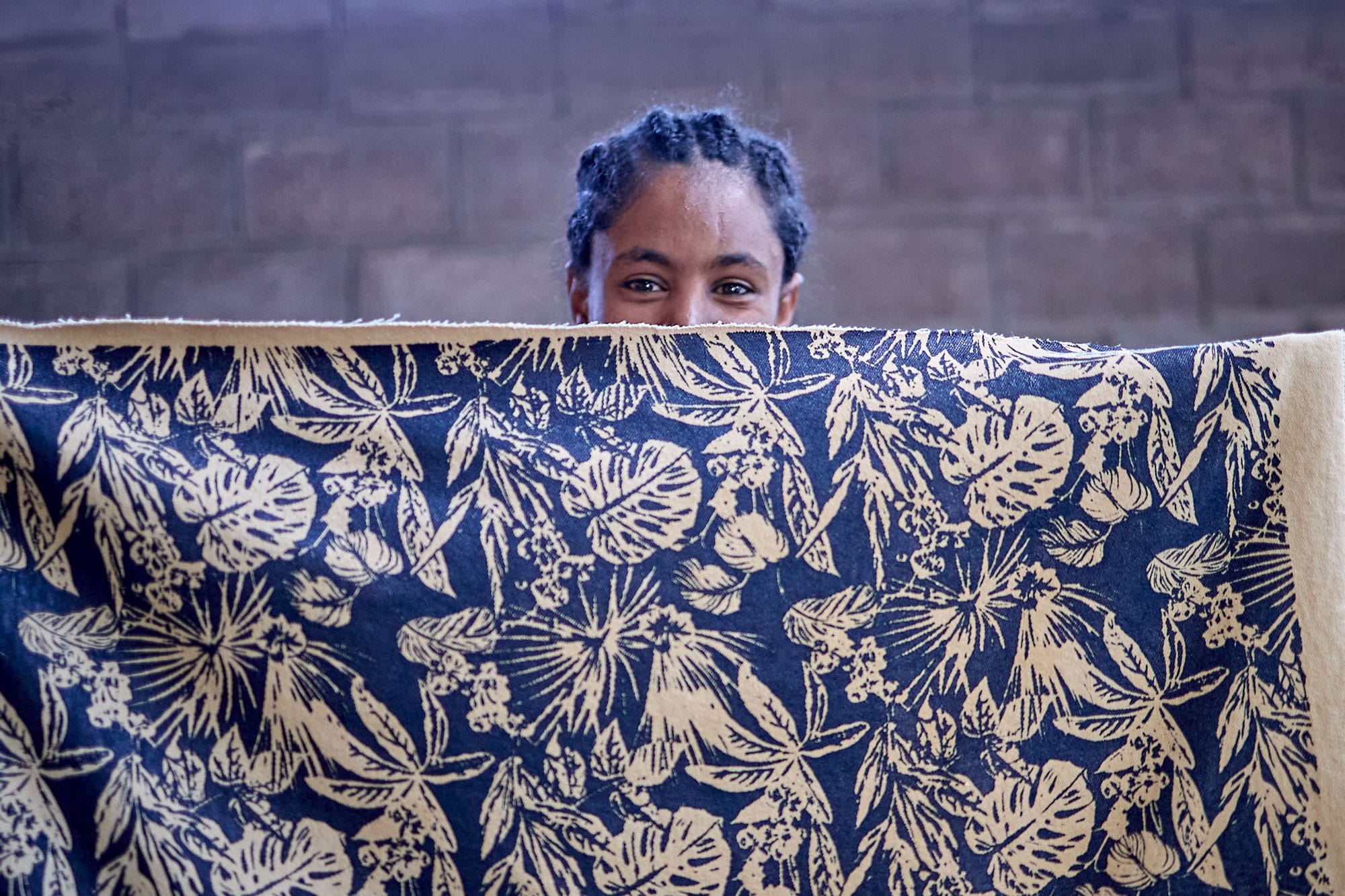
The printed canvas becomes part of a bag. Other hands cut, assemble, stitch, and finish the material. A pattern that began as a design on a screen acquires a different form and purpose.
Its destination may be a shop, a home, a train, an airport, or a journey that cannot be anticipated by the people who produced it. The image continues to travel, carried on an ordinary object.
This is one of the enduring qualities of screen printing. It has allowed people to reproduce images for an extraordinary range of purposes: to decorate, to sell, to persuade, to teach, to protest, to experiment, and to make objects that participate in daily life.

Across all these applications, the relationship between an image and the work that produces it remains fundamental.
A finished print may appear simple. Its existence depends on decisions, materials, and practical knowledge that are rarely visible once the process is complete.
Perhaps that is why the most revealing moment in the Addis Ababa photographs comes before the finished bag, before the fabric leaves the workshop.
A worker lifts the screen and looks at what has appeared beneath it. The image is there. The work continues.
Note. This photographic essay documents the people and processes involved in AFAR's textile printing. The historical discussion explores the wider development and uses of screen printing across different cultures and periods.


Member discussion